


Minimalist Living Room Ideas: How to Create Calm Through Restraint
Minimalism is perhaps the most misunderstood of all interior design styles. It is frequently mistaken for emptiness — a few pieces of furniture in a white box — when in reality it is something far more considered and intentionally rich. True minimalism is not about having nothing; it is about having only what is essential, and making each essential thing the very best it can be. The result, when done well, is not a cold or austere room but one of extraordinary calm, clarity, and concentrated quality. This guide explores how to achieve genuine minimalism in the living room.
The Philosophy Behind Minimalist Design
Minimalism as an interior design movement has roots in both the Japanese concept of 'ma' — the value of empty space — and in the mid-century modernist tradition of functional, form-following design. At its core, minimalism asks a question of every object and every decision: is this necessary? If an element does not serve a clear purpose — functional or aesthetic — it has no place in a minimalist room. This is not a negative process but a liberating one: once you commit to only keeping what is truly good and truly needed, every remaining object is elevated by the quality of the space around it.
The Minimalist Colour Palette
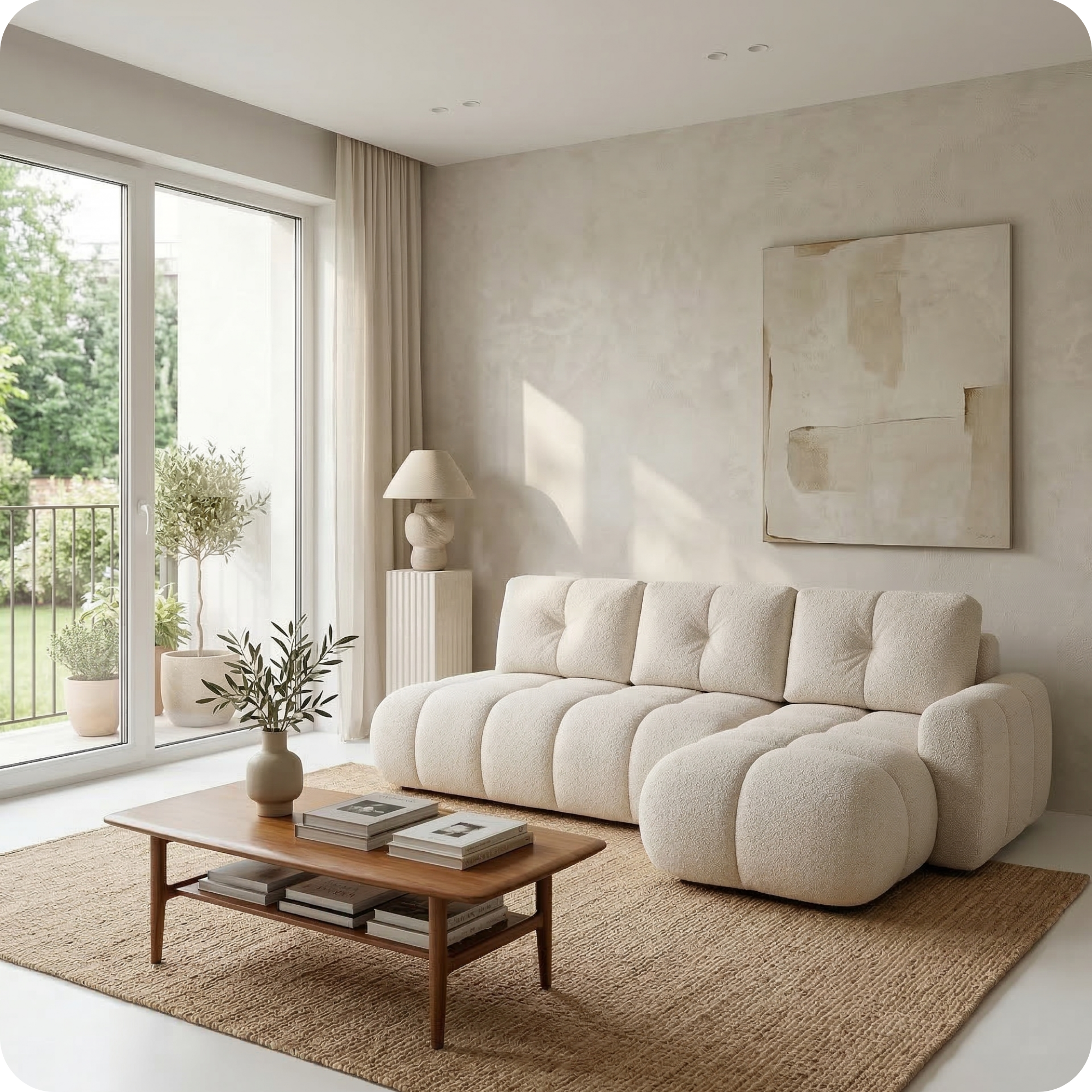
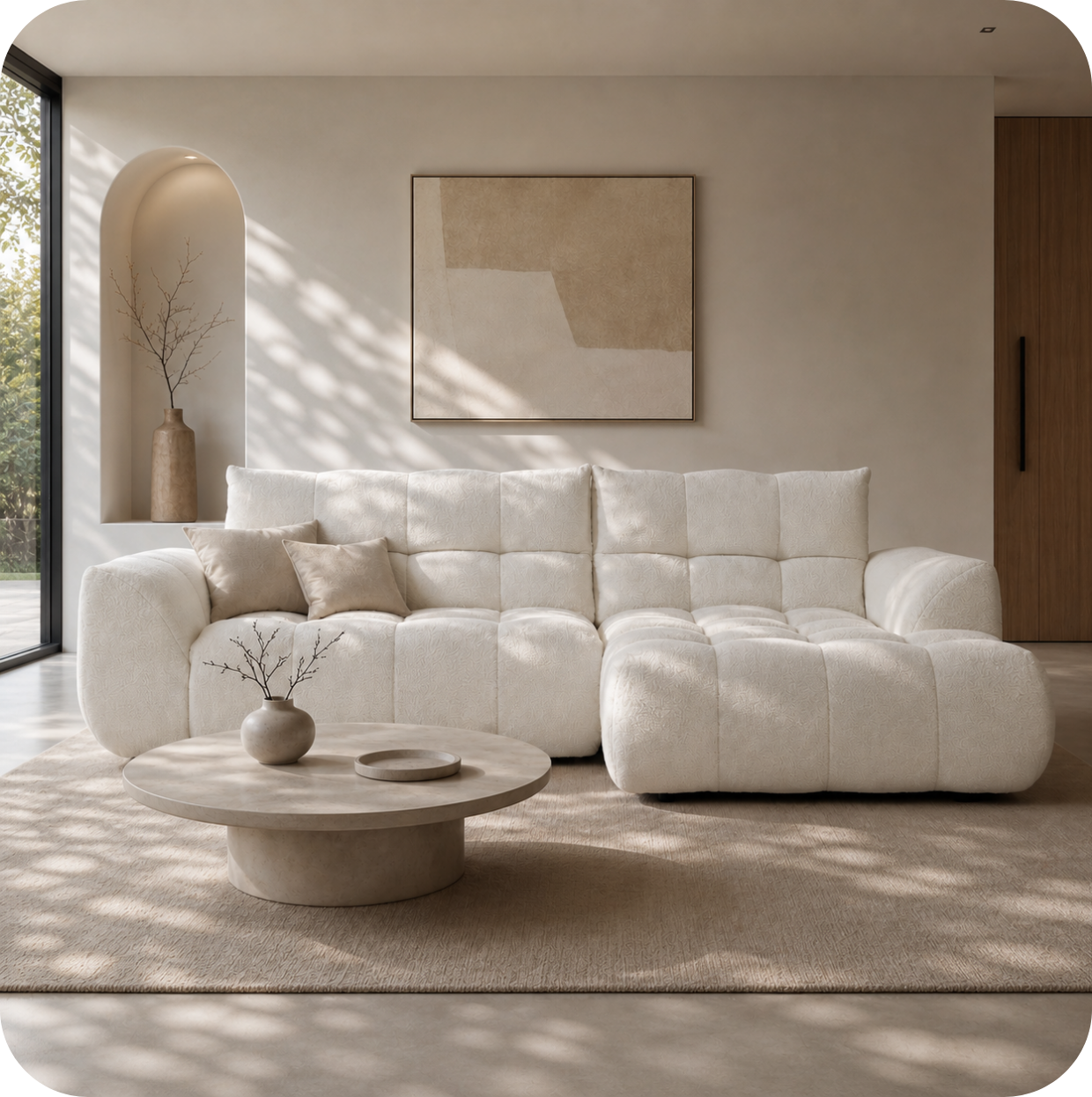
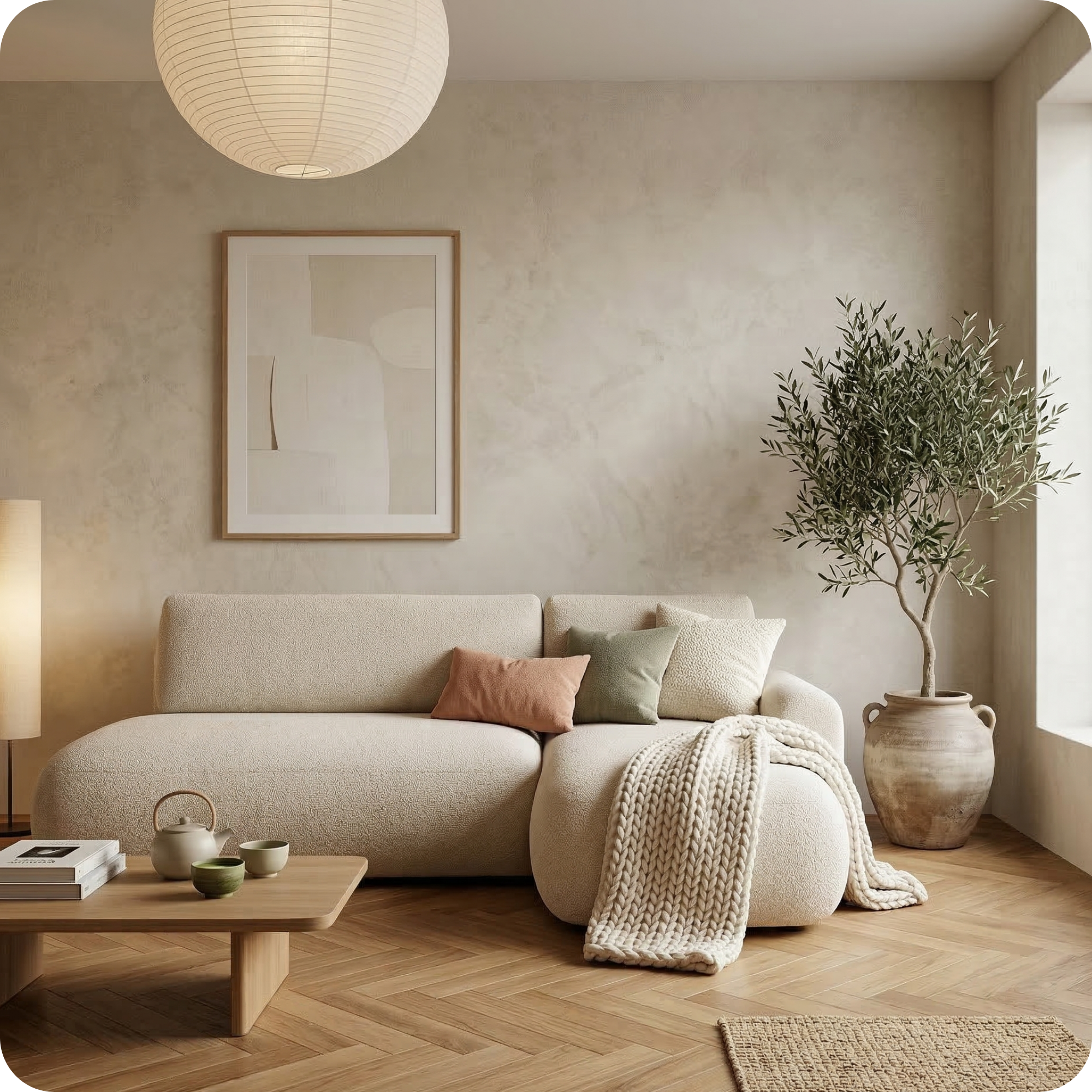
The classic minimalist palette is built on whites, off-whites, and very pale neutrals — tones that recede and allow space and form to dominate. But minimalism is not exclusively white: warm stone, pale greige, warm cream, and very light grey are all legitimate minimalist base colours that add warmth without adding visual noise. The key is tonal consistency — a minimalist room uses a narrow range of closely related tones rather than contrasting or clashing colours. Texture becomes the primary source of visual interest.

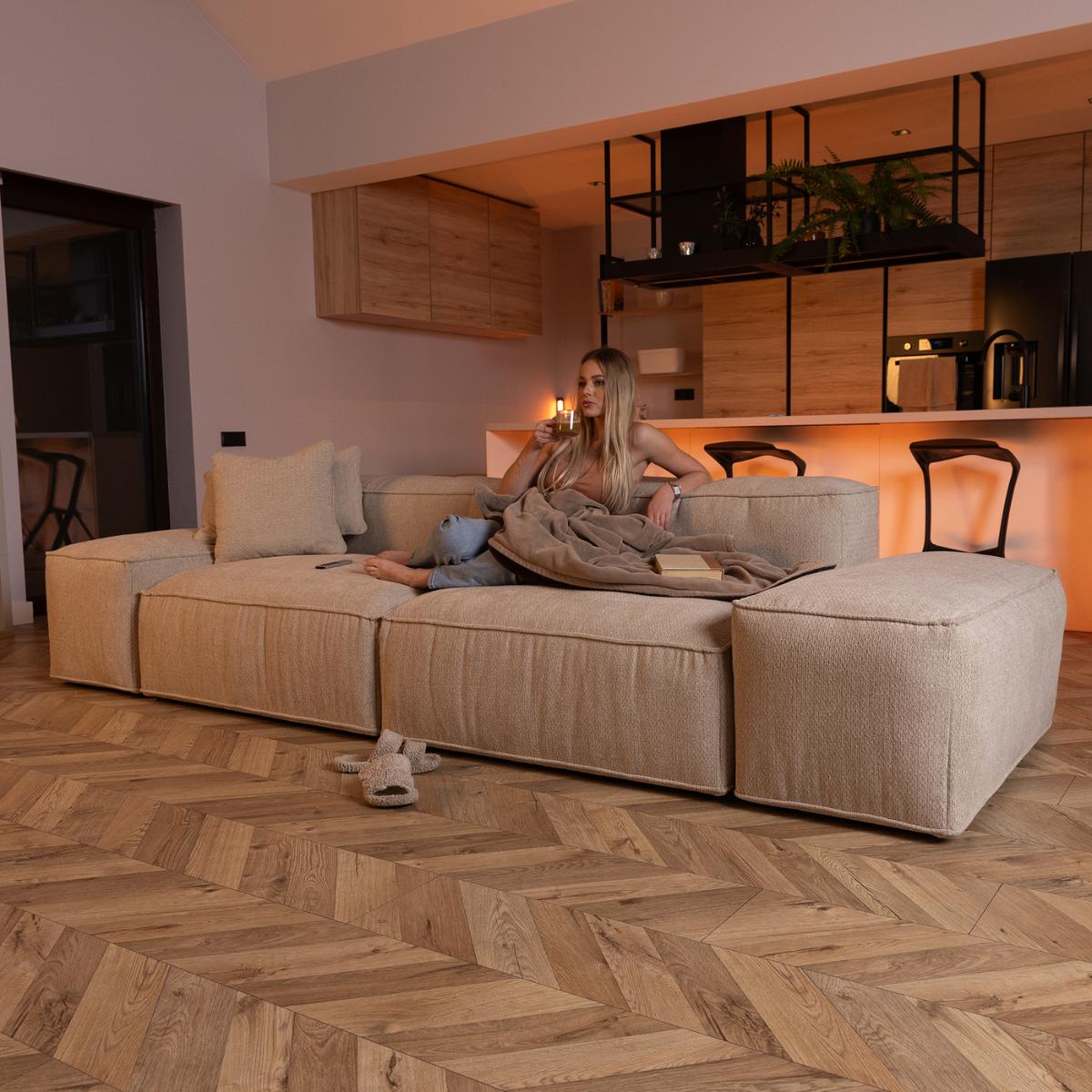
Lugano Sofa in Sand — from EUR 790
The Lugano's clean silhouette and natural sand upholstery make it an ideal minimalist sofa — its unfussy form disappears into a calm room without demanding attention, while the warmth of its tone prevents the space from feeling cold.

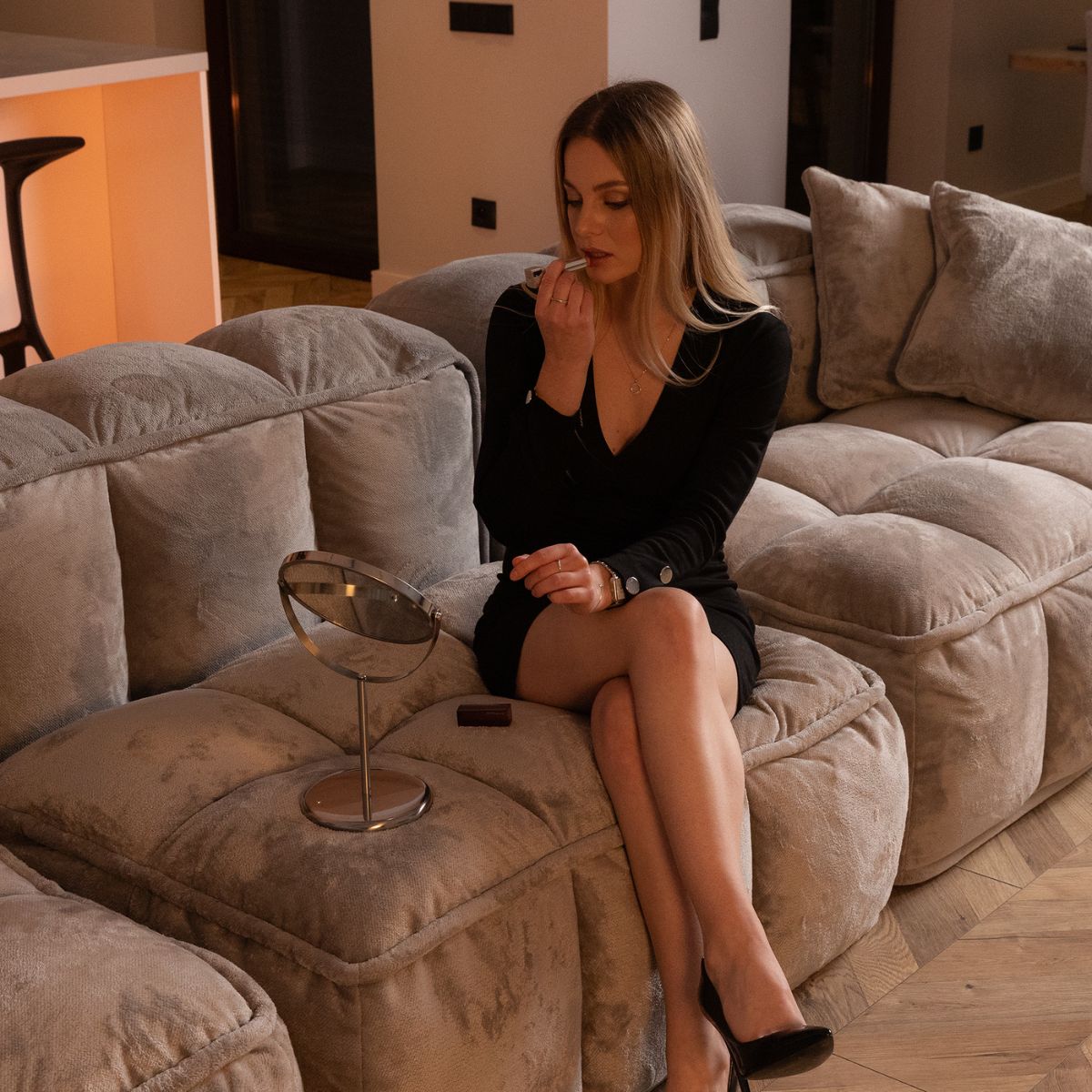
Lugano Sofa in Light Grey — from EUR 790
Light grey is the quintessential minimalist upholstery colour — it is neutral enough to recede, warm enough to avoid sterility, and versatile enough to work with the full range of minimalist palettes from warm cream to cool white.
Furniture: Less, Better
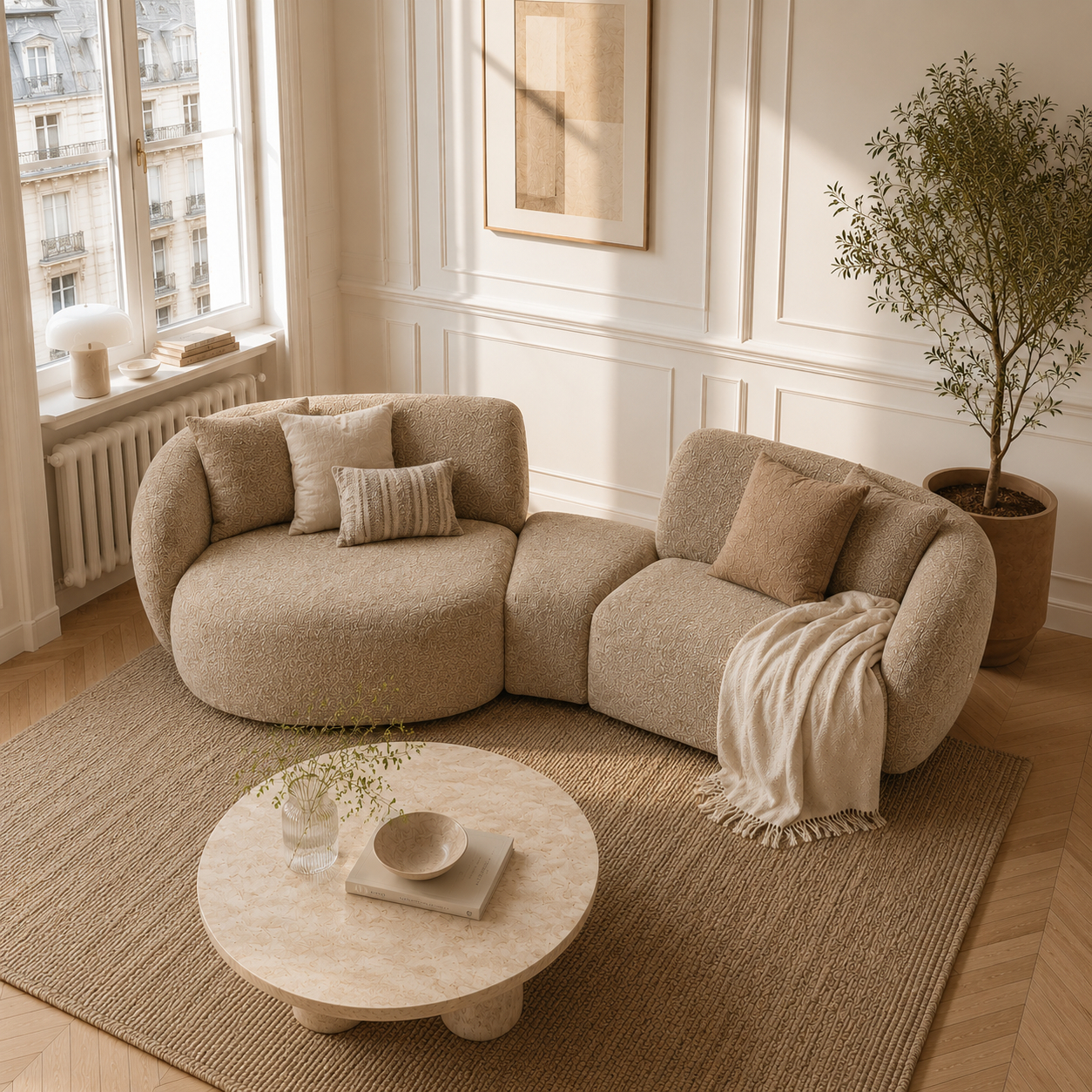
In a minimalist living room, every piece of furniture must earn its place. This means fewer pieces, each chosen with exceptional care. The sofa is typically the largest and most important investment — it should be impeccably proportioned, genuinely comfortable, and upholstered in a quality fabric that improves with use. Side tables, coffee tables, and storage should be minimal in profile — slender legs, clean surfaces, hidden storage. Avoid statement pieces that demand attention through novelty. In minimalism, the room as a whole is the statement.
The Role of Texture in Minimalism
When colour is reduced to a narrow tonal range, texture becomes the primary source of sensory richness. A minimalist room that uses only smooth, flat surfaces feels genuinely sterile. A minimalist room that layers linen, bouclé, polished concrete, rough plaster, smooth ceramic, and raw oak within a single narrow palette feels alive and genuinely pleasurable to inhabit. The discipline of minimalism is not in rejecting texture — it is in choosing textures that harmonise tonally even as they contrast materially.
Editing: The Ongoing Practice
Minimalism is not a project with a completion date. It is an ongoing discipline of editing — regularly reassessing what is in the room and removing anything that no longer serves a clear purpose. The most useful questions: does this bring me pleasure every time I see it? Does it earn its space? If the answer is no, it goes. The minimalist living room is not a destination but a practice — and the practice itself, over time, creates a quality of clarity and calm that is genuinely irreplaceable.

Leave a comment
This site is protected by hCaptcha and the hCaptcha Privacy Policy and Terms of Service apply.