


Open Plan Kitchen Living Room Ideas: How to Zone and Style an Open Space
The open plan kitchen-living room has become one of the defining formats of contemporary domestic life. By removing the wall between kitchen and living room, you gain light, sociability, and a sense of spaciousness that few other architectural interventions can match. But the open plan also presents a genuine design challenge: how do you create a space that feels cohesive rather than chaotic, where the cooking zone and the relaxing zone feel like part of the same considered interior without simply merging into a single undifferentiated room? The answer lies in zoning — using furniture, rugs, lighting, and colour to create defined areas within a single open space, without physical barriers.
Using the Sofa to Define the Living Zone
In an open plan space, the sofa does more work than it does in a conventional living room. Its position — not pushed against a wall, but placed with its back to the kitchen — acts as the primary divider between the living and cooking zones. The back of a sofa becomes the implicit boundary of the living space. This is why the choice of sofa is particularly important in open plan spaces — you need a piece that looks as good from the back as from the front, and that has a presence strong enough to anchor a large, undivided space.

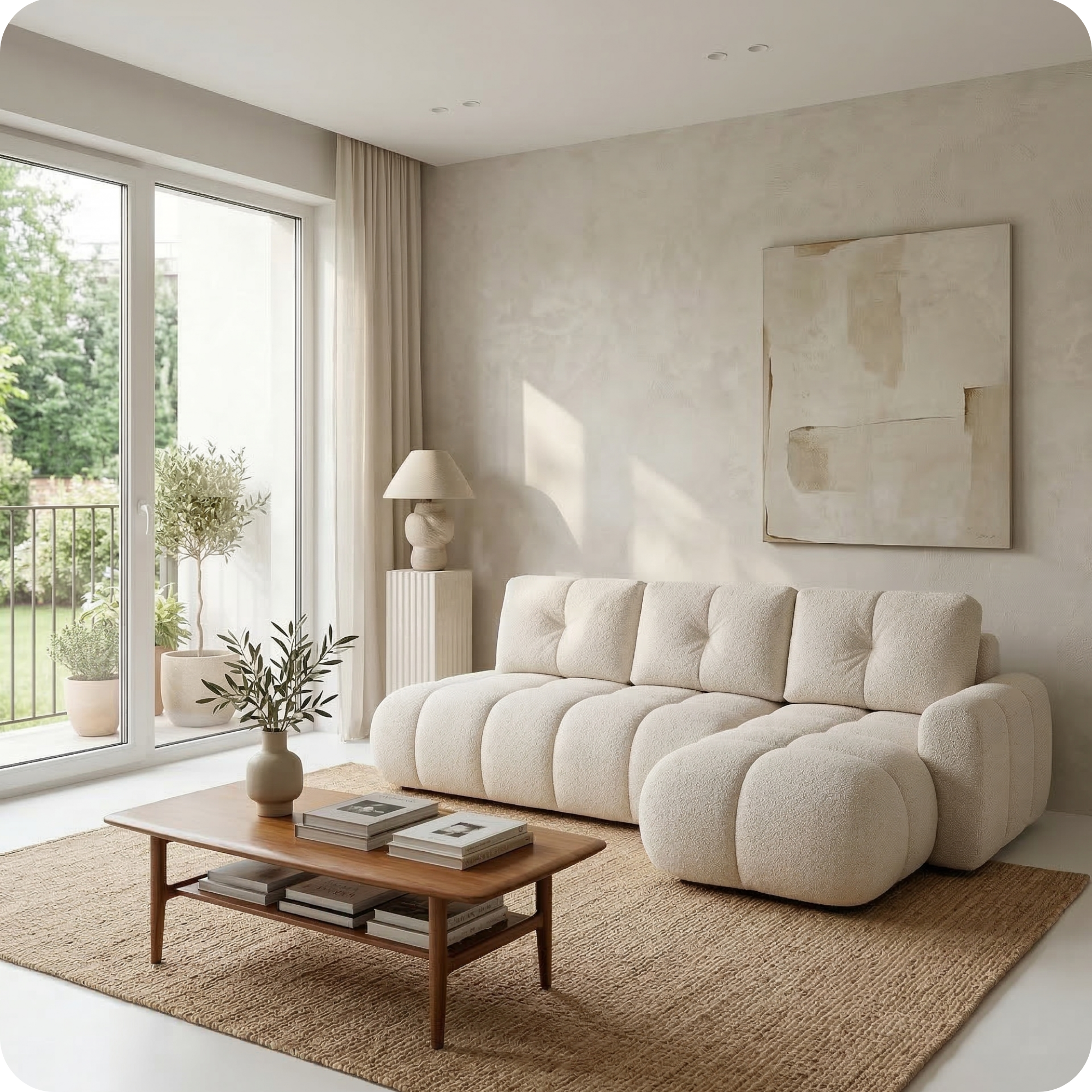
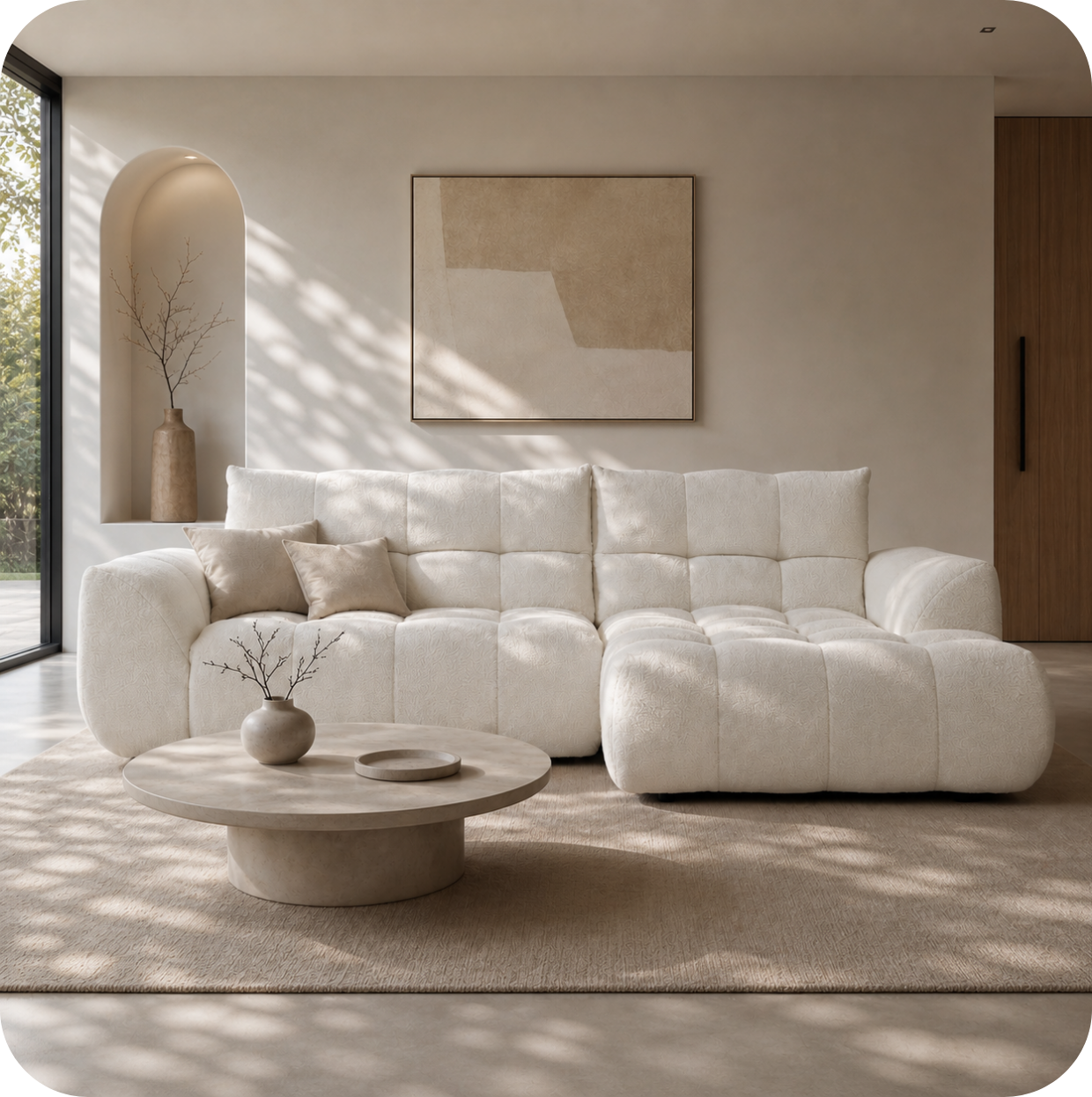
Merlot Corner Sofa — from EUR 1,290
A corner sofa is an excellent choice for an open plan space — its L-shaped footprint naturally defines a seating zone, and its generous size creates a clear visual boundary between the living area and the kitchen beyond.

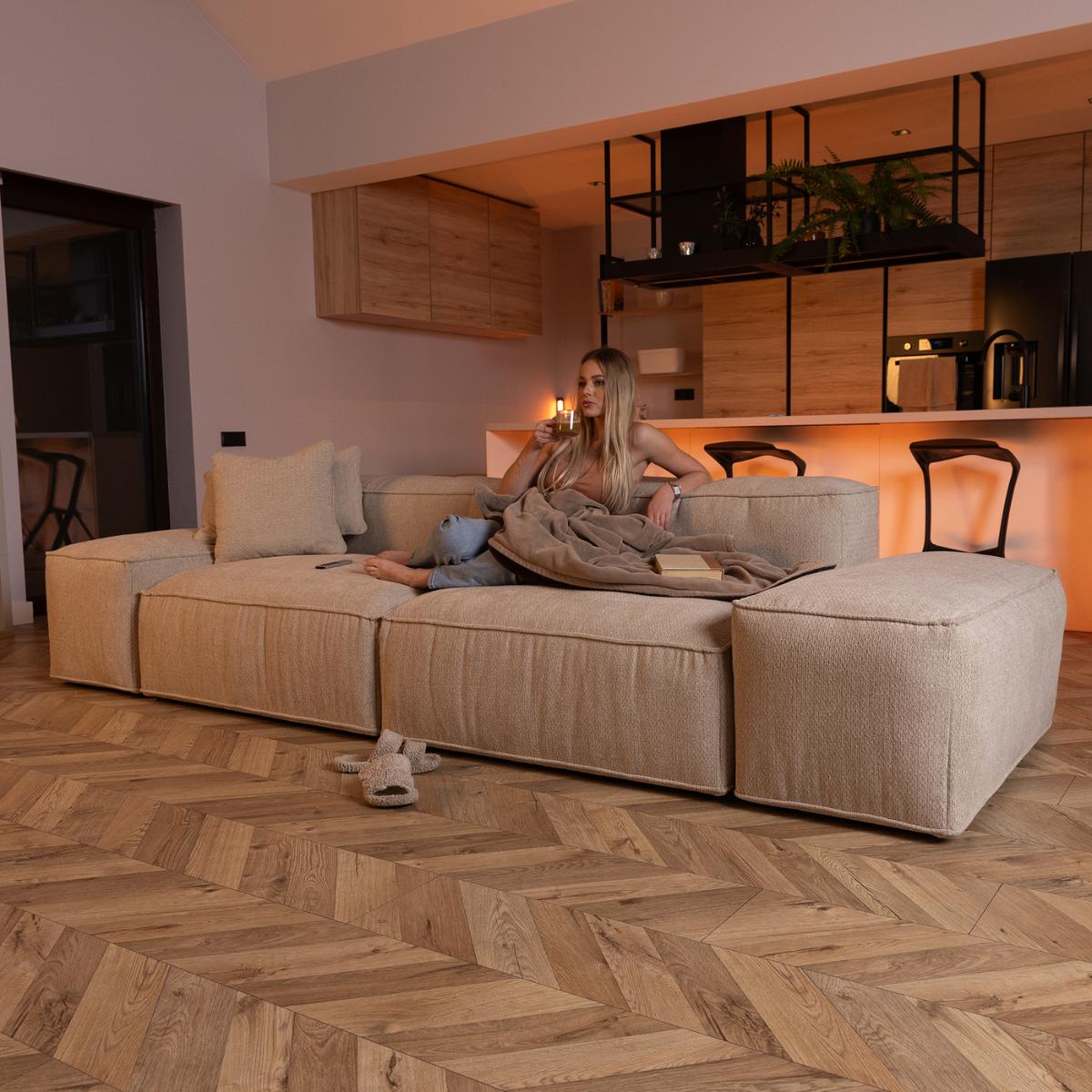
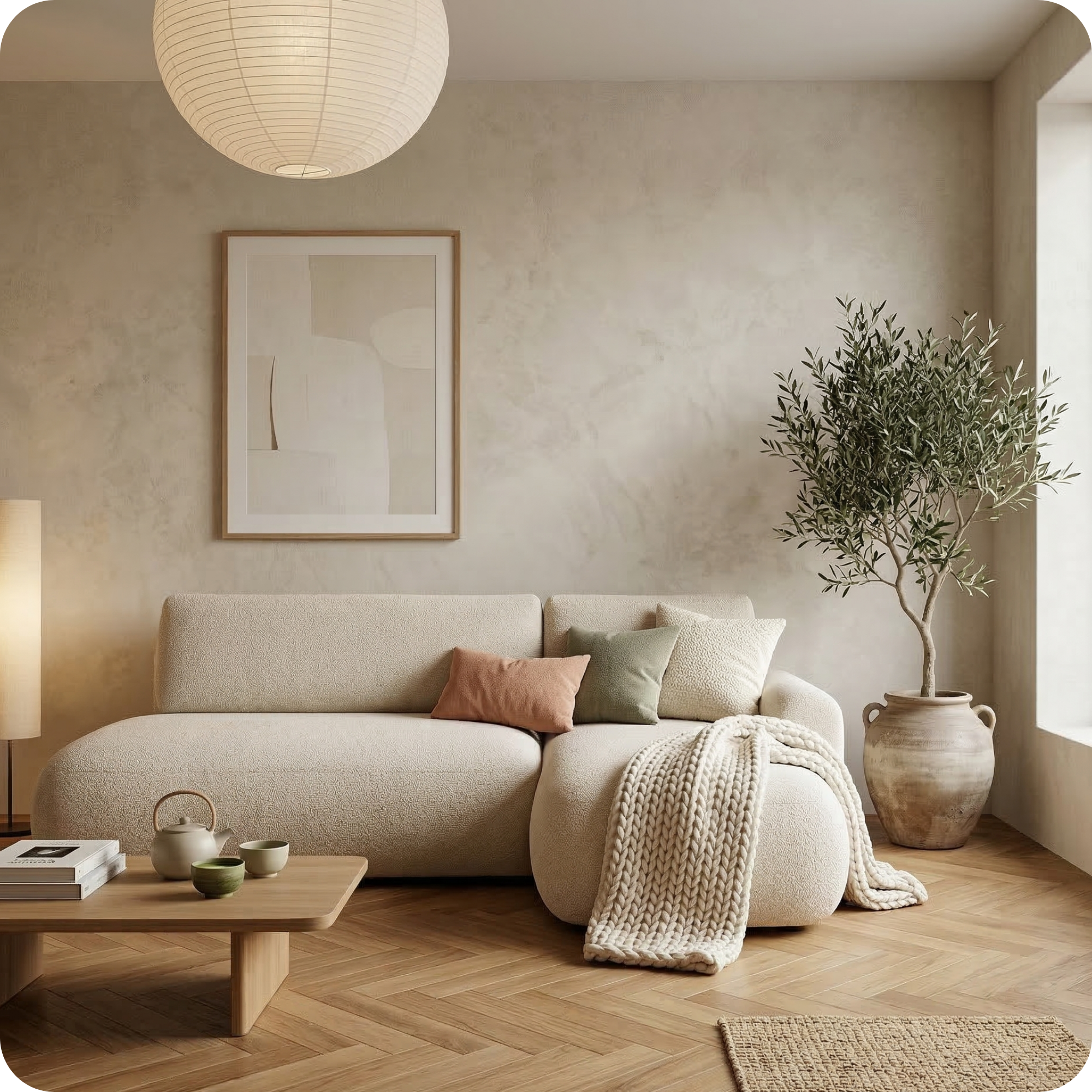
Malbec Modular Sofa with Longchair — from EUR 1,190
The modular Malbec with longchair works beautifully in open plan spaces — the chaise extension defines the perimeter of the seating zone, while the sofa's back faces the kitchen to create a natural visual division.
Using Rugs to Zone Without Walls
A large area rug under the seating furniture is the single most effective way to define the living zone in an open plan space. Without walls, the rug does the work of the wall — it visually encloses the space, signals to the eye that this is a distinct zone, and creates a sense of warmth and definition in what might otherwise feel like a large, undifferentiated room. Size is critical — the rug should be large enough for all four legs of the sofa to sit on it, with the coffee table also contained within the rug. A rug that is too small will make the space feel disconnected and poorly proportioned.
Colour Consistency Across Zones
In an open plan space, you can see the kitchen and living room simultaneously, which means they need to feel visually coherent. This does not mean everything should be the same colour — but it does mean there should be a connecting palette. The simplest approach is to use a consistent neutral for walls and major surfaces throughout, and then introduce variation through materials and textures: warm wood tones in the kitchen carry into furniture in the living room; the same stone worktop material echoed in a stone accessory or coffee table in the seating zone. These material connections create visual coherence without uniformity.
Lighting to Define Zones
Lighting is one of the most powerful and underused tools for zoning an open plan space. By hanging a pendant light or cluster of pendants over the dining table and a different pendant or chandelier over the seating zone, you create distinct pools of light that signal to the eye that these are different areas, even without any physical division. In the evening, when each zone is lit separately, the effect of division is even stronger. A floor lamp in the corner of the seating area adds a warm layer of light that is completely distinct from the kitchen lighting above the worktops.

Leave a comment
This site is protected by hCaptcha and the hCaptcha Privacy Policy and Terms of Service apply.