


Velvet Sofa Guide: How to Choose, Style and Care for Velvet
Velvet sofas occupy a unique position in the furniture market: they are simultaneously the most glamorous and the most misunderstood sofa fabric. The hesitation around velvet is understandable — it is associated with high maintenance, it crushes, it shows marks. But modern performance velvets have addressed almost all of these concerns, and a well-chosen velvet sofa is one of the most enduring, versatile, and visually striking pieces you can buy. This guide covers everything you need to know.
Modern Velvet vs Traditional Velvet
The velvet of 30 years ago — loosely woven, easily crushed, difficult to clean — is a world apart from modern performance velvet. Contemporary velvet upholstery fabrics are typically woven from synthetic microfibre or polyester blends with a tight, short pile that resists crushing, is highly durable (Martindale ratings of 30,000-100,000 are common in quality velvets), repels liquids to a significant degree, and is much easier to clean than traditional cut velvet. The hallmark of quality modern velvet is consistency of pile height, a smooth surface that reflects light evenly, and a tight weave that resists pilling and snagging.

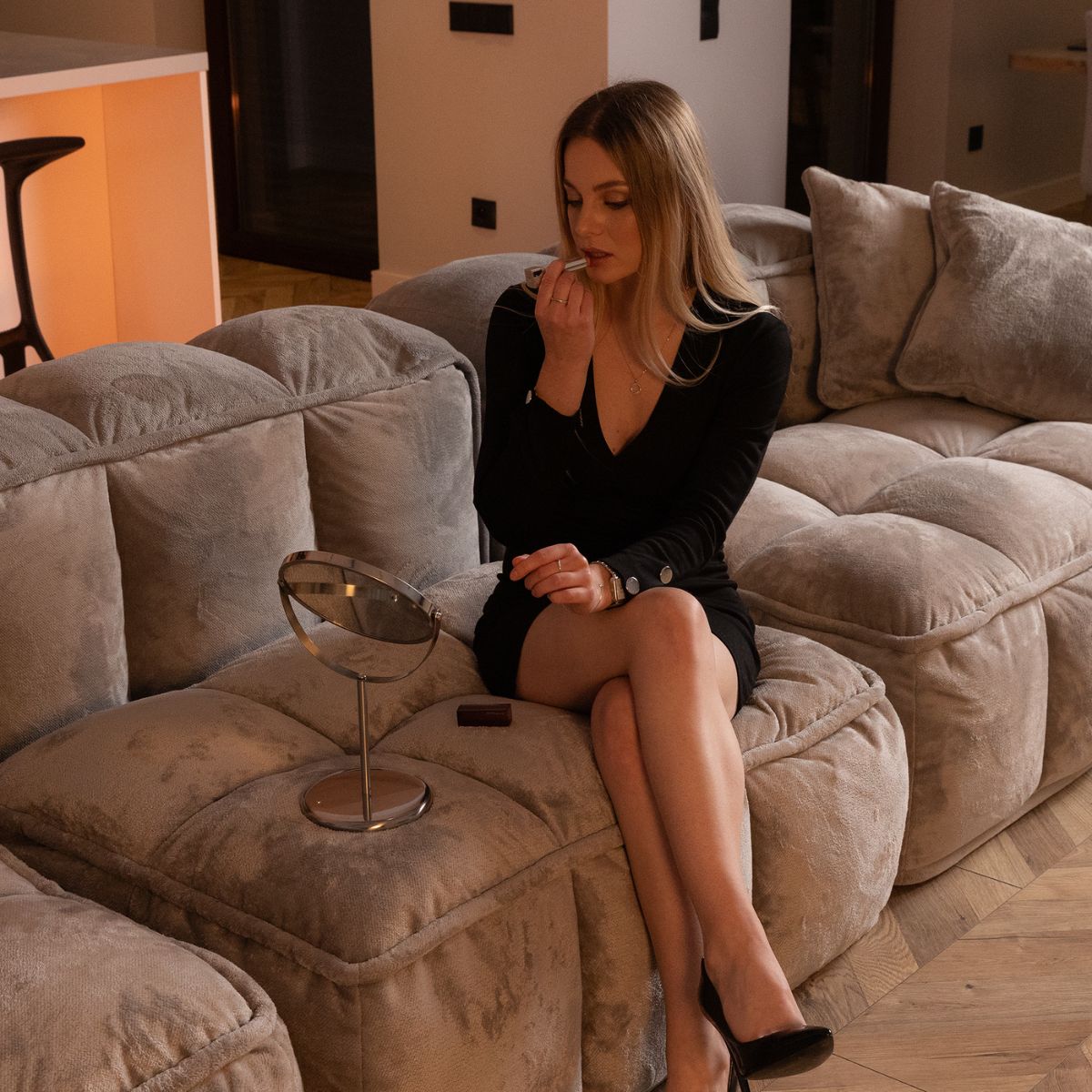
Merlot Sofa in Leaf Green — from EUR 1.190
The Merlot sofa demonstrates one of the most important truths about velvet-style upholstery: colour intensity is dramatically enhanced. The leaf green of the Merlot has a depth and richness under this fabric that a flat woven fabric simply cannot achieve — the pile catches and reflects light differently at different angles, creating the impression of a living, shifting colour. This is particularly striking with jewel tones: emerald, sapphire, ruby, and deep teal are colours that come fully alive only in velvet.

Merlot Corner Sofa — from EUR 1.490
The Merlot corner configuration demonstrates the scale advantage of velvet upholstery: on a large sectional, the consistent light-play across a large expanse of velvet creates a luxurious, almost sculptural quality that makes the entire sofa appear more substantial and intentional. For those hesitating between a corner configuration and a standard 3-seater, the added visual impact of the larger velvet-upholstered surface is a genuine argument for the corner option.
Which Velvet Colours Work Best
Velvet's light-absorbing and light-reflecting properties make it particularly suited to deep, saturated colours. Forest green, deep teal, navy blue, burnt orange, mustard, plum, and burgundy are among the colours that look most striking in velvet — they gain a richness and depth that flat fabrics cannot replicate. Neutral velvets — pale grey, cream, blush, dusty pink — have a quieter luxury: they retain the sheen and texture of velvet while remaining versatile and easy to style around. Bright, highly saturated colours (electric blue, bright red) tend to read as intense in velvet and should be chosen with confidence. Black velvet is dramatically beautiful but shows lint, pet hair, and dust most readily of any velvet.
How to Style a Velvet Sofa
Velvet sofas are strong visual statements, which means they benefit from restraint elsewhere in the room. If you have a jewel-toned velvet sofa, the most effective approach is to keep walls, flooring, and other large surfaces relatively neutral, allowing the sofa to be the clear focal point. Cushions should complement rather than compete: velvet-on-velvet (the same or related colour, different texture direction) creates depth; linen or cotton cushions in complementary neutrals create contrast and relief. Avoid mixing multiple strong patterns or colours near a velvet sofa — its texture is already doing enough visual work.
Caring for a Velvet Sofa
Modern performance velvet is considerably more forgiving than its reputation suggests. For everyday maintenance, brush the pile gently with a soft upholstery brush in the direction of the pile to restore its appearance after heavy use. For spills, blot immediately — do not rub — with a clean, dry cloth to absorb as much liquid as possible before it sets. For more significant stains, a small amount of upholstery cleaner applied with a soft cloth and worked in the direction of the pile is usually effective. Steam cleaning is generally suitable for modern performance velvet and can restore crushed pile. Avoid direct sunlight, which will fade velvet more quickly than most fabrics.

Leave a comment
This site is protected by hCaptcha and the hCaptcha Privacy Policy and Terms of Service apply.