


Velvet Sofa Living Room: How to Style a Velvet Sofa
Velvet is one of the most seductive materials in furniture design — rich, tactile, light-reflective, and warm. A velvet sofa carries a visual weight and luxury quality that most other upholstery fabrics simply cannot match. But styling a velvet sofa requires some specific considerations: the wrong colour combinations, the wrong accessories, or the wrong room context can make velvet feel overdone or theatrical rather than genuinely beautiful. This guide gives you the tools to get it right.
Why Velvet Works So Well on Sofas
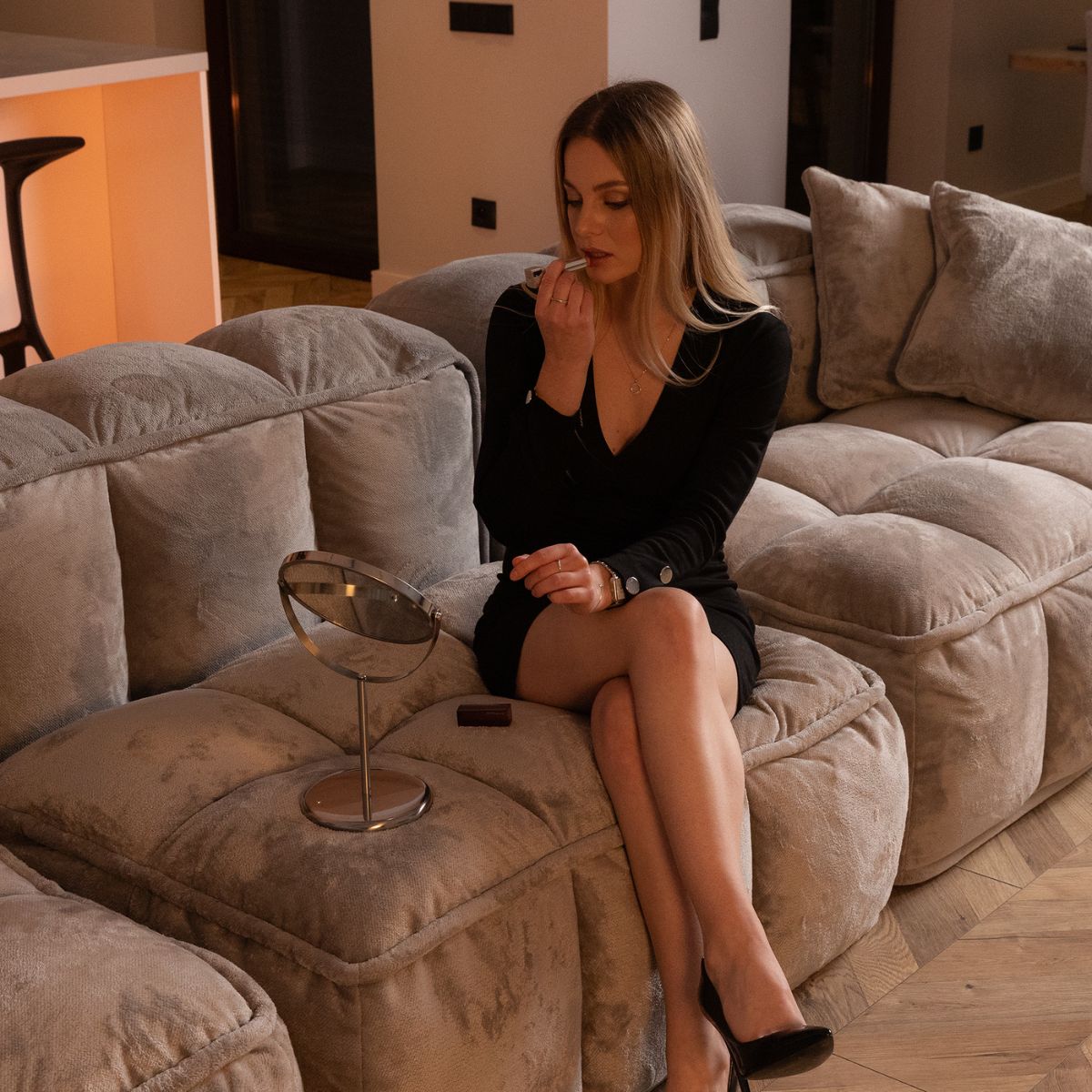
Velvet's distinctive quality comes from its pile — the short, dense fibres that stand upright from the base weave. This pile catches and reflects light differently at different angles, creating the characteristic two-tone effect (where the fabric looks lighter from one direction and deeper from another). This depth and richness means that velvet sofas photograph exceptionally well and have a visual presence that fills a room even when the colour chosen is relatively quiet. Teal velvet, midnight blue velvet, deep forest green velvet, warm terracotta velvet — all of these look luminous and alive in a way that the same colour in a plain woven fabric does not. Velvet also feels genuinely luxurious to the touch — soft, warm, and inviting in a way that smooth leather or tight-weave cotton cannot replicate.

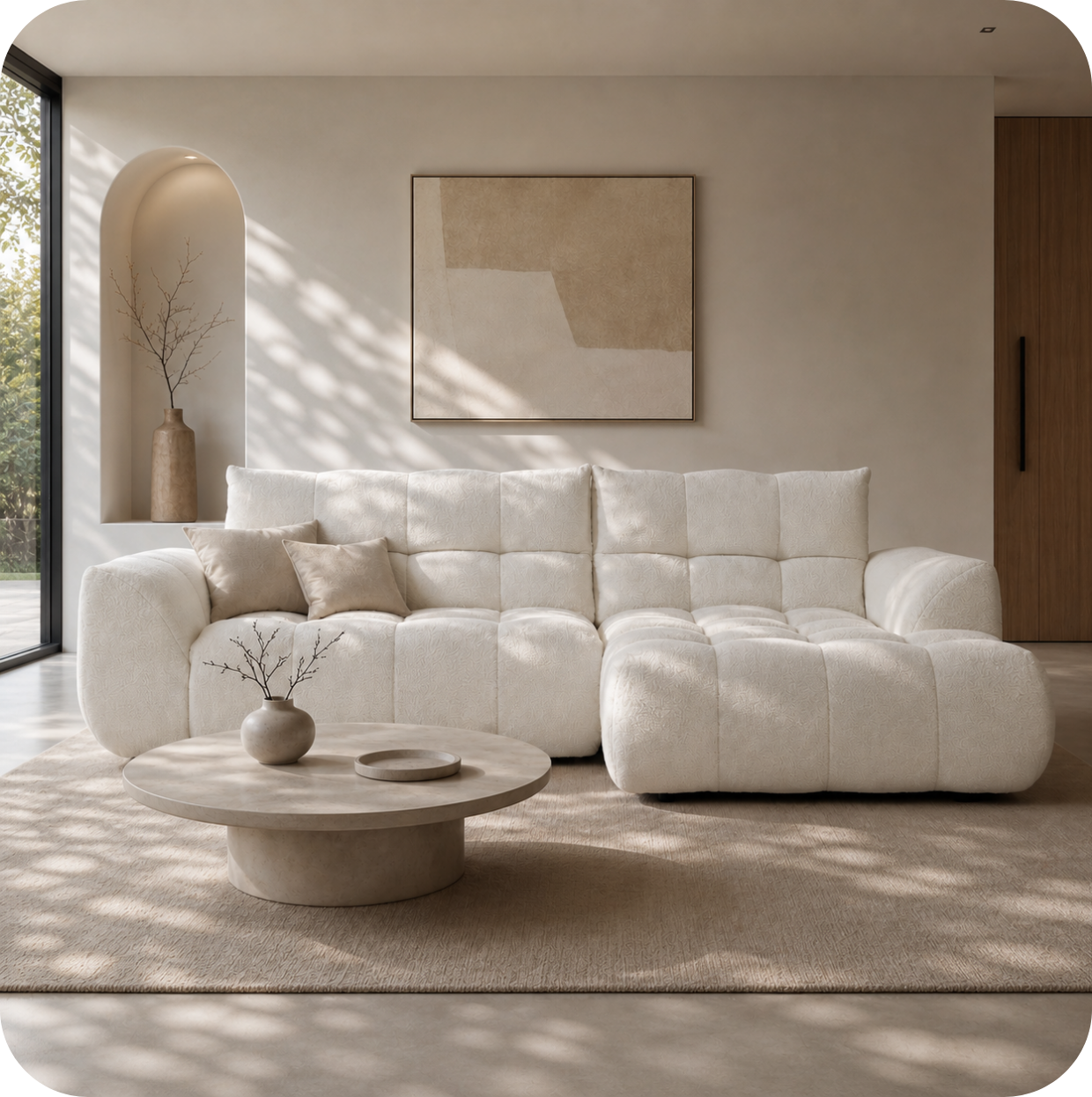
Merlot Modular Sofa — Leaf Green — from EUR 1,190
The Merlot in leaf green brings the luminous, rich quality of a velvet-like deep colour to a modular sofa format. The deep green sits at the heart of the current trend for botanical, nature-inspired interiors — pair it with natural wood, woven rattan accessories, terracotta ceramics, and linen cushions for a deeply contemporary result that celebrates colour without sacrificing warmth.

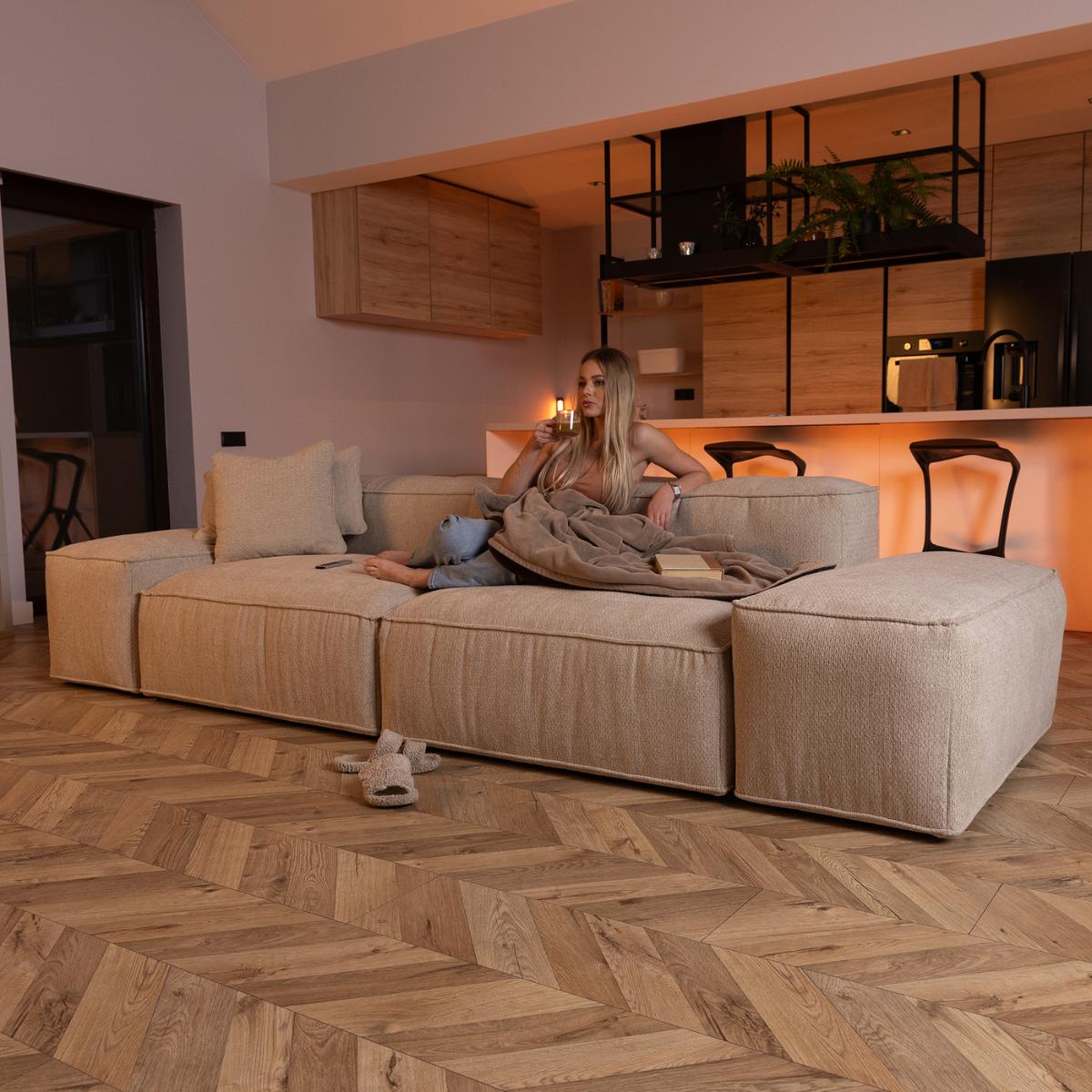
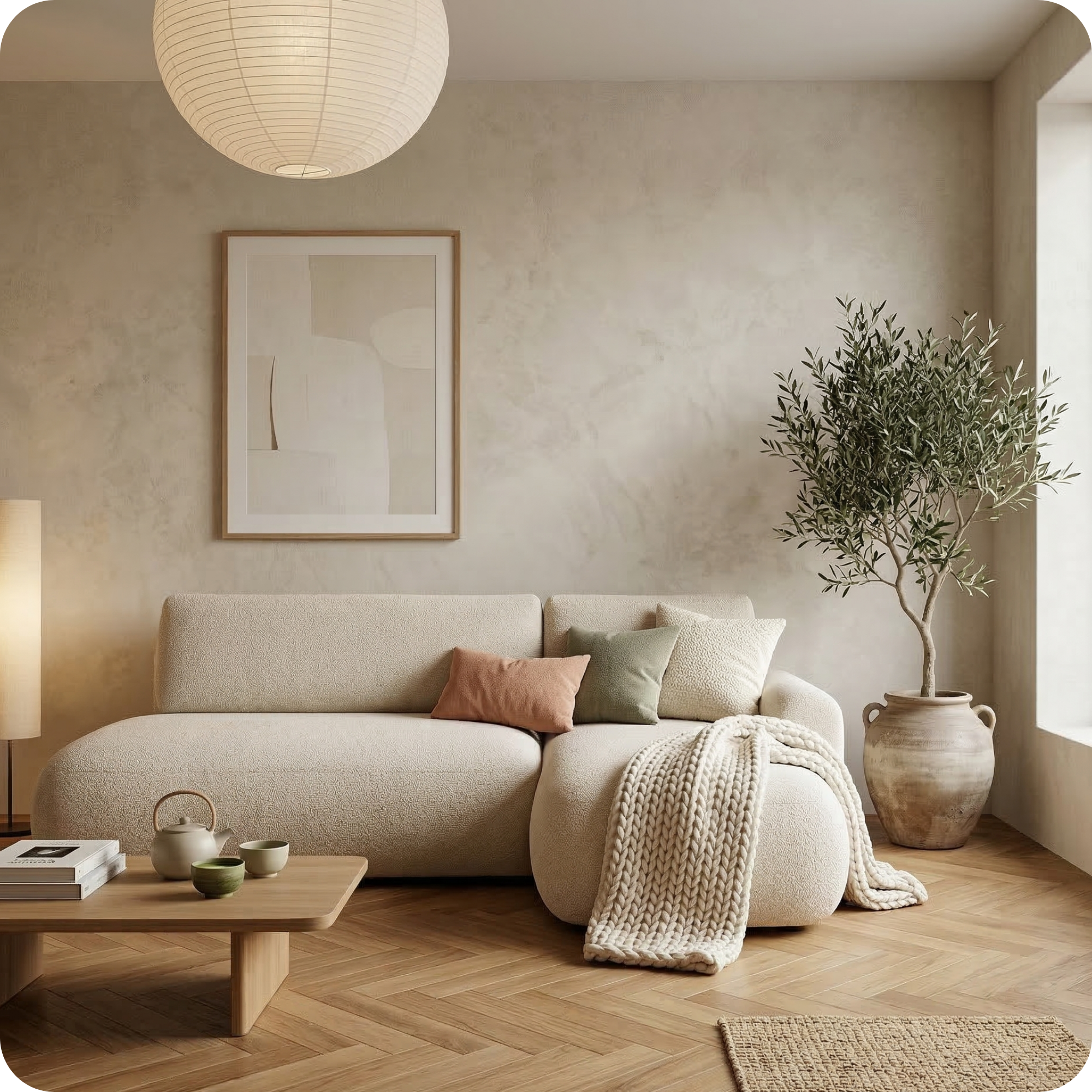
Lugano Sofa — Toffee — from EUR 890
The Lugano's toffee tone captures the warmth and depth of the velvet aesthetic in a more durable, practical upholstery. The caramel richness of the toffee tone pairs particularly well with gold metallic accents, deep navy cushions, and warm amber lighting — a combination that maximises the sense of luxury without requiring the specific maintenance that velvet demands.
Colour Combinations That Work with Velvet Sofas
Deep jewel tones of velvet pair best with: warm neutrals (natural wood, warm white walls, warm grey floors), metallic accents (brushed gold, brass, warm bronze — not chrome or silver, which read as cold against rich velvet), contrasting texture (woven cushions against velvet upholstery; linen versus velvet is a classic pairing), and plants (large green plants beside a deep velvet sofa create one of the most striking living room combinations). Forest green velvet pairs best with terracotta, warm wood, natural linen, and gold. Navy velvet pairs best with warm creams, brass, natural rattan, and dusty rose. Teal velvet pairs best with warm whites, brass, mustard, and natural wood. Midnight blue velvet pairs best with blush pink, warm white, brass accents, and white bouclé cushions.
Practical Considerations for Velvet Sofas
Velvet requires more care than most other upholstery fabrics. The pile can be flattened by sustained pressure or crushing — heavy sitting in the same spot repeatedly will eventually compress the pile and create visible flat patches. Velvet shows cat scratches readily. Most velvets are not machine washable. However, modern performance velvet fabrics are significantly more durable and easier to clean than traditional velvet — they resist crushing better and can be spot-cleaned effectively. When purchasing a velvet sofa, check whether it uses traditional velvet (more luxurious but less durable) or performance/velvet-effect fabric (more practical for everyday use). Velvet is also prone to attracting pet hair and lint, which are visible against the pile — a good lint roller is essential velvet sofa maintenance.
How to Style Velvet: The Complete Approach
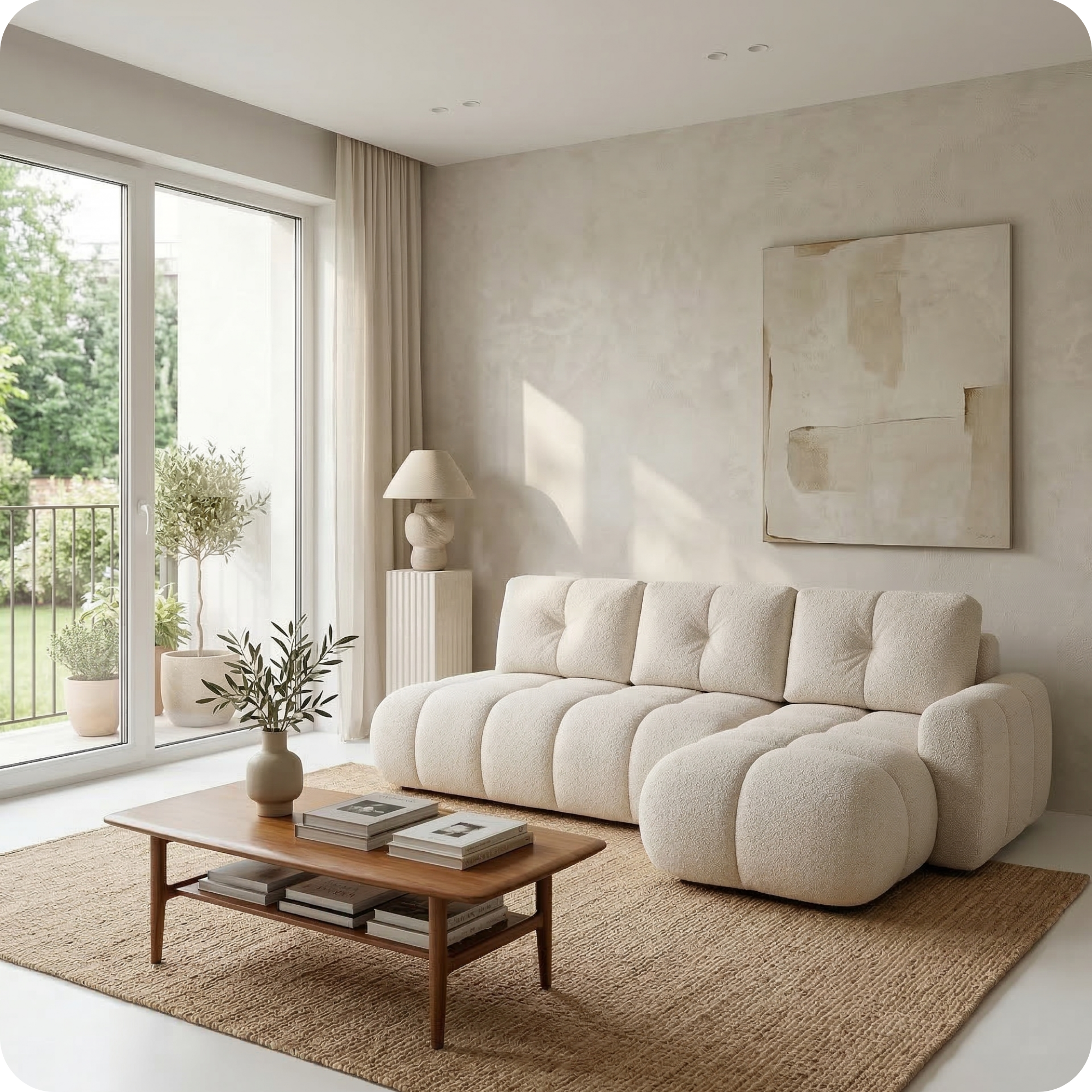
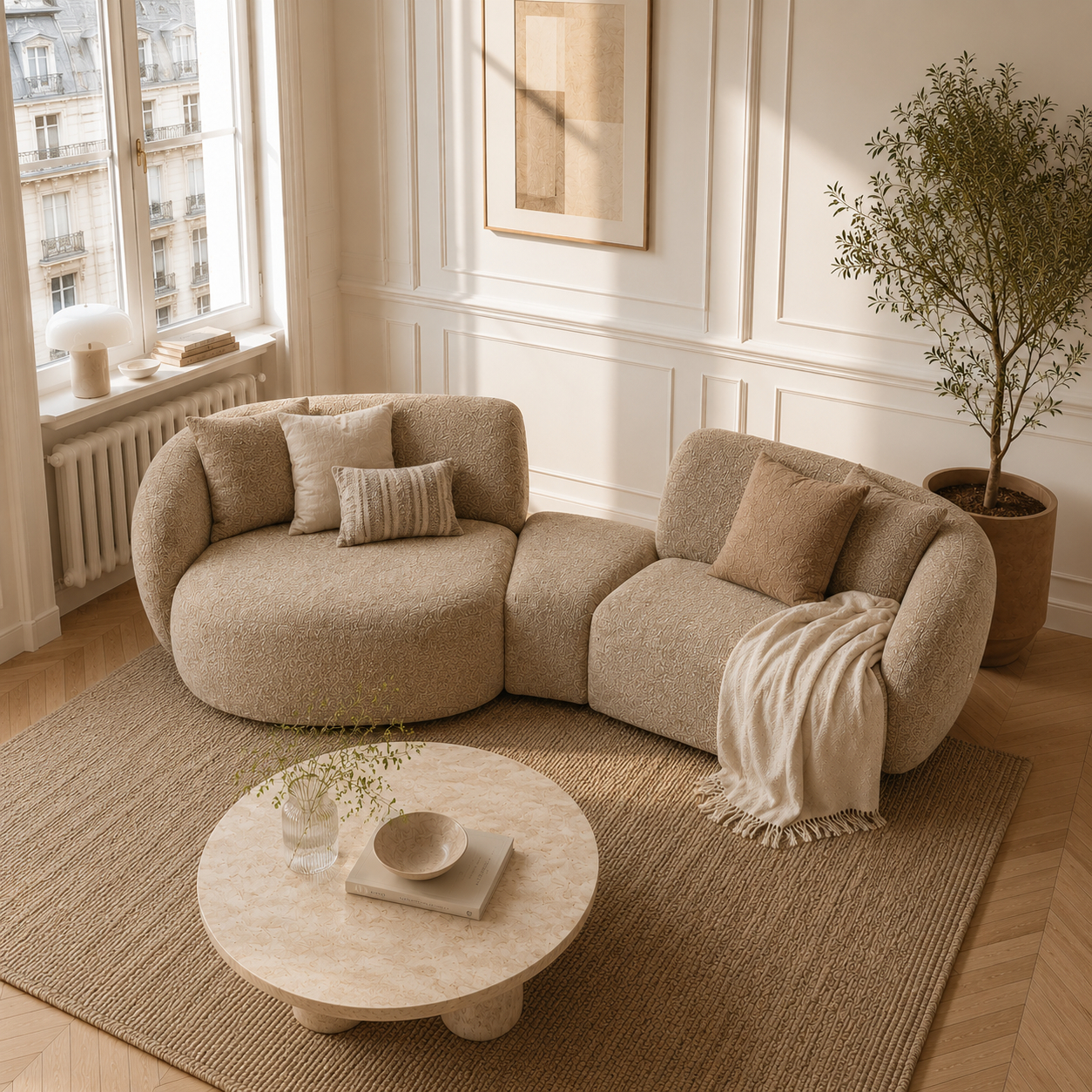
The key to styling a velvet sofa is to balance its richness rather than either doubling down on luxury (which tips into theatrical excess) or diluting it with overly plain surroundings (which makes the velvet look out of place). The most effective approach is: pair the velvet with natural, organic textures and materials — wood, linen, jute, rattan, stone — that ground the richness. Add metallic accents at a ratio of roughly one brass or gold element per table or shelf. Keep the wall behind the sofa relatively neutral (warm white, soft plaster, pale grey) so the velvet reads against a clear background. Use cushions in two or three textures, one of which should be a woven natural texture to contrast with the velvet. Add at least one plant — the combination of deep velvet and fresh green has an almost unbeatable visual richness.

Leave a comment
This site is protected by hCaptcha and the hCaptcha Privacy Policy and Terms of Service apply.