

Ask what the most durable furniture material is and you will get a different answer for every part of a sofa. The fabric is what you see, but the frame is what decides whether the sofa still feels solid in ten years. This guide focuses on the frame: solid wood vs plywood vs MDF vs particleboard vs metal, how each one fails, and which joints hold them together. Then we cover the other parts briefly (foam, suspension, fabric and legs) and finish with a checklist you can use in a showroom or on a product page.
What is the most durable furniture material for a sofa frame?
For an upholstered sofa, the short answer is kiln-dried solid wood, ideally combined with good-quality multi-layer plywood in the panels that do not carry the main load. Metal is extremely strong too, but it is mostly used for legs, bases and sofa-bed mechanisms rather than the whole frame. MDF and particleboard are the weakest options for anything that flexes or takes screws repeatedly.
The reason is simple physics. A sofa frame is not a bookcase: every time someone drops onto the seat, the joints twist slightly. Materials with long, continuous fibres (solid wood) or cross-laminated layers (plywood) resist that twisting. Materials made from compressed fibres or chips (MDF, particleboard) do not, and screws gradually loosen in them.
Solid wood vs plywood vs MDF vs metal: comparison table
| Material | Strength under load | Holds screws | Typical failure | Durability |
|---|---|---|---|---|
| Kiln-dried solid hardwood | very high | very well | rarely fails; poorly dried wood can warp | 15–25+ years |
| Solid softwood (pine, spruce) | good if dimensioned generously | well | dents, knots can crack in thin rails | 10–20 years |
| Multi-layer plywood (15–18 mm) | high, stable in all directions | well | edges can split if very thin | 10–20 years |
| MDF / HDF | medium, brittle under twisting | poorly after re-tightening | screws pull out, swells with moisture | 5–10 years in load-bearing parts |
| Particleboard (chipboard) | low | poorly | cracks at joints, crumbles at screw holes | 3–7 years |
| Steel | very high | bolted or welded | welds or thin tubes can crack; rust if uncoated | 20+ years for legs and bases |
The lifespans are typical ranges for normal household use, not guarantees. How the material is used matters as much as the material itself: a thick softwood rail with glued and screwed joints will outlast a thin hardwood rail held with staples.
Solid wood: the benchmark
Solid timber has long fibres running the length of each rail, which is why it copes so well with the repeated flexing of a seat. Two details separate a good solid-wood frame from an average one:
- Kiln drying. Wood that is dried to a low, stable moisture content before assembly does not shrink after delivery. Undried wood shrinks in a heated living room, joints open up, and the sofa starts to creak within a year or two.
- Cross-section. Rails of 25–40 mm thickness on the seat front and back are far stiffer than thin strips, whatever the species.
Hardwoods such as beech, oak or birch are the most rigid. Slow-grown northern timber is valued for its dense, even grain. Many Furni models list a frame in Scandinavian wood on their product pages; the PINOT, for example, has a Scandinavian wood frame with reinforced corners.
Plywood: underrated and very strong
Plywood is made from thin wood veneers glued with the grain of each layer at right angles to the next. That cross-lamination makes it strong in every direction and very resistant to splitting. In sofa construction it is ideal for side panels, armrest shapes, back panels and curved parts that would be hard to cut from solid wood.
What to look for: at least 15 mm thickness for structural parts, many thin layers rather than a few thick ones, and no hollow gaps visible on the edge. Good plywood combined with solid-wood rails is one of the most durable frame recipes you can buy.
MDF and particleboard: where they are fine and where they are not
MDF and particleboard are not bad materials as such. They are flat, cheap and perfect for wardrobes or the decorative back panel of a sofa. The problem appears when they carry load or hold screws that will be tightened again. Under repeated twisting, the compressed fibres around a screw crumble, the joint loosens and the frame starts to move. Moisture makes it worse: a spilt drink that reaches an unsealed edge can make MDF swell.
If a product page does not mention the frame material at all, assume it is not solid wood. Manufacturers who use good timber usually say so.
Metal: strongest for legs, bases and mechanisms
Powder-coated steel is almost indestructible for legs, sofa bases and sofa-bed mechanisms. Full metal frames exist mainly in outdoor and industrial-style furniture. For an indoor upholstered sofa, a wood frame with metal or solid-wood legs bolted into a reinforced plate is the best balance of strength, weight and comfort. More on choosing legs in our sofa leg height guide.
Joints: the hidden part of a durable frame
Even the best material fails if the joints are weak. In order of durability:
- Glued and dowelled or mortise-and-tenon joints, ideally with screws as well.
- Glued and screwed joints with corner blocks, small triangular pieces fixed inside each corner.
- Screws only, acceptable in solid wood or plywood.
- Staples only, quick and cheap, and the most likely to loosen.
Reinforced corners matter most because that is where the seat and back meet and where most of the twisting happens.
Beyond the frame: foam, suspension, fabric and legs
Foam. High-resilience (HR) foam with a density of around 35 kg/m³ keeps its shape for years, while low-density foam under 25 kg/m³ flattens quickly. Density is not the same as firmness. The ASTI corner sofa, for instance, uses HR 35/38 foam: 35 kg/m³ density and 38 kPa hardness. Read more in our sofa foam density guide and compare fillings in foam vs feather vs fibre.
Suspension. Sinuous steel springs or tightly tensioned elastic webbing spread the load under the cushion. Slack or sparse webbing is a common reason seats sag early.
Fabric. Tightly woven synthetic and blended fabrics usually outlast loose natural weaves. A published abrasion rating (Martindale) is a useful indicator; for a family sofa, look for a high figure and a tight weave. Our guide to durable upholstery for families covers fabric choice in detail.
Legs. Solid wood or metal, bolted into the frame through a metal plate, with a centre support on sofas wider than about 200 cm.
How to recognise a durable sofa in the shop
- Lift one front corner about 10–15 cm. If the opposite leg lifts almost at the same time, the frame is rigid. If it twists and stays on the floor, the frame flexes.
- Feel the weight. Solid wood and dense foam make a sofa heavier than its particleboard equivalent.
- Press the front rail through the fabric. It should feel solid, with no creaking.
- Read the spec sheet: frame material, foam type and density, fabric certification.
- Check the warranty and what it covers.
- Unzip a cushion if possible and look at the foam: a uniform block with a fibre wrap is a good sign.
For the wider picture of what separates a premium sofa from a budget one, see what makes a quality sofa, and for realistic lifespans, how long a sofa should last.
Furni sofas: what the product pages say
Furni makes its sofas in its own factory in Wielkopolska, Poland. Seats use HR35 foam, all fabrics are OEKO-TEX certified, and every sofa has a 2-year warranty.
ASTI Corner Sofa 3-Seater — from €1,599
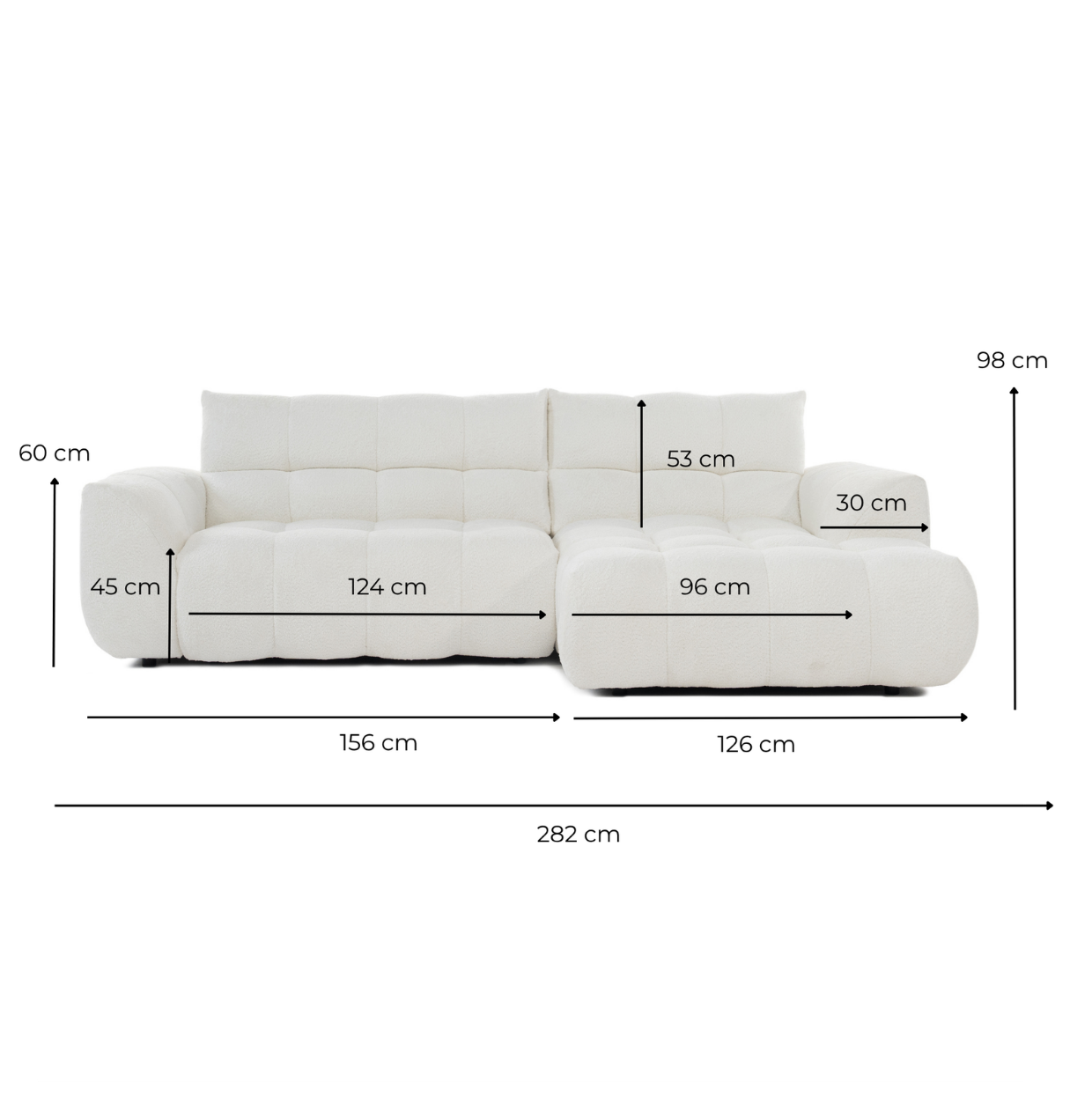
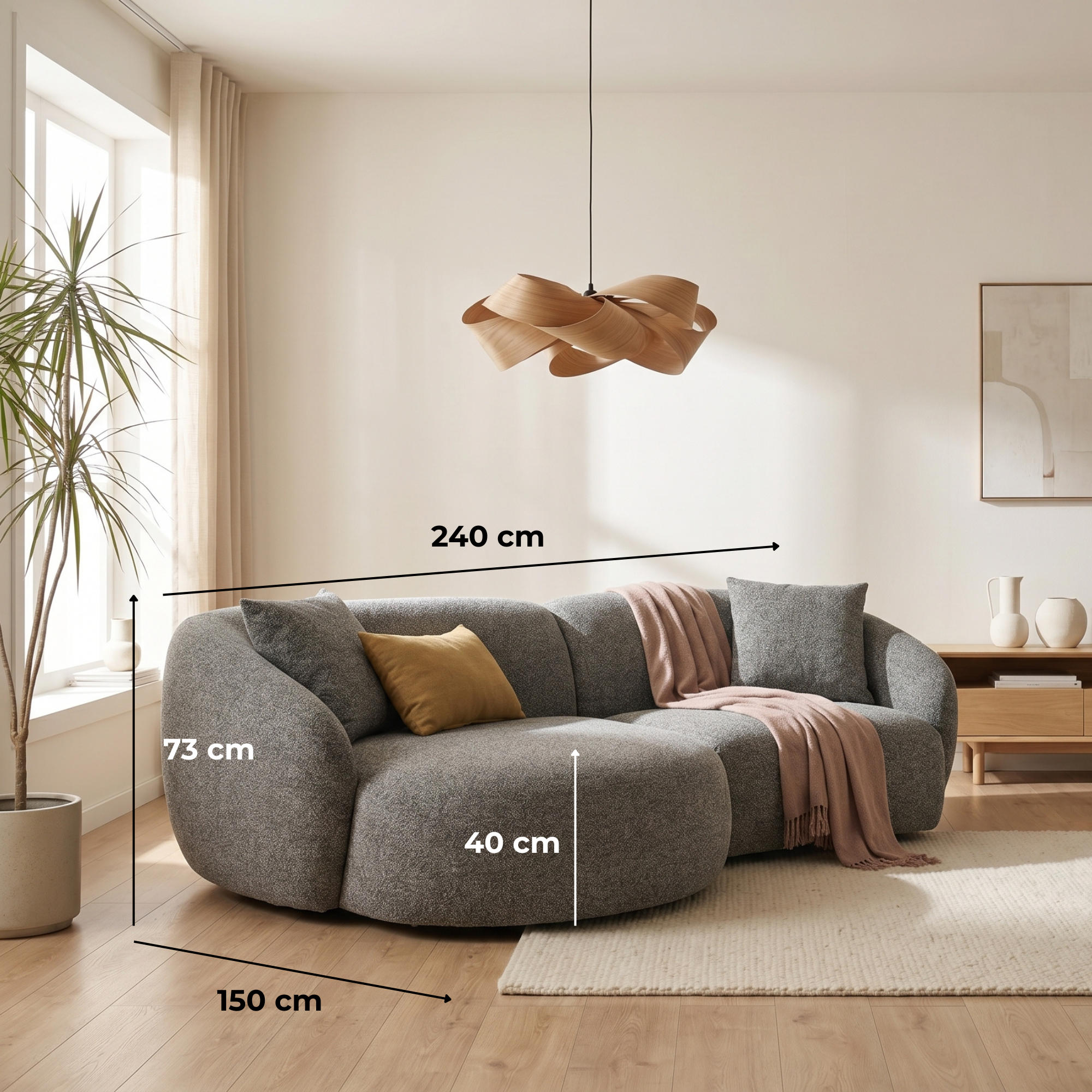
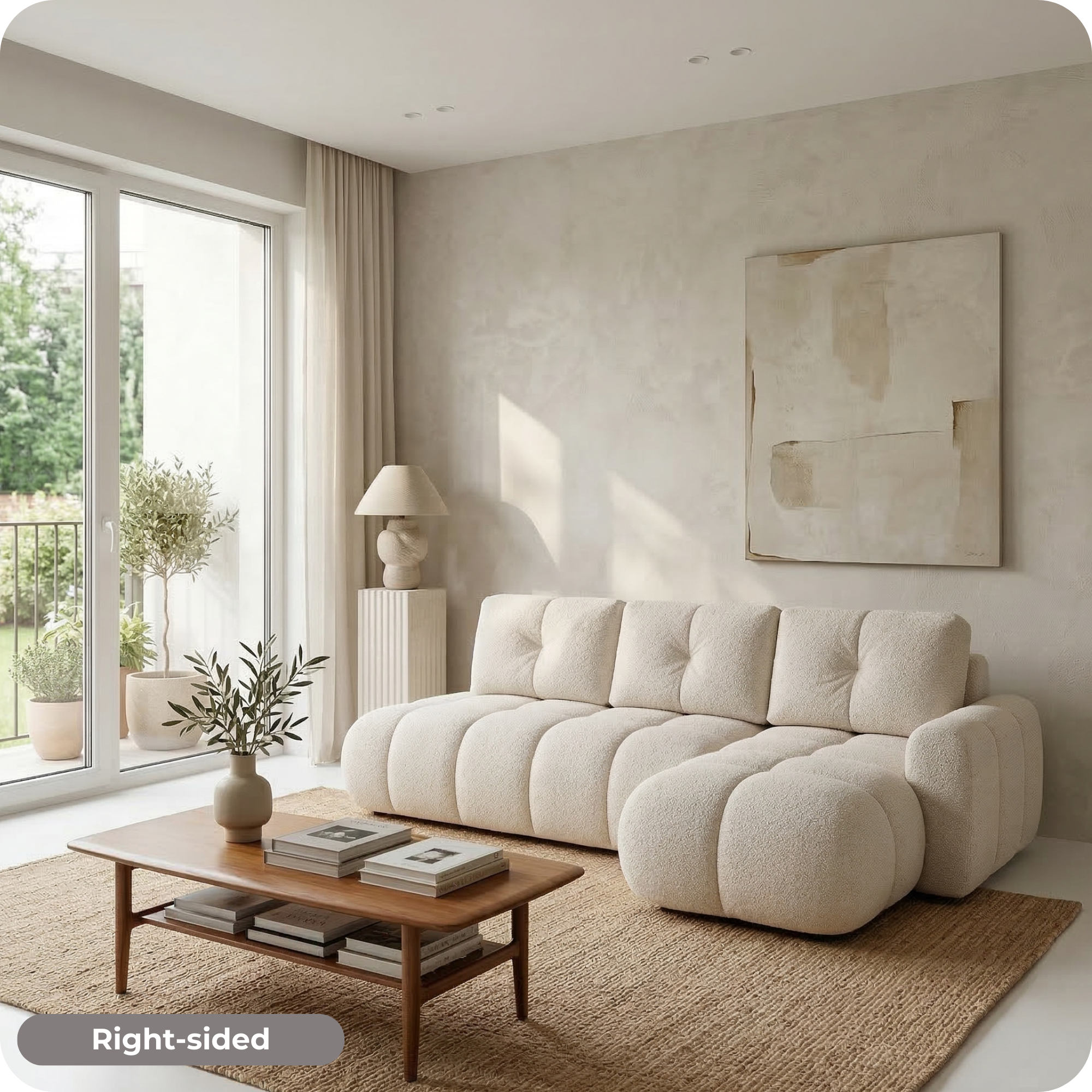
Solid Scandinavian wood frame and HR 35/38 foam; 282 cm wide, 155 cm deep.
PINOT Sofa 3-Seater, High Armrests — from €1,690
Scandinavian wood frame with reinforced corners; 262 × 95 cm.
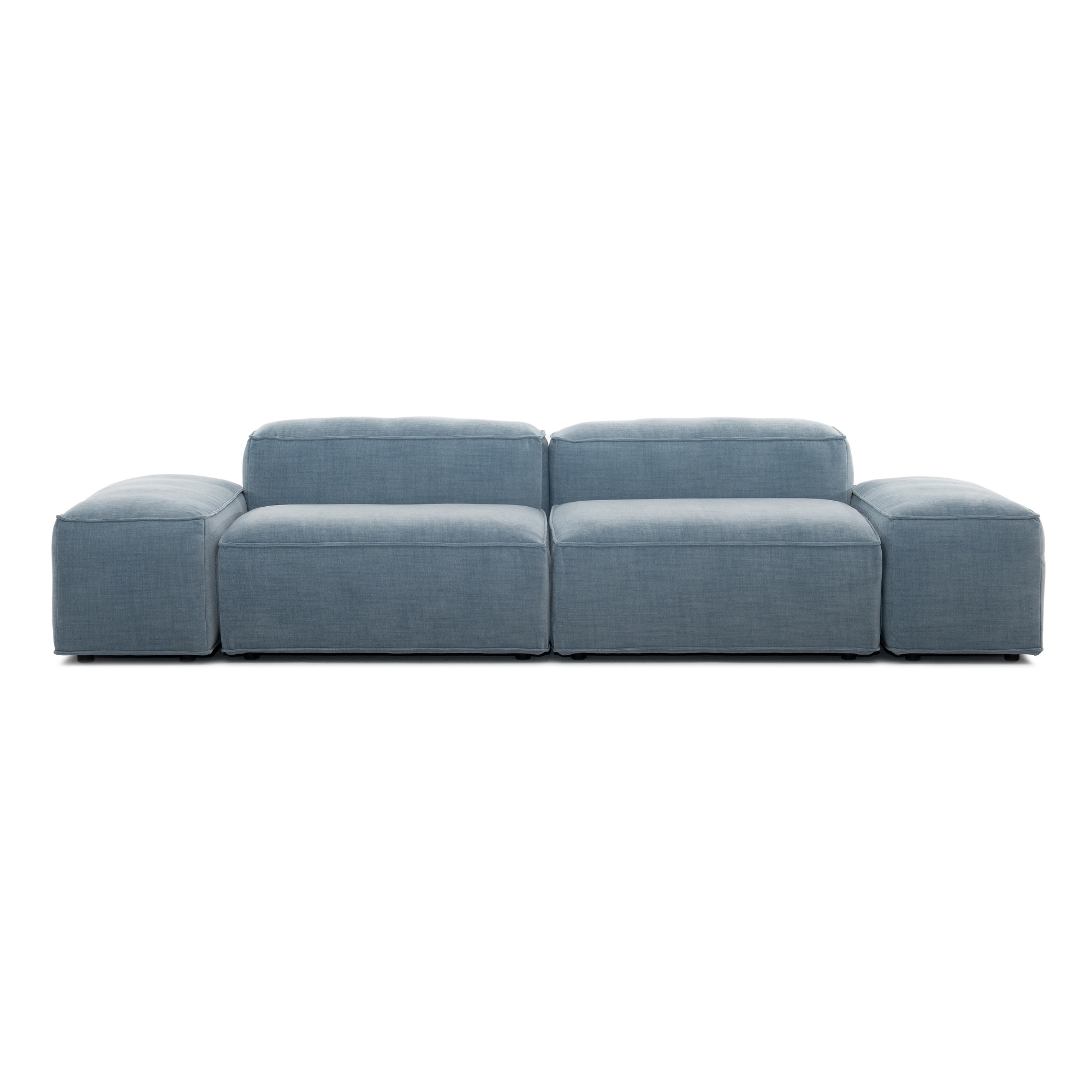
BAROLO Sofa 3-Seater — from €1,320
Scandinavian wood frame and HR foam; slim, wide or headrest armrest.
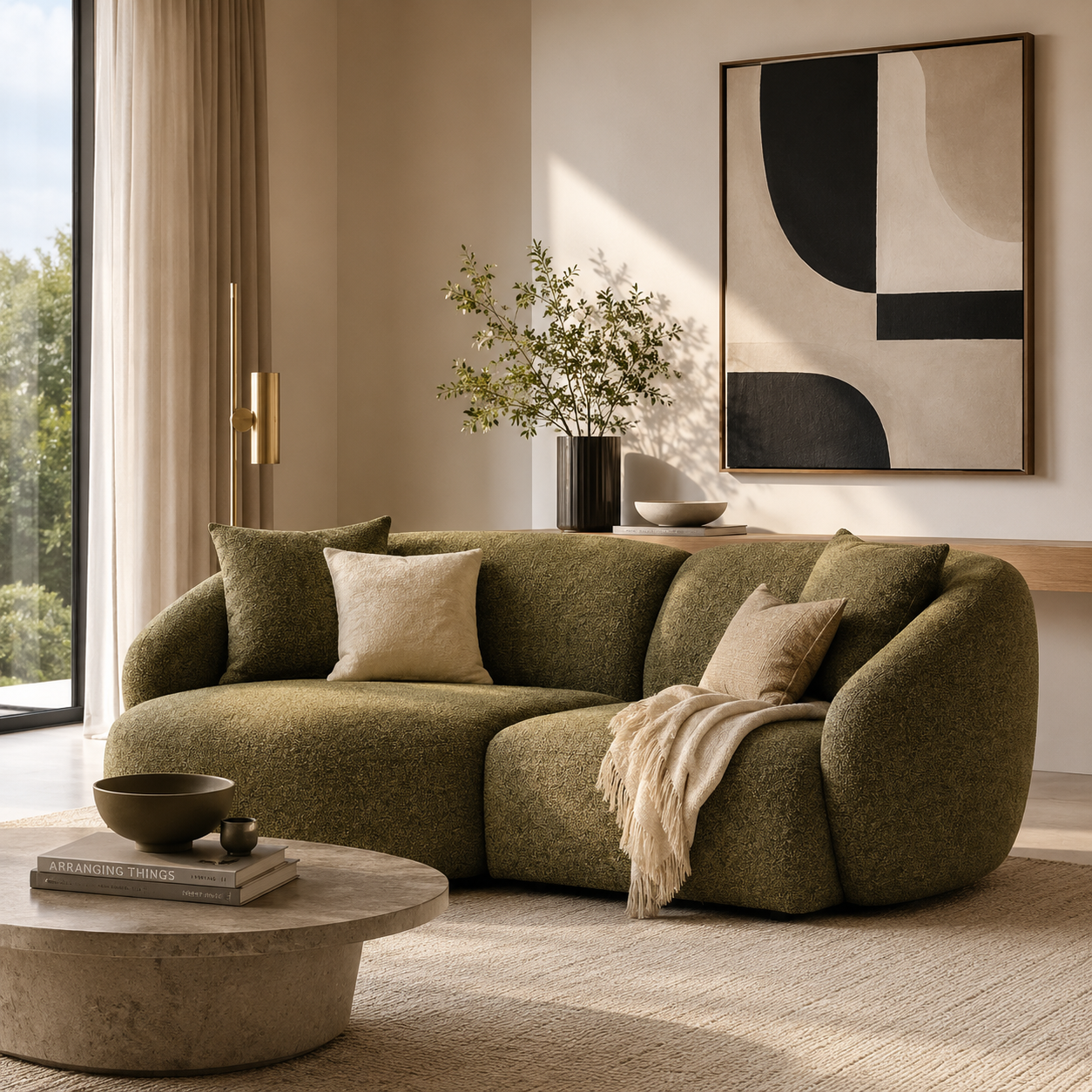
COMO Sofa 3-Seater — from €990
Scandinavian wood frame, HR foam and a dense bouclé upholstery.
Sofas
Fixed-shape sofas and sofa beds.
Modular Sofas
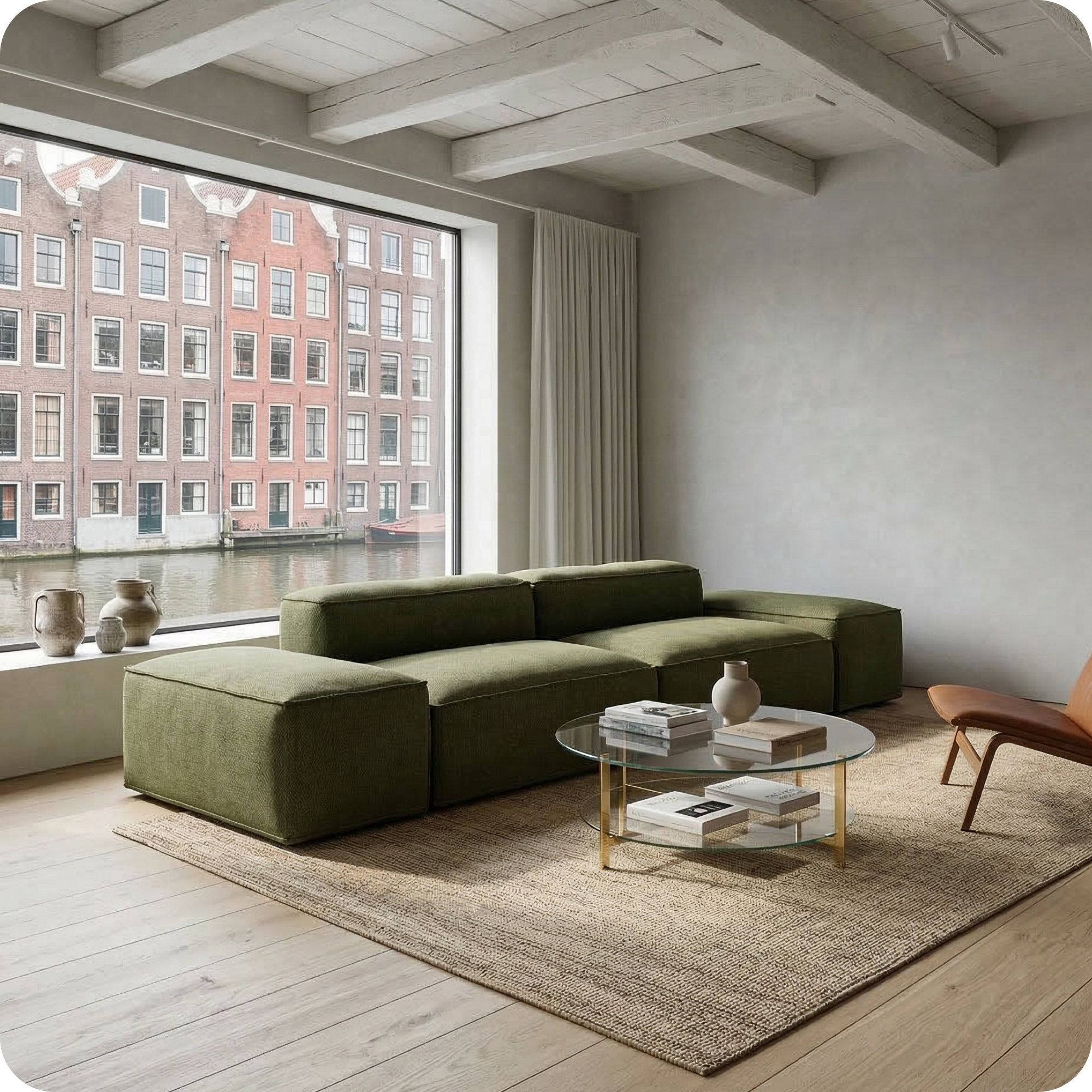
MERLOT and MALBEC modular sofas and corner sofas.
Checklist: choosing a sofa that lasts
- Frame in kiln-dried solid wood, ideally with plywood for panels.
- Reinforced corners and glued, dowelled or screwed joints, not staples only.
- HR foam with a stated density of around 35 kg/m³.
- Springs or firm webbing under the seat.
- Tightly woven, certified fabric.
- Legs bolted into the frame, with a centre support on long sofas.
- A clear spec sheet and a written warranty.
FAQ
What is the most durable furniture material?
For sofa and chair frames, kiln-dried solid wood, especially hardwood, combined with quality plywood. For legs and bases, powder-coated steel. MDF and particleboard are the least durable in load-bearing parts.
Is plywood better than solid wood for a sofa frame?
Not better, but different. Solid wood is best for rails that take the main load; plywood is excellent for panels and curved parts because it does not split. The most durable frames use both.
Is an MDF sofa frame bad?
MDF is fine for non-structural panels. In load-bearing parts, screws tend to loosen over time and the material can swell if it gets wet.
What are the most durable fabrics for furniture?
Tightly woven synthetics and blends with a high abrasion rating usually last longest. Loose weaves and delicate natural fibres wear faster.
How long does a solid wood sofa frame last?
With good joints, typically 15 to 25 years or more. In practice the foam and fabric usually wear out before the frame.
Can I return a Furni sofa?
Yes, within 30 days if it is unused and in its original packaging. Return costs are paid by the customer: you can arrange the return yourself, or Furni can collect it for 120–250 EUR, agreed individually.
Furni: manufacturer from Poland · 2-year warranty · OEKO-TEX certified fabrics · HR35 foam · 30-day returns (return costs paid by the customer) · 4.8 on Trustpilot