



Coastal Living Room Ideas: How to Create a Beach House Style Interior
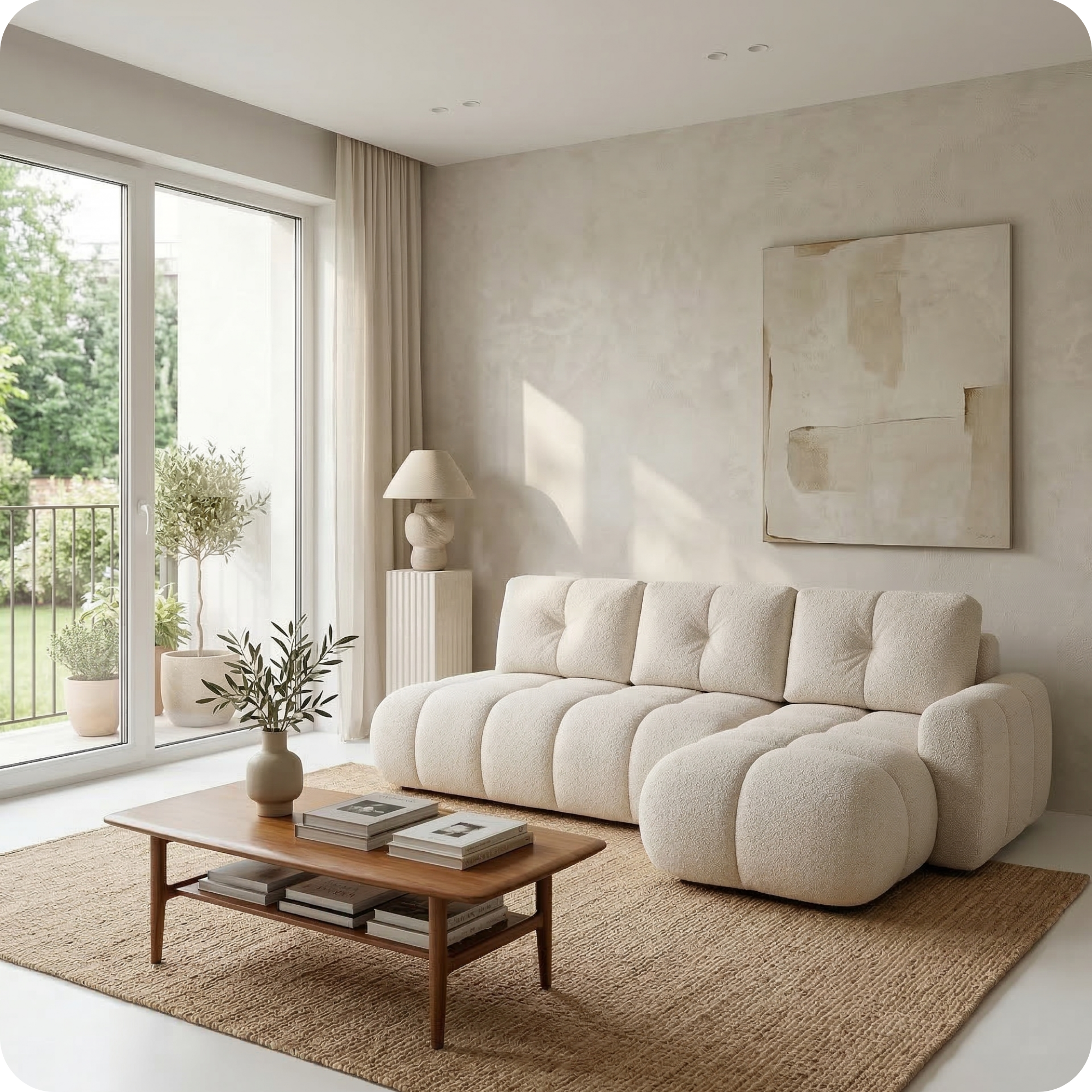
Coastal interior design draws its palette, materials and mood from the landscape of the sea: the bleached whites and soft blues of a summer sky reflected in shallow water, the warm natural tones of driftwood and sea-worn timber, the textures of woven rope, smooth pebbles and coarse linen. A coastal living room is a room that feels light, airy and unhurried -- a room designed for relaxation and the pleasures of an uncomplicated, generous way of living. It does not require you to live by the sea; a coastal living room brings the essence of the coast into an urban flat, a suburban home or any space where you want to create a sense of calm and openness.
The Coastal Colour Palette
The classic coastal palette is built from whites, off-whites, soft blues, warm sandy neutrals and weathered greens. Crisp white walls reflect light and create the airy brightness that defines the style. Soft blues -- from the palest aqua through powder blue to a deeper, dustier slate blue -- reference sea and sky. Sandy beiges and warm naturals ground the scheme and prevent it from feeling cold. Driftwood grey and weathered wood tones add warmth and an organic quality. The palette deliberately avoids anything too saturated or dark; coastal rooms should feel like a room full of reflected natural light, even when the windows are limited. Accents of a bolder colour -- a deep coral, a stronger navy, a terracotta -- can add punch without breaking the coastal mood.
Natural Materials in a Coastal Room
Materials are central to the coastal aesthetic. Sea-worn natural materials dominate: bleached or whitewashed timber, rattan and wicker (for chairs, baskets and lampshades), jute and sisal rugs, linen and cotton fabrics, natural rope and woven accessories. The overall effect is of materials that have been gently aged by sun, salt and wind into something beautiful. In a modern coastal living room this translates to: wooden floors (painted white or light-stained), a sisal or jute rug, linen or cotton upholstery, rattan or wicker side tables and accessories, and ceramic and glass decorative objects in natural tones.

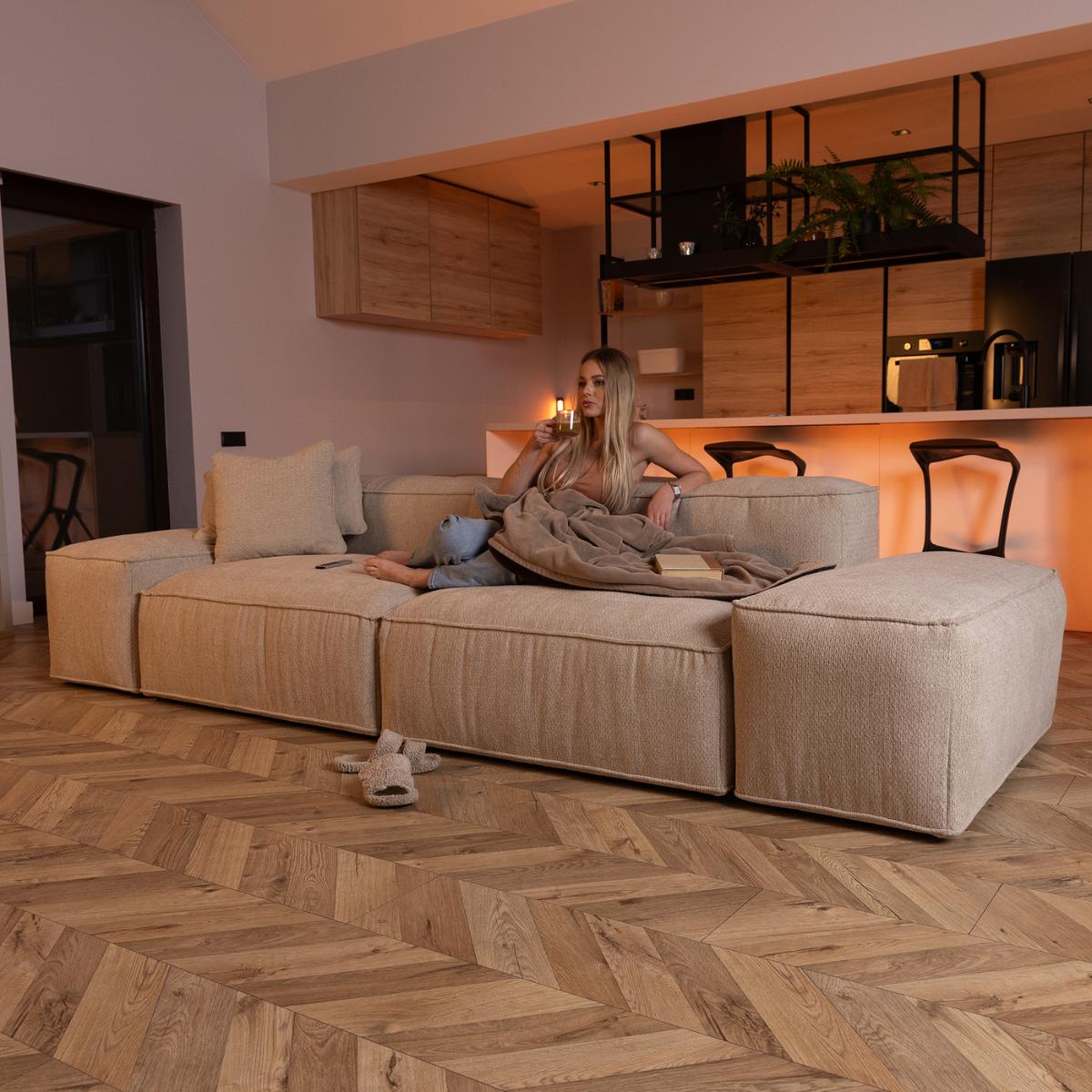
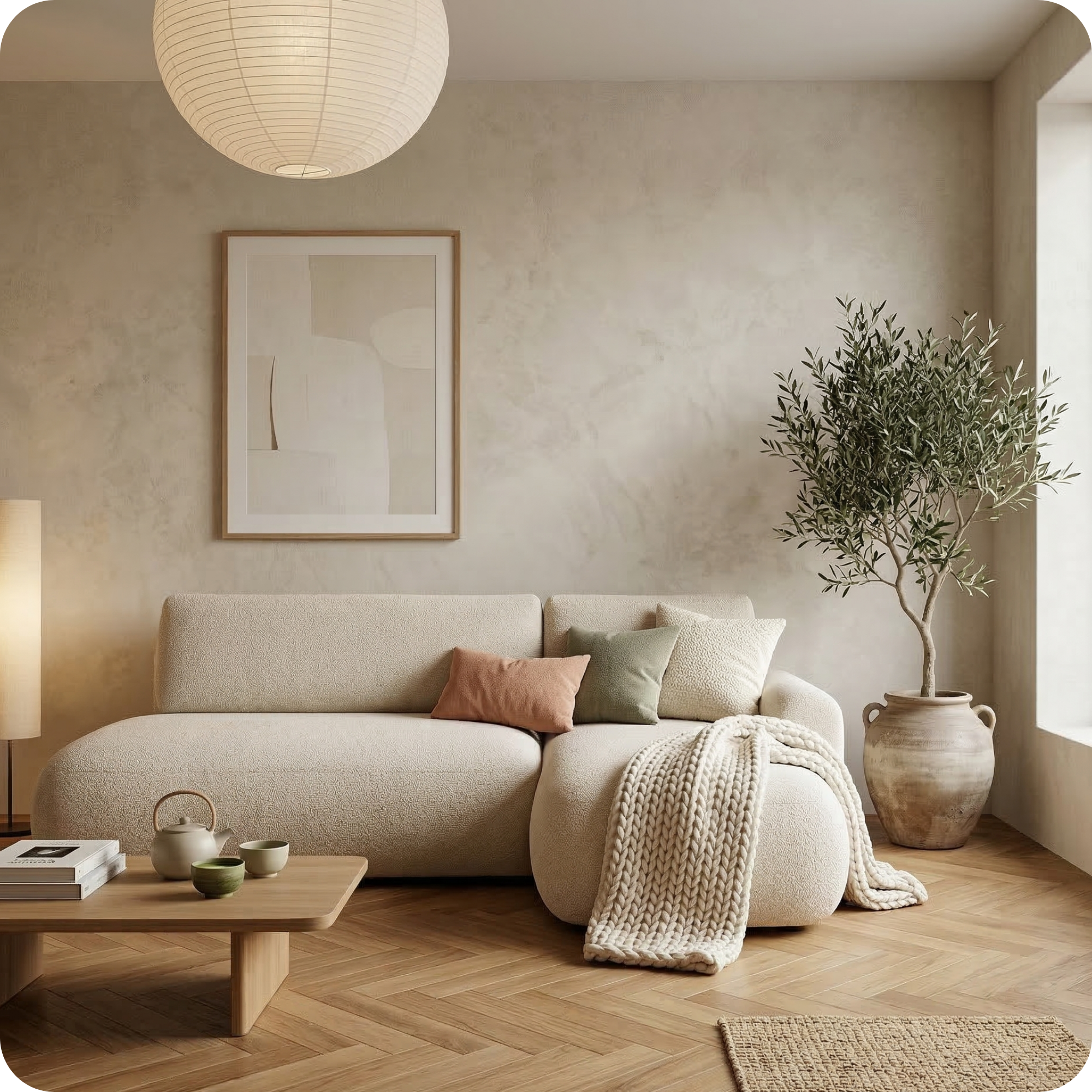
Lugano in Sand — from EUR 1.090
The Lugano in Sand is an ideal coastal sofa: its warm, natural tone references bleached timber and sea-worn canvas, and its clean, unfussy silhouette suits the relaxed, uncluttered aesthetic of coastal interiors.

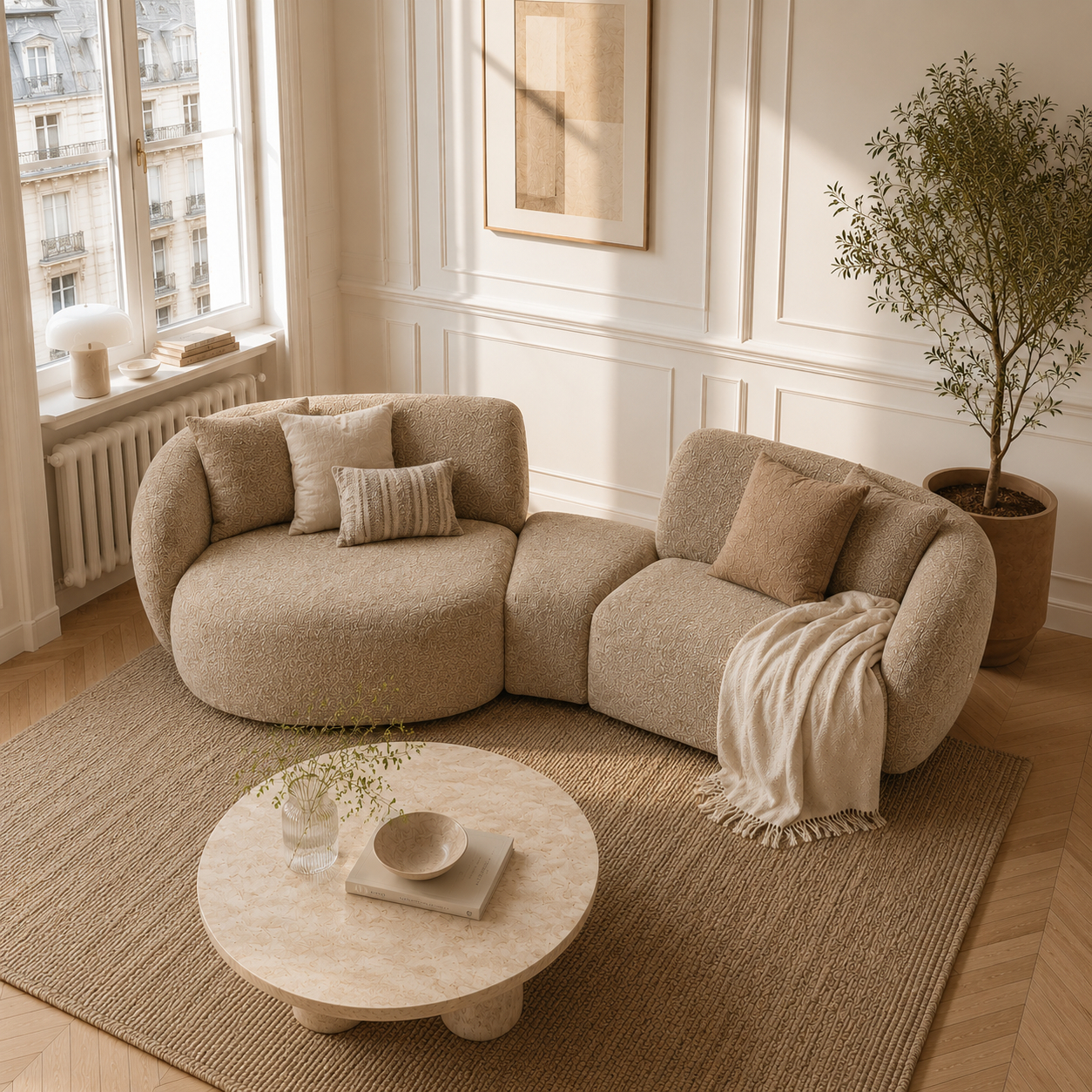
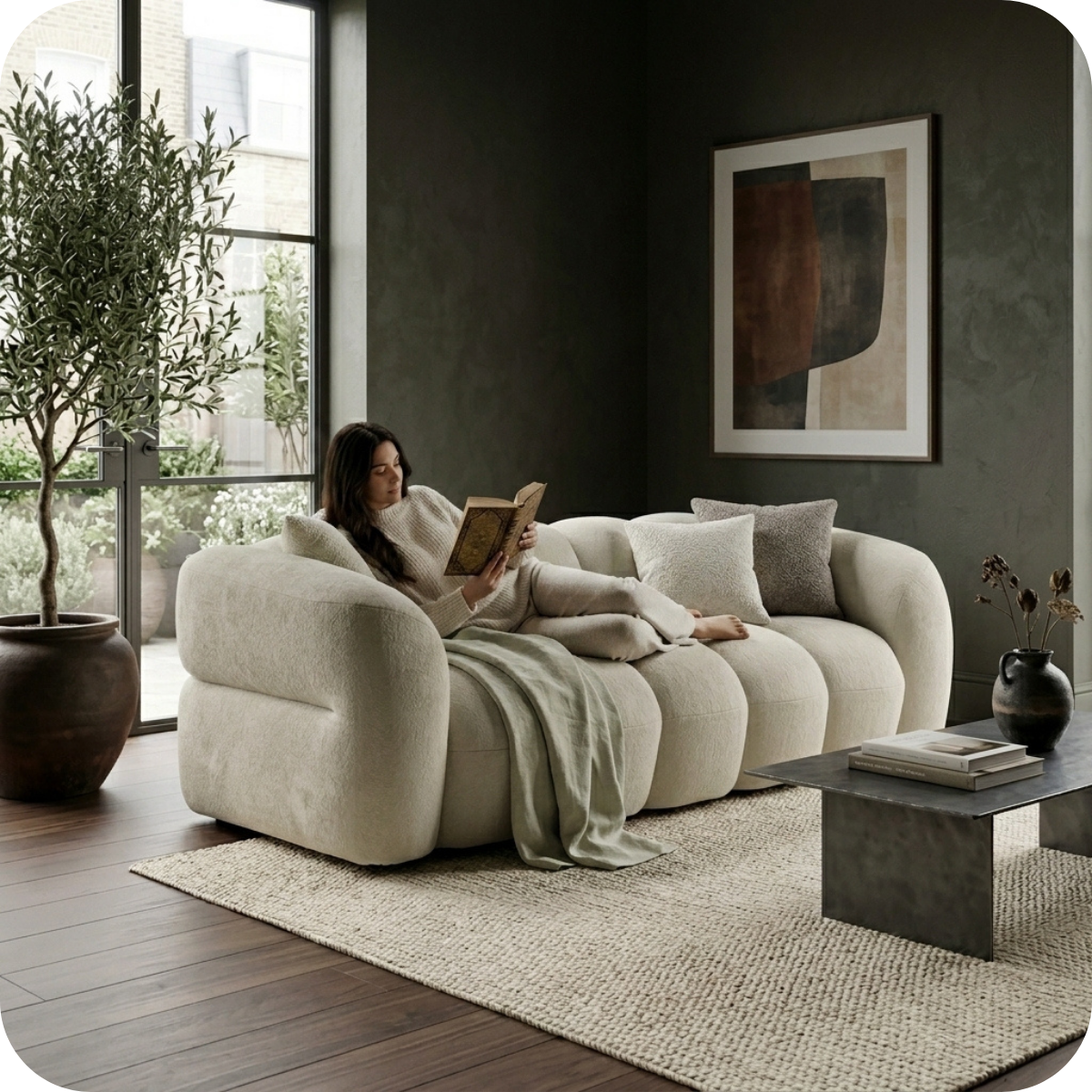
Lugano in Light Grey — from EUR 1.090
In light grey, the Lugano evokes the cool, calming tones of sea mist and sea-washed pebbles. Paired with white walls and natural timber flooring, it anchors a quintessentially coastal living room.
Coastal Furniture Choices
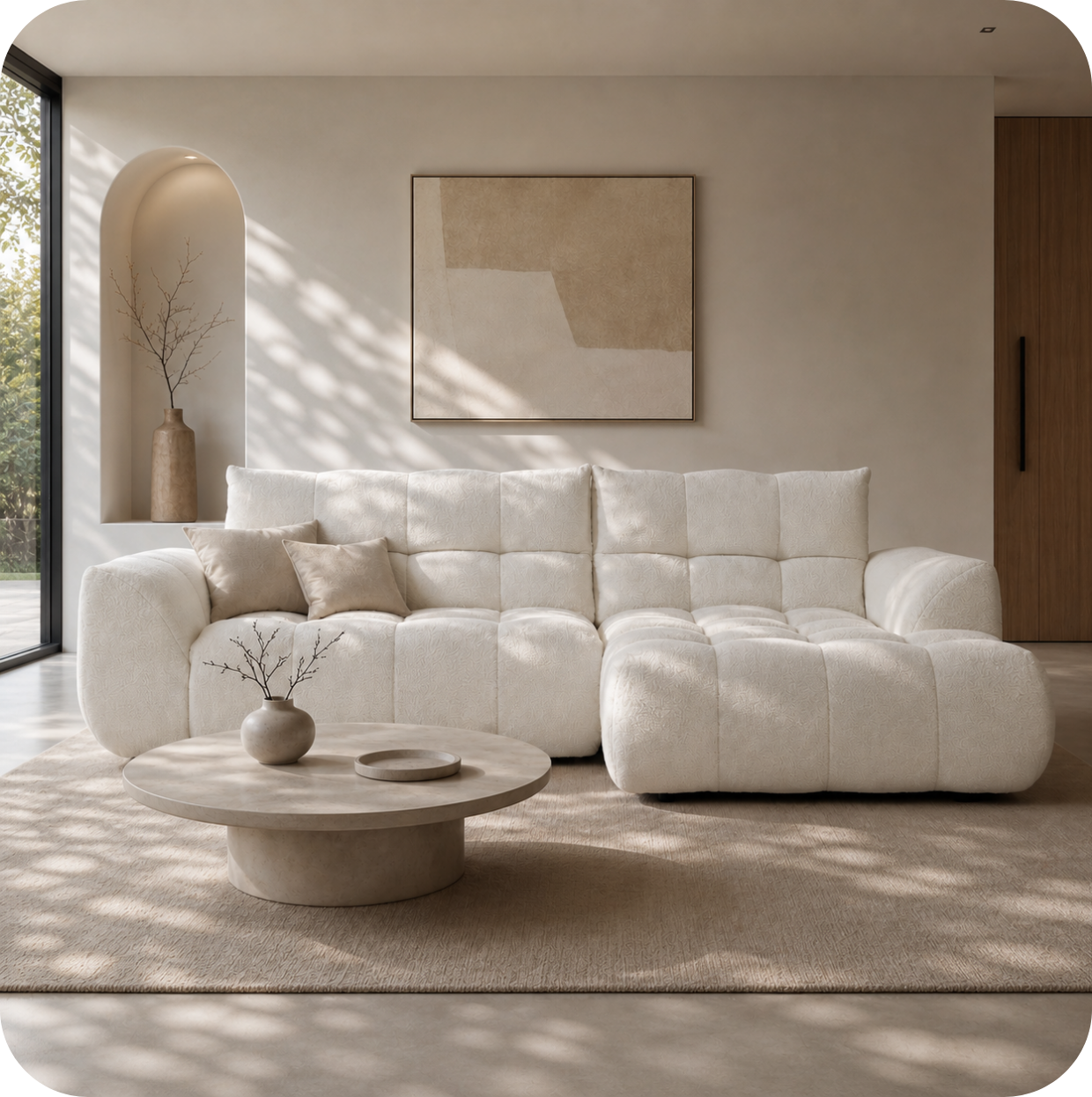
Coastal furniture has a relaxed, slightly worn quality -- it should feel as though it has been well-used and is completely comfortable rather than pristine and formal. Sofas tend to be generous and low-profile with light-coloured upholstery; occasional chairs in rattan or wicker work naturally in the style; coffee tables in bleached or whitewashed timber are ideal. Avoid: dark, heavy furniture; ornate or formal pieces; anything that reads as overly formal or structured. The overall effect should be of a room that was furnished for comfort and has accumulated its pieces gradually over time.
Lighting a Coastal Room
Natural light is the most important light source in a coastal room -- maximise it wherever possible by keeping window treatments simple (light linen curtains that barely filter the light, or shutters rather than heavy curtains). Pendant lights in rattan or woven natural materials work beautifully in coastal rooms. Table lamps with linen or paper shades on natural timber bases maintain the material palette. Candles and lanterns in the evening reinforce the relaxed, unhurried mood of the style.
Coastal Accessories
Accessories in a coastal room reference the sea and natural coast without descending into overly literal decorating. Glass and ceramic vases in white, sand and soft blue; woven baskets and storage; driftwood pieces as decorative objects; indoor plants in simple terracotta or white pots; framed prints of natural coastal landscapes or simple botanical subjects. Avoid overly kitsch or literal nautical references like anchors, ropes and fishing nets as decorative items unless they are genuinely beautiful pieces.

Efterlad en kommentar
Denne side er beskyttet af hCaptcha, og hCaptchas Politik om beskyttelse af persondata og Servicevilkår er gældende.