



Sustainable Sofa Guide: What to Look for in an Eco-Friendly Sofa
Sustainability in furniture is a growing consumer priority and a genuinely complex topic. Unlike food or clothing, where certification systems are relatively mature, the furniture industry has less standardised sustainability labelling, more complex supply chains, and a wide range of what "eco-friendly" actually means in practice. This guide cuts through the marketing language to identify what actually makes a sofa more or less environmentally responsible -- from frame materials and foam to fabric and logistics.
The Most Important Sustainability Factor: Longevity
The single most sustainable choice in a sofa is buying one that lasts. The environmental impact of manufacturing a sofa is fixed at the point of purchase; the longer the sofa lasts, the lower the per-year environmental cost. A sofa that lasts 15 years has half the per-year impact of an identical sofa that lasts 7 years. This means that the most ecologically sound buying decision is often also the most economically sound one: buy quality once. The indicators of longevity are frame construction (solid hardwood or high-quality engineered wood is more durable than softwood or particle board), foam density (higher-density, higher-resilience foam lasts longer and maintains its shape better), fabric quality (higher rub count fabrics last longer), and the availability of replaceable components (particularly seat cushions, which receive the most wear).
Frame Materials
The most sustainably sourced frame materials are solid hardwood from certified sustainable forestry (FSC or equivalent certification confirms that the wood comes from managed forests where replanting equals or exceeds harvesting). Rubberwood -- the wood from rubber trees that have finished their latex-producing life -- is a particularly good choice: it is a by-product that would otherwise be wasted, and it is genuinely strong and durable. Kiln-dried hardwood minimises warping and extends the life of the frame. Steel frames are also durable and fully recyclable at end of life, though their production is more energy-intensive than wood.
Foam and Cushion Filling
Conventional polyurethane foam is the standard for sofa seat cushions and is not derived from a renewable source. More sustainable alternatives include: CertiPUR certified foam (which restricts certain harmful chemicals in the manufacturing process but is still petrochemical-based), plant-based foam (typically soy-based, with a proportion of oil replaced by renewable sources -- not fully natural but meaningfully better), and natural fillings such as natural latex (derived from rubber trees), wool, and feather/down (by-products of food production). Fully natural fillings are available in premium sofas and represent the highest sustainability benchmark for cushion filling, though they are also more expensive and require slightly different maintenance.

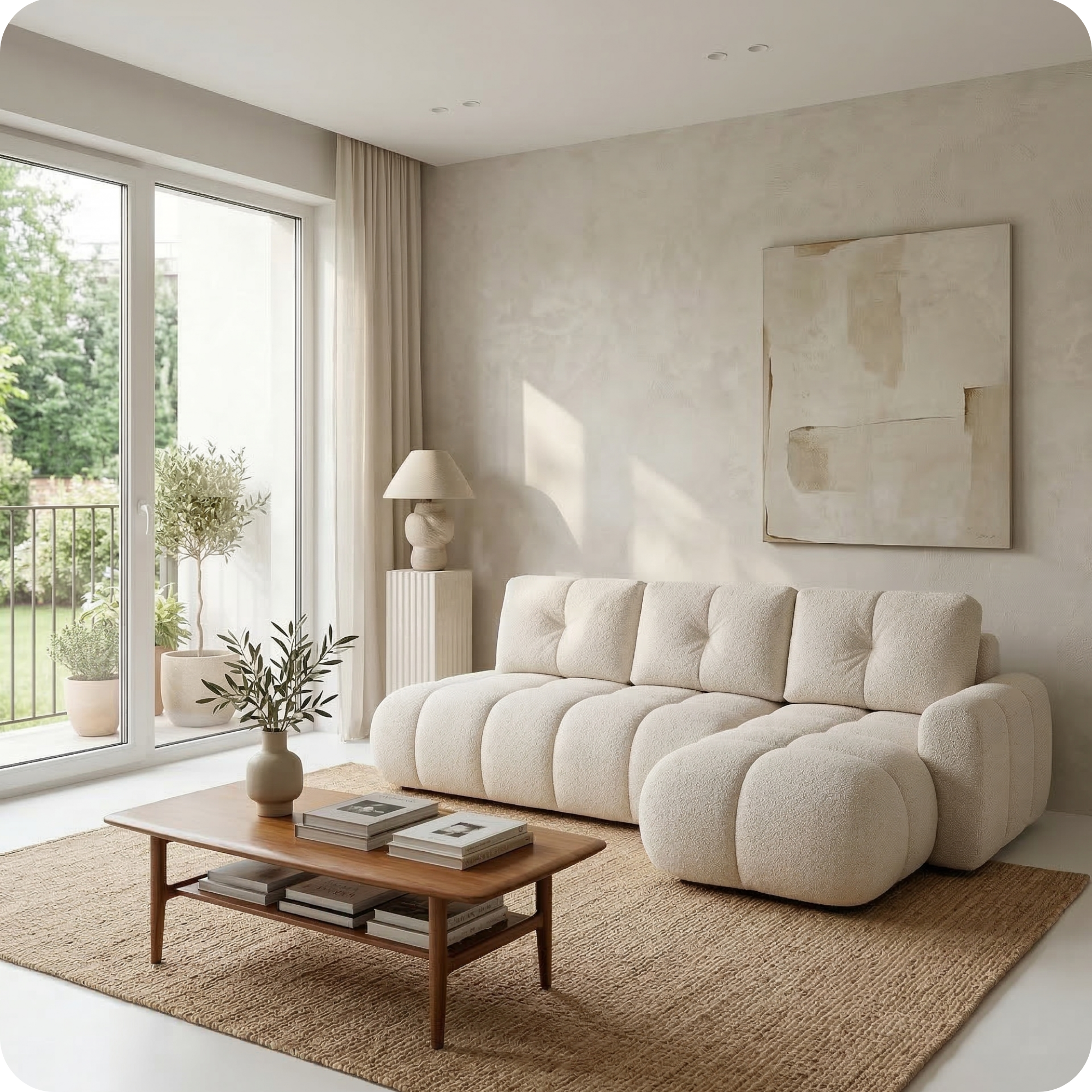
Lugano Collection — from EUR 1.190
The Lugano is built for longevity: a robust frame structure and high-quality foam cushions that retain their shape and comfort over years of daily use. The durability of a sofa is its most important sustainability credential.

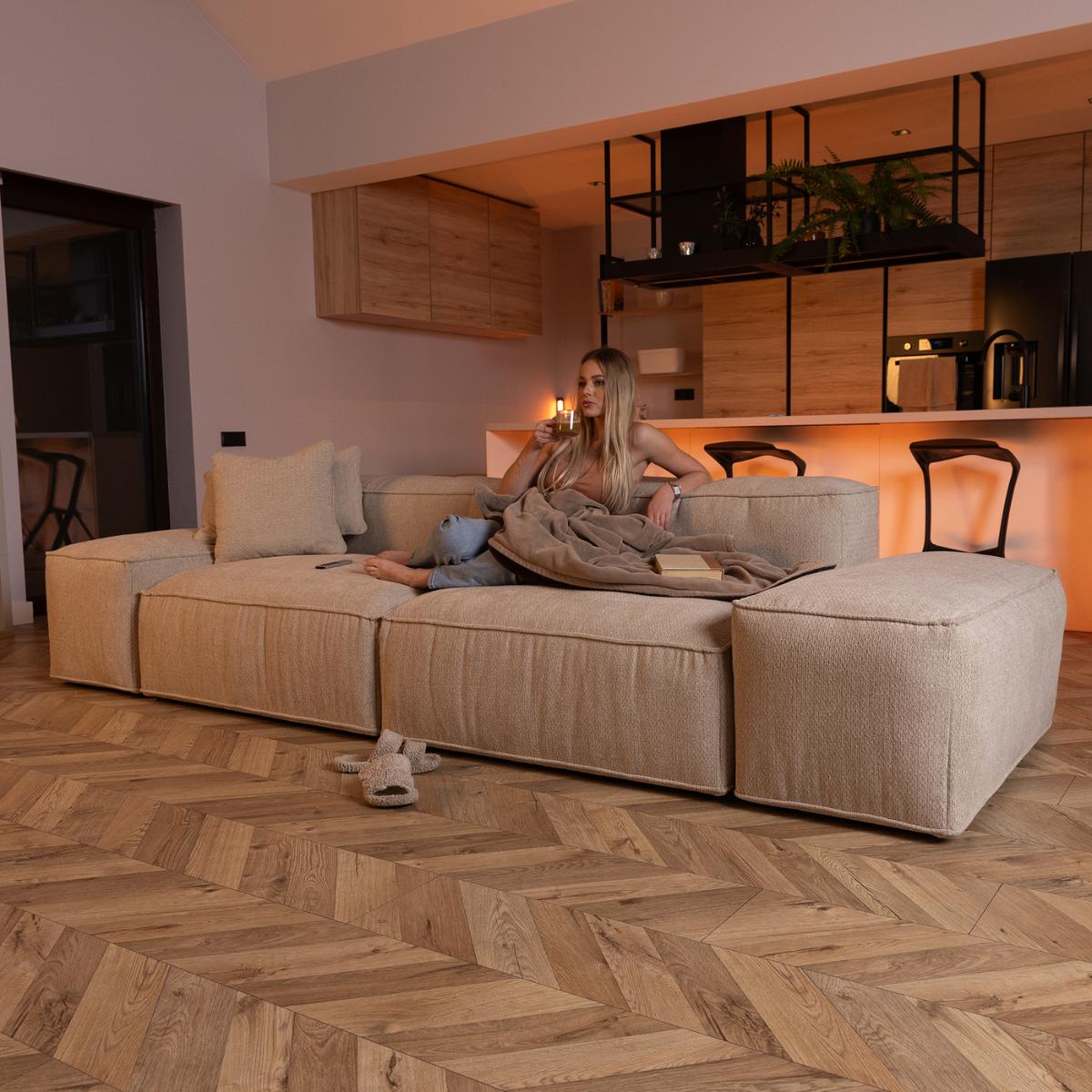
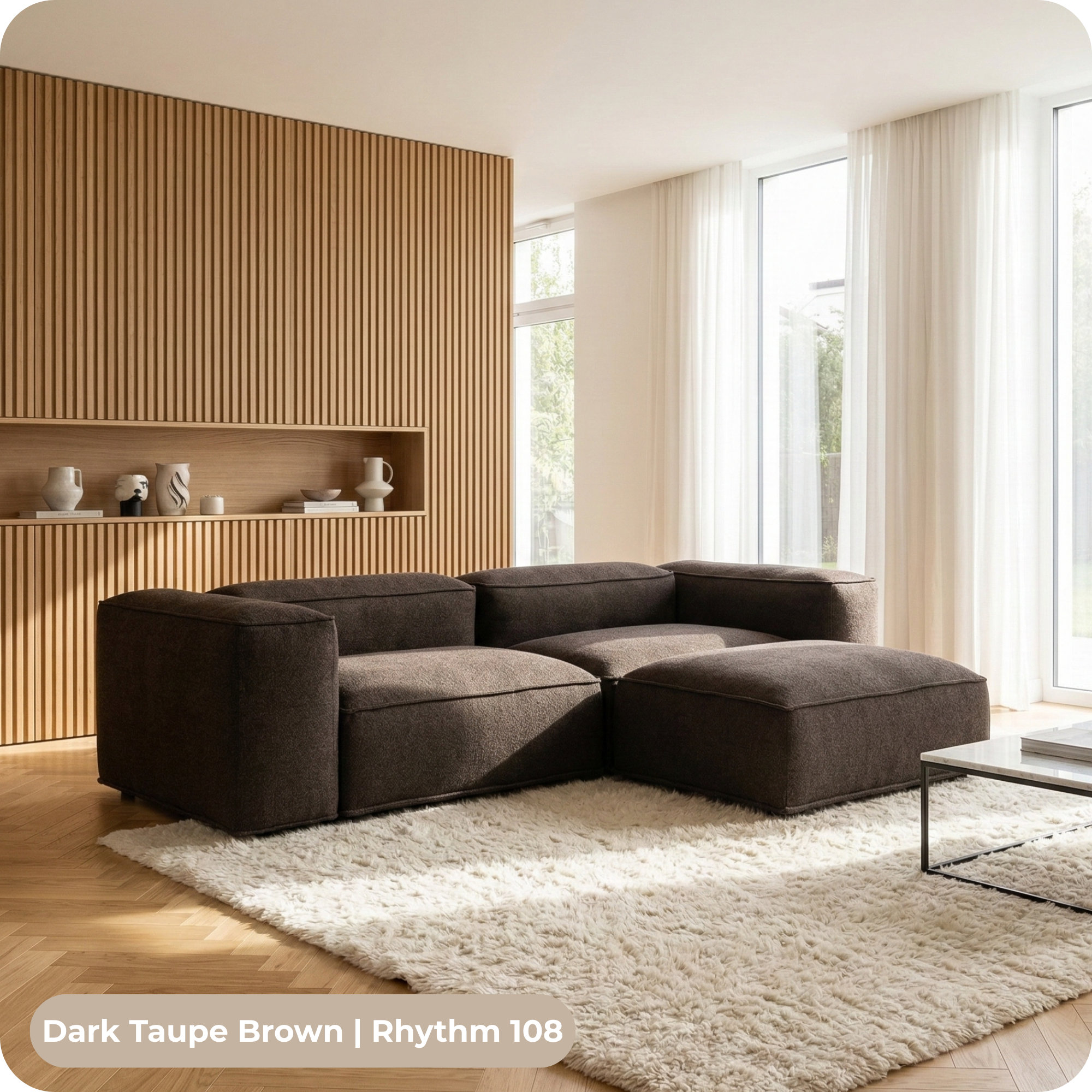
Merlot Modular Sofa — from EUR 1.490
The Merlot's modular design is inherently more sustainable than a fixed sofa: individual sections can be replaced if damaged without replacing the entire sofa, and the configuration can be adapted if you move home rather than replacing the sofa for a different size.
Fabric and Upholstery Sustainability
Natural fabrics -- linen, cotton, wool, natural leather -- are derived from renewable sources and are biodegradable at end of life, which makes them the preferable choice from a raw material perspective. However, the production processes for natural fabrics (particularly cotton) can be resource-intensive and chemically intensive (pesticides, dyes). Organic cotton and GOTS (Global Organic Textile Standard) certified fabric addresses these process concerns but is more expensive. Recycled polyester fabrics -- made from recycled plastic bottles or textile waste -- offer a middle ground: a synthetic material that reduces virgin plastic use and represents a real improvement over virgin polyester. Linen is one of the most naturally sustainable choices: it requires minimal water and pesticides compared to cotton and degrades naturally at end of life.
Modular Sofas and Sustainability
Modular sofas have a structural sustainability advantage: they are designed to be reconfigured and partially replaced. If a single section is damaged or worn, you can replace that section without replacing the whole sofa. If you move to a larger home, you can add sections; if you move to a smaller home, you can sell the sections you no longer need. This adaptability extends the functional life of the sofa and reduces waste significantly compared to fixed sofas that become obsolete if your room changes.
What to Avoid
The furniture categories with the worst sustainability credentials: very cheap sofas with particle-board frames, thin fabric, and low-density foam -- these typically last 3-5 years before requiring replacement, making their per-year environmental cost extremely high. Sofas with bonded leather (compressed leather scraps -- peels and cracks within a few years). Fast furniture: sofas that are priced and produced at very low cost typically involve shortcuts across all the sustainability dimensions discussed above. The phrase "fast furniture" describes the same dynamic as "fast fashion" -- high throughput, low durability, high environmental cost per year of use.


Efterlad en kommentar
Denne side er beskyttet af hCaptcha, og hCaptchas Politik om beskyttelse af persondata og Servicevilkår er gældende.