




What Makes a Quality Sofa: The Luxury Sofa Buying Guide
When you are spending a significant amount of money on a sofa -- and a quality sofa is one of the larger household investments most people make -- it pays to understand what you are paying for. The difference in price between a budget sofa and a premium sofa is not arbitrary. It reflects real differences in construction, materials, cushioning and upholstery that directly affect how comfortable the sofa is, how well it holds its shape over time, and how it looks and performs after years of use. This guide explains what separates a quality sofa from a cheap one, and what to look for when shopping at the premium end of the market.
The Frame: The Foundation of Sofa Quality
The frame is the structural skeleton of a sofa and the most important single factor in its long-term durability. The best frames are made from kiln-dried hardwood -- typically beech, birch or oak. Kiln-drying removes moisture from the wood, which prevents warping, cracking and the structural weakening that can occur as wood dries out after manufacture. The joints in a quality frame are mortise-and-tenon or double-dowelled and glued, which creates a rigid, stable connection between components. Corner blocks -- triangular pieces of wood screwed and glued into the corners of the frame -- further reinforce the structure and prevent the frame from racking under load. A sofa with a good hardwood frame should last 15-20 years or more without structural problems. By contrast, budget sofas often use softwood, particle board or MDF, which are significantly less durable and prone to weakening over time.
Suspension: Springs vs Webbing
The suspension system beneath the seat cushions is what gives a sofa its bounce and support, and it degrades faster than any other component if poorly made. The gold standard in sofa suspension is eight-way hand-tied coil springs: individual coil springs tied by hand in eight directions, creating a support surface that distributes weight evenly and returns consistently to its original shape after use. This type of suspension is expensive to produce and time-consuming to install, which is why it is found almost exclusively in high-end sofas. A common alternative in quality sofas is sinuous (S-shaped) steel springs, which provide good support at a lower cost. Budget sofas typically use webbing -- strips of interwoven elastic or woven fabric stretched across the frame. Webbing suspension is acceptable in new sofas but degrades significantly faster than spring suspension, often sagging noticeably within 3-5 years of regular use.
Cushion Filling: The Comfort Factor
The filling inside the seat and back cushions determines both the immediate comfort of the sofa and how well it maintains its shape over time. The best seat cushion filling is a combination of high-density foam core (the structural foundation that provides firm, even support) wrapped in a layer of softer material -- typically down and feather, polyester fibre, or a foam-and-fibre combination. High-density foam is rated by its density (kg per cubic metre) and its firmness (ILD rating): quality sofa seat foam typically has a density of at least 32 kg/m3 and an ILD of 25-35 for a comfortable, supportive seat that holds its shape. Back cushions in quality sofas are typically filled with a looser combination that allows them to be plumped and adjusted: feather and down, or a down-wrap fibre combination, are the most luxurious options.

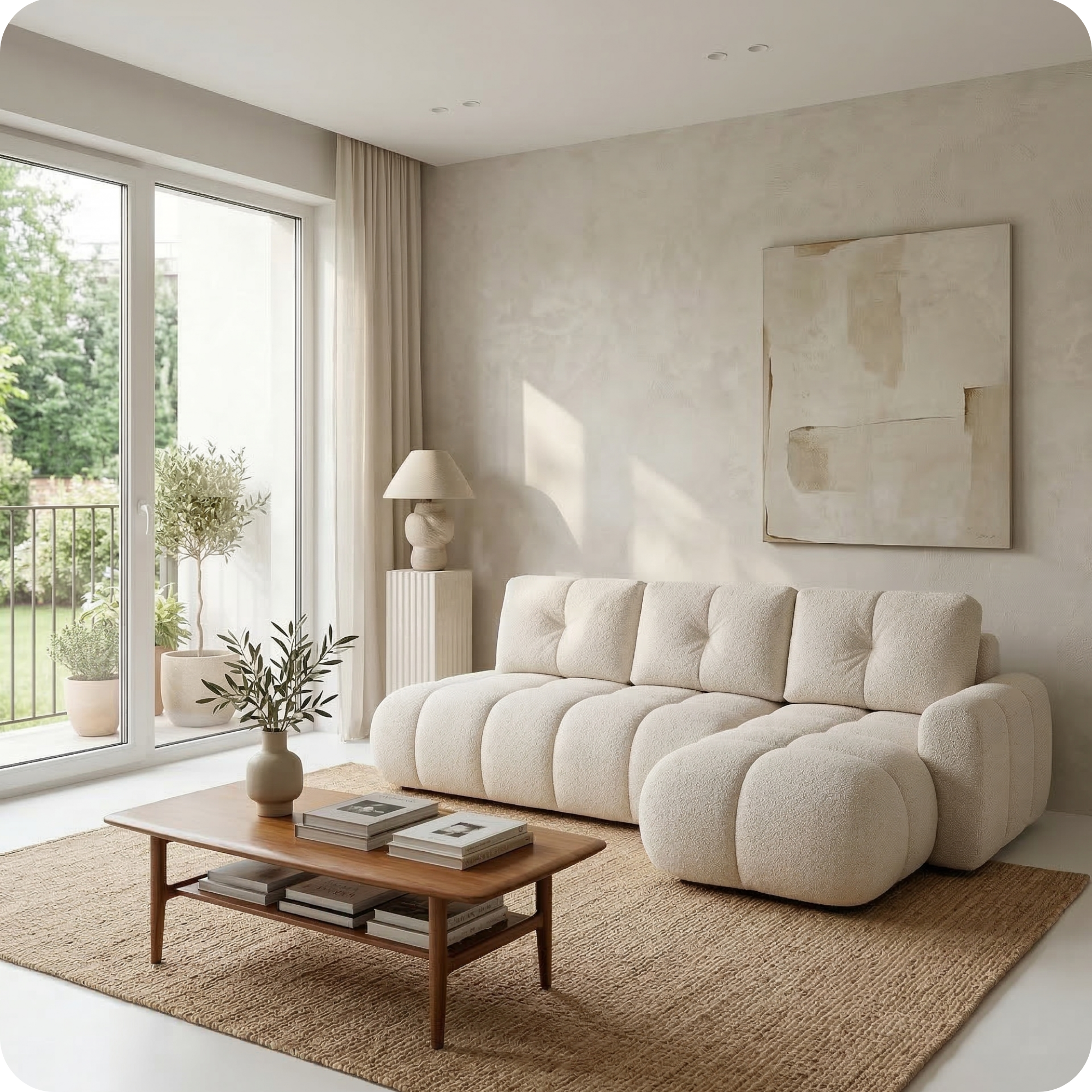
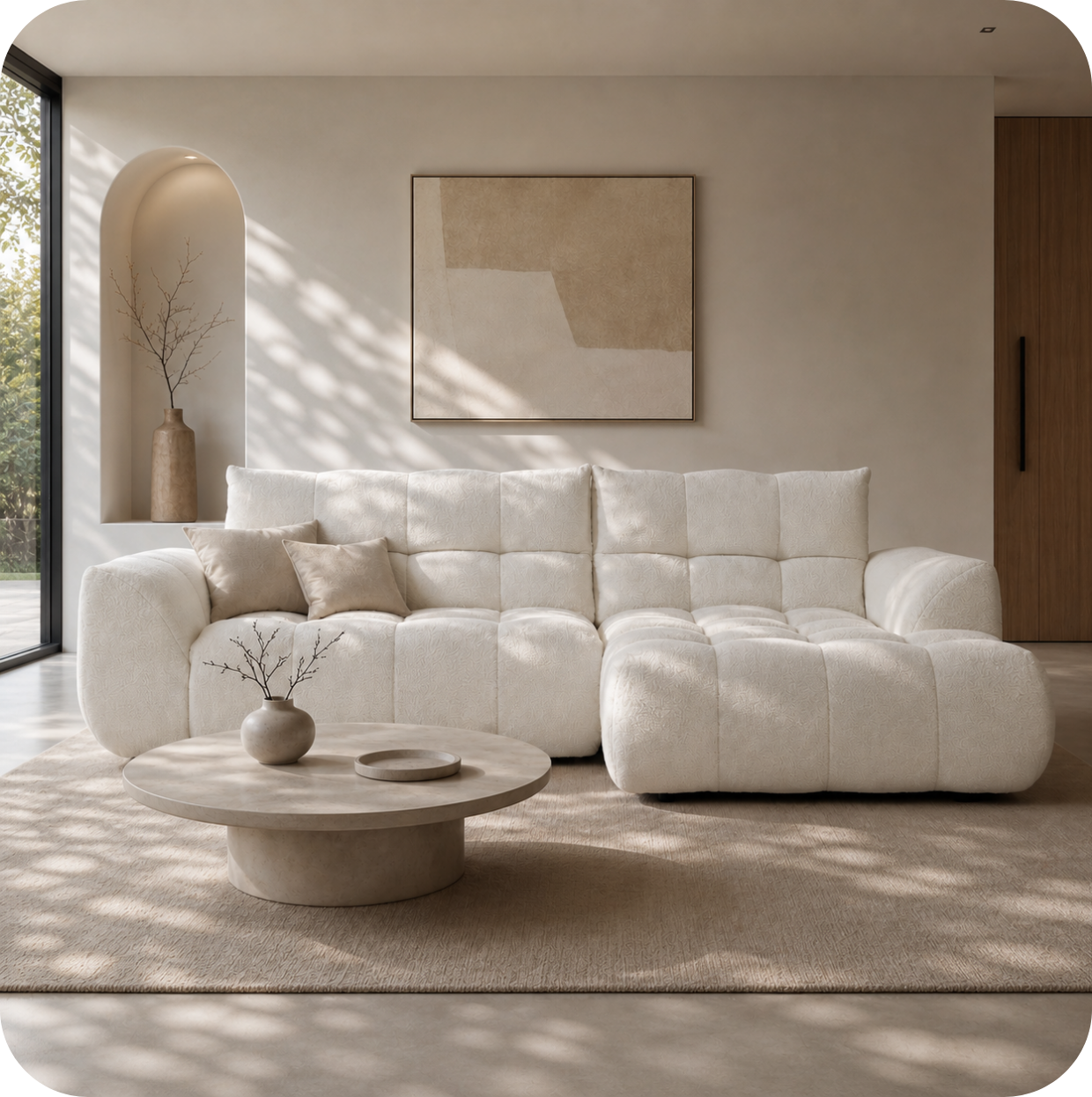
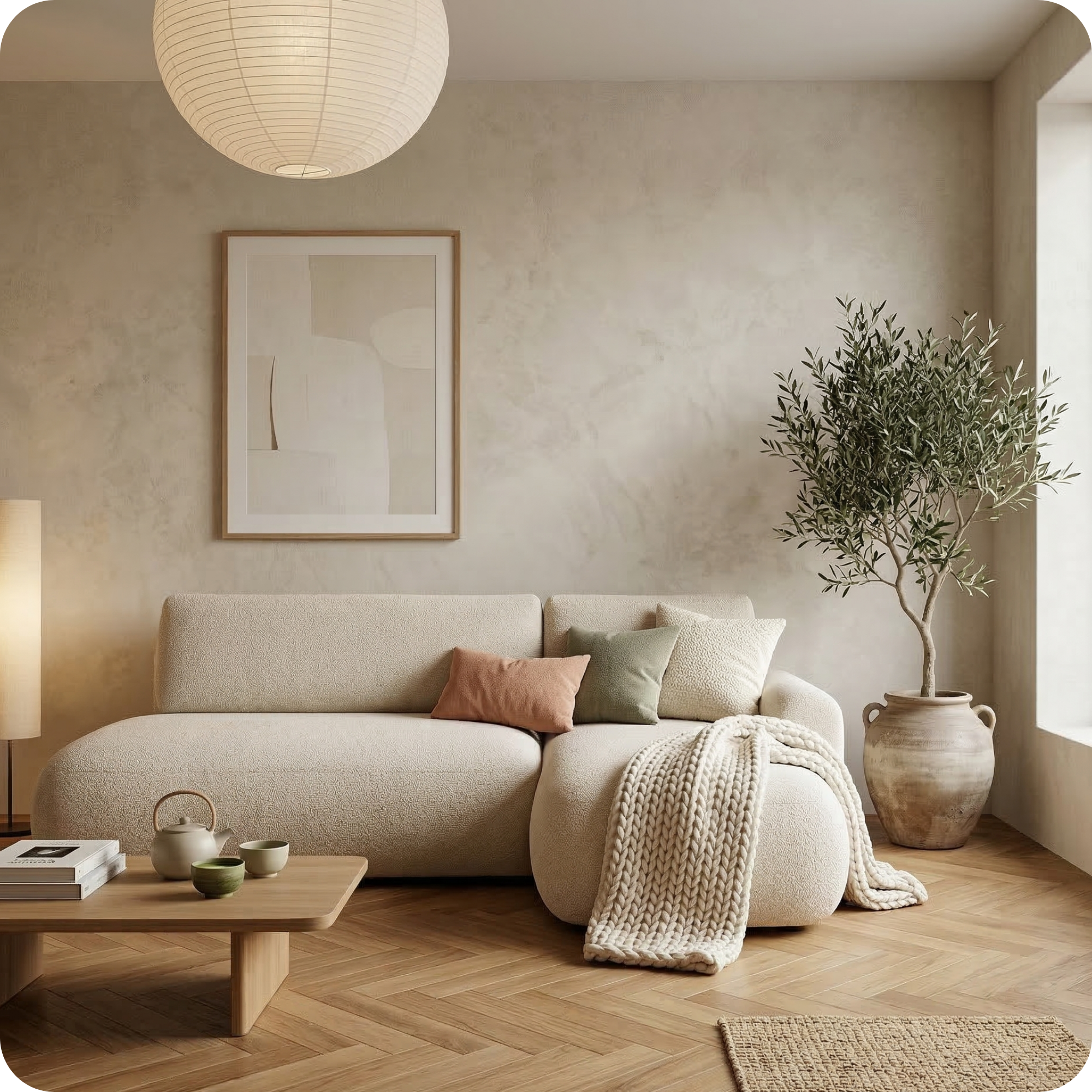
Asti Corner Sofa — from EUR 1.990
The Asti is built to premium standards with a hardwood-reinforced frame, high-density foam seat cushions and structured back cushioning. The architectural silhouette and precision upholstery reflect the construction quality beneath the surface.

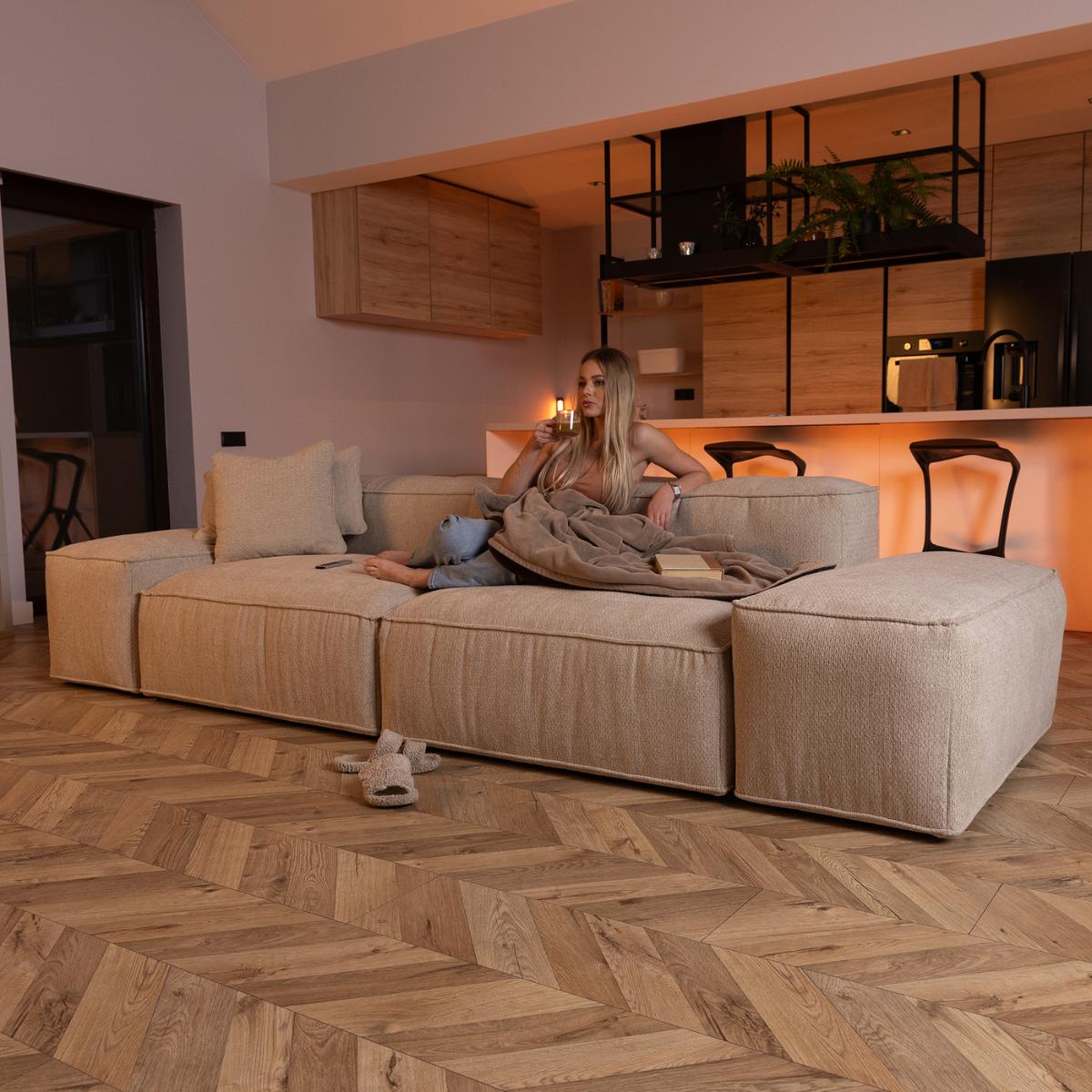
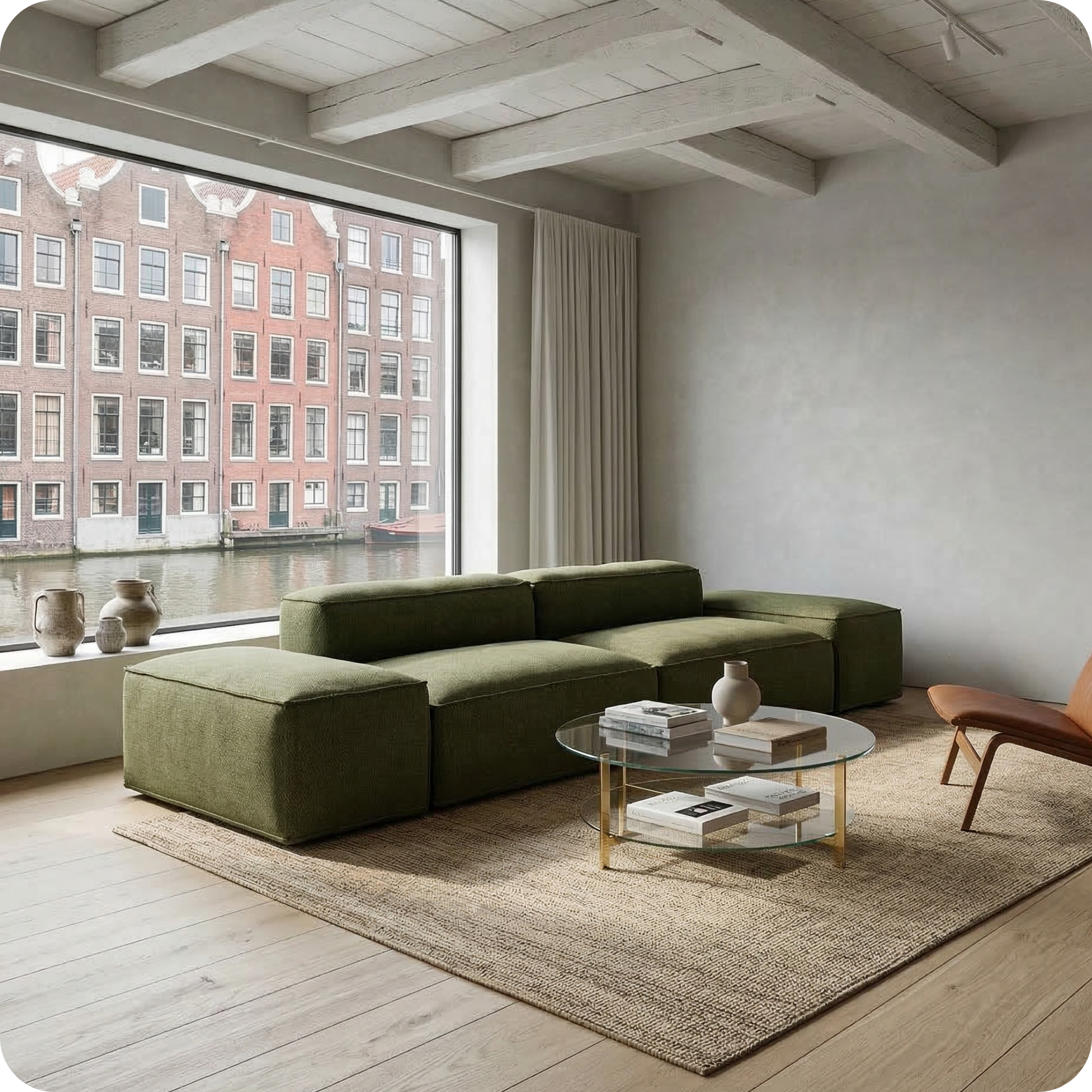
Merlot Modular Sofa — from EUR 1.490
The Merlot's modular construction combines premium frame materials with dense, well-engineered cushioning. The modular design also means individual components can be replaced if needed, extending the sofa's functional lifespan significantly beyond a standard fixed sofa.
Upholstery: Fabric Quality and Performance
The upholstery fabric is what you touch, see and clean every day -- and what most immediately signals quality (or its absence) to a visitor. Quality upholstery fabrics are rated by their rub count (Martindale test): a higher rub count indicates greater durability. For a living room sofa that receives regular use, look for a minimum of 25,000 rubs; for a family sofa likely to receive heavy use, 40,000 rubs or more is advisable. Premium sofas typically offer proprietary performance fabrics that combine a high rub count with resistance to staining, fading and pilling. Velvet, bouclé and high-quality woven fabrics used in premium sofas are produced to tight colour consistency standards and designed to maintain their texture and appearance through sustained regular use.
What to Ask When Buying a Luxury Sofa
When buying at the premium end of the market, it is worth asking the retailer or manufacturer several specific questions: What type of wood is the frame made from, and is it kiln-dried? What type of suspension system does the sofa use? What is the density and ILD rating of the seat foam? What is the Martindale rub count of the upholstery fabric? Can individual components (seat cushions, covers) be replaced if they wear? What is the guarantee on the frame, suspension, cushioning and fabric respectively? A confident, specific answer to each of these questions is itself a signal of quality.


Jätä kommentti
Tämä sivu on suojattu hCaptcha-tunnistuksella, ja hCaptchan tietosuojakäytäntöjä ja käyttöehtoja sovelletaan.