




How to Measure a Room for a Sofa: The Complete Guide
Measuring a room correctly before buying a sofa is one of the most important steps in avoiding a costly and frustrating mistake. Sofas are large, expensive pieces of furniture that are difficult and expensive to return once delivered. A sofa that looked right on a website but arrives too big for the room, too wide for the doorway, or awkwardly positioned relative to other furniture is a common problem -- and one that is almost entirely avoidable with careful measuring. This guide walks you through everything you need to measure: the room, the doorways and delivery route, and the key sofa dimensions to check before you buy.
What You Need Before You Start
You will need a tape measure (ideally 5 metres or longer), a pencil and paper or a notes app, and ideally a second person to hold one end of the tape measure. For a more visual approach, masking tape on the floor can be used to mark out the footprint of the sofa you are considering -- this is a highly effective way to test whether the sofa will feel right in the room before committing to buying it.
Step 1: Measure the Room
Measure the total length and width of the room from wall to wall, including any alcoves or awkward corners. Also measure the height from floor to ceiling, as some high-backed sofas can look oppressive in rooms with lower ceilings. Note the position of any fixed features that will affect sofa placement: radiators, window sills, power sockets and light switches. The practical rule for sofa length is that it should be no longer than two-thirds of the wall it faces (or sits against), leaving clear sightlines and comfortable circulation space on either side. For a room 4 metres wide, this means a sofa of no more than approximately 2.6 metres in length.
Step 2: Measure the Delivery Route
This is the step most people forget, and it is often the cause of the most frustrating delivery problems. Measure the internal width of every door the sofa must pass through on its way to the room, including the front door, any interior hallway doors, and the living room door. Also measure the height of each doorway and note whether any doors can be removed from their hinges to gain extra centimetres. For a standard 3-seater sofa of around 220-240 cm length, the critical dimension is whether it can be rotated around corners: measure the width of the corridor at each corner point and check whether the sofa's depth (typically 85-100 cm) plus length will allow it to turn. Some sofas can be delivered as separate sections (modular sofas in particular), which makes delivery through narrow doorways significantly easier.

Modular Sofas at Furni
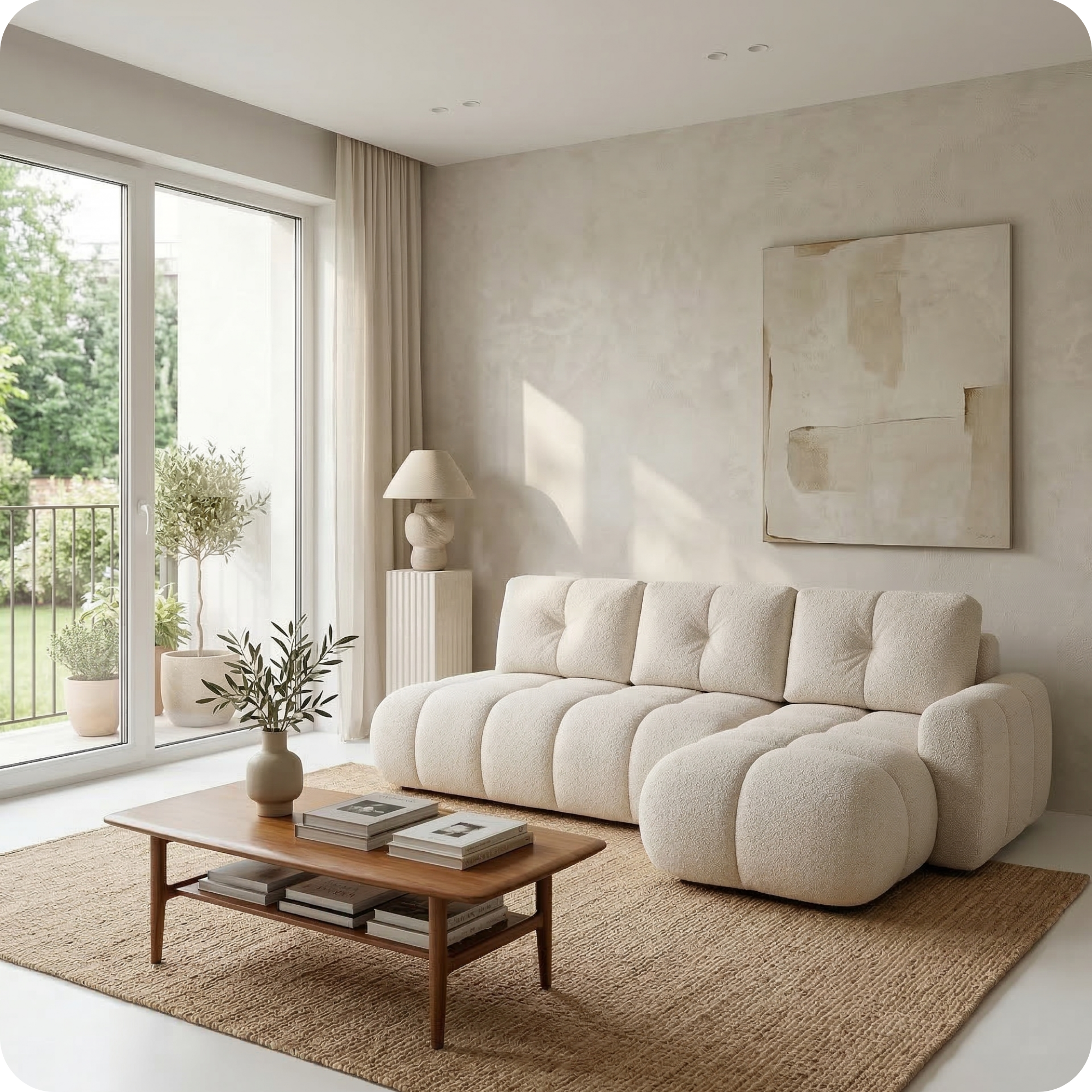
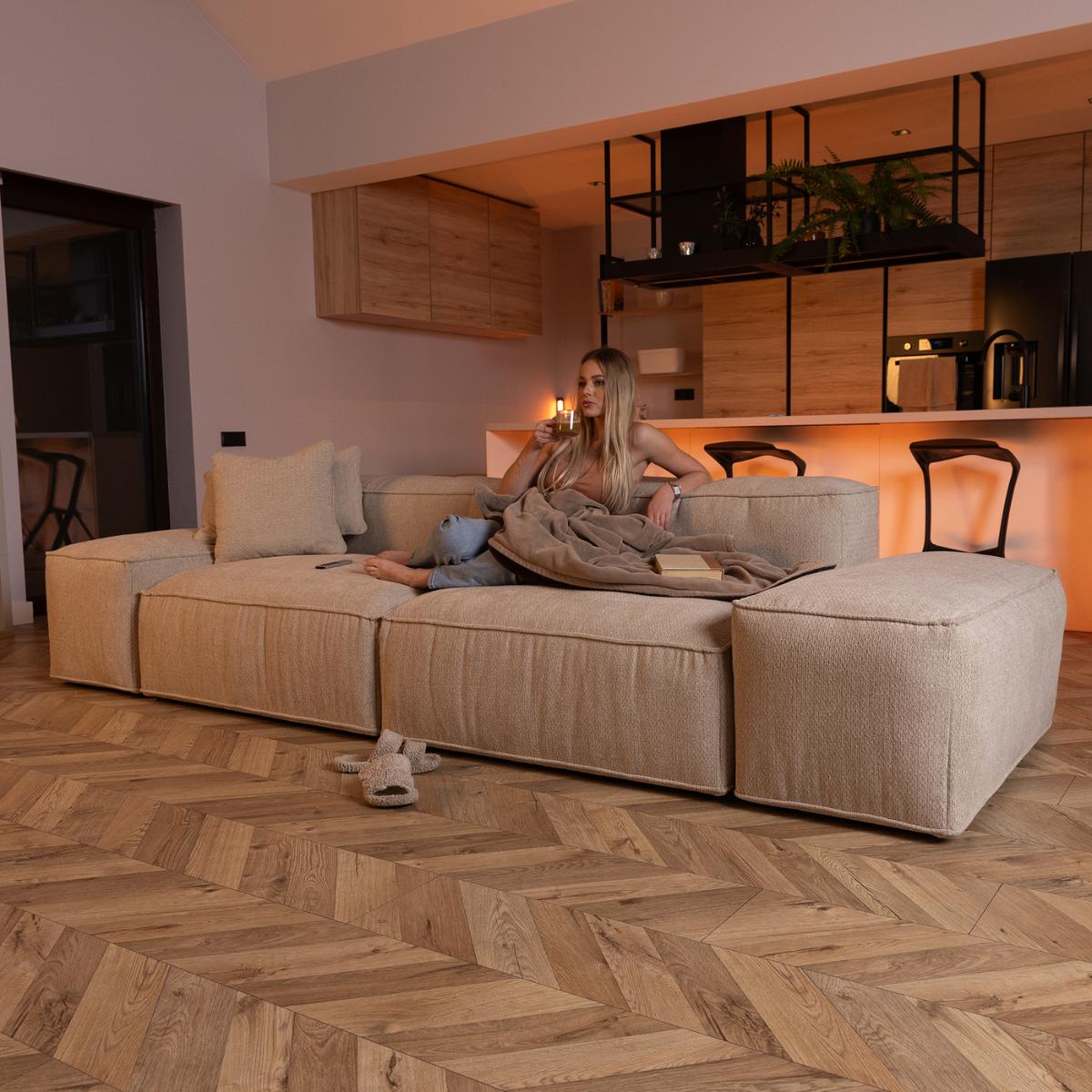
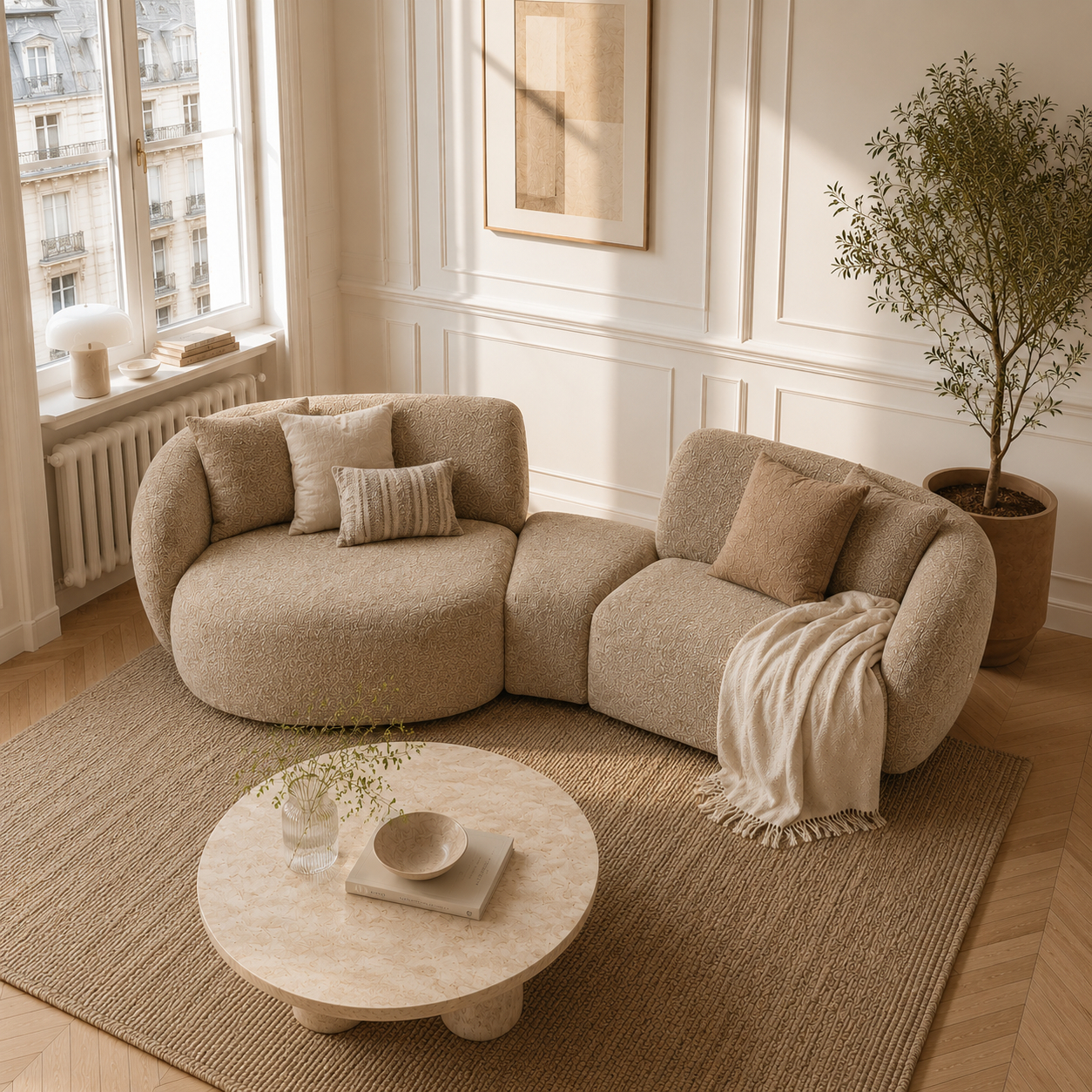
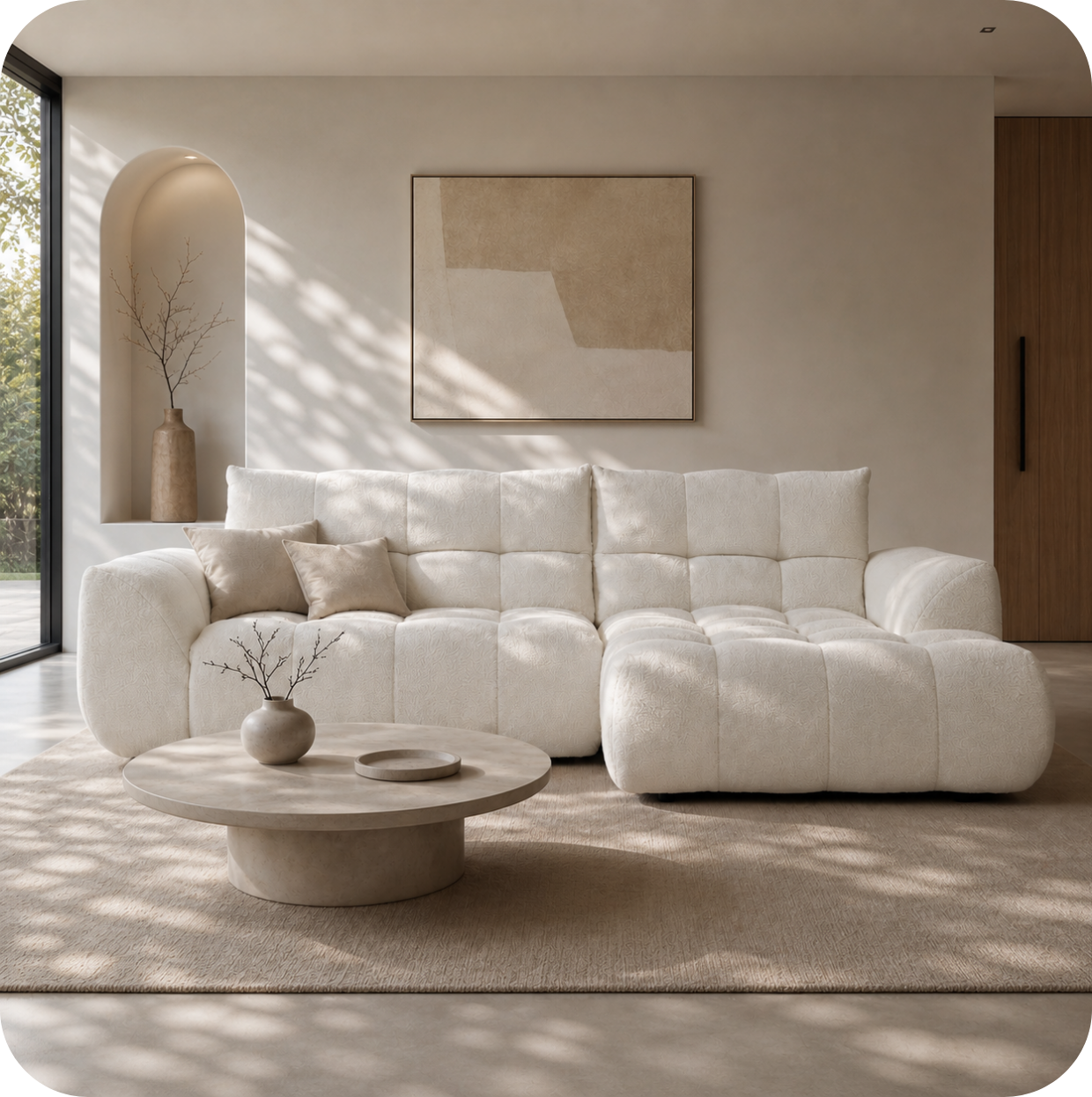
Modular sofas are the most delivery-friendly option for any home with narrow hallways, tight staircases or small doorways. Each section arrives separately and is assembled in the room, eliminating the risk of the sofa not fitting through the door.

Lugano Collection — from EUR 1.290
The Lugano range is available in multiple sizes and configurations, making it easy to find the exact dimensions that fit your room. All product pages include precise measurements for length, depth, seat height and armrest height.
Step 3: Key Sofa Dimensions to Check
When looking at sofa product pages, there are four key dimensions you need to check and compare against your room measurements. The first is overall length: the total width of the sofa from the outer edge of one armrest to the outer edge of the other. This is the dimension most people check but it is not always the most critical. The second is depth: how far the sofa extends from the wall into the room. For a standard 3-seater this is typically 85-100 cm; for corner sofas with a chaise longue it can be 160-200 cm. The third is seat height: the height from the floor to the top of the seat cushion, which affects how comfortable the sofa is for different body heights. The fourth is back height: the overall height of the sofa from the floor to the top of the back. A sofa with a very high back (over 95 cm) will visually dominate more of the room and can look imposing in spaces with lower ceilings.
Step 4: The Clearance Rules
In addition to the sofa's own dimensions, allow for the necessary clearance between the sofa and other elements in the room. The minimum comfortable walking clearance behind or alongside a sofa is 75-90 cm. Between the sofa and the coffee table, 45-60 cm allows comfortable movement while keeping items on the table within easy reach. Between the sofa and the television, the recommended minimum viewing distance depends on screen size, but a general guideline is that the sofa should be at least 1.5 times the screen's diagonal measurement away from the television. For a 65-inch screen (approximately 165 cm diagonal), this means at least 2.5 metres of viewing distance.
The Masking Tape Test
Once you have your measurements and have identified a sofa that looks promising, use masking tape on the floor to mark out the sofa's exact footprint. Stand in the room, live with the tape for a day or two, walk around it, sit in the approximate seat area on a temporary cushion or folded blanket. This simple test will give you a much clearer sense of whether the scale is right, whether the circulation around the sofa works, and whether the arrangement leaves the room feeling open or crowded.


Legg igjen en kommentar
Dette nettstedet er beskyttet av hCaptcha, og hCaptchas personvernerklæring og vilkår for bruk gjelder.