


How to Style a Corner Sofa: Cushions, Rugs, Layouts and Accessories
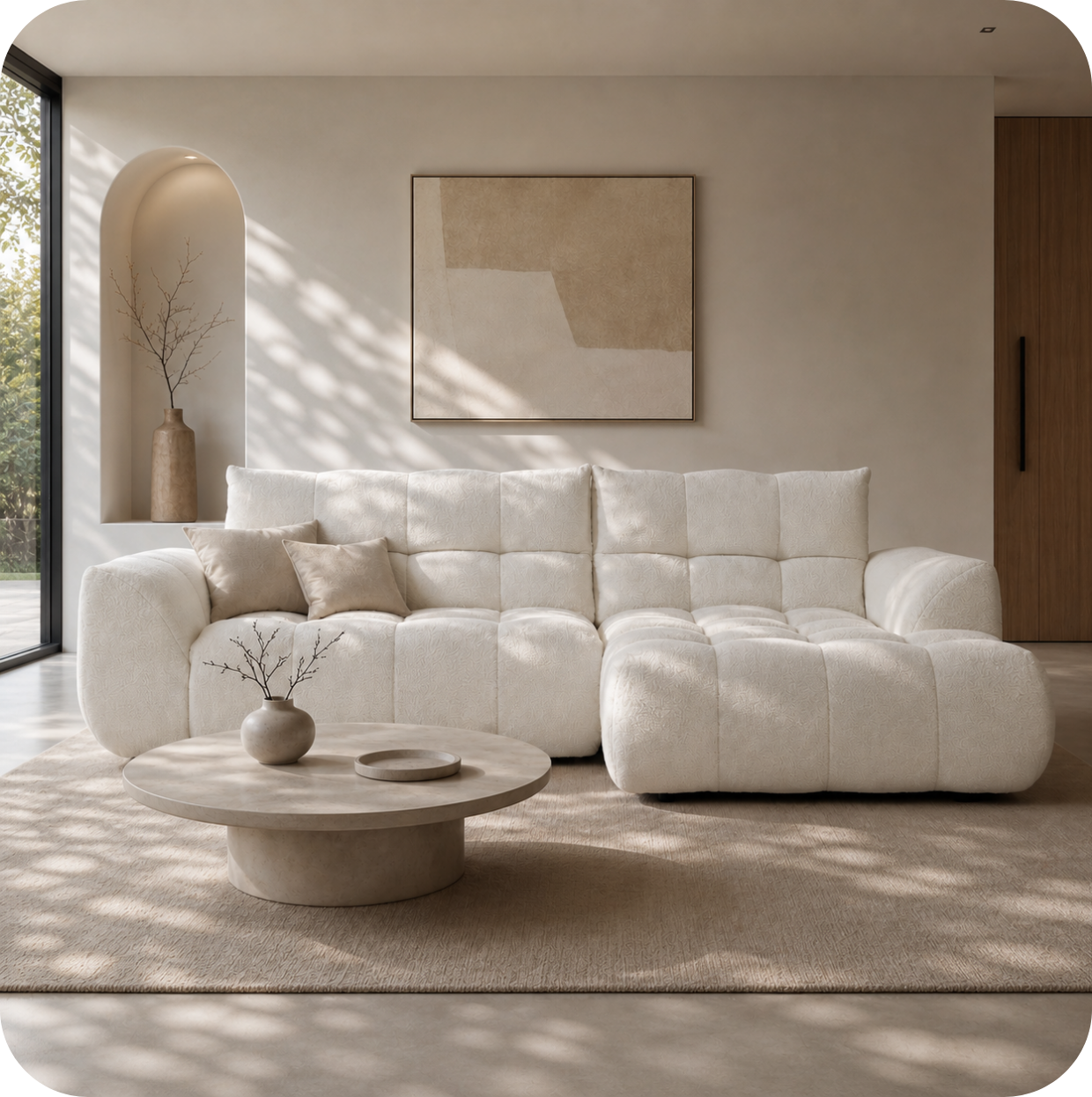
A corner sofa is a significant investment and the dominant object in any living room -- which means styling it well is one of the most impactful interior design decisions you can make. Done right, a styled corner sofa turns a large practical piece of furniture into the anchor of a coherent, considered living room. Done wrong, it looks like a large piece of furniture that has been dropped into a room and surrounded with random objects. This guide covers every aspect of styling a corner sofa: cushions, throws, rugs, coffee tables, layout, and the accessories that complete the look.
Cushion Arrangement: The Most Visible Styling Element
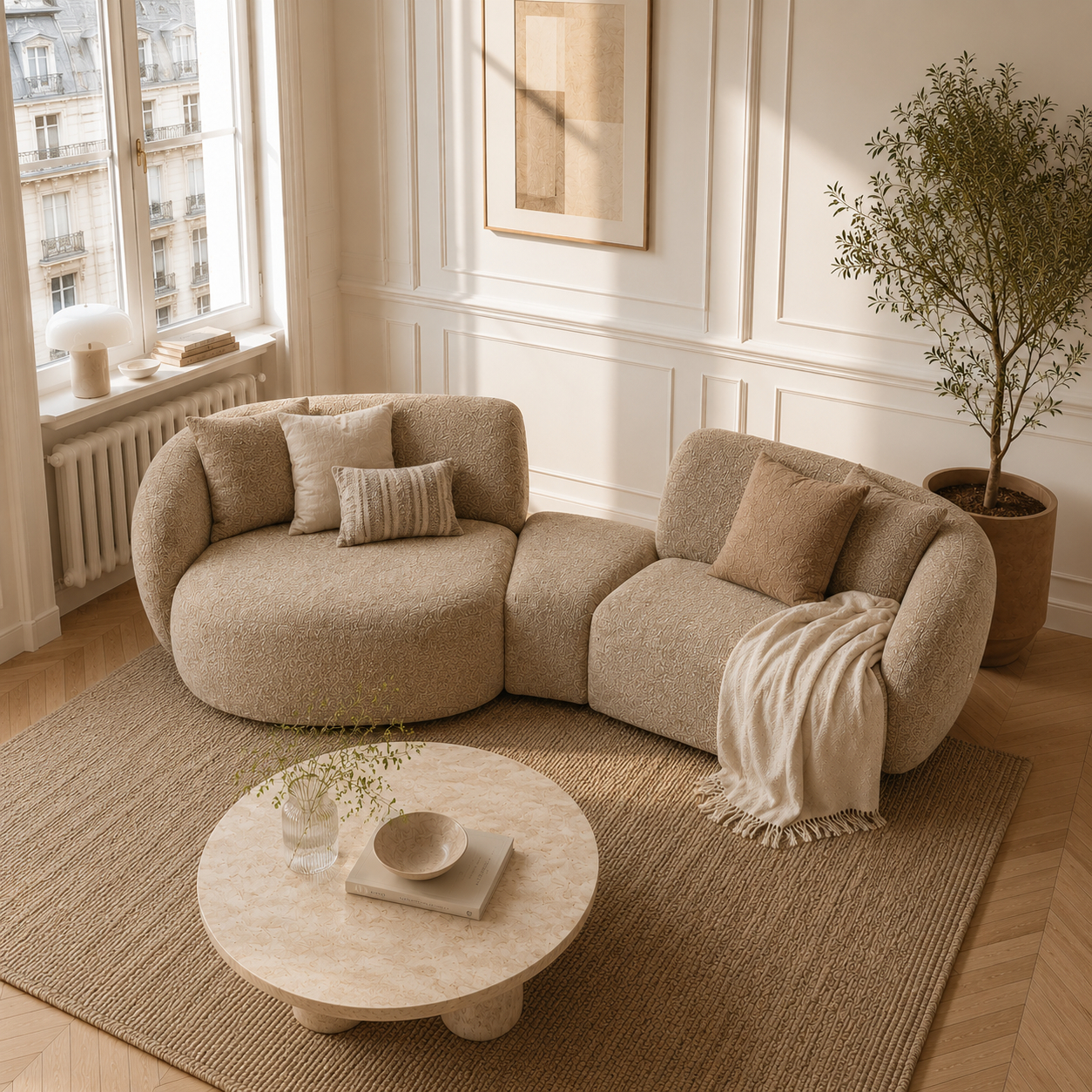
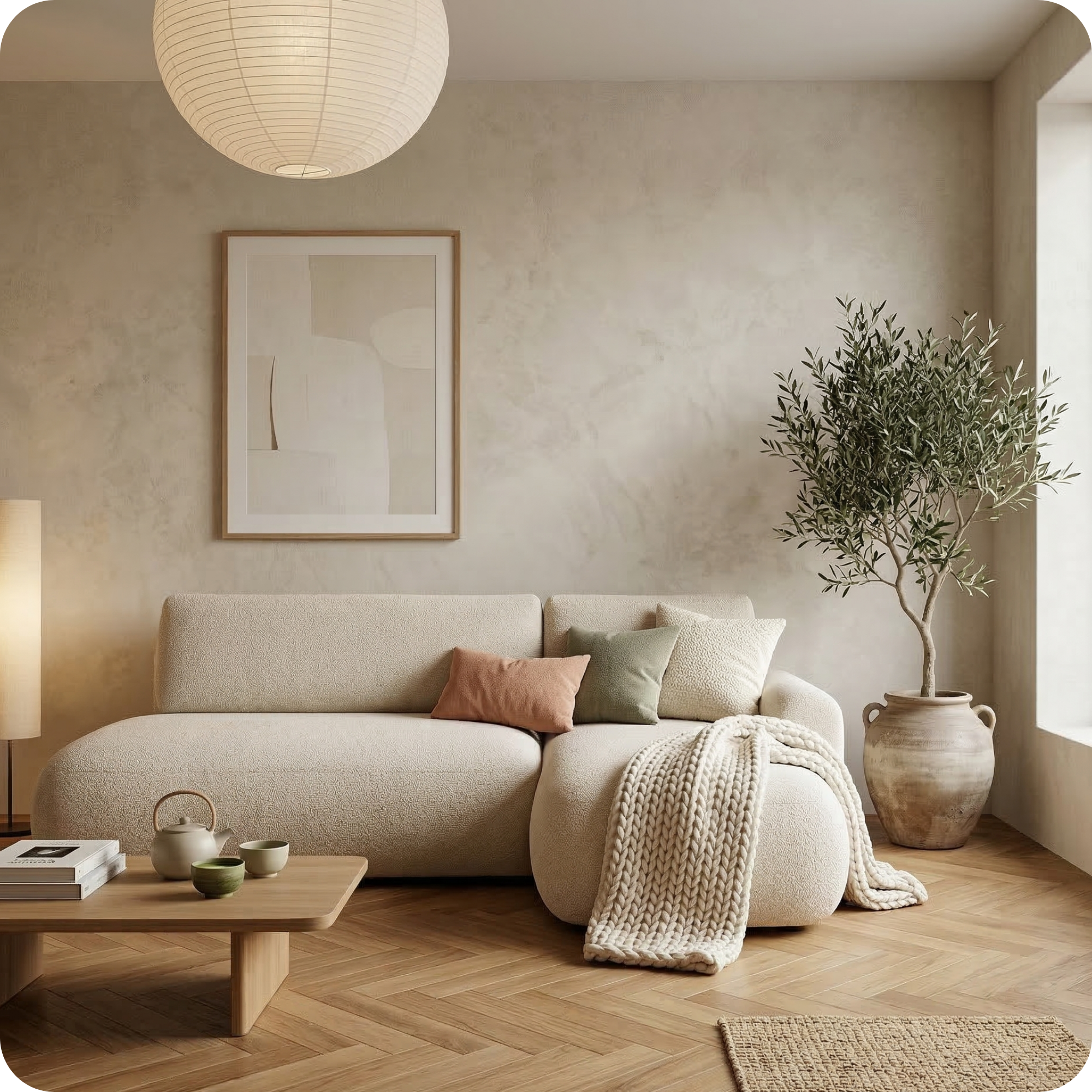
Cushions have more visual impact on a corner sofa than any other styling element. The key principles: vary the size (a combination of 50x50 cm square cushions and 60x40 cm rectangular bolster or lumbar cushions creates more visual interest than all the same size), limit the colour palette (two or three coordinating colours maximum -- more than that looks chaotic), and choose a mix of textures (combine smooth fabric with textured bouclé, velvet, or linen to create depth). A practical corner sofa cushion arrangement: four 50x50 cm cushions in a neutral base colour at the back of each section, two 50x50 cm cushions in an accent colour, and two 60x40 cm rectangular cushions in a third complementary or tonal colour. This gives enough cushions to look considered without looking crowded.
The Right Number of Cushions
More cushions is not always better. A very large corner sofa with 12-15 cushions looks like a bed shop display and sacrifices sitting space for decoration. For a standard 3-seater corner with a longchair, 6-8 cushions is the typical range: enough to look styled without becoming impractical. The arrangement that always works: cluster cushions at the back corners and at the junction between the two sofa sections, and leave the outer edges of the sofa clean enough to actually sit on comfortably.
Throws: Warmth and Texture
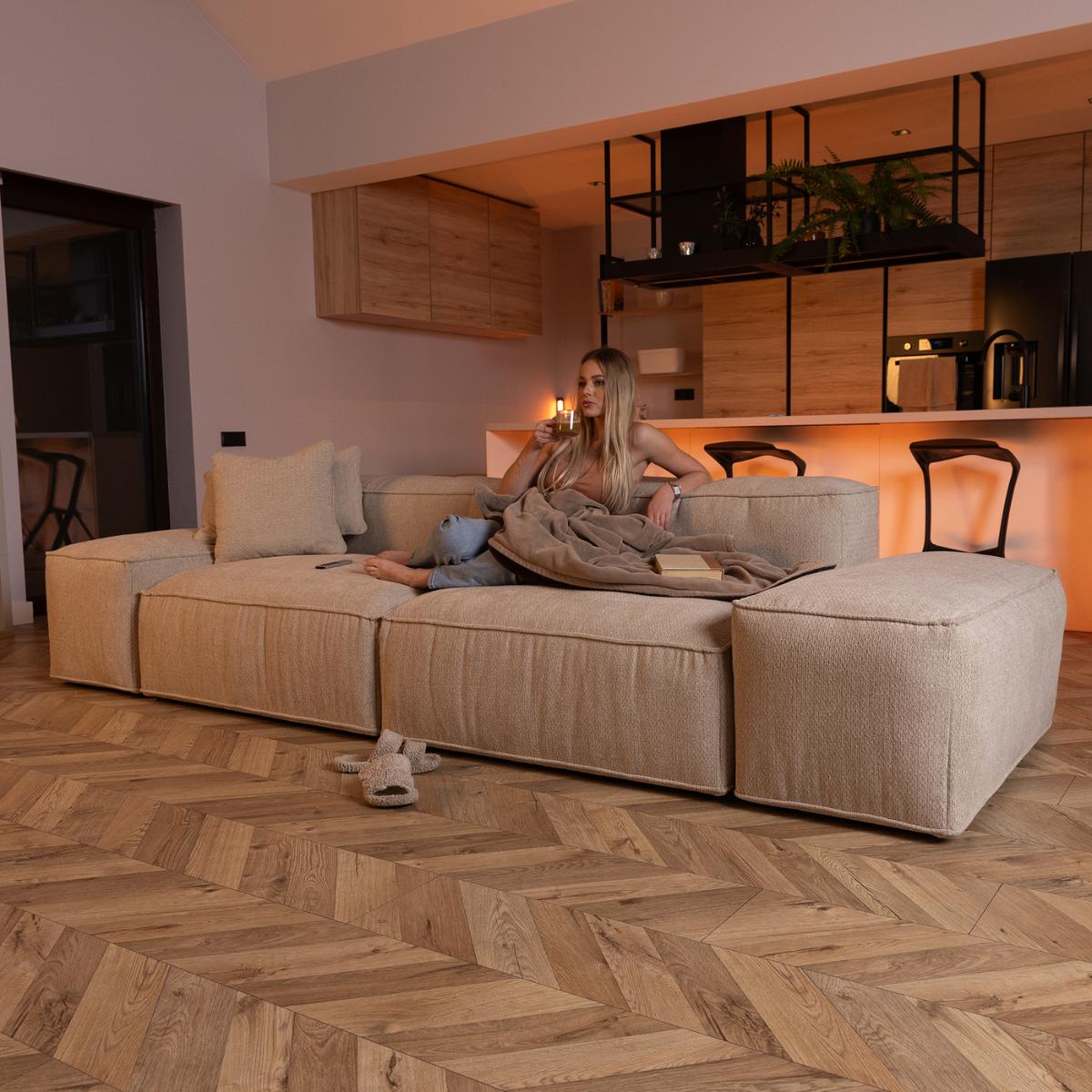
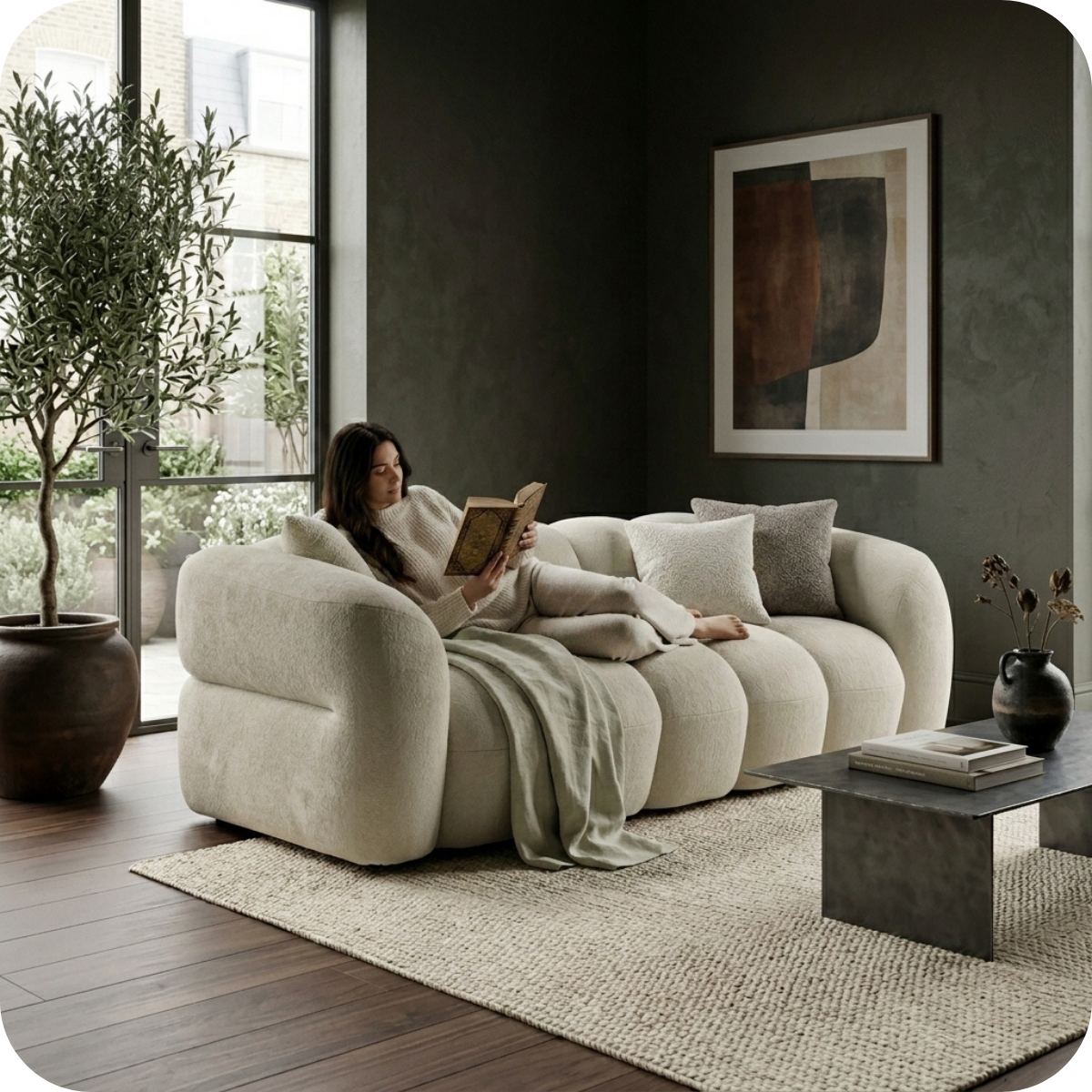
A throw is one of the most effective styling tools for a corner sofa because it can be draped naturally and informally over the longchair section in a way that adds texture and warmth without requiring precise arrangement. The best throws for a corner sofa are large enough to cover the longchair generously (at least 150x200 cm) and made from natural or natural-feel materials: chunky knit wool, waffle weave cotton, boucle, or linen. Colour-wise, the throw can either tone with the cushions (for a very coordinated look) or introduce a warm accent colour (terracotta, rust, or deep ochre on a neutral sofa).

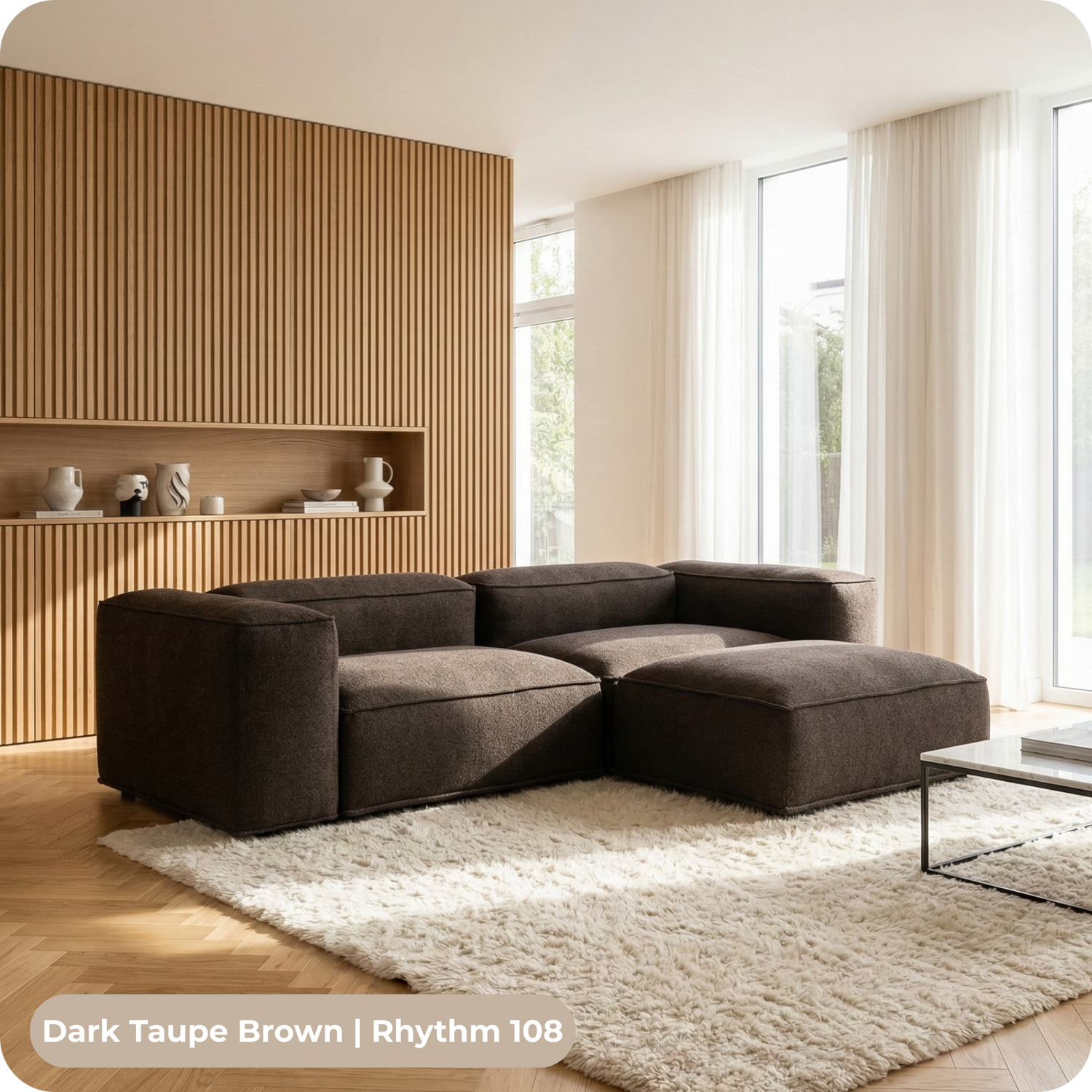
Merlot Modular Corner Sofa — from EUR 1.890
The Merlot corner sofa's clean modular structure provides an ideal canvas for cushion and throw styling. The structured back cushions and defined sections make arrangement straightforward -- cushions at the corners and junction, throw over the longchair.

Asti Corner Sofa — from EUR 1.290
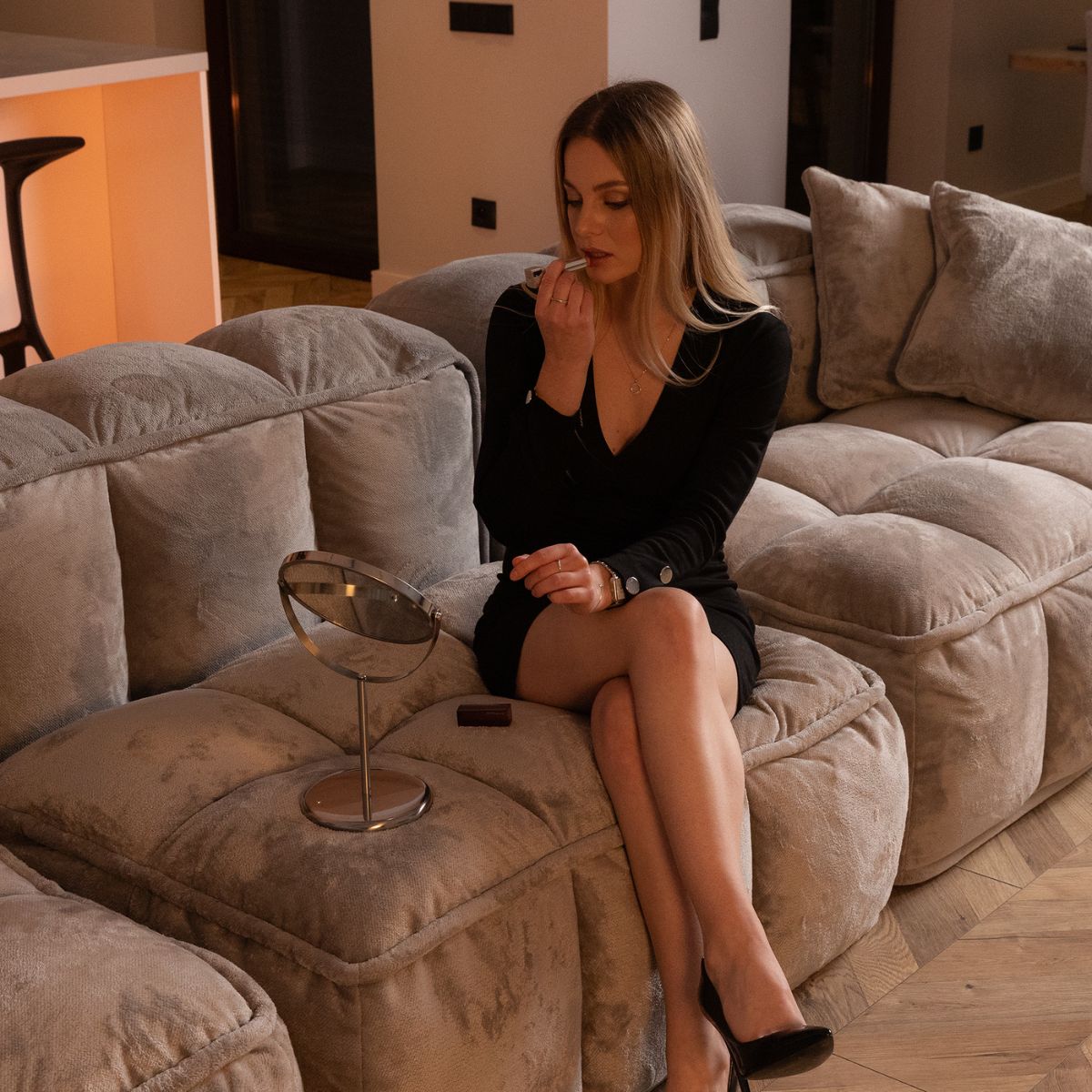
The Asti's generous dimensions and clean upholstery make it one of the most versatile corner sofas for styling. The neutral tones available take cushions in almost any direction -- earthy, cool, or warm.
Rug Sizing and Placement
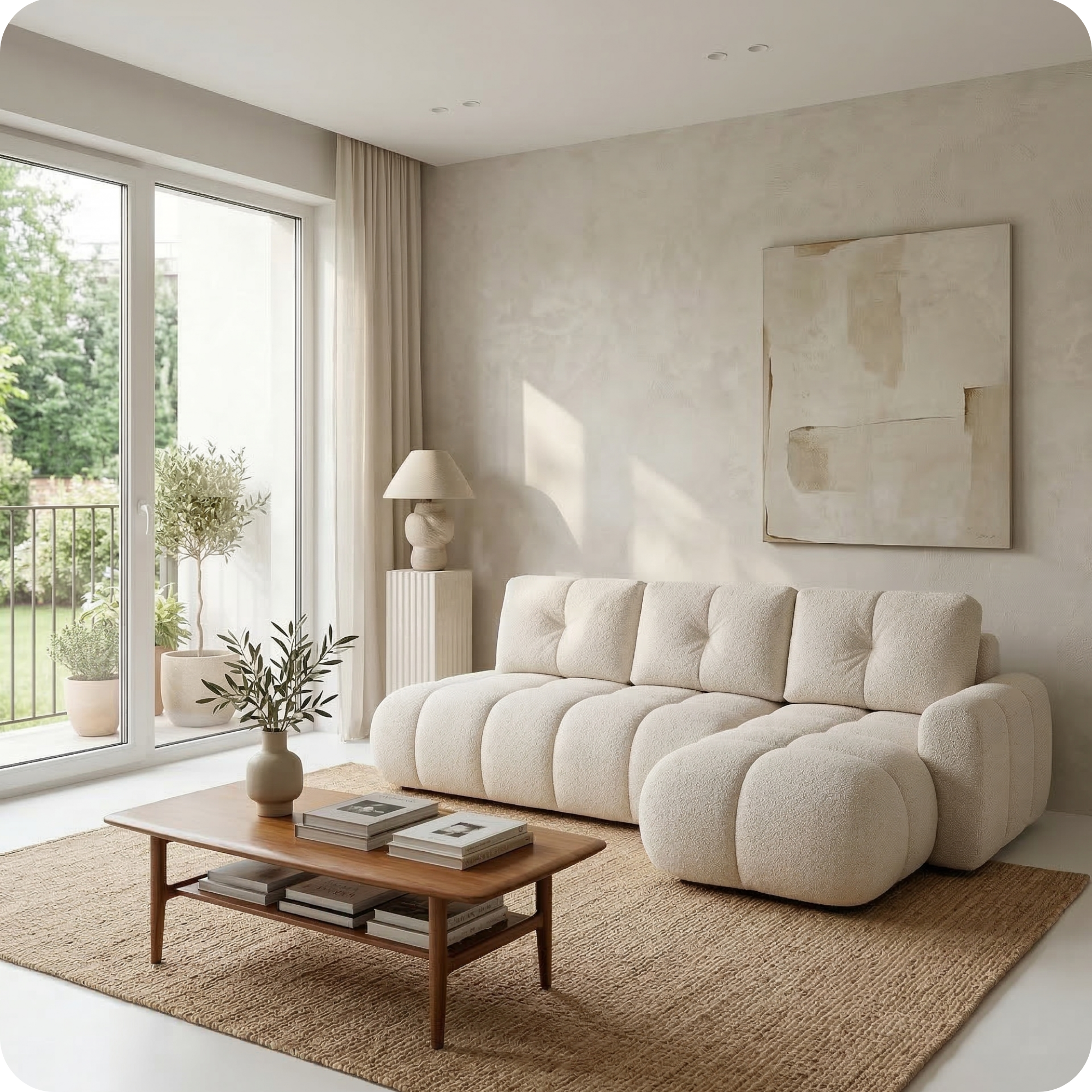
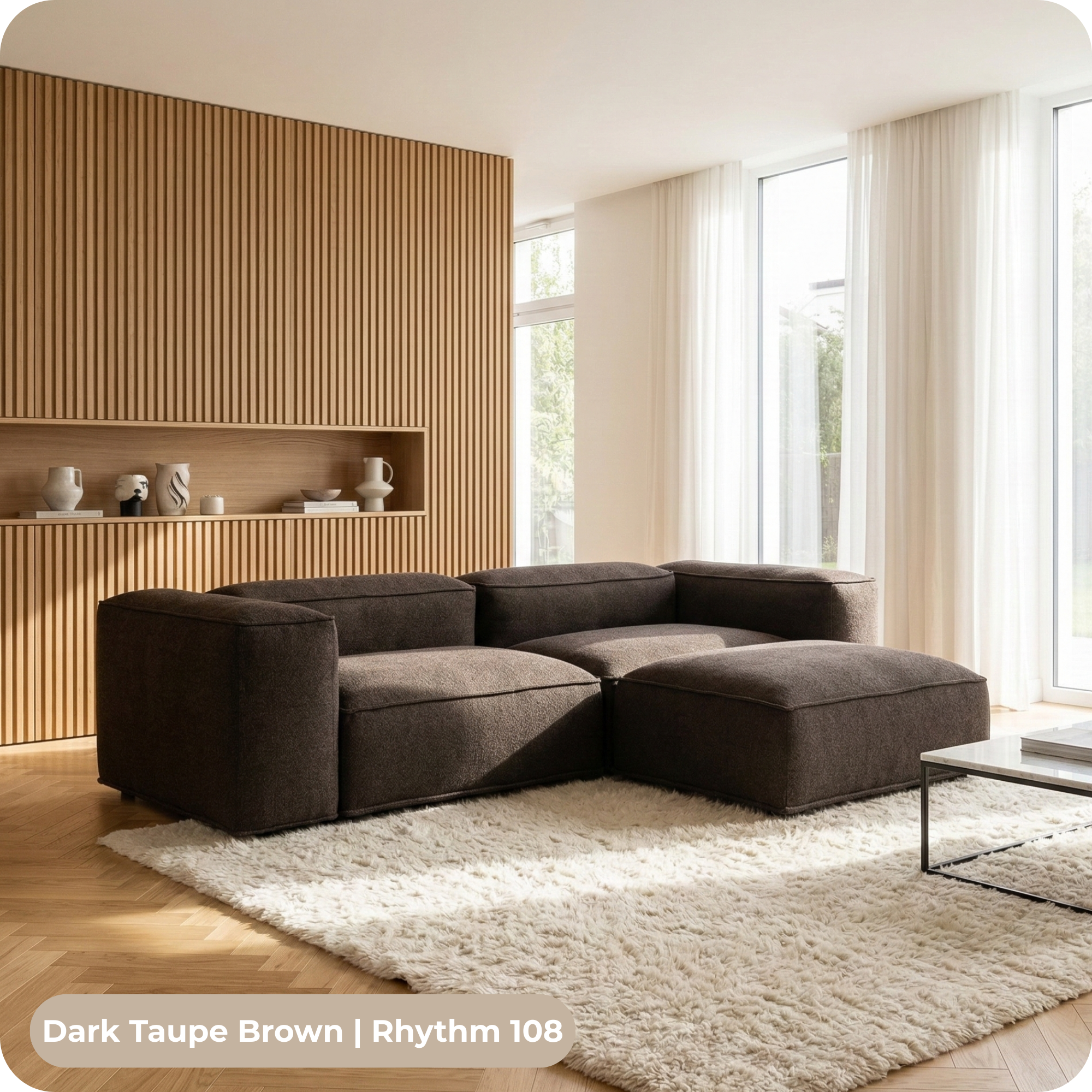
The rug is the most common styling mistake with corner sofas. Too small a rug (a 160x230 cm rug under a large corner sofa) looks lost and actually makes the room feel smaller. For a corner sofa, the rug should be large enough for all sofa legs to sit on it, or at minimum for the front legs of every sofa section to be on the rug. A standard large corner sofa typically needs a rug of at least 200x300 cm; an extra-large corner needs 240x340 cm or larger. The rug anchors the seating group and defines the living area -- getting this right has more visual impact than almost any other single decision.
Coffee Table Placement
Corner sofas create a clear living area, and a coffee table placed within that area completes the composition. The ideal coffee table for a corner sofa is slightly lower than the seat height (typically 35-42 cm versus the sofa's 42-46 cm), centred approximately within the angle created by the sofa, and within easy reach of all seating sections -- a maximum of 35-40 cm from the sofa edge. Round coffee tables are a natural choice with corner sofas because they avoid the angular visual competition that a large rectangular table can create; they also make movement around the sofa easier. A large round coffee table in warm wood, marble, or dark stone is the most versatile choice.
Layout: Positioning the Corner Sofa
The corner of a corner sofa should not necessarily go into the corner of the room. In larger living rooms, positioning the sofa floating away from the walls (with 40-60 cm of space behind the sofa) creates a more architectural, considered look and allows for a console table or shelving behind the sofa -- a practical and visual addition. In smaller rooms, the corner of the sofa typically does go into the corner of the room, which is fine -- the task is then to make sure the front of the sofa is positioned far enough from the opposite wall to leave a clear walking path (at least 90 cm).
Completing the Look: Lighting and Side Tables
The end of the longchair section of a corner sofa is a natural landing spot for a floor lamp -- positioned behind or beside the end of the longchair, a floor lamp provides reading light for the person lying down and adds a vertical element that balances the horizontal mass of the sofa. A small side table at the end of the longchair is extremely practical and adds a surface for drinks, books, and a small plant or lamp. These details are what separate a styled corner sofa from an unstyled one.

Legg igjen en kommentar
Dette nettstedet er beskyttet av hCaptcha, og hCaptchas personvernerklæring og vilkår for bruk gjelder.