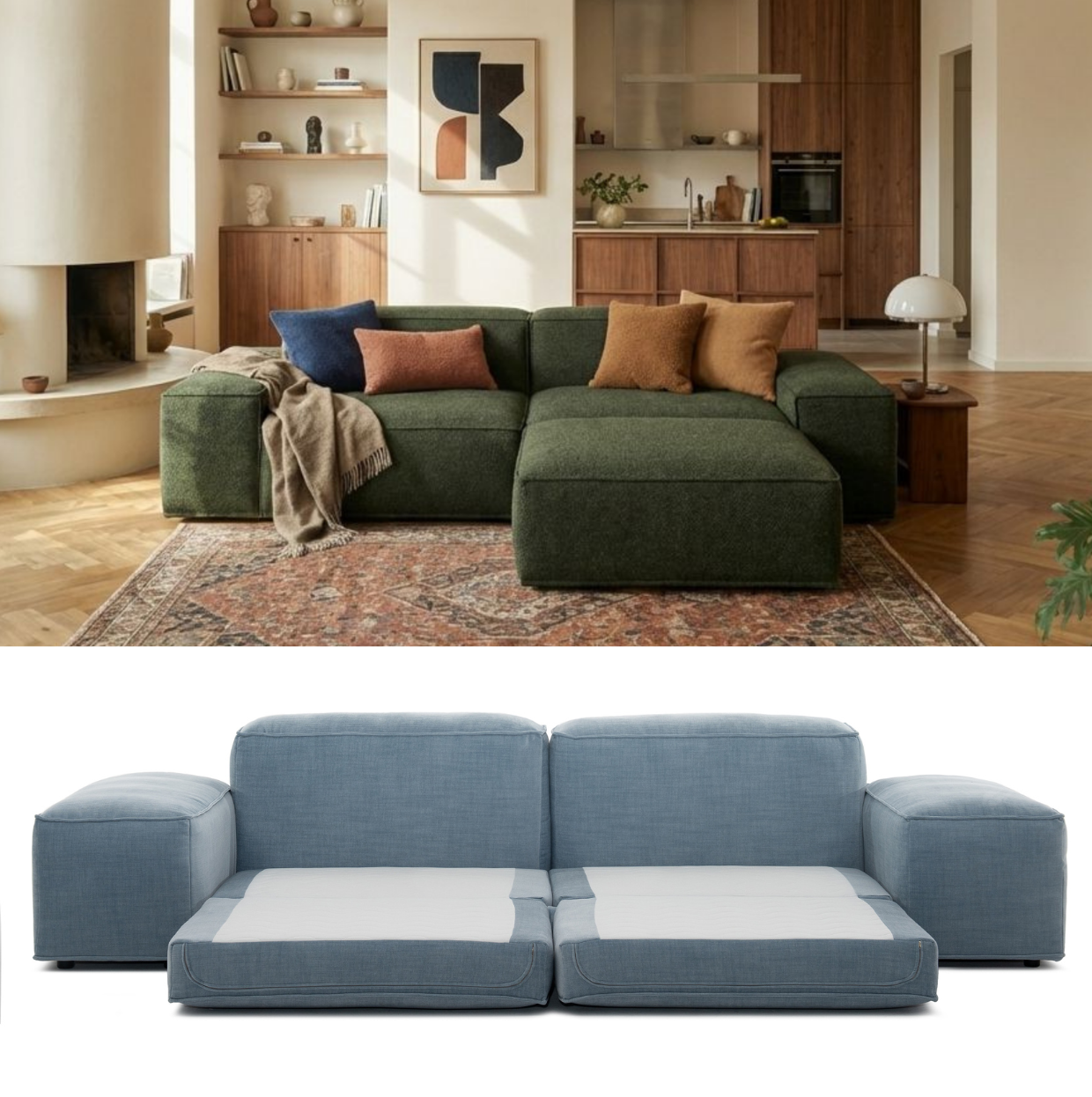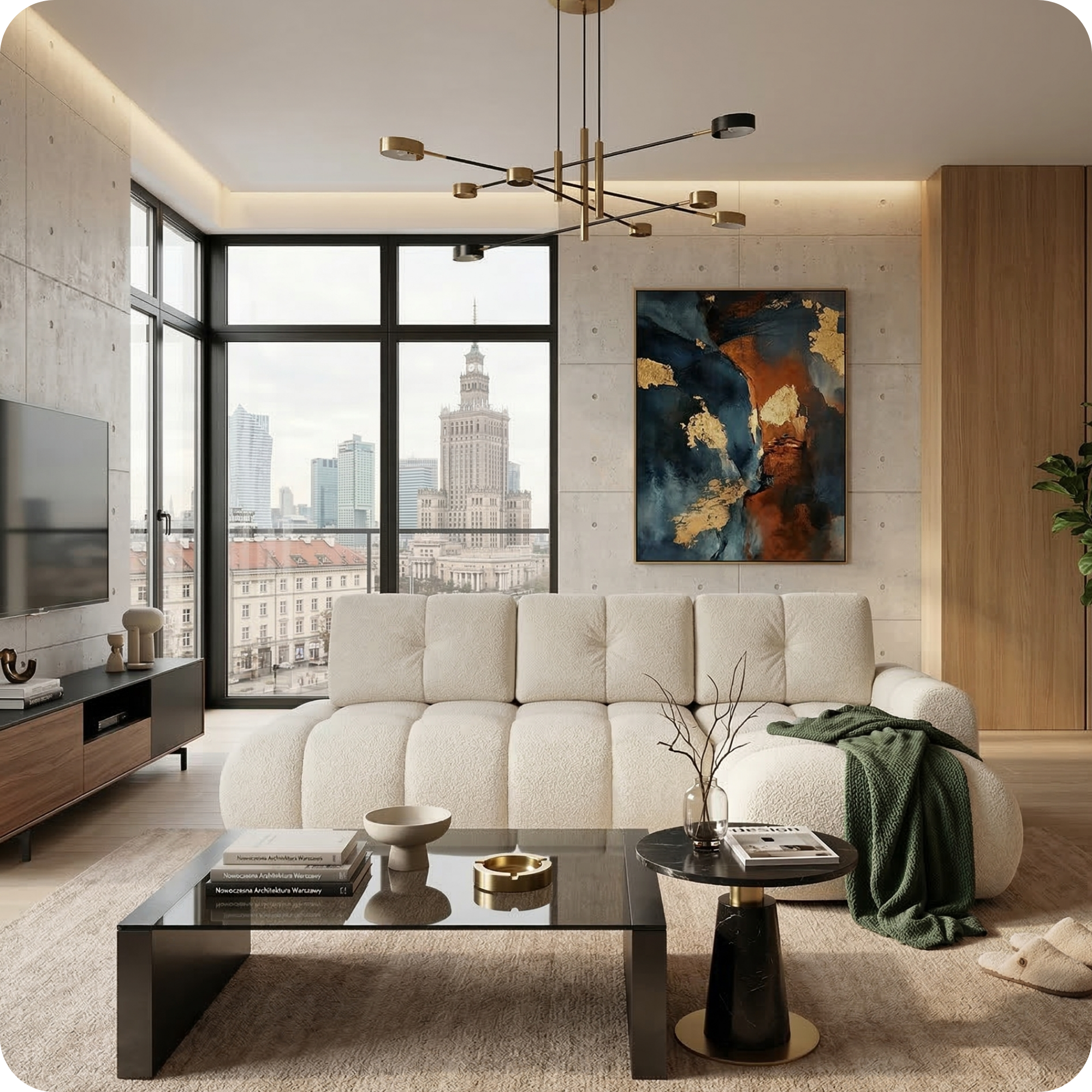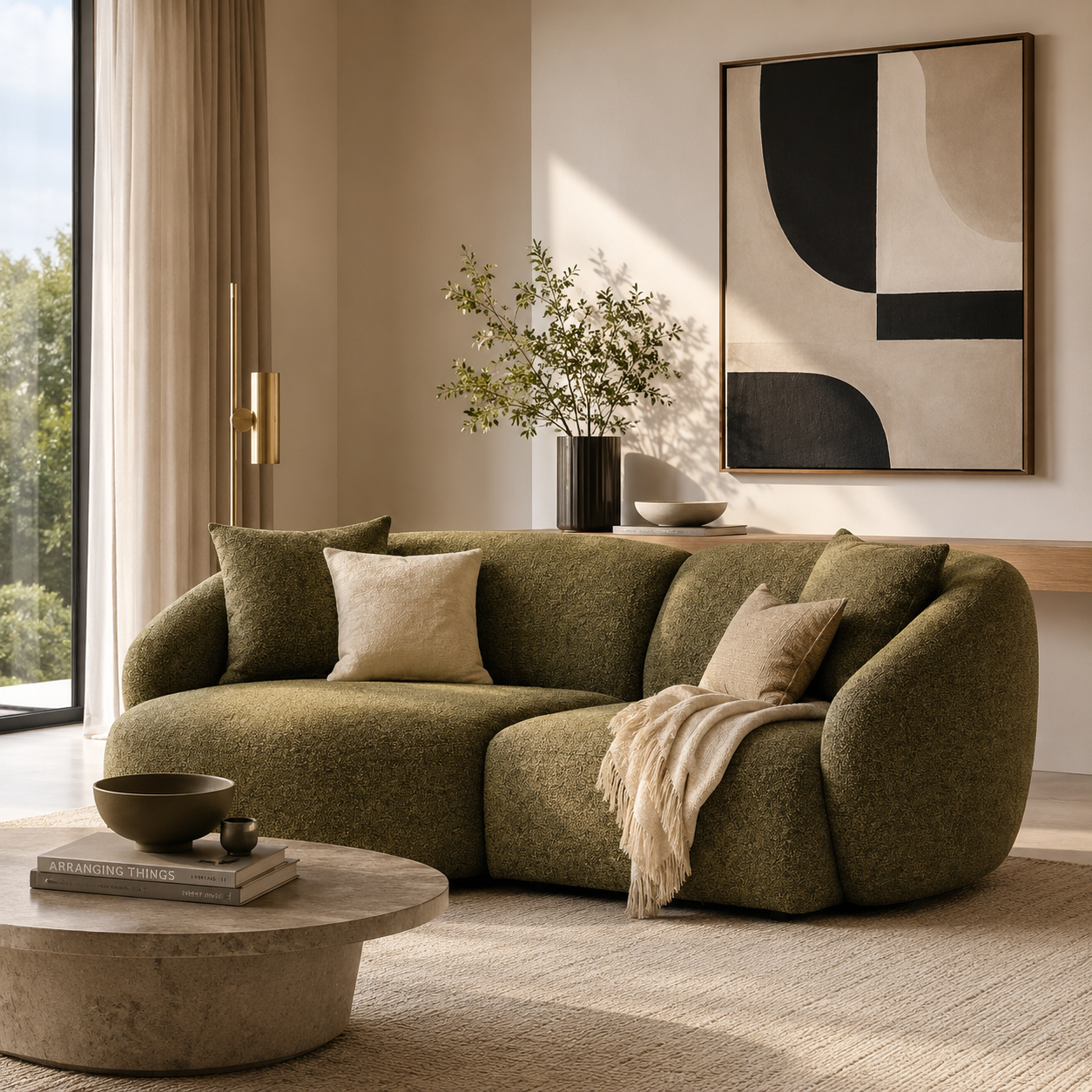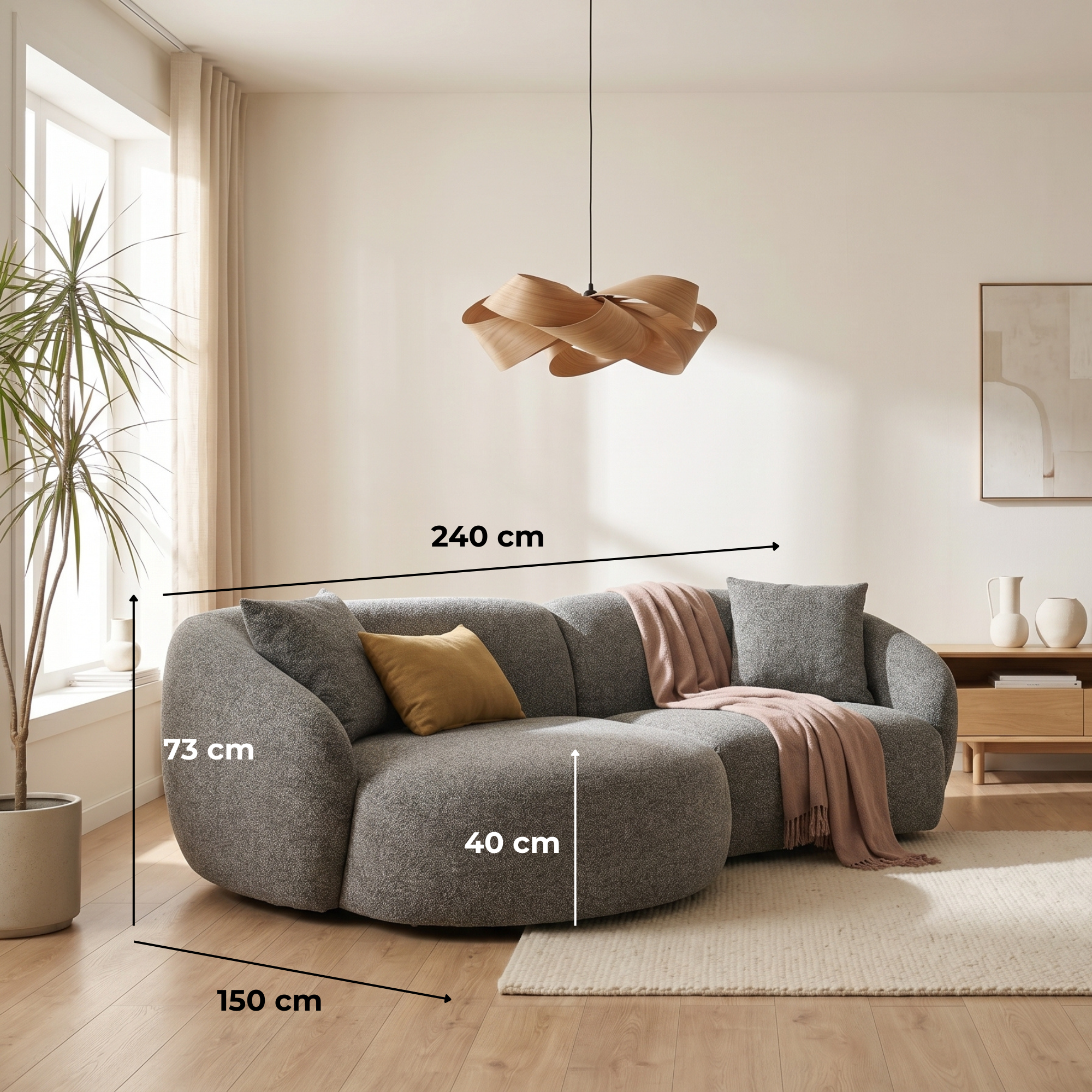

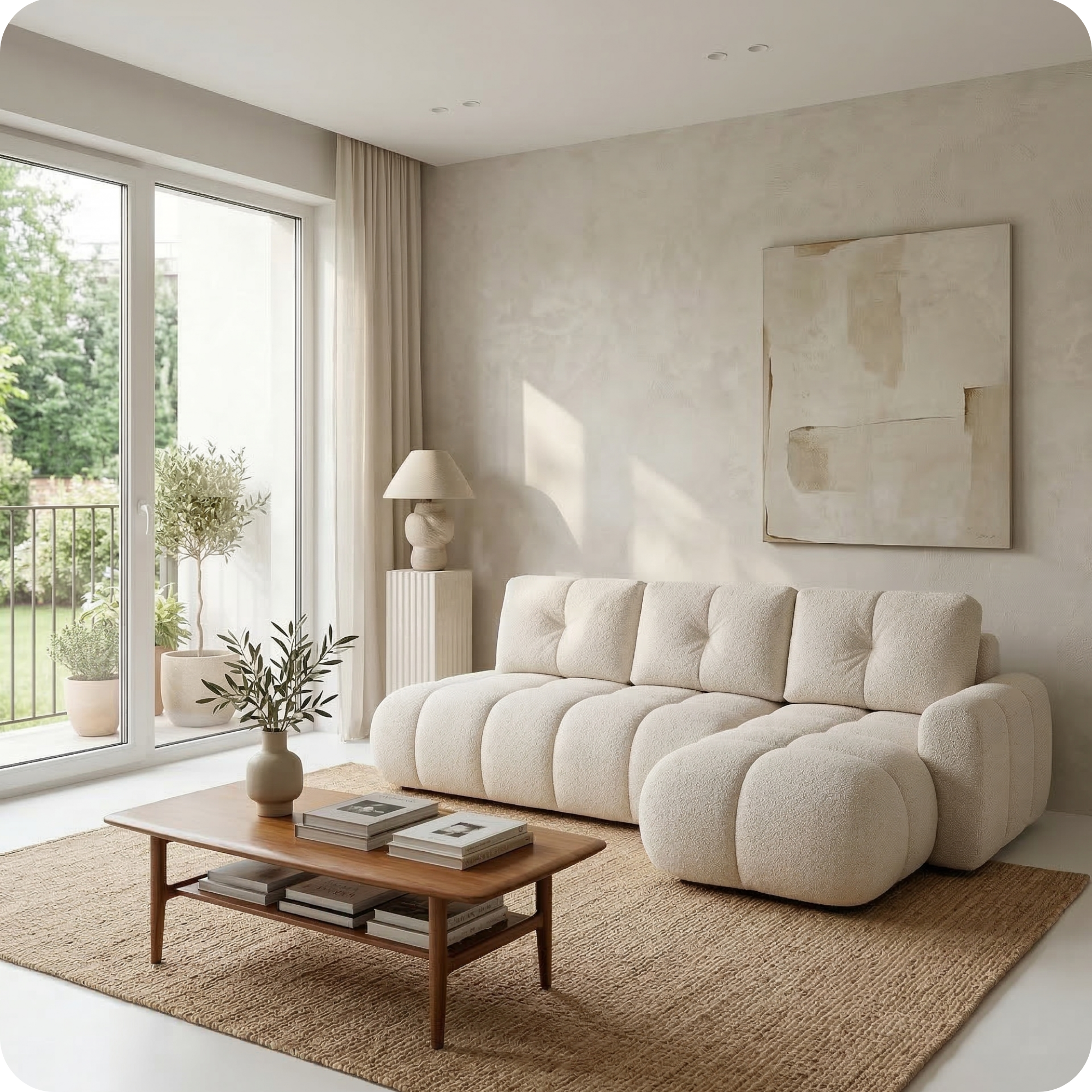

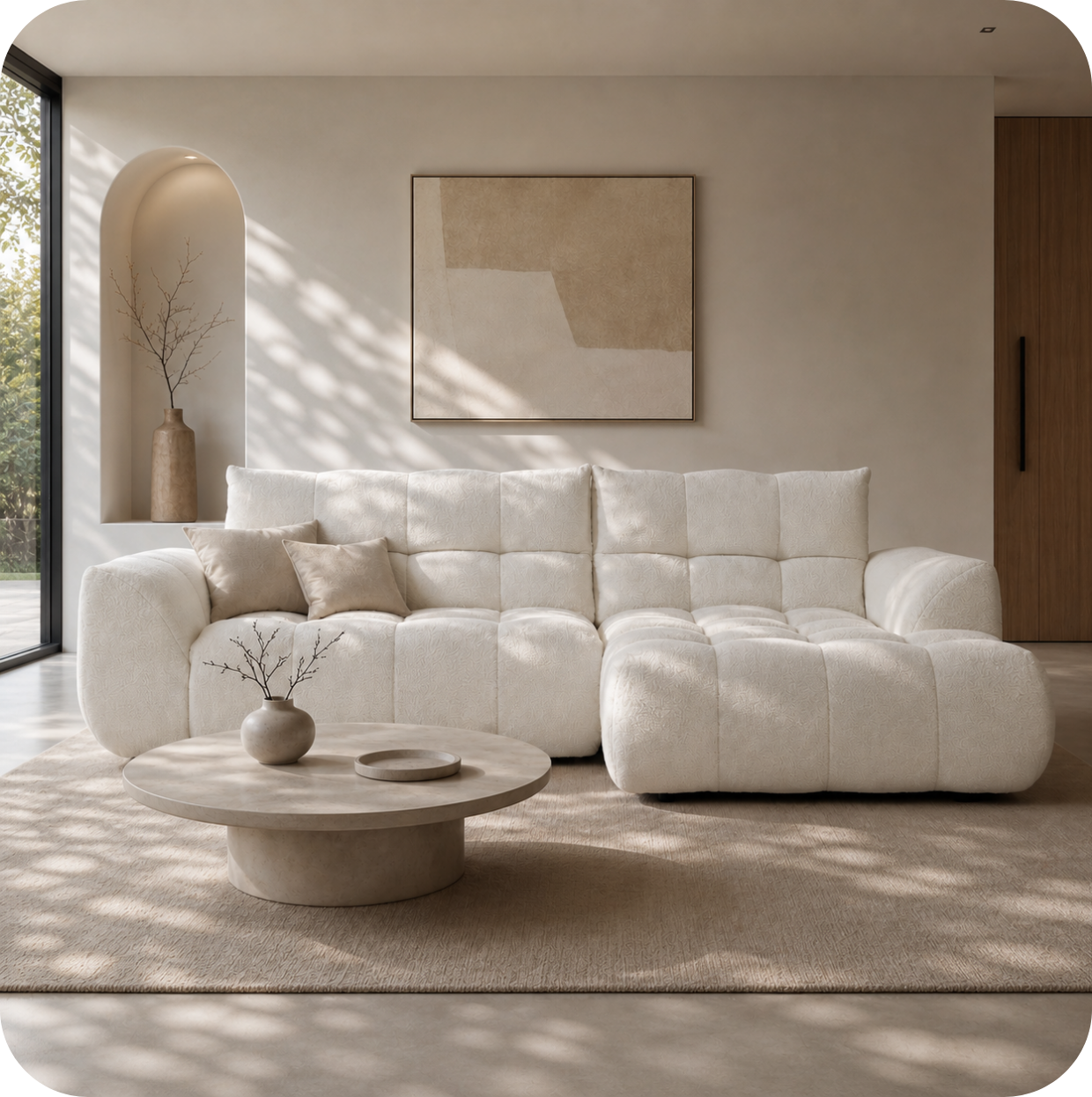
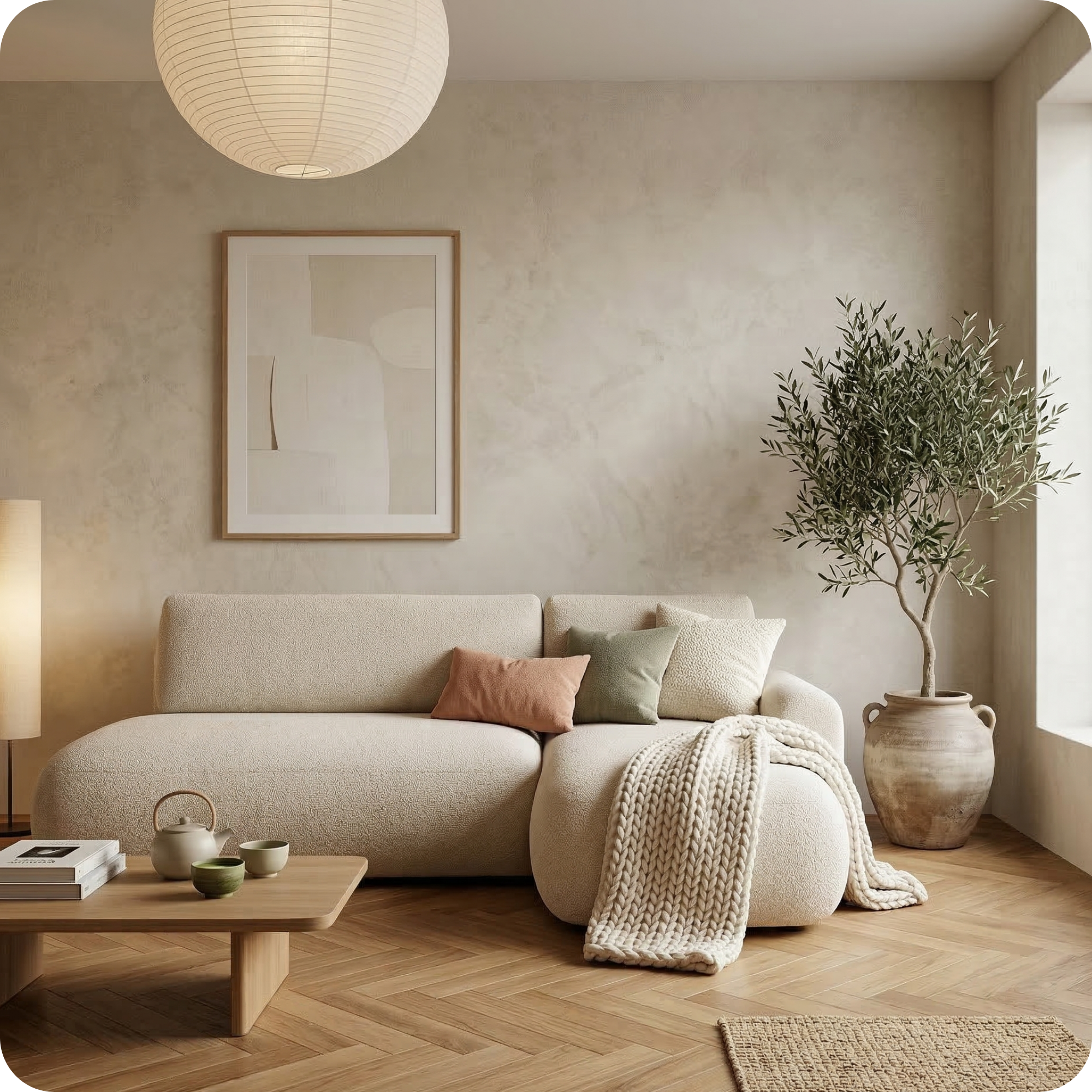
An industrial look is created by combining raw, exposed materials — metal, wood, brick, concrete — with a muted, utilitarian colour palette and simple, function-first furniture. It borrows its character from converted warehouses and factories: nothing hidden, nothing overly polished, and every material left close to its natural state.
The core elements of industrial style
- Exposed or faux materials — brick (real or a brick-effect panel), poured concrete or concrete-look flooring, and exposed structural elements like beams or pipework where possible.
- Metal and wood together — black or dark-bronze metal frames paired with reclaimed or solid wood tabletops and shelving is the signature industrial material pairing.
- A muted, neutral palette — charcoal, graphite, rust, tan and warm grey, rather than bright or pastel colours.
- Statement lighting — exposed-bulb pendants, black metal cage fixtures, or factory-style task lamps do a lot of the visual work in an industrial room.
- Worn, lived-in textures — leather that ages visibly, distressed wood, and matte rather than glossy finishes.
How to create an industrial look, room by room
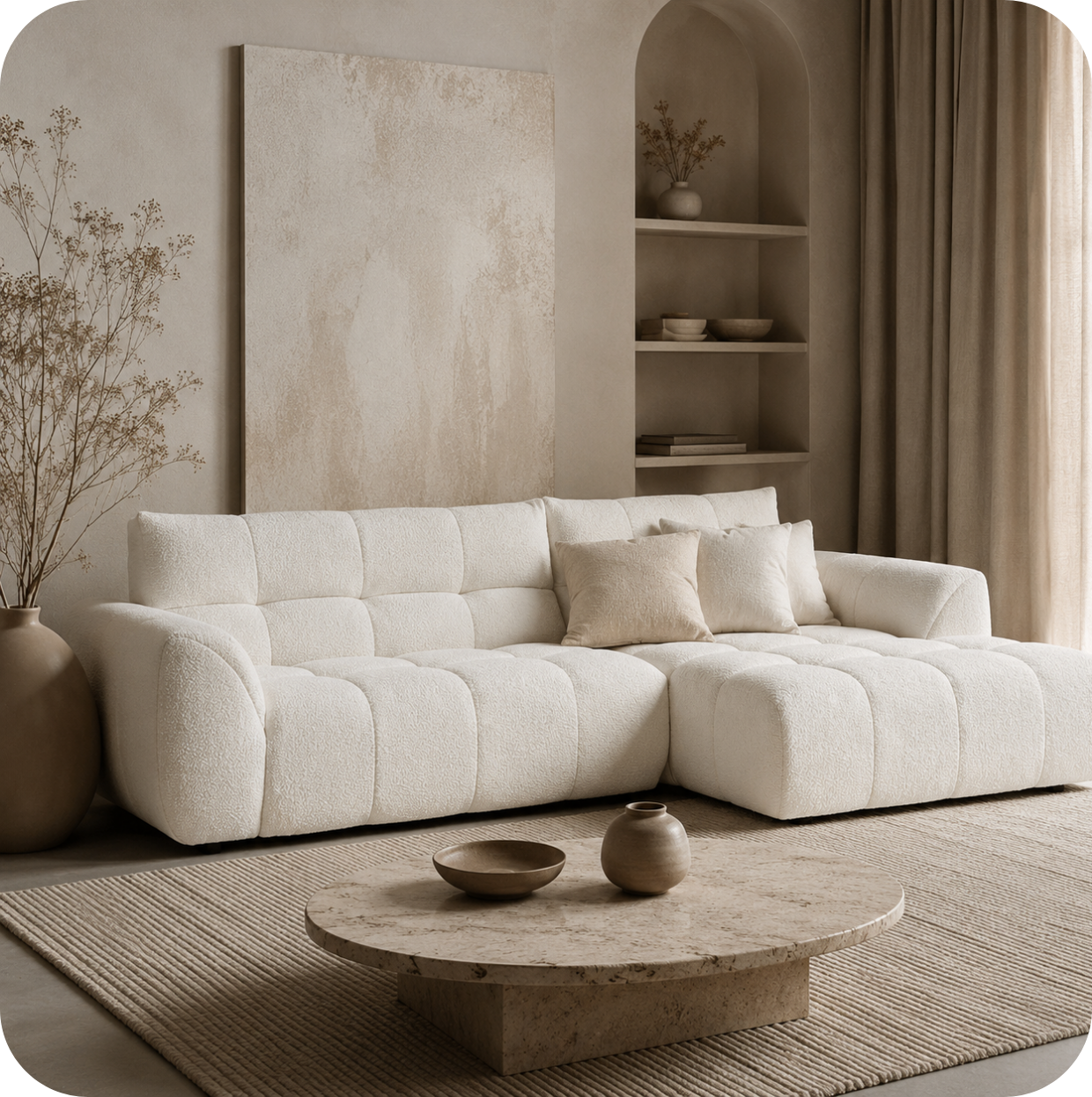
Start with the walls and floor, since industrial style leans on raw backdrops: an exposed-brick or concrete-effect wall, dark-painted walls (charcoal or deep graphite), or polished-concrete-look flooring all read as industrial immediately. From there, add furniture with visible black or dark metal frames — a metal-framed dining table, open black shelving units, or a sofa with exposed metal or dark wood legs rather than a fully upholstered plinth base. Finish with textured, tactile fabrics: a bouclé or heavyweight linen sofa softens the room just enough to keep it comfortable rather than cold.
Industrial living room furniture
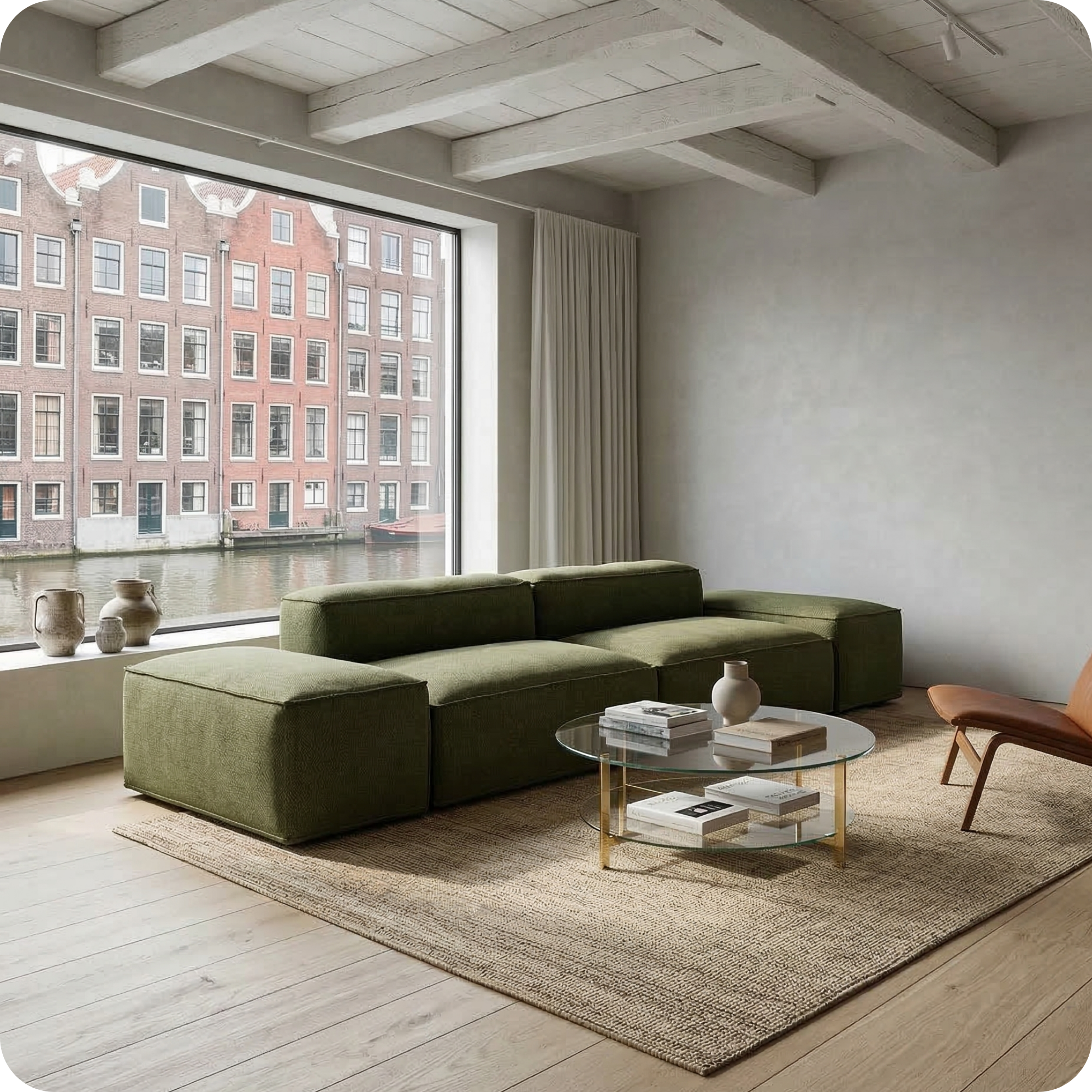
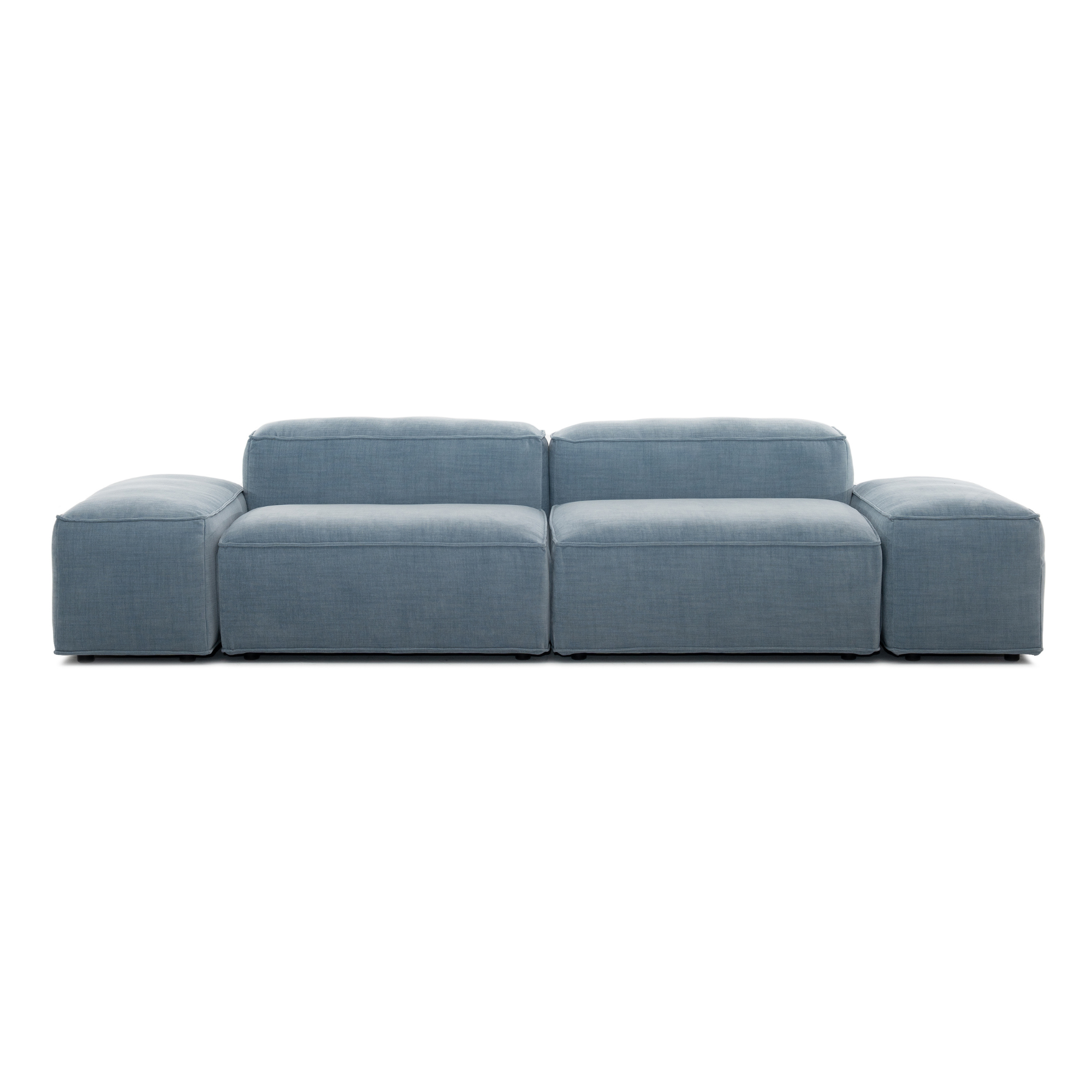
In a living room specifically, the sofa is the piece that sets the tone. Look for low, wide silhouettes in muted tones — charcoal, warm grey, rust or terracotta — with visible metal or dark wood legs rather than a hidden skirted base. Pair it with a raw-wood or metal-framed coffee table and open shelving instead of closed cabinetry, so the materials stay visible.

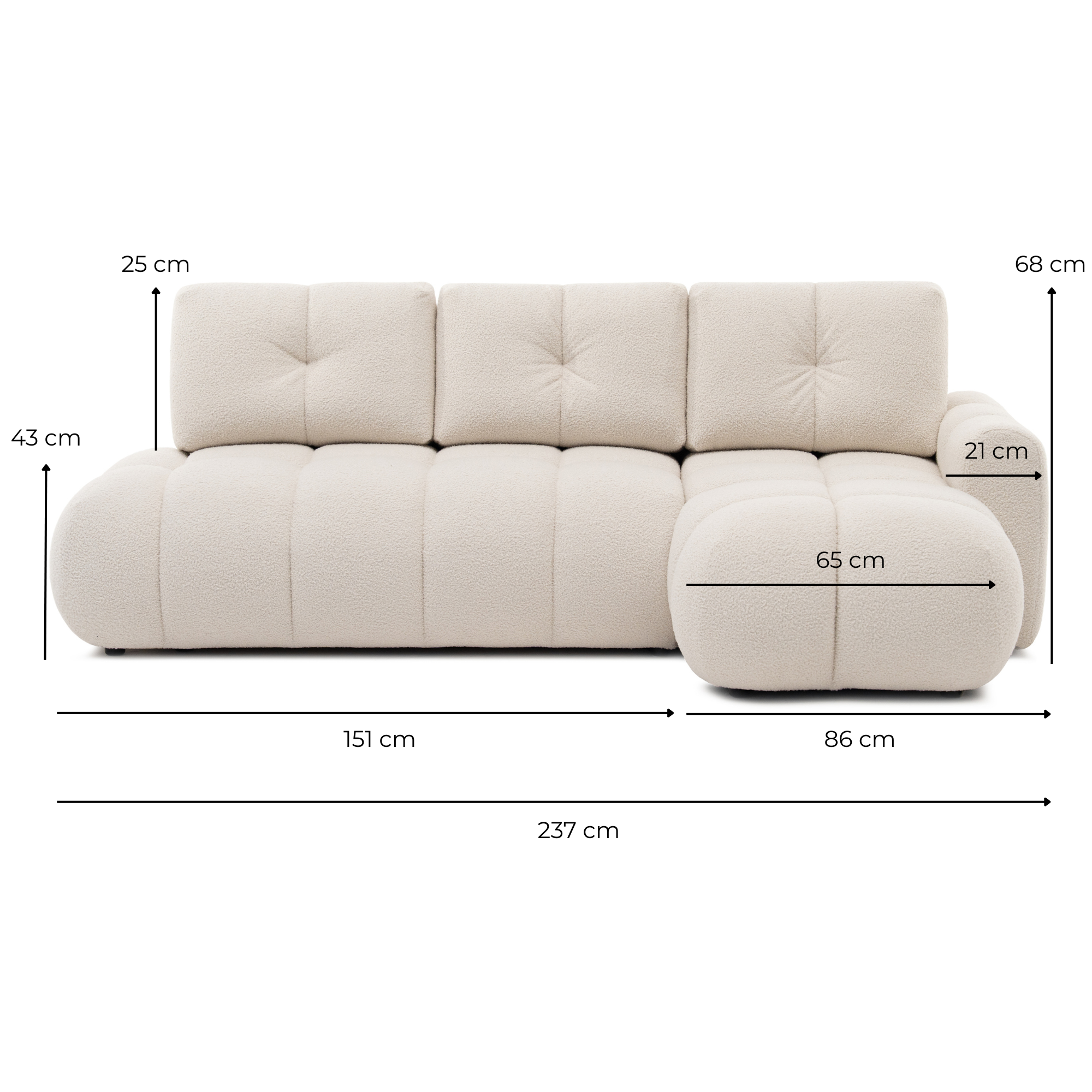
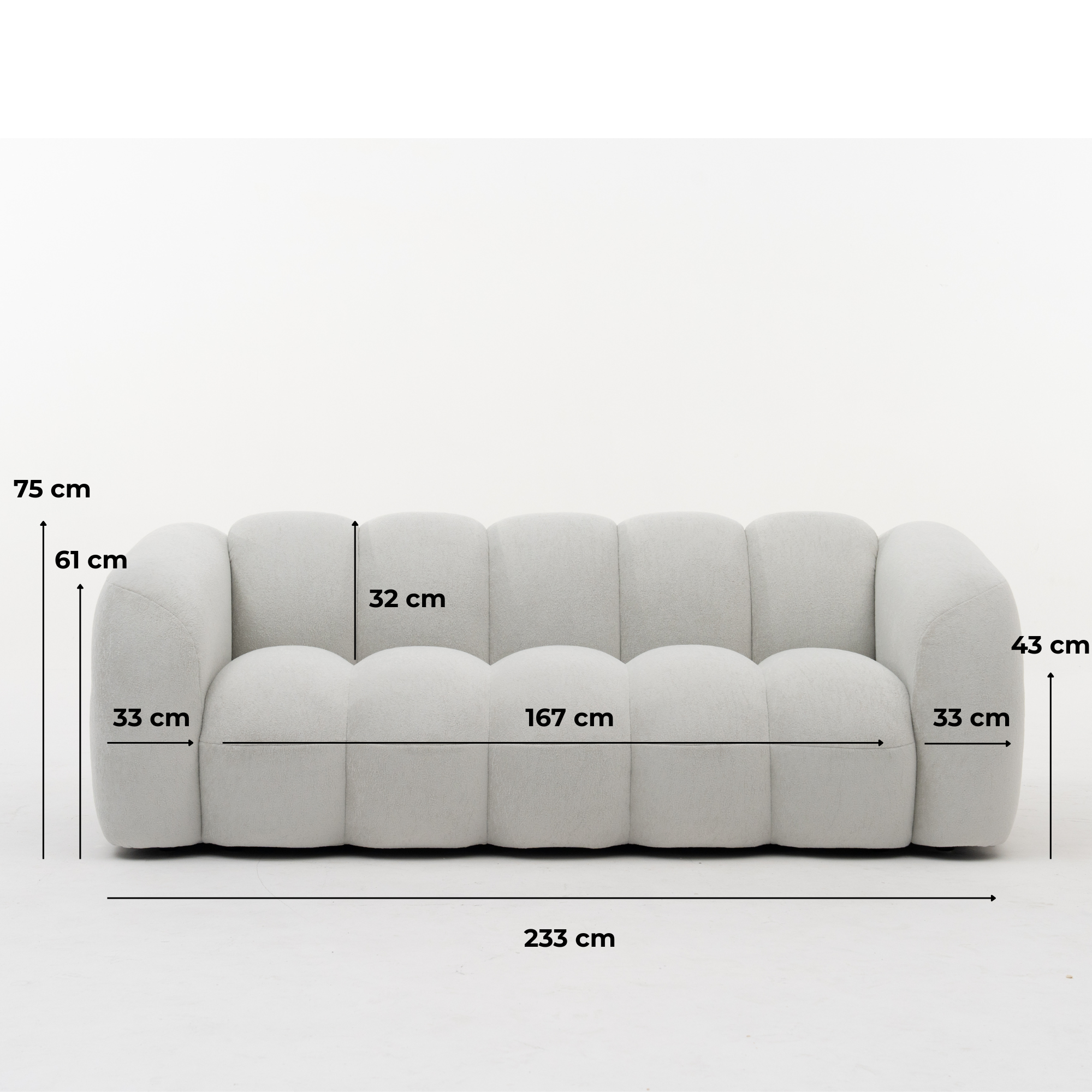
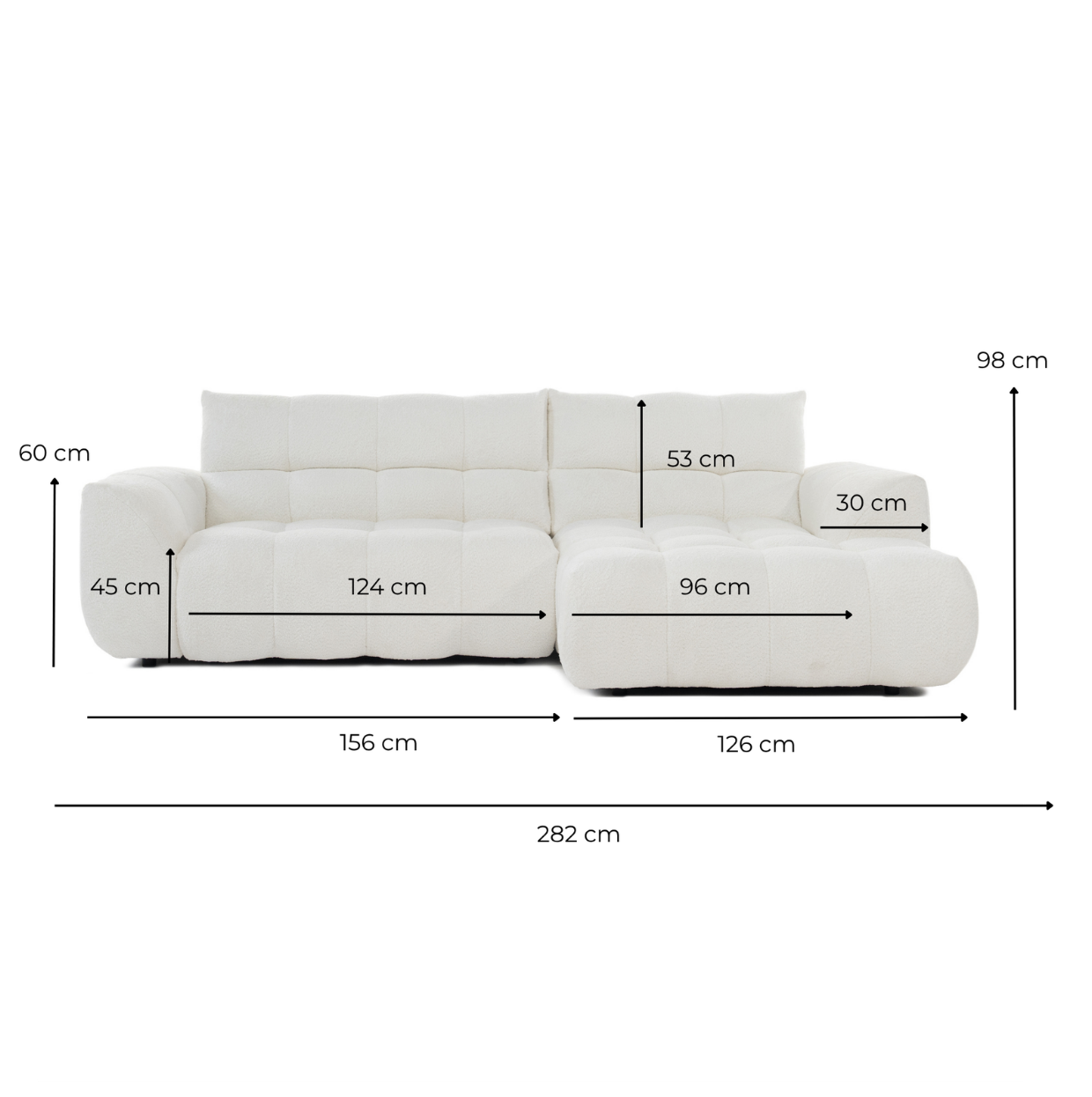
Browse grey sofas → · Browse Barolo (compact, low-profile) → · Browse all modular sofas →
Common industrial-style mistakes to avoid
The most common mistake is overdoing it — pairing too many raw materials together (brick, concrete and reclaimed wood all at once) can feel more like an unfinished building site than a designed room. Keep one or two raw materials as the backdrop, then let furniture and lighting carry the rest of the look. It's also worth balancing all that hard surface with at least one soft, tactile layer — a heavy rug, a linen or bouclé sofa, or layered cushions — so the room stays comfortable rather than feeling cold.
Frequently asked questions
What colours work best for an industrial look?
Charcoal, graphite, warm grey, rust, tan and black form the core industrial palette. These can be layered with warmer wood tones to keep the space from feeling too cold.
Can you do industrial style in a small room?
Yes — keep the palette lighter (warm grey rather than black) and prioritise one or two industrial elements (a metal-framed table, exposed-bulb lighting) rather than covering every surface, so the room doesn't feel heavy.
Does industrial style work with a modular sofa?
Very well — modular sofas with visible metal or dark wood legs and a muted, textured fabric (bouclé, linen, or a matte performance velvet) fit the industrial aesthetic naturally, while still offering the flexibility to reconfigure the layout.
All Furni sofas: Free EU & UK delivery · Free fabric samples · 30-day returns · 2-year warranty · Made in Poland.