



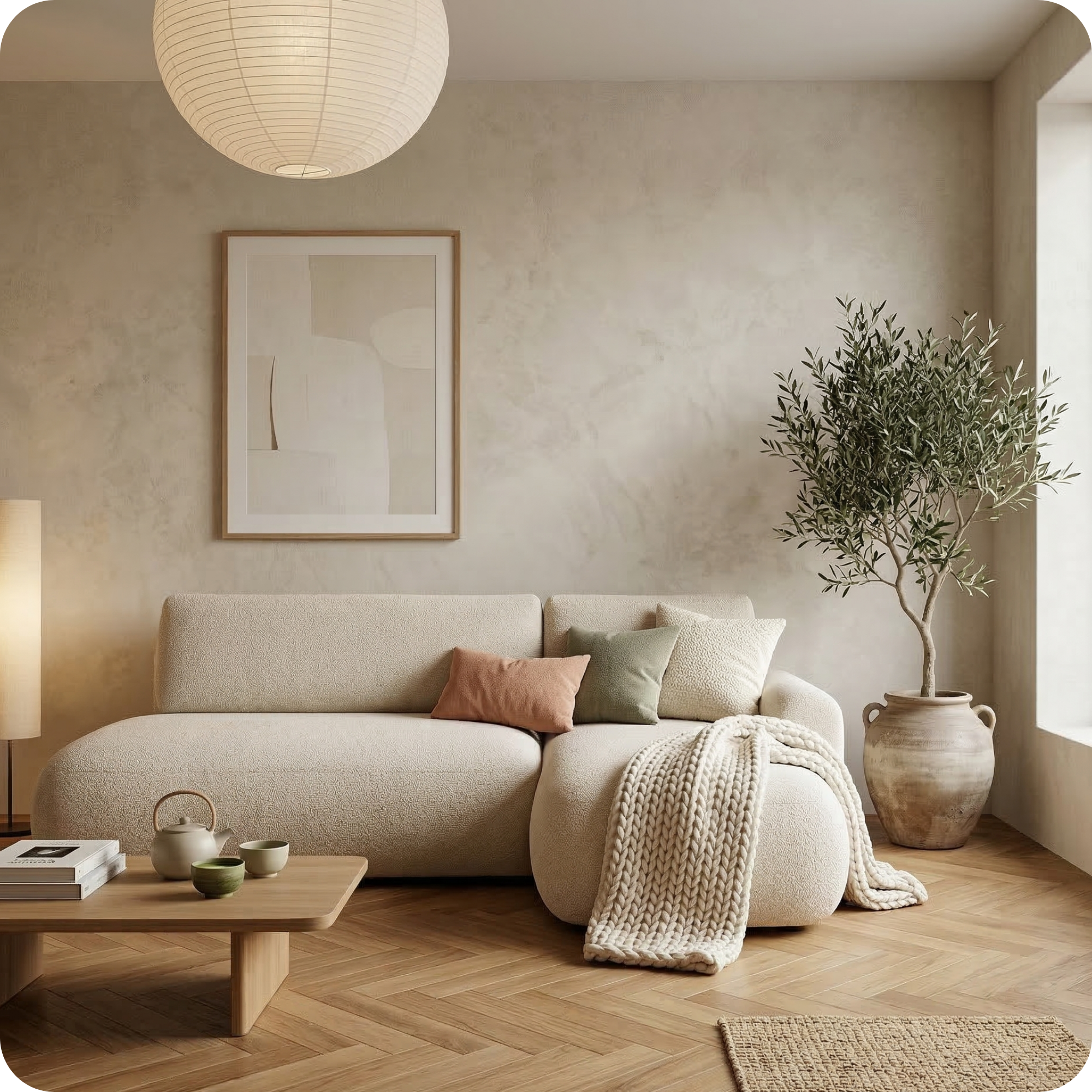
Best sofa fabric for cats: what every cat owner should know
If you share your home with cats, your sofa choice is one of the most important decisions you will make for your living room. Cats scratch, knead armrests, sleep on the cushions, and occasionally run their claws down the back panels. Choose the wrong fabric and you will be replacing your sofa within two or three years. Choose the right one and it will last a decade with minimal visible wear.
Three things to prioritise in a cat-friendly fabric
Tight weave: Fabrics with a tight, flat weave are much harder for cats to catch claws in. Loose or loopy textures — bouclé, chenille, open-knit weaves — provide exactly the kind of surface cats love to scratch, and they show damage within weeks.
High rub count: Check the Martindale rub test rating before you buy. A rating of 30,000 or higher is considered suitable for heavy domestic use. Anything below 15,000 will wear quickly. The best cat-friendly fabrics typically rate between 40,000 and 100,000.
Easy to clean: Cat hair, muddy paw prints, and the occasional hairball are facts of life. Fabrics that release hair easily and can be wiped down or spot-cleaned will save you significant time every week.
The best fabrics for cat owners
Microfibre: The most consistently recommended fabric for cat owners. The fibres are so tightly woven that claws tend to slide off the surface rather than catch. Hair removal with a lint roller takes seconds, and the material is soft, durable and available in many colours.
Leather: Genuine full-grain leather is highly scratch-resistant and the easiest surface to clean. Cat hair does not cling to it. The main downside is that any scratches that do penetrate are permanent and visible. High-quality leather develops a patina over time that can mask minor surface scuffs.
Performance velvet: A modern flat-pile velvet with a stain-resistant finish is a surprisingly good option. The dense pile gives cats less to catch onto, and loose hair brushes off easily with a damp cloth. Standard, uncoated velvet behaves very differently — avoid it.
Crypton and performance weaves: Purpose-built performance fabrics designed for high-traffic use. They are typically tightly woven, fluid-resistant, and easy to clean. Many manufacturers now offer these as a premium upgrade and they are worth the extra cost if you have pets.
Fabrics to avoid
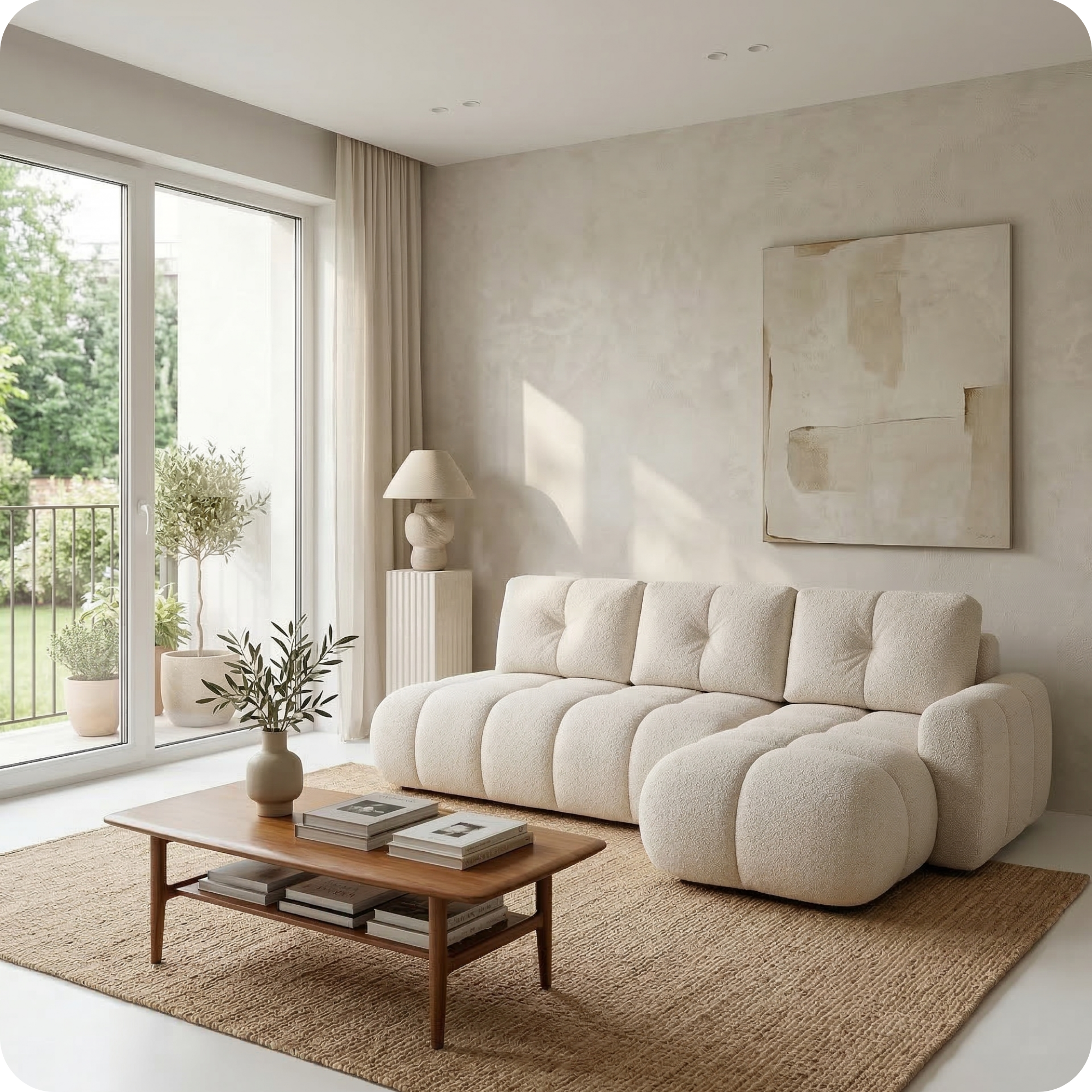
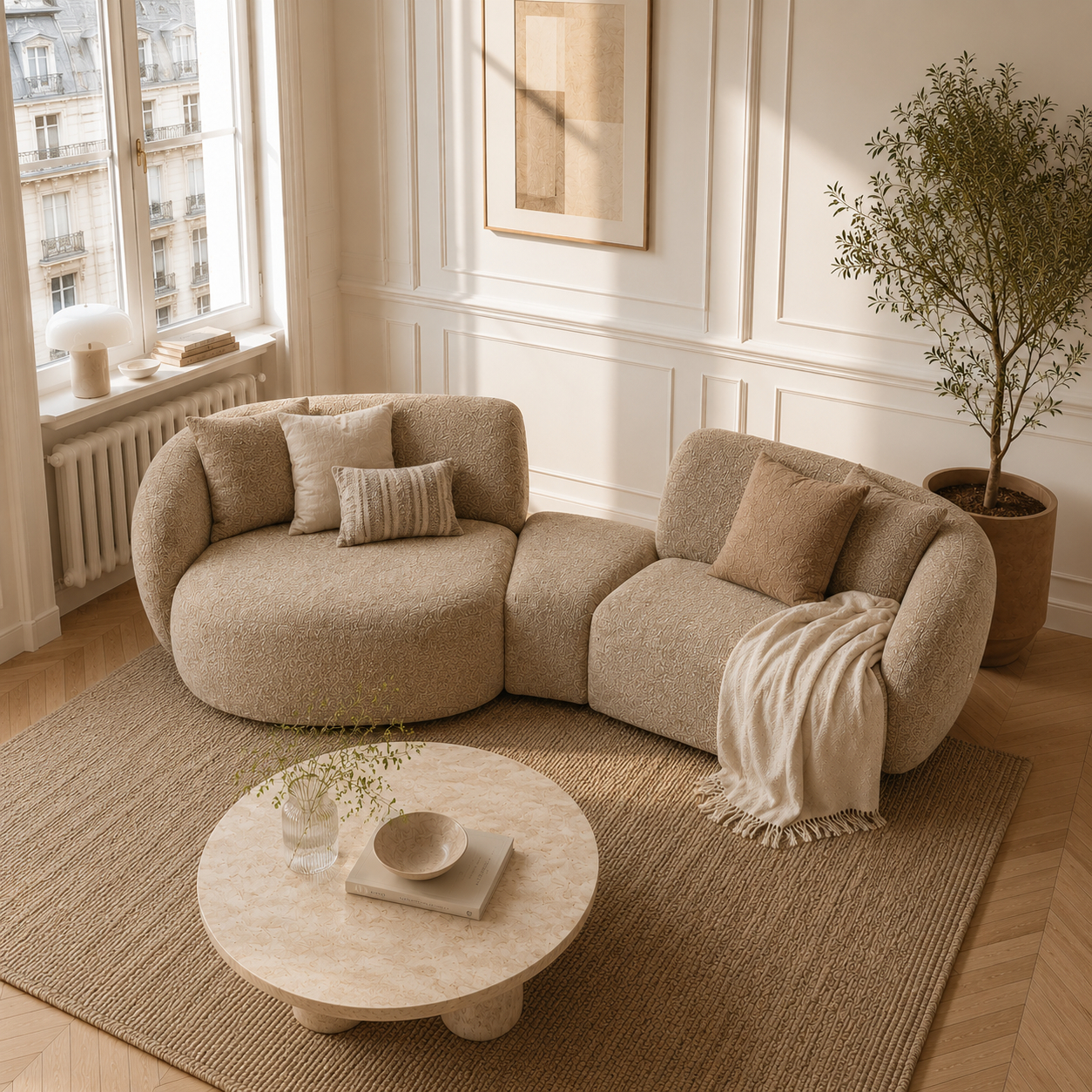
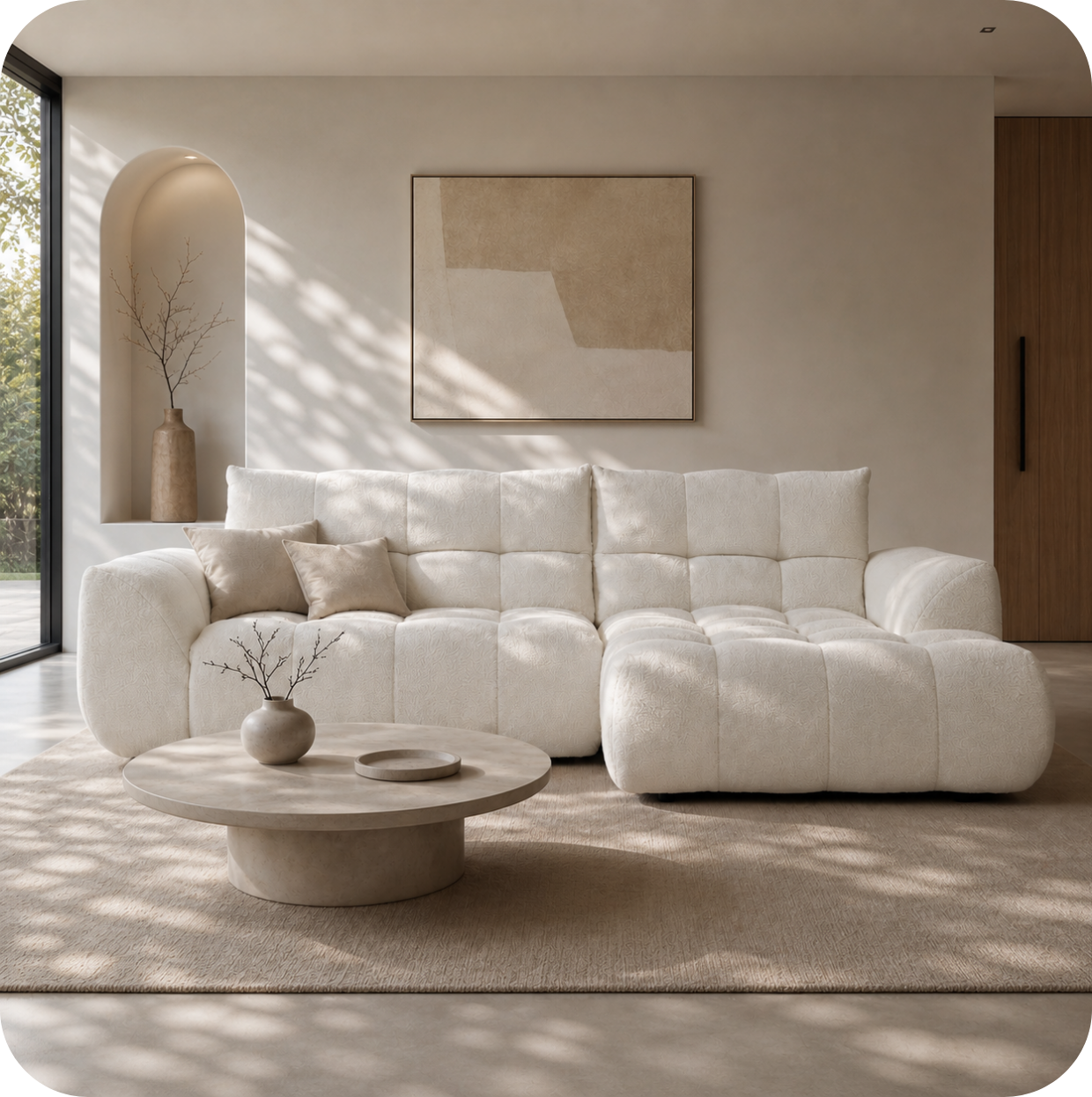
Avoid anything with a looped, textured, or heavily nubbed surface. Bouclé and chenille are beautiful in other contexts but genuinely unsuitable for homes with cats. Velvet with a long pile traps hair deeply. Linen, though elegant, is relatively fragile and will show claw marks and pulls within months. Loosely woven tweed has the same problem as bouclé — every loop is an invitation.
Design factors that also help
Beyond fabric, a few structural choices reduce the impact of cats. Sofas raised on wooden or metal legs have less upholstered surface area for scratching compared to floor-skimming designs with fully upholstered bases. Removable, washable cushion covers are a significant practical advantage. Arm caps — small protective covers for the armrests, which take the most claw traffic — are worth purchasing separately if they are not included.
Furni sofas such as the Riva 3-seater and the Torino corner sofa are available in a wide selection of performance fabrics chosen specifically for durability and ease of maintenance in active households.
The honest reality
No fabric is completely cat-proof. The goal is to choose a material that absorbs daily use with minimal visible damage, and to provide your cats with a dedicated scratching post placed near the sofa so they have a legitimate and appealing alternative. The best cat-friendly sofa is one your cat finds only slightly less interesting than the scratching post beside it.

Zostaw komentarz
Ta strona jest chroniona przez hCaptcha i obowiązują na niej Polityka prywatności i Warunki korzystania z usługi serwisu hCaptcha.