


Biophilic Design in the Living Room: How to Bring Nature Indoors
Biophilic design is built on a simple, well-evidenced idea: humans feel better in spaces that connect them to the natural world. Plants, natural materials, natural light, organic shapes, and the sounds and textures of nature reduce stress, improve concentration, and create environments that people find genuinely restorative. In a living room, biophilic design principles translate into practical, beautiful choices that make the space feel more alive and more calming at the same time.
Start With Plants: The Most Impactful Change
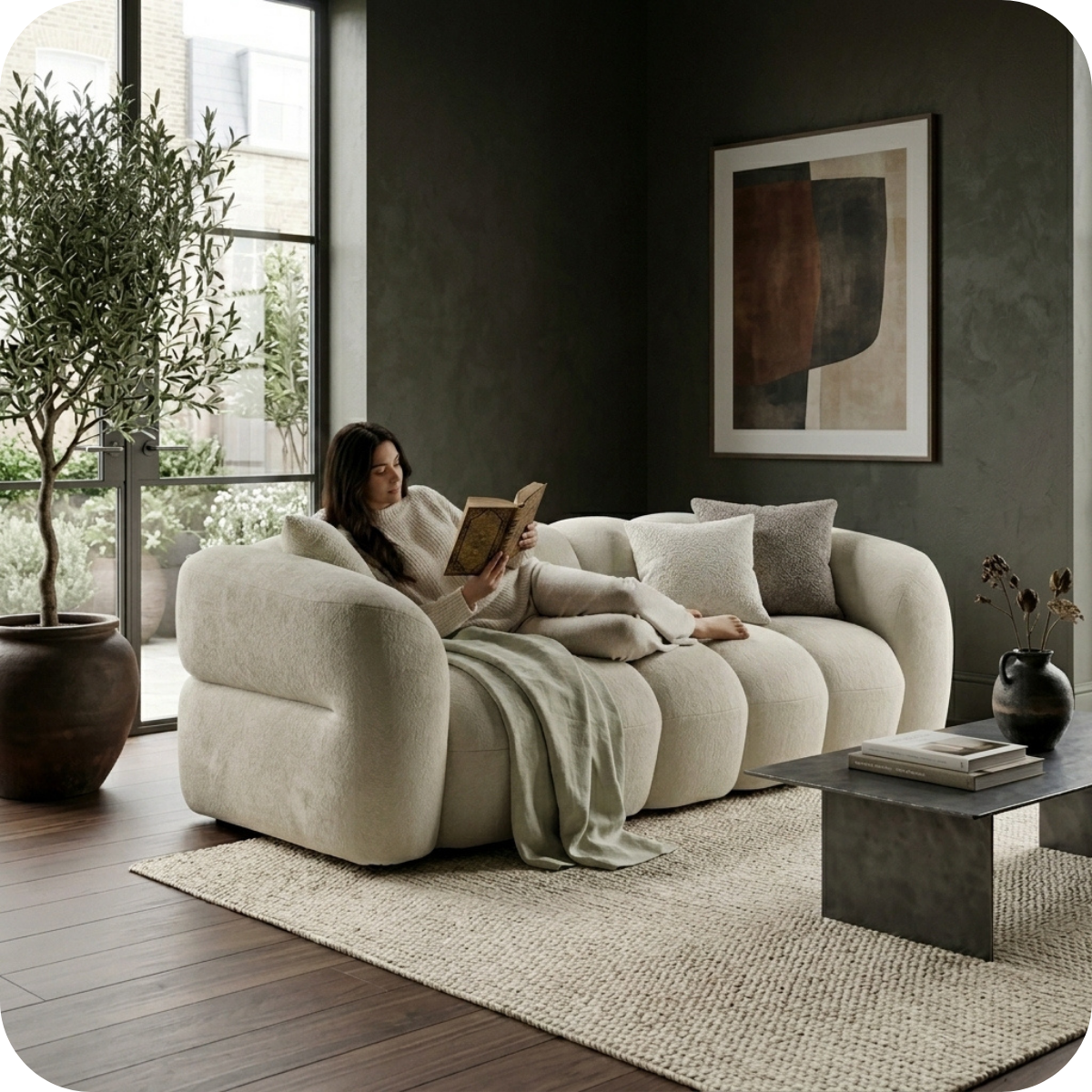
The single most effective biophilic intervention in any room is adding living plants. Plants do multiple things simultaneously: they soften hard architectural lines, add scale and vertical interest, introduce movement (leaves in air currents), improve air quality, and bring genuine life and unpredictability into a space. For a living room, a mix of plant sizes and types creates the most interesting effect. Large floor plants — a fiddle leaf fig, a Monstera deliciosa, a rubber plant, or a large Sansevieria — anchor corners and draw the eye upward. Medium plants on side tables, shelving, and windowsills add layers of greenery at different heights. Trailing plants on high shelves add movement and depth.

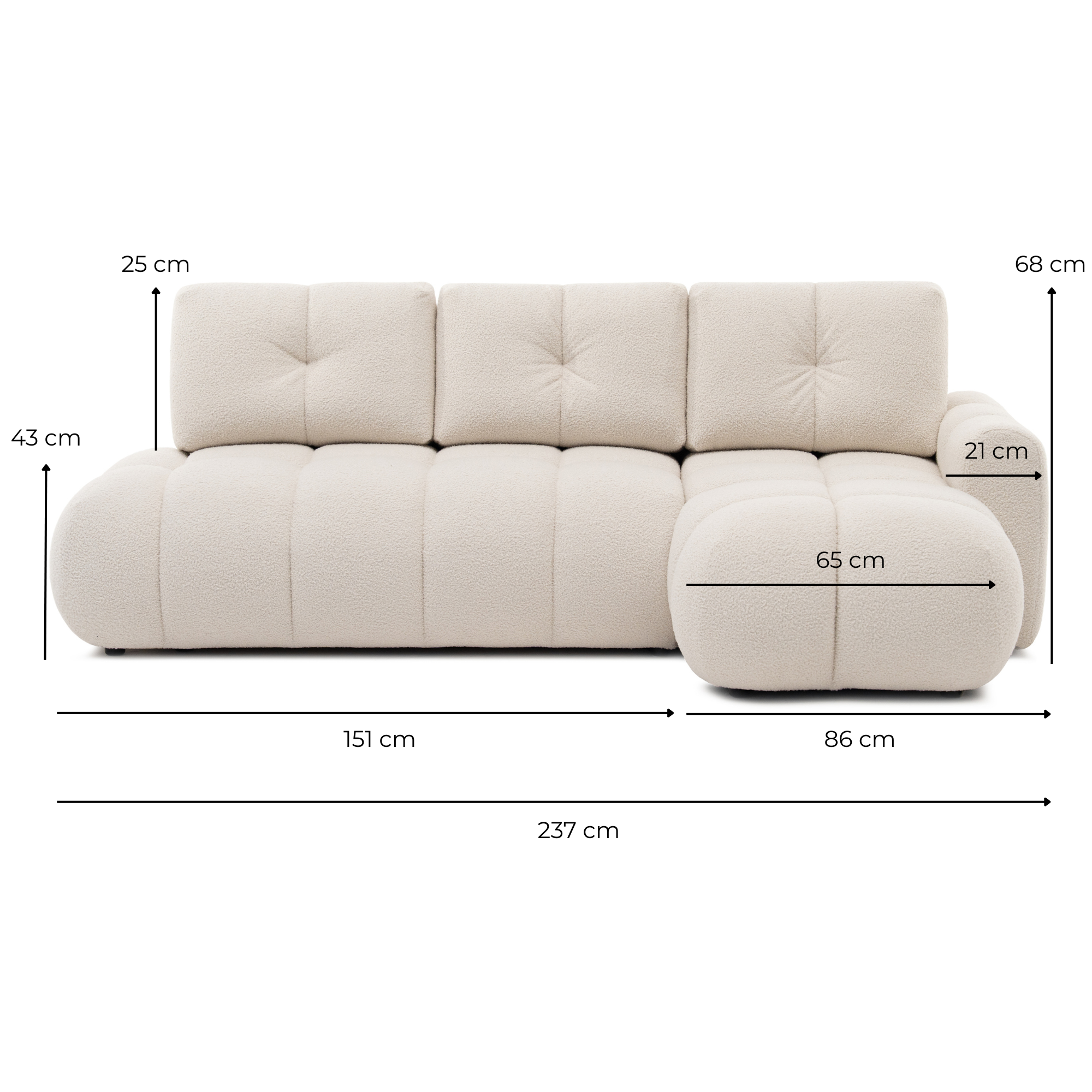
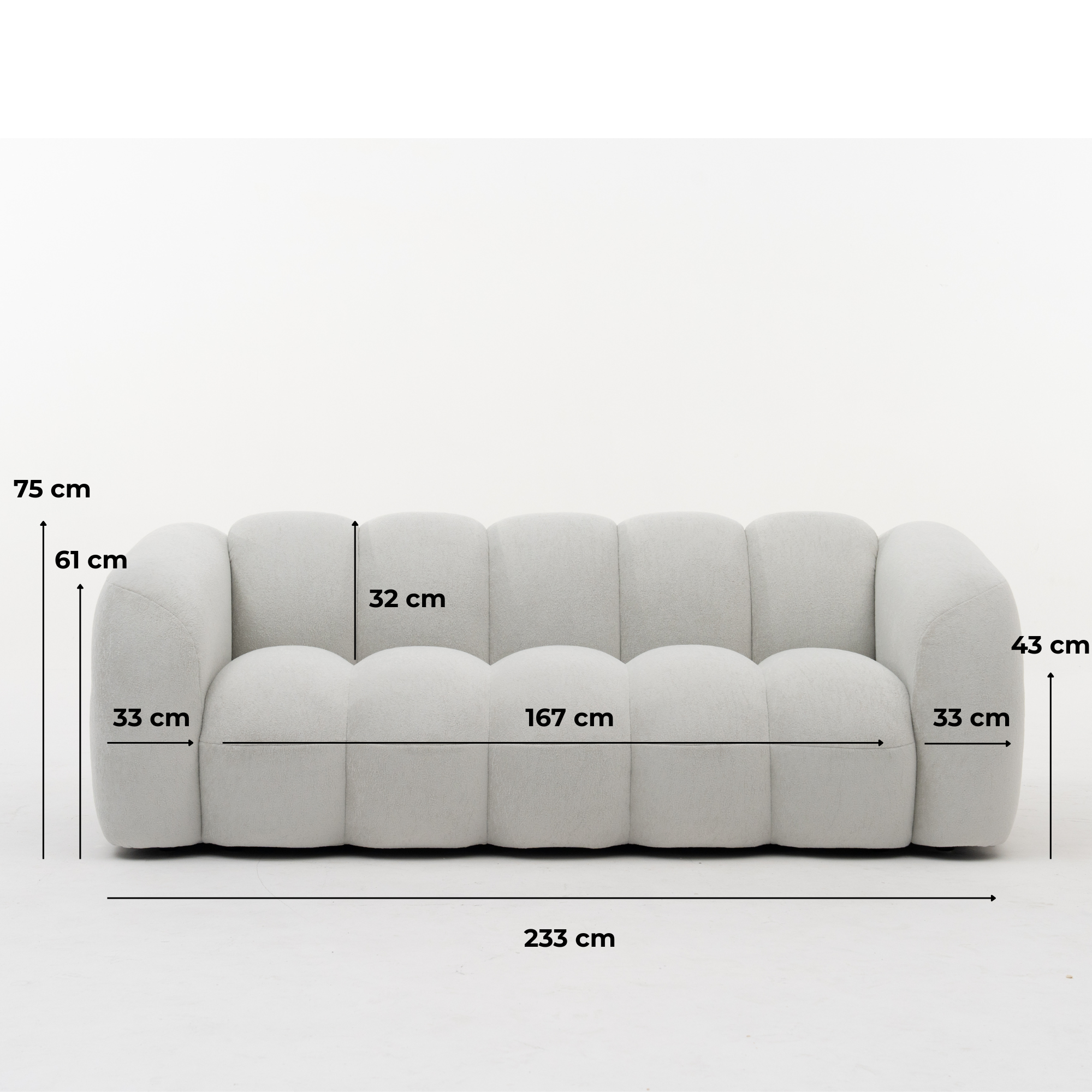
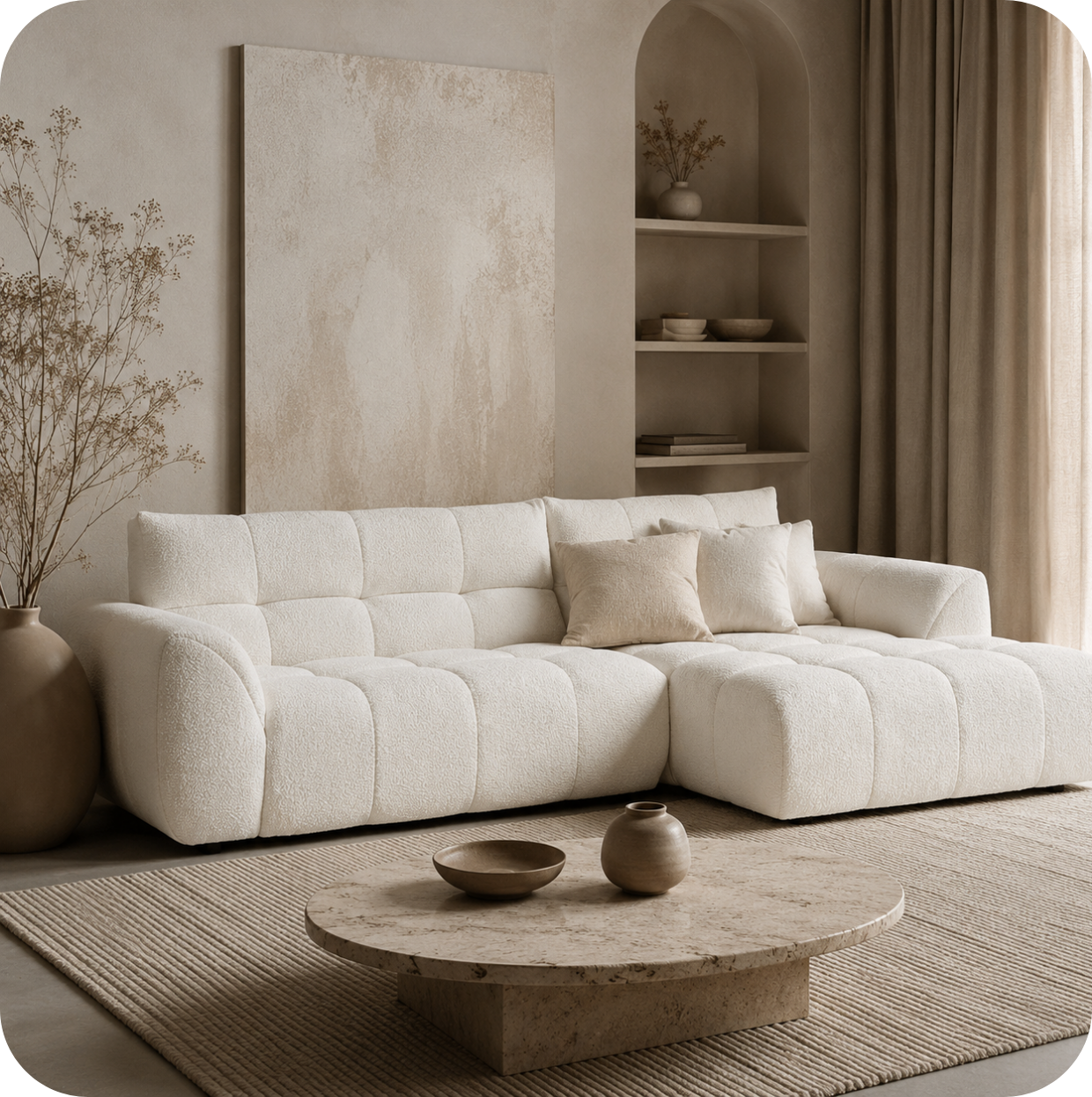
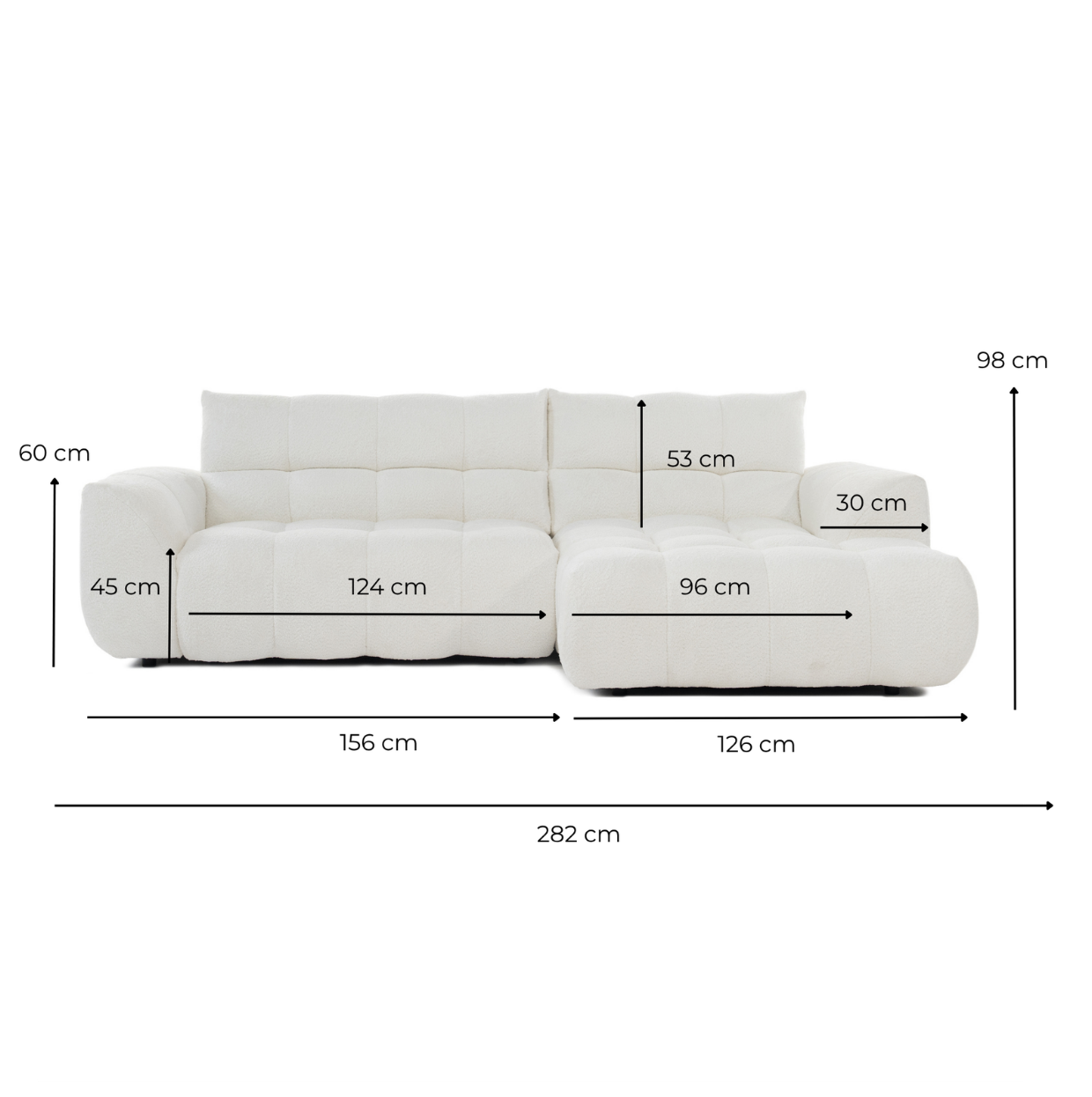
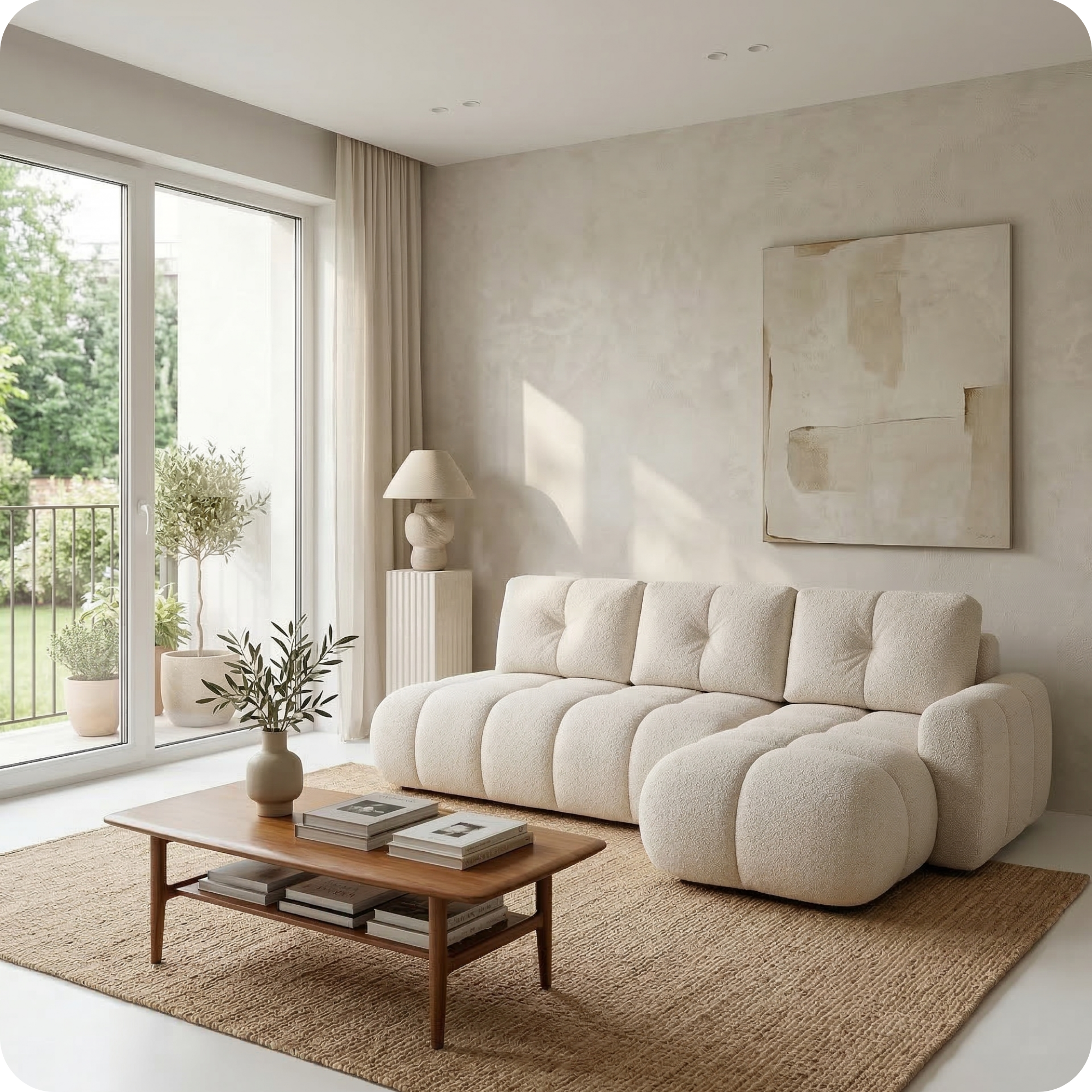
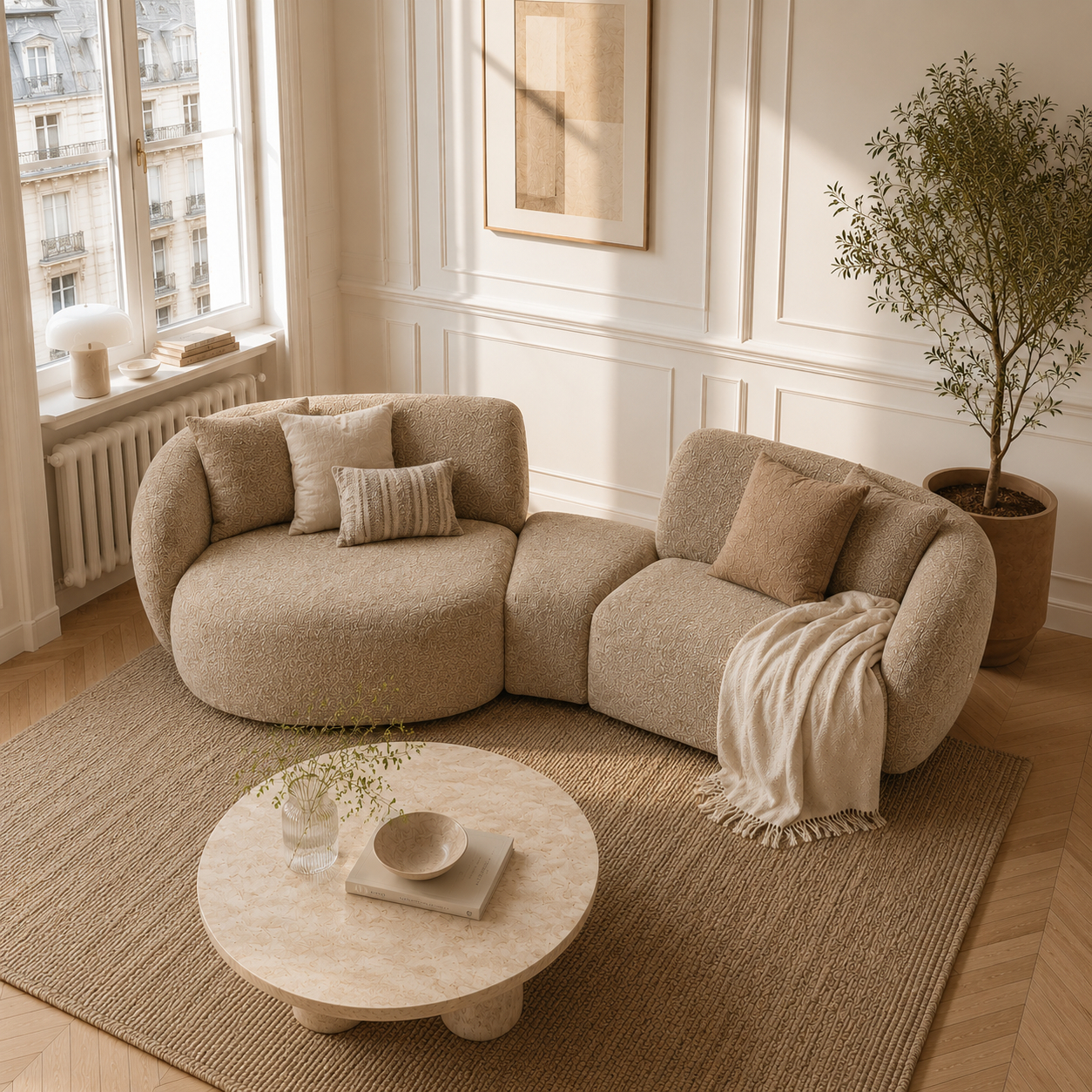
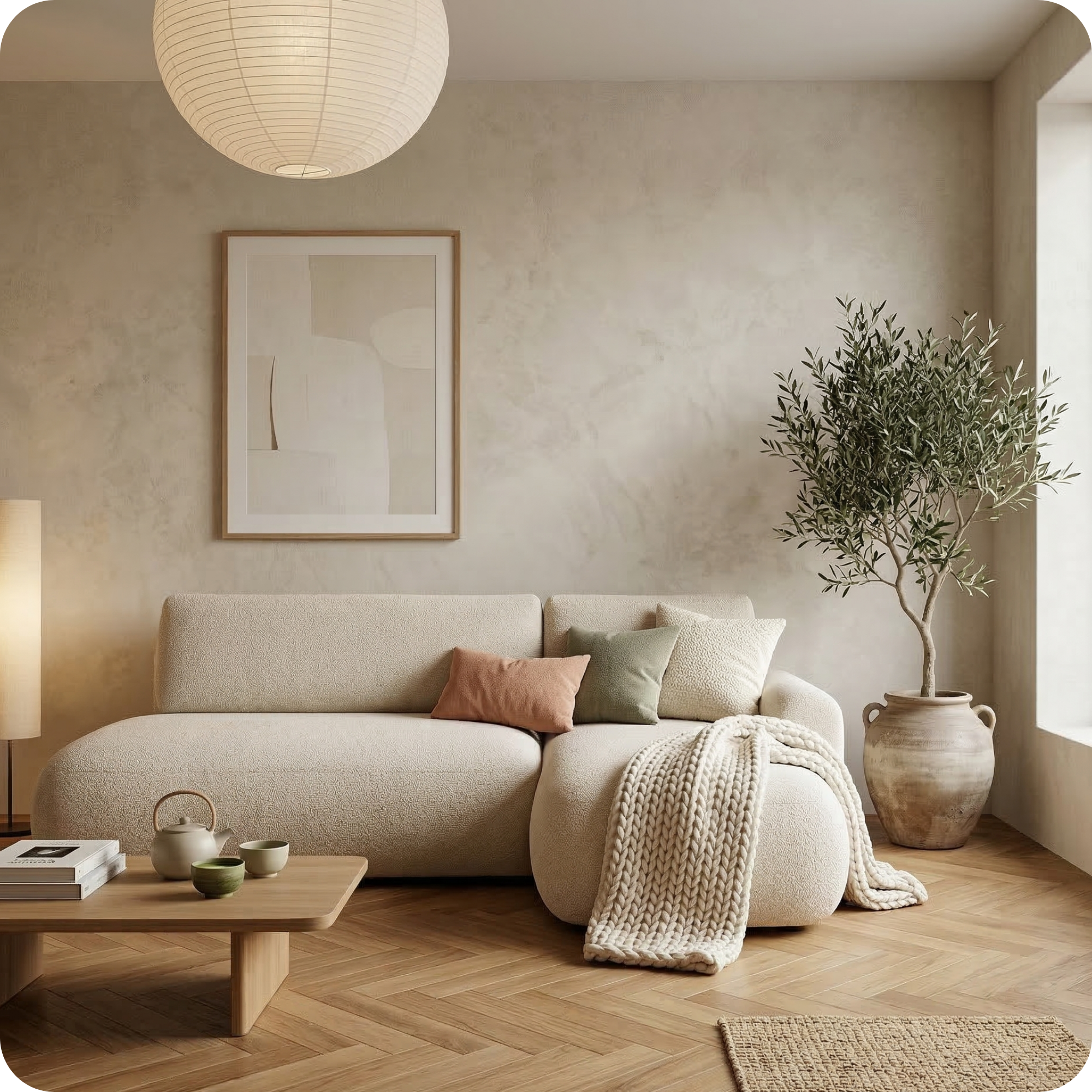
Lugano Sofa in Sand — from €1,299
The sandy, warm-toned fabric of the Lugano sofa perfectly embodies the biophilic palette: earth tones, natural textures, and organic warmth. Position a large floor plant in the corner behind the sofa to frame the seating area with greenery, and layer with linen cushions and a jute rug for maximum natural texture. The sand colour specifically pairs beautifully with the varied greens of houseplants — from the deep green of a Fiddle Leaf Fig to the variegated chartreuse of a Pothos.

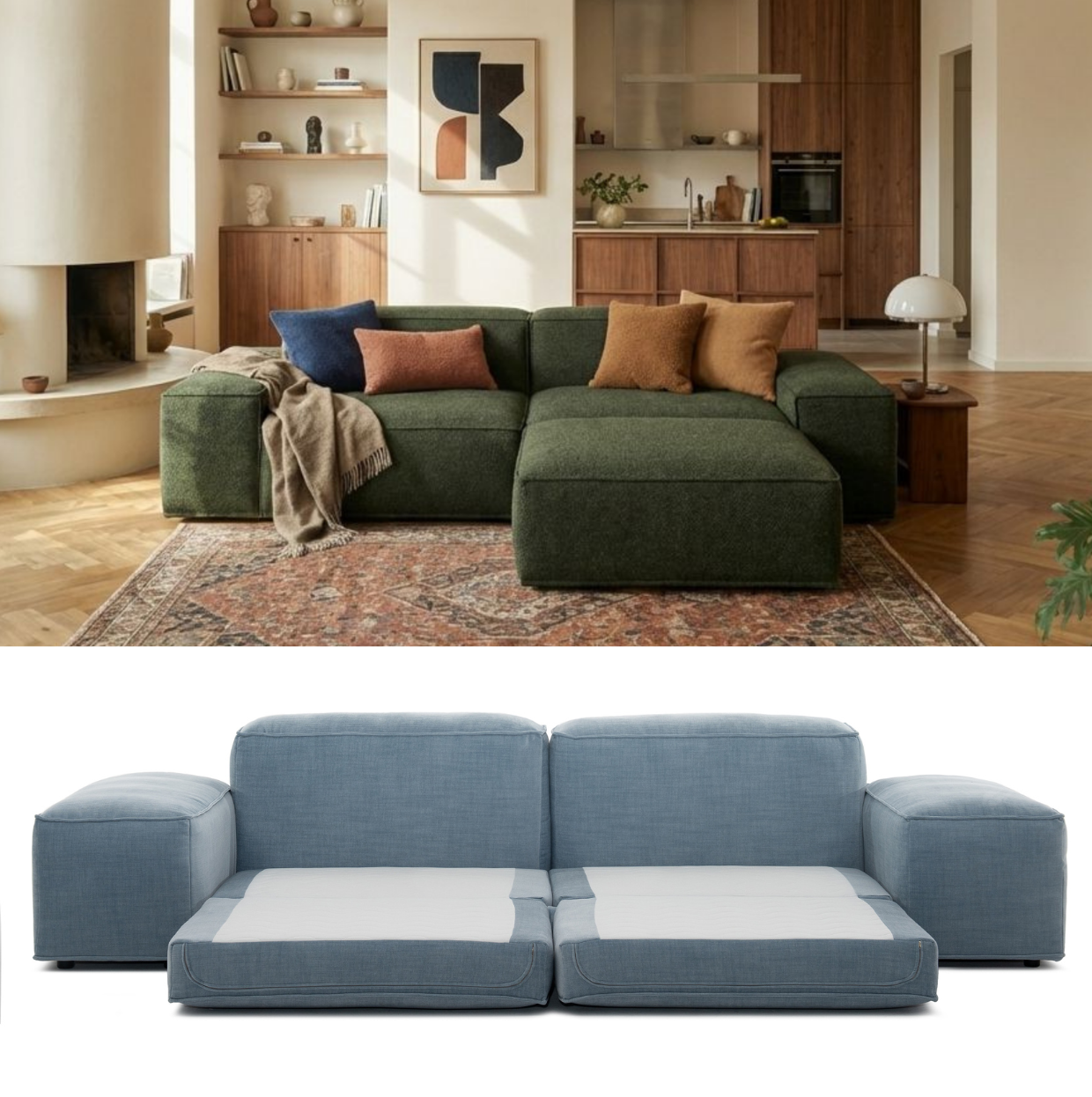
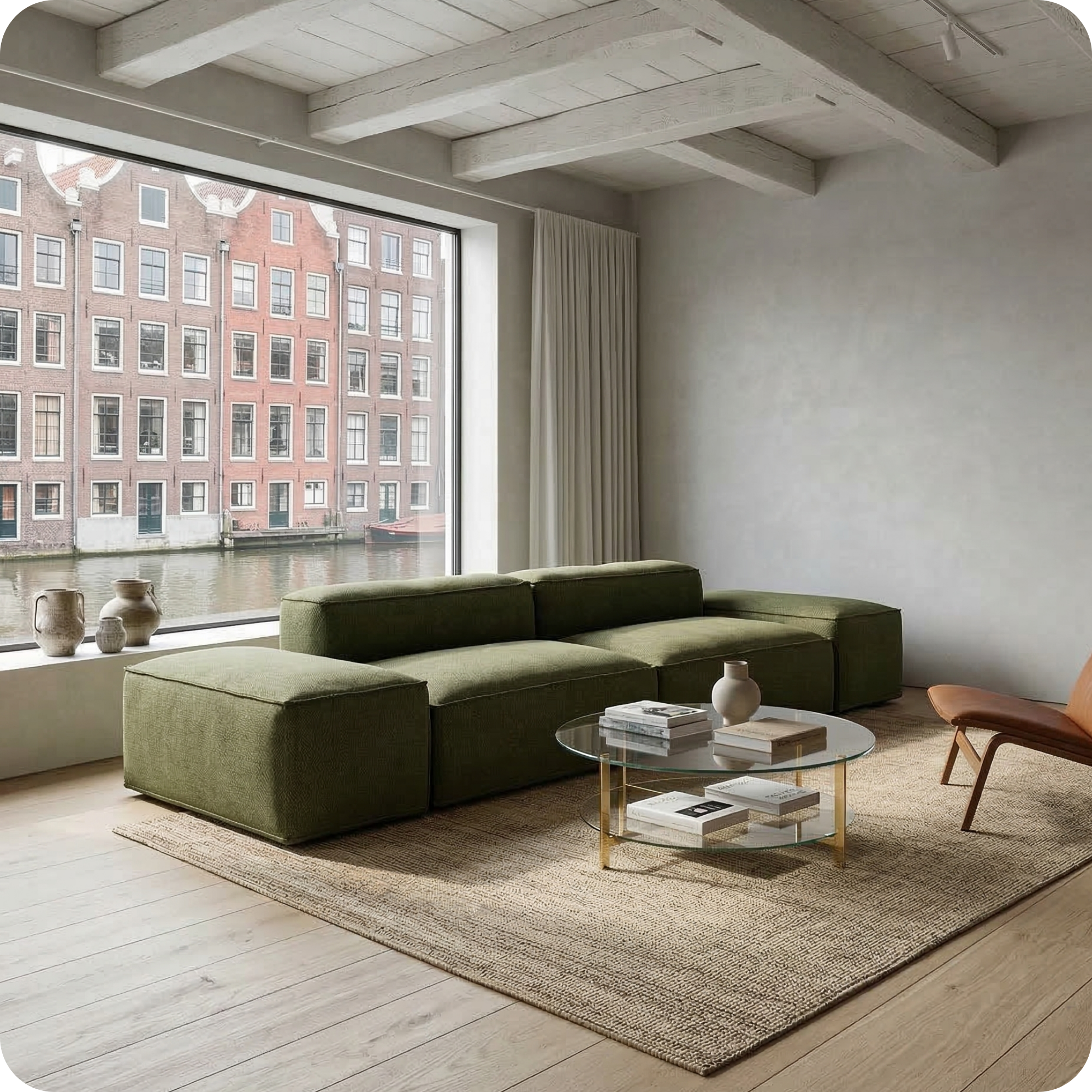
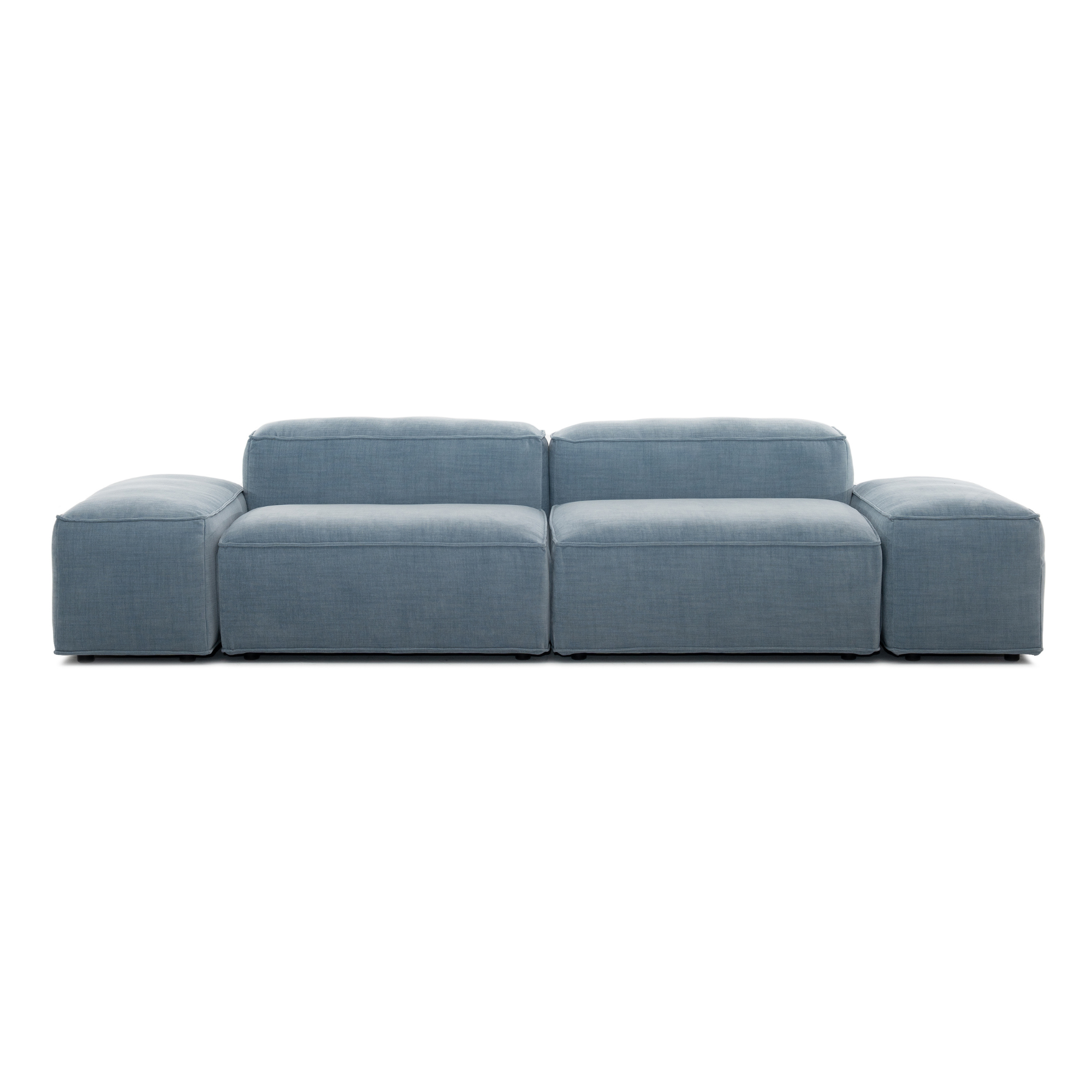
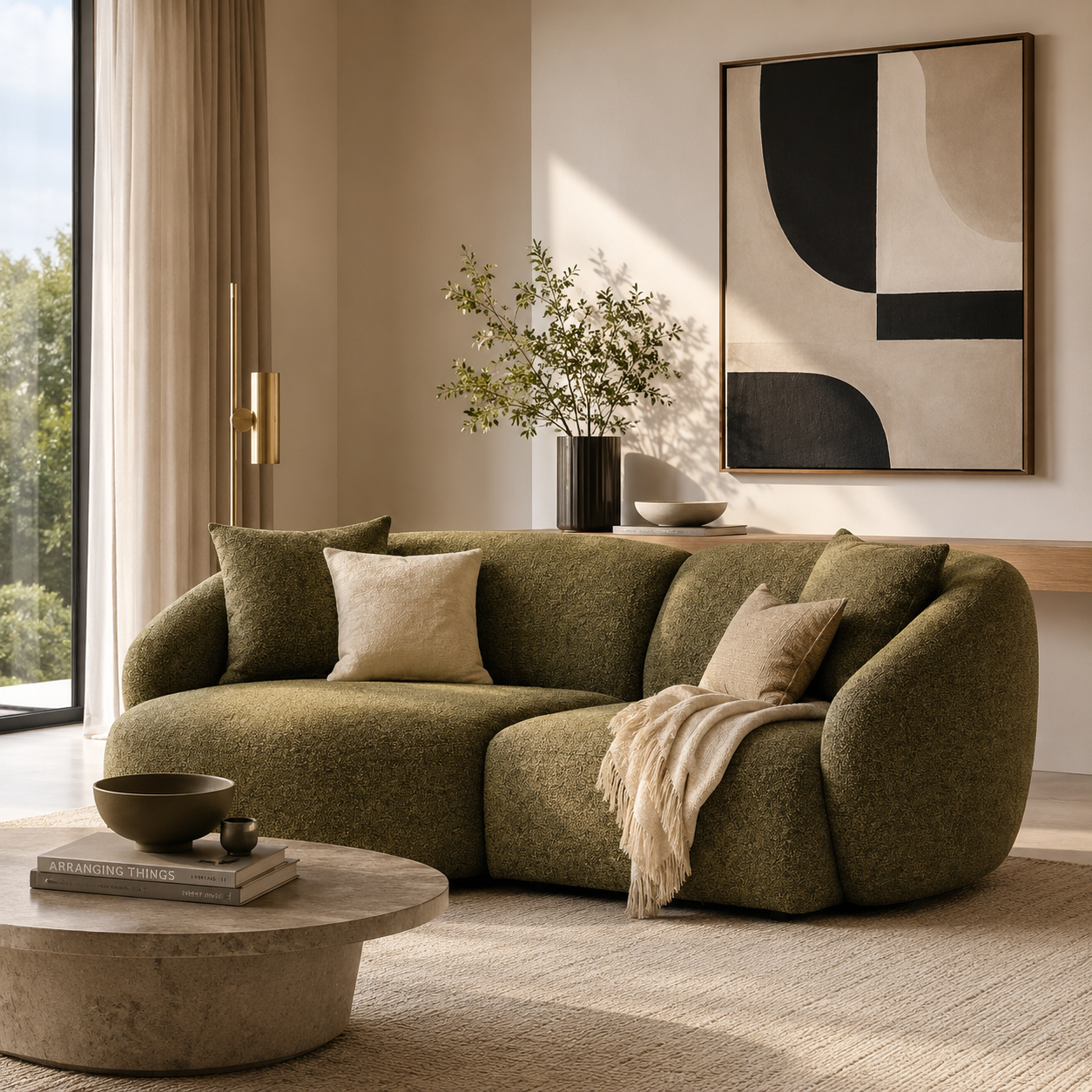
Merlot Sofa in Leaf Green — from €1,532
A green sofa is perhaps the most direct expression of biophilic colour in a living room — it brings nature's most prominent hue into the heart of the space. The Merlot in leaf green sits beautifully among plants: the colour directly references the natural world, and the contrast between the structured, upholstered form of the sofa and the organic, irregular shapes of surrounding plants creates a rich, layered visual tension that feels genuinely alive.
Natural Materials: Wood, Stone, Rattan, Linen, and Wool
The materials in a room carry strong biophilic signals. Natural materials — wood, stone, terracotta, rattan, cane, linen, cotton, wool, jute — have textures, grain, and colour variation that manufactured materials rarely replicate. Each natural material connects the room to its origin: wood to forest, stone to earth, linen and cotton to field, wool to pasture. In a biophilic living room, the goal is to build up layers of these materials: a jute or sisal rug underfoot, a wooden coffee table, rattan side tables or baskets, linen or cotton cushions and throws, and ceramic plant pots. The cumulative effect is a room that feels warm, grounded, and deeply rooted in the natural world.
Natural Light: Maximise and Enhance
Natural light is one of the most powerful biophilic elements and one of the most overlooked. Every design choice that admits more daylight into a living room has both aesthetic and wellbeing benefits. Keep window sills clear of clutter. Use sheer curtains or blinds that can be fully opened during the day. Choose window treatments in natural fabrics — linen, cotton — that soften light without blocking it. If you have the option, position your sofa to catch afternoon light, as warm, directional afternoon sun on natural fabric and wood is one of the most pleasurable interior experiences available. Light-coloured walls and large mirrors bounce daylight deeper into the room.
Organic Shapes and Patterns
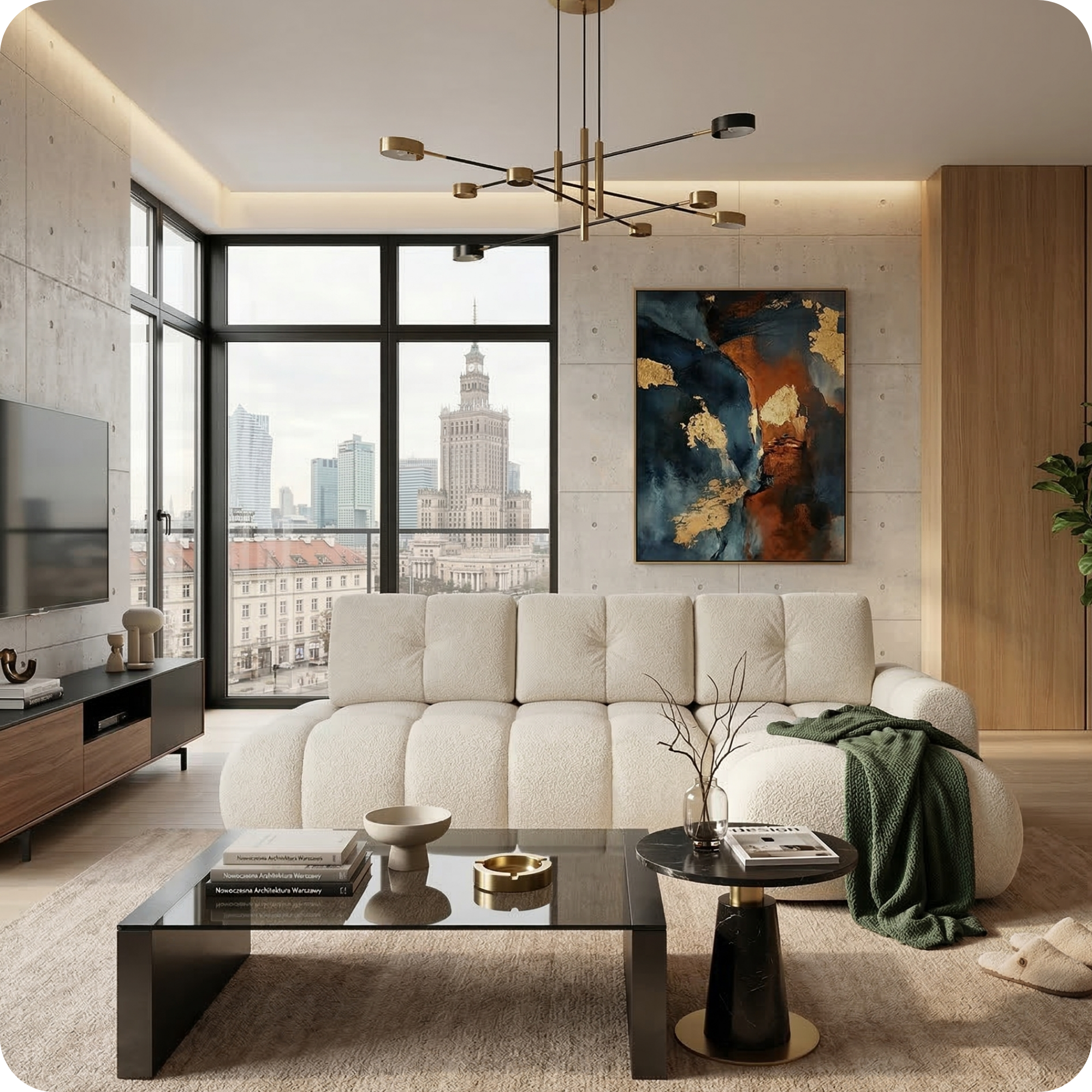
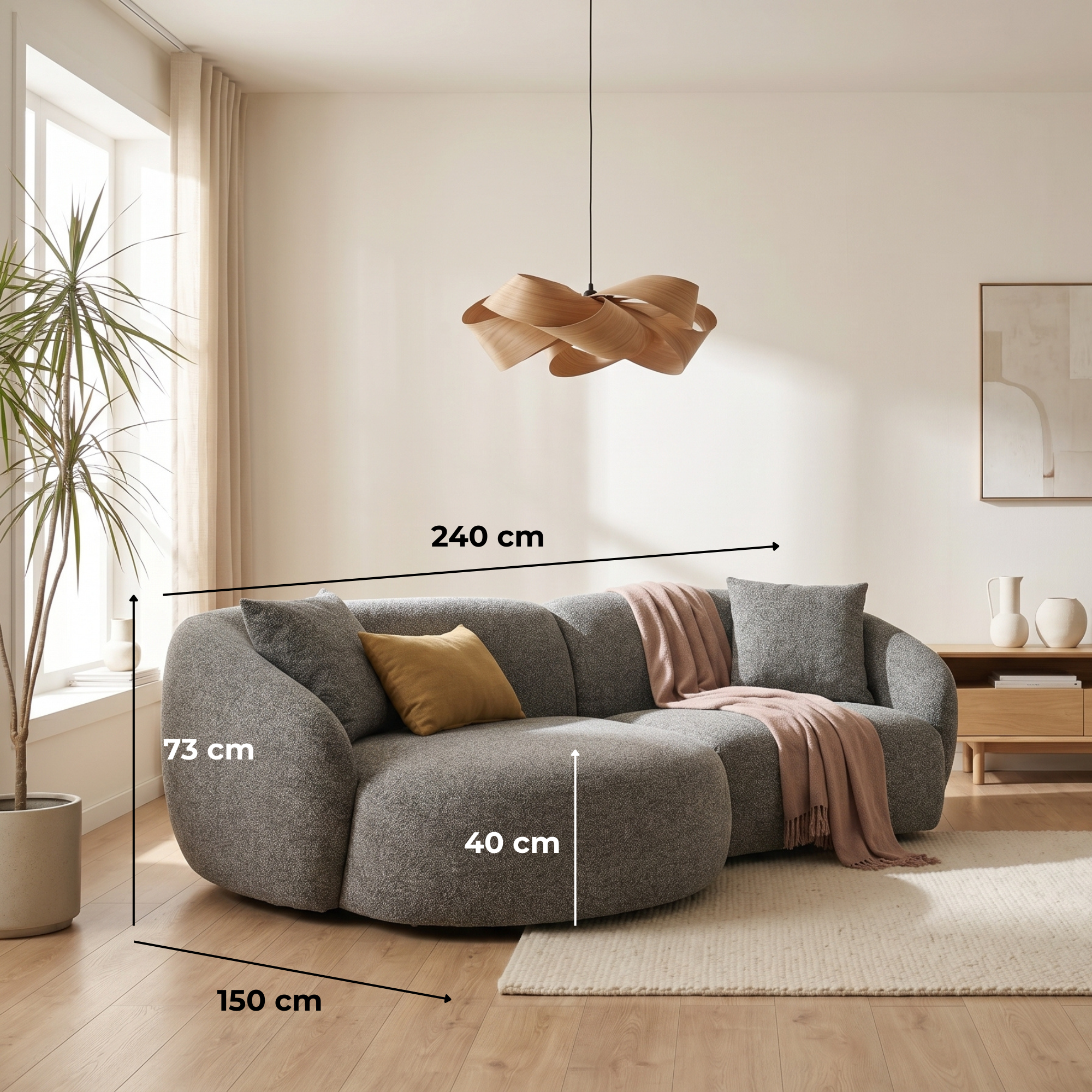
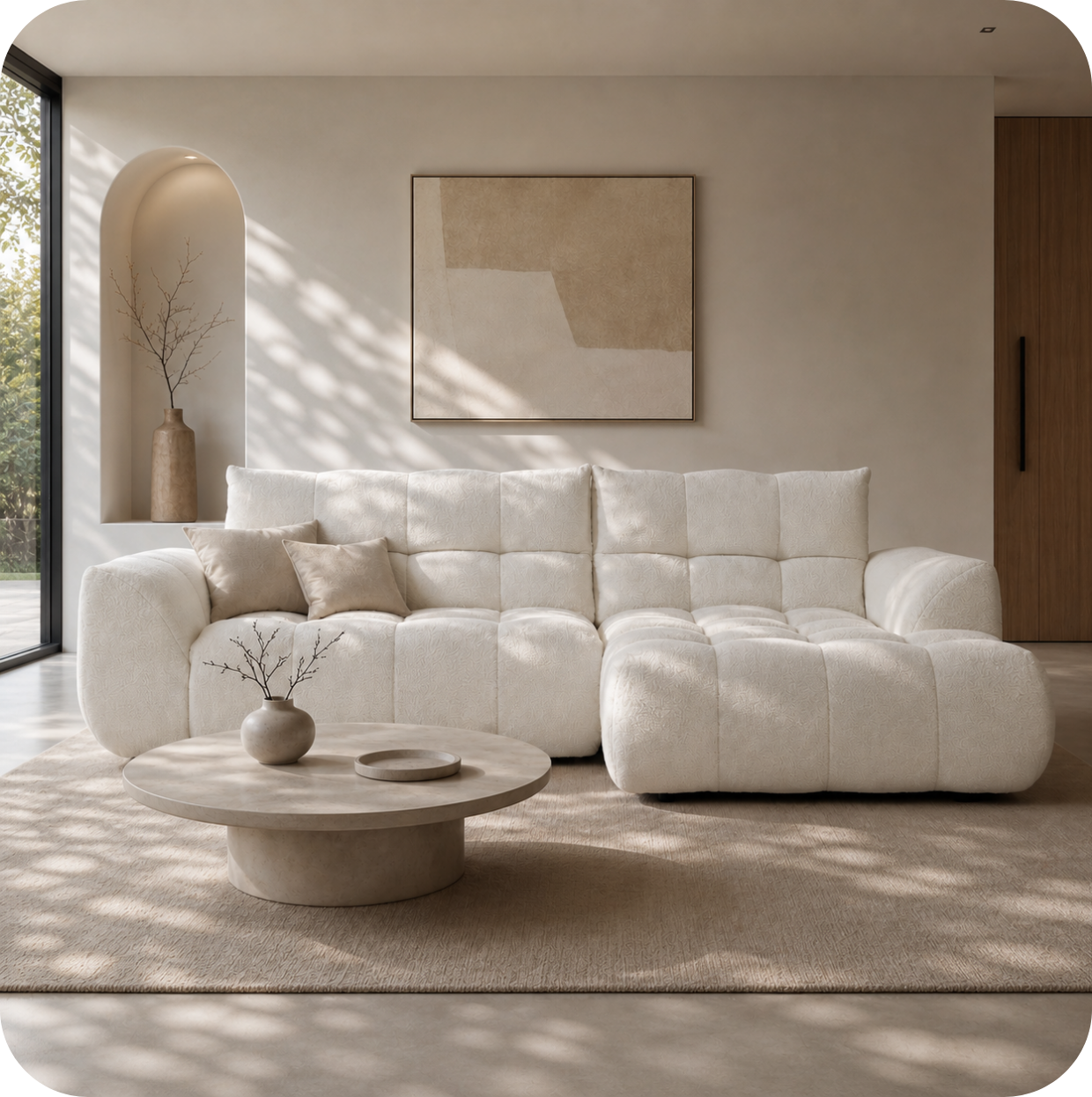
Nature abhors straight lines — organic, flowing shapes are a core biophilic signal. Curved sofas, round coffee tables, organic-shaped rugs, arched mirrors, and sinuous lamp bases all contribute to a more biophilically resonant living room. Botanical prints on cushions, curtains, or wallpaper introduce nature's visual patterns. Stone and wood grain patterns, woven textures, and leaf-like ceramic vessels all contribute to the layered, irregular visual language of the natural world. The contrast between a clean-lined, well-proportioned sofa and organic-shaped accessories around it creates the most satisfying biophilic interior composition.
Water Features and Natural Sounds
A small tabletop water feature adds the sound of flowing water — one of the most reliably calming sounds in the human sensory experience. Even a modest water feature creates an ambient soundscape that drowns out street noise and TV background hiss. Natural beeswax candles, wood-burning fires (where available), and essential oil diffusers with botanical scents add the sensory dimensions of smell and flickering light that complete the biophilic picture. The goal is not any single intervention but the cumulative layering of sensory connections to the natural world that, together, make a living room feel like a restorative sanctuary.