



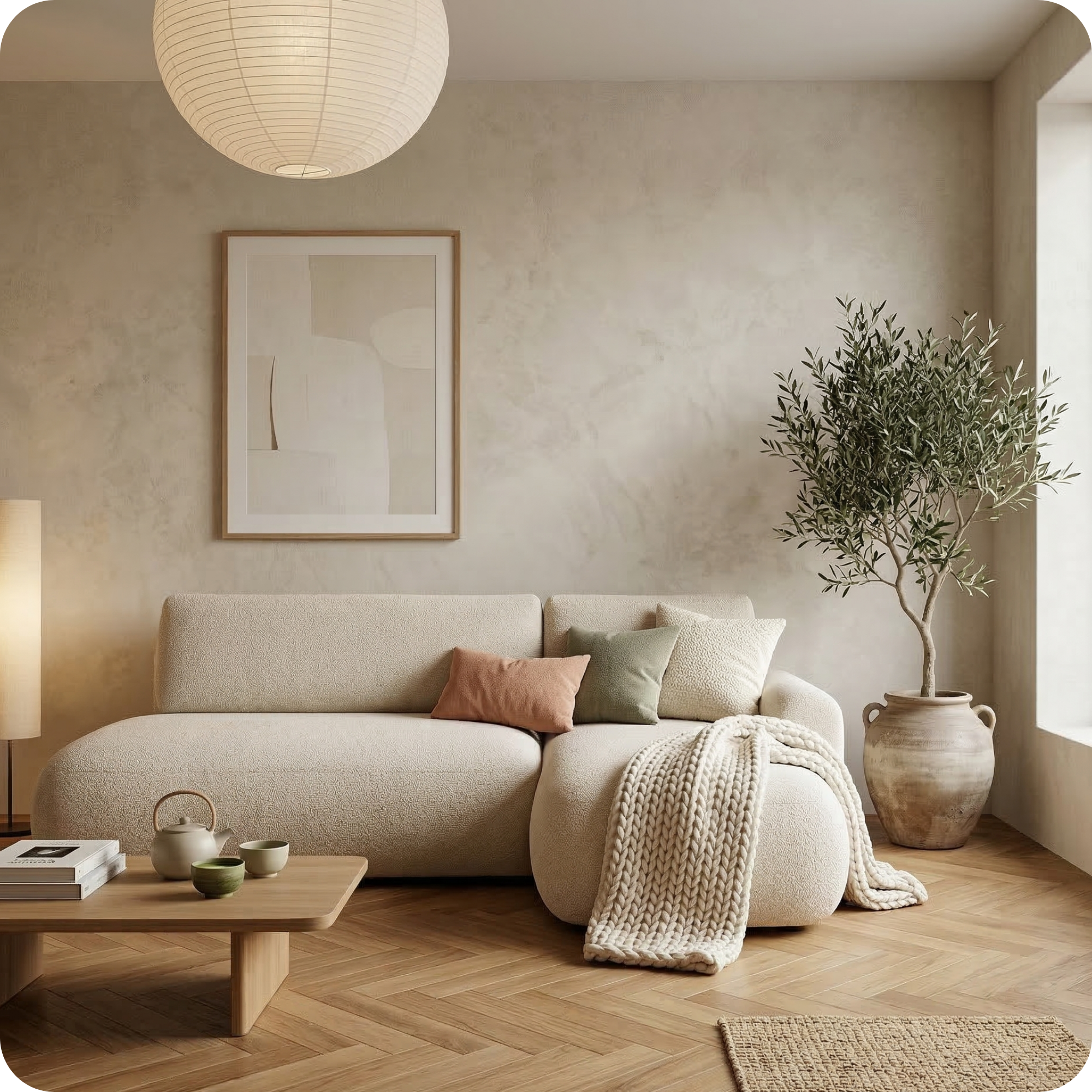
How to Arrange Furniture in a Living Room: Complete Layout Guide
Furniture arrangement is one of the most underestimated aspects of interior design. You can have the most beautiful sofa, the most tasteful colours, and the most curated accessories — but if the furniture is arranged badly, the room will feel awkward, cramped, or cold. Good furniture arrangement creates flow, defines zones, encourages conversation, and makes a room feel simultaneously spacious and welcoming. This complete guide covers the fundamental principles of living room layout and gives you practical rules to follow for any room shape or size.
Start with the Focal Point
Every living room needs a focal point — a single element that anchors the arrangement and draws the eye. In most rooms, the focal point is the fireplace, a large window with a view, or the television. Identify your focal point before placing any furniture: it determines the orientation of the sofa and seating. The primary sofa should face the focal point, or at least be angled toward it at no more than 45 degrees. If your room has competing focal points (fireplace AND TV, for example), choose which is primary and arrange the main seating toward it. The other focal point becomes secondary and can be acknowledged with a single armchair or side seating.
The Sofa: The Most Important Piece
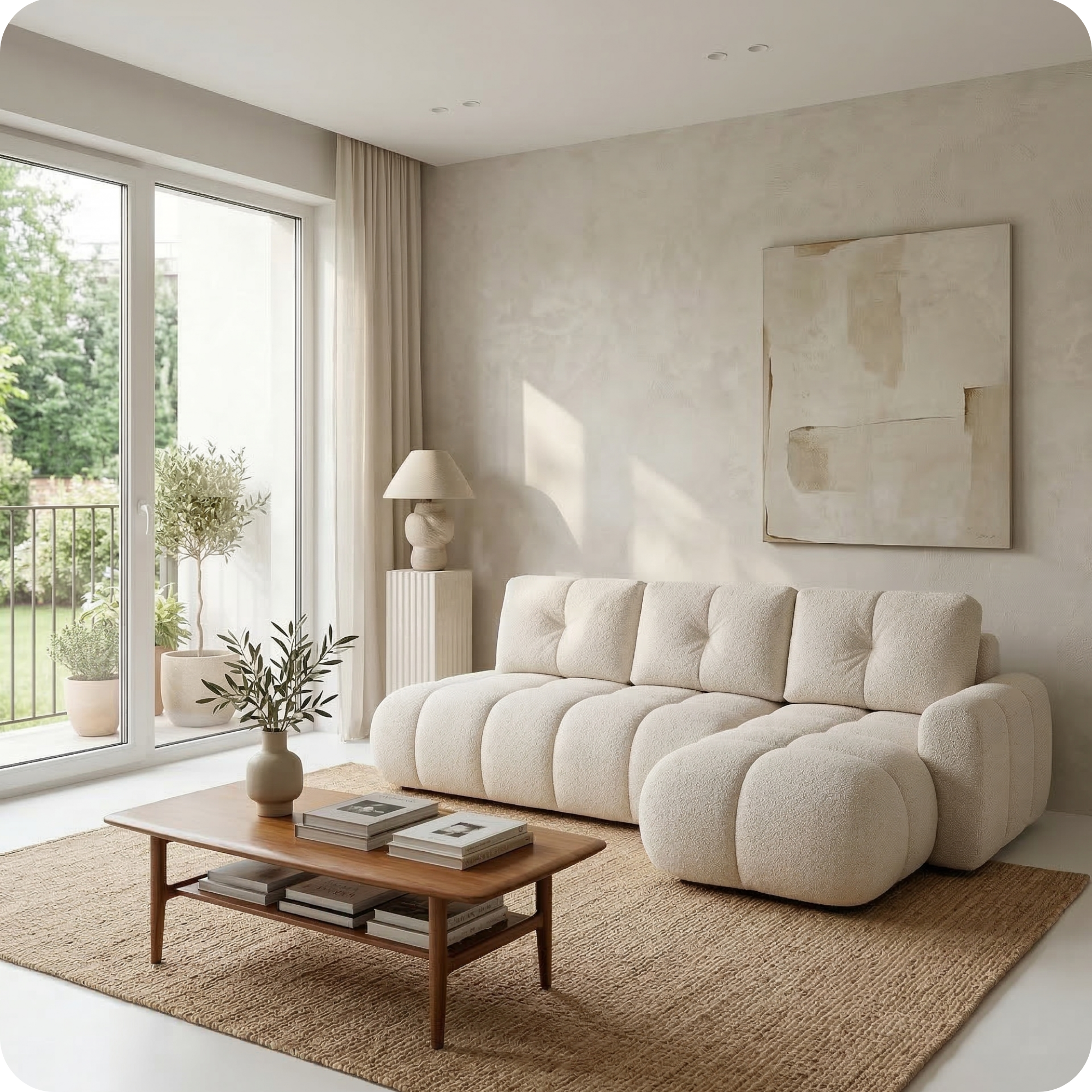
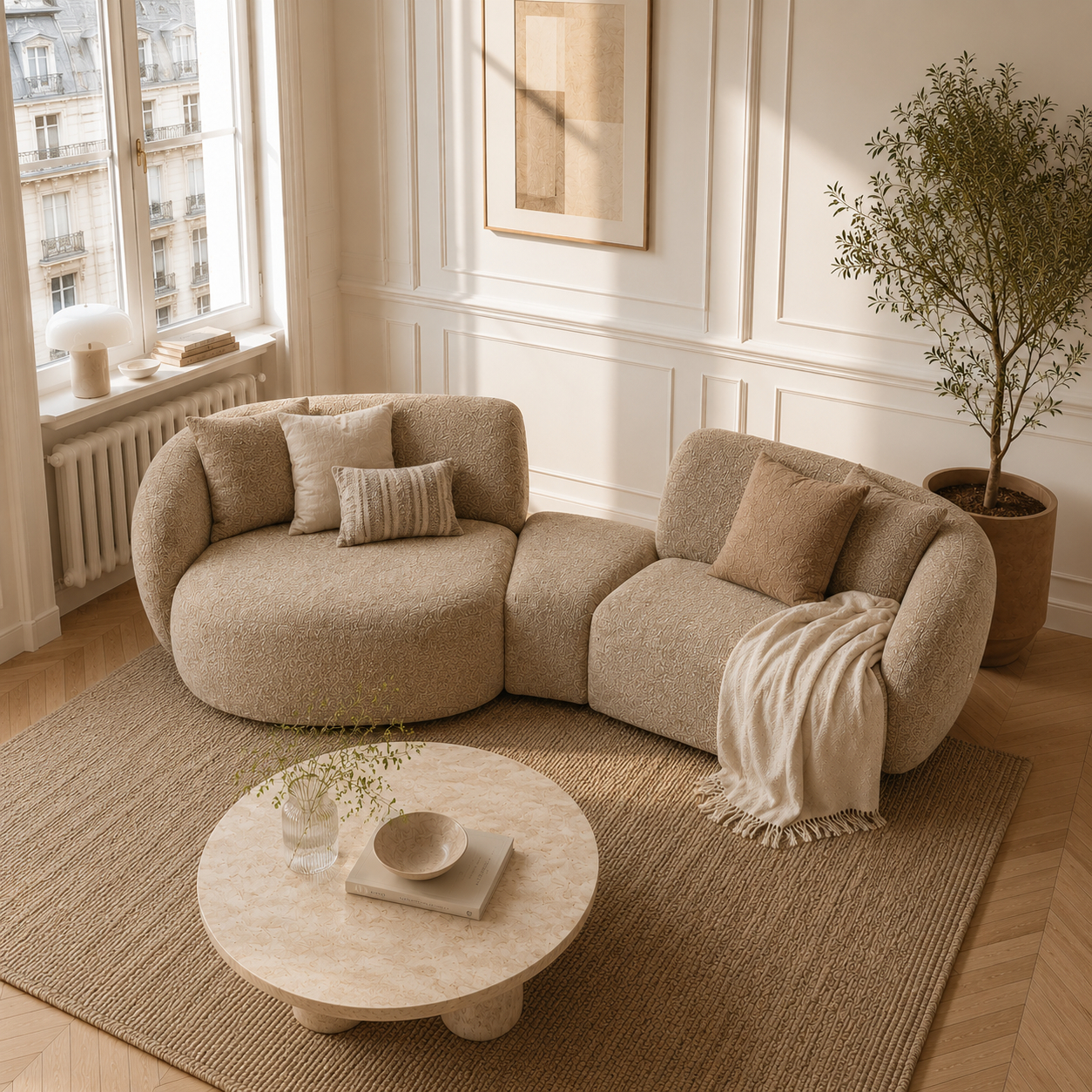
The sofa is the largest and most visually dominant piece of furniture in most living rooms. Where you place the sofa largely determines the arrangement of everything else. The most common mistake is pushing the sofa against the wall — this is instinctive (it seems to "save space") but usually makes a room feel emptier and less sociable. Floating the sofa — pulling it slightly away from the wall, even just 15–30cm — almost always improves a room's feeling of intimacy and proportionality. Define a conversation area: the ideal distance between facing seating pieces is 2.5–3.5 metres — close enough for comfortable conversation, far enough to avoid feeling crowded.

Riva 3-Seater Sofa — from EUR 1,090
The Riva's clean rectangular footprint makes it one of the most versatile sofas for furniture arrangement — it works against a wall, floated, or as part of a paired arrangement facing a second sofa. Its mid-depth (90cm) means it doesn't dominate the room even when floated.

Merlot Modular Sofa — from EUR 1,190
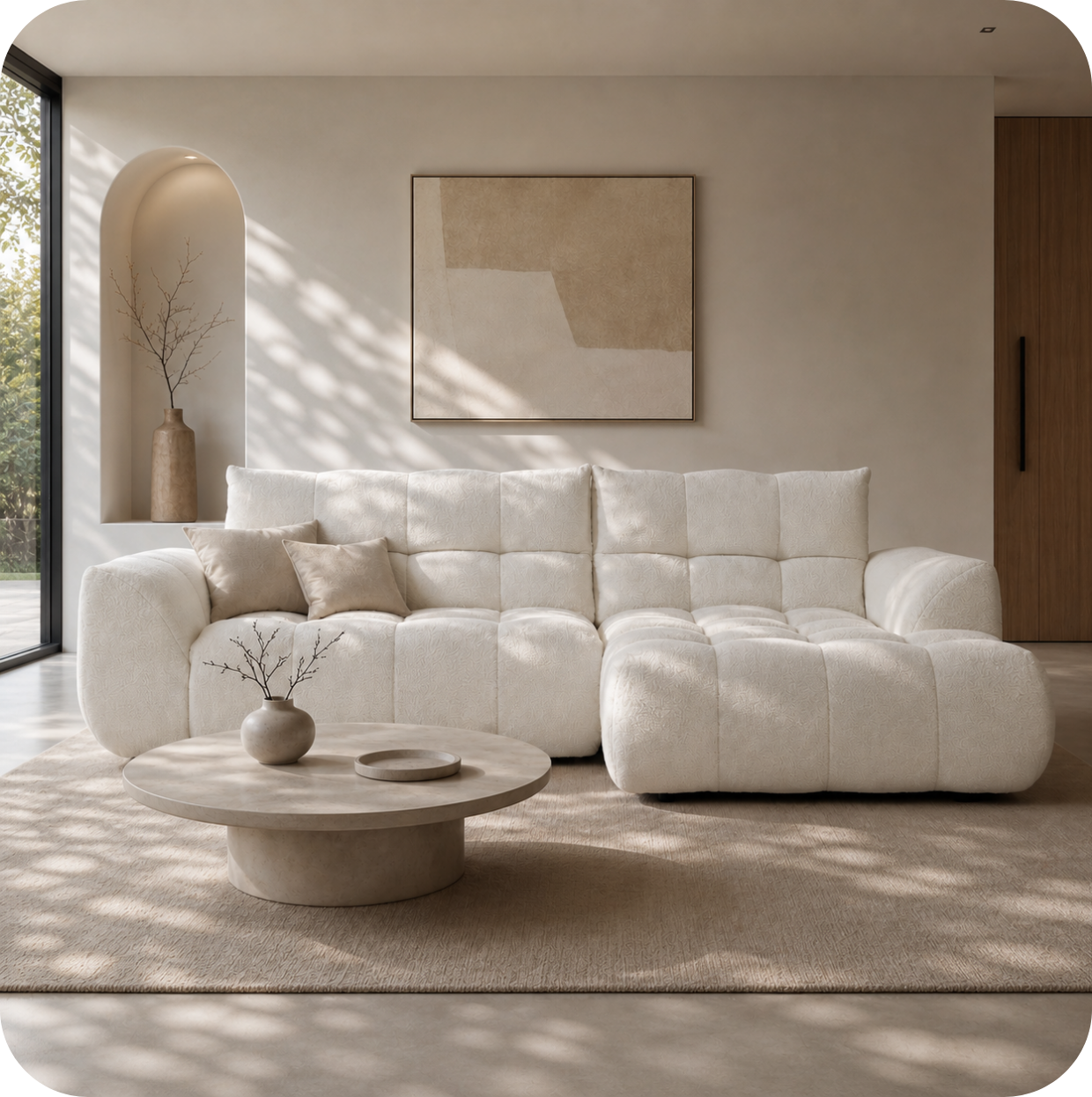
The Merlot's modular nature gives extraordinary arrangement flexibility — configure it as a standard three-seater, add a chaise to one end for a corner arrangement, or split modules to create multiple smaller seating zones in a large open-plan space.
Furniture Layout for Different Room Shapes
Rectangular rooms: the most common shape and the most flexible. Place the sofa perpendicular to the longest wall, facing the TV or fireplace on the short wall. This creates a clear seating zone that feels proportionate. Square rooms: square rooms can feel awkward because no orientation is obviously "correct". The solution is usually to float the sofa diagonally, creating a conversation area in the centre rather than following the walls. L-shaped or irregular rooms: use the L-angle to your advantage — a corner sofa placed in the inner corner of the room naturally defines the seating zone and uses the awkward corner space productively.
The Coffee Table: Position and Clearance
The coffee table should be placed 35–45cm from the front edge of the sofa — close enough to reach comfortably without leaning, far enough to allow easy walking past. For a 3-seater sofa, a coffee table approximately 120cm × 60cm is proportionate. Avoid coffee tables that are higher than sofa seat height — the proportion looks top-heavy. Round coffee tables ease circulation in tight rooms; rectangular tables define the space more formally.
Creating Multiple Zones in Open-Plan Spaces
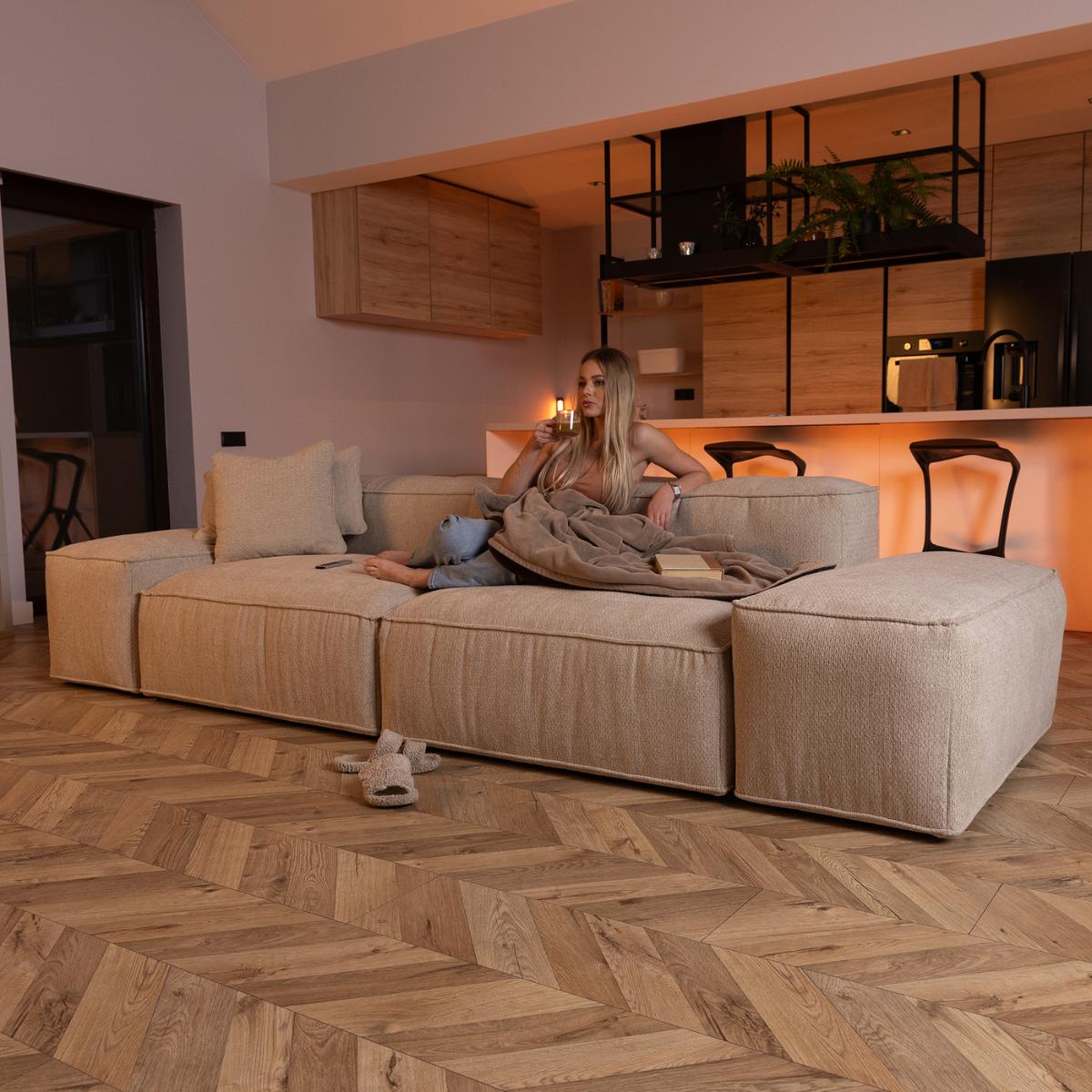
In open-plan living-dining spaces, furniture arrangement does the job of walls — it creates distinct zones without physical barriers. Float the sofa with its back to the dining area: this creates a clear visual boundary between living and dining. Use a large rug under the sofa and coffee table to define the living zone further. The gap between the back of the sofa and the dining table edge should be at least 1 metre for comfortable circulation between zones.
Common Furniture Arrangement Mistakes to Avoid
Too much furniture: fewer, better pieces create more spacious-feeling rooms than many smaller pieces. Matching suites: three identical pieces (sofa, armchair, armchair) can feel rigid — mix in a different piece for character. Blocking windows: avoid placing tall furniture in front of natural light sources. Ignoring traffic flow: ensure a clear path through the room — minimum 90cm walkway.

Zostaw komentarz
Ta strona jest chroniona przez hCaptcha i obowiązują na niej Polityka prywatności i Warunki korzystania z usługi serwisu hCaptcha.