



How to Arrange Living Room Furniture: Layout Ideas and Rules
How you arrange furniture in a living room is as important as what furniture you choose. The same pieces arranged poorly will make a room feel cramped, disconnected, or cold; arranged well, they create a room that feels spacious, intentional, and genuinely comfortable to live in. Good arrangement is not particularly complex — it follows a small number of principles that, once understood, make the right configuration obvious.
Start with the Focal Point
Every well-designed living room has a focal point — a single dominant visual anchor that the other elements of the room respond to. In most living rooms, the focal point is either the television, the fireplace, or a large window with a view. Identify your focal point first, then position your sofa to face or address it. The sofa should be the primary responder to the focal point — positioned so that the primary seating faces it directly or at a slight angle. Everything else in the room then supports that relationship.

Corner Sofas — from EUR 1.190
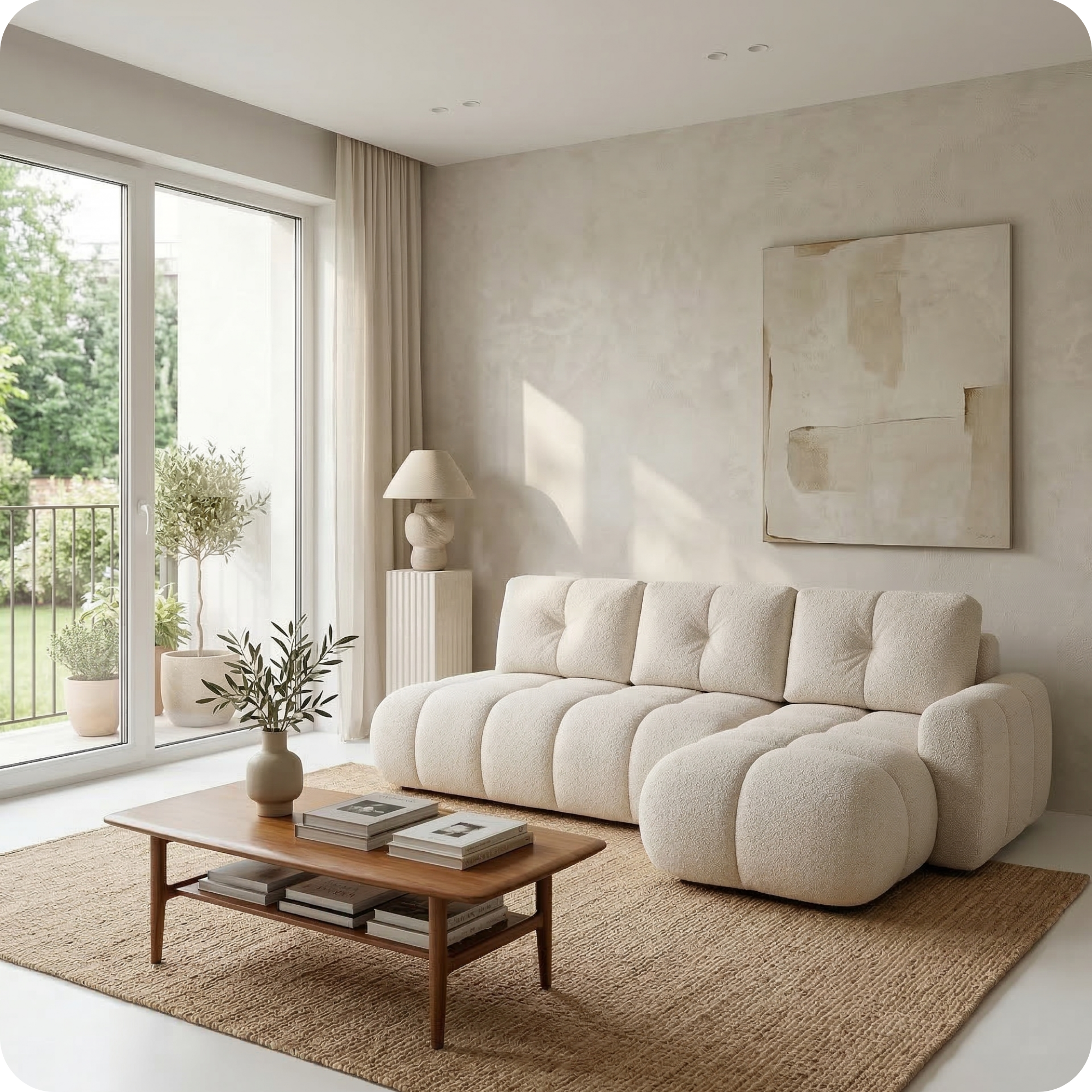
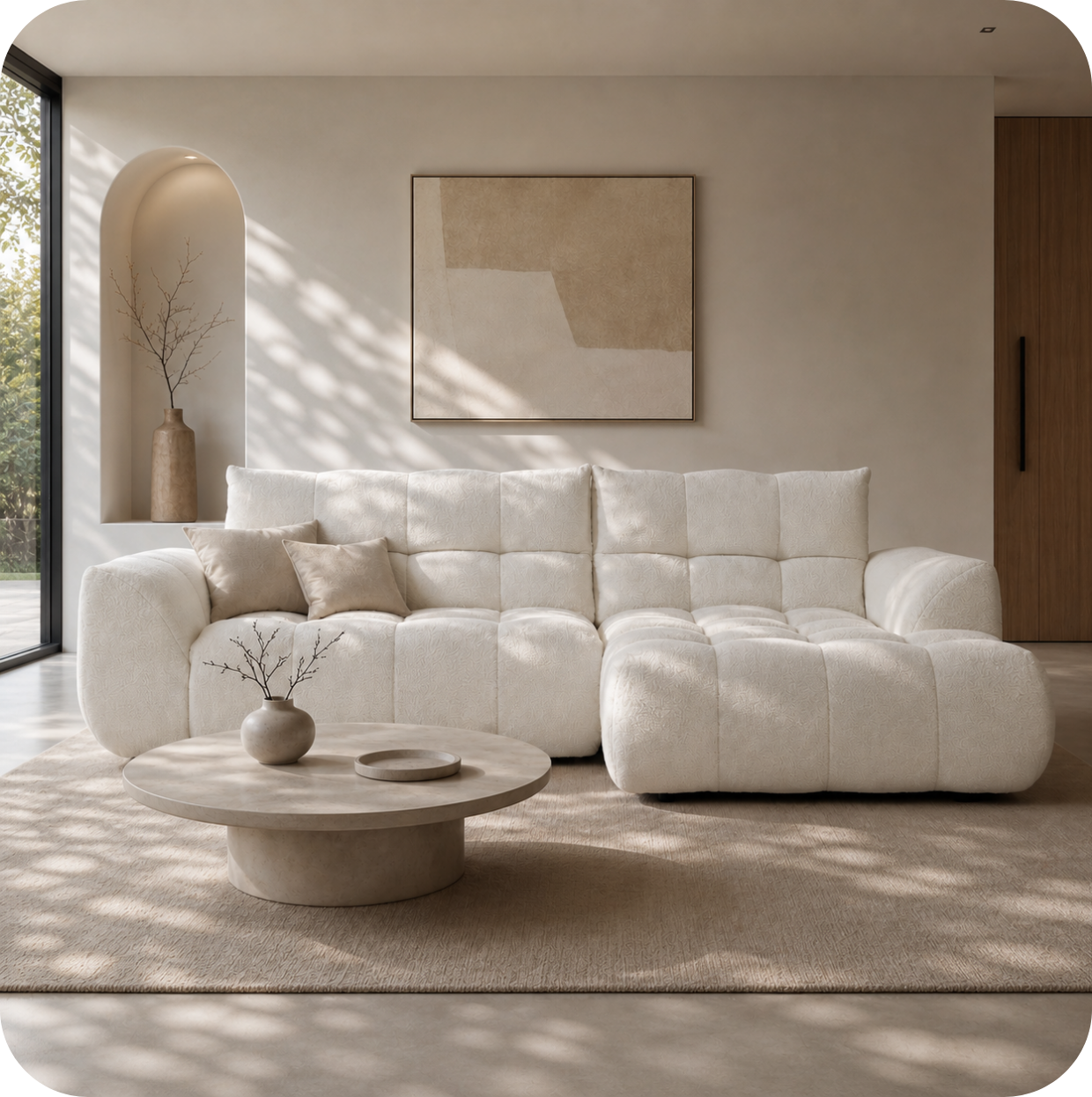
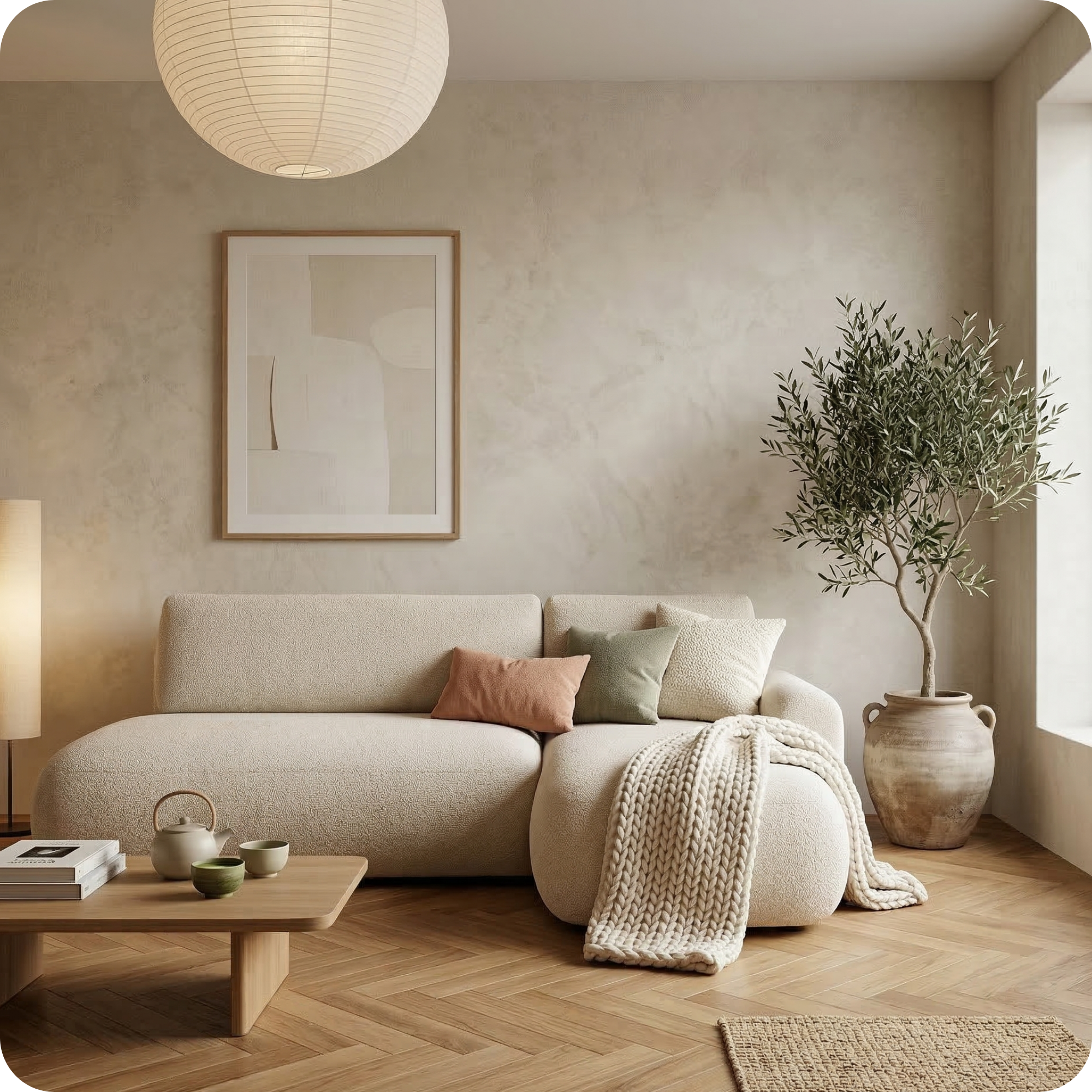
Corner sofas are among the most efficient living room furniture pieces for arranging: the L-shape naturally defines a seating zone, faces a TV or fireplace, and uses the corner so that traffic can flow around the back of the sofa rather than having to navigate between the sofa and the wall. This is the layout that makes most rectangular rooms feel the most spacious and deliberate.

Modular Sofas — from EUR 1.290
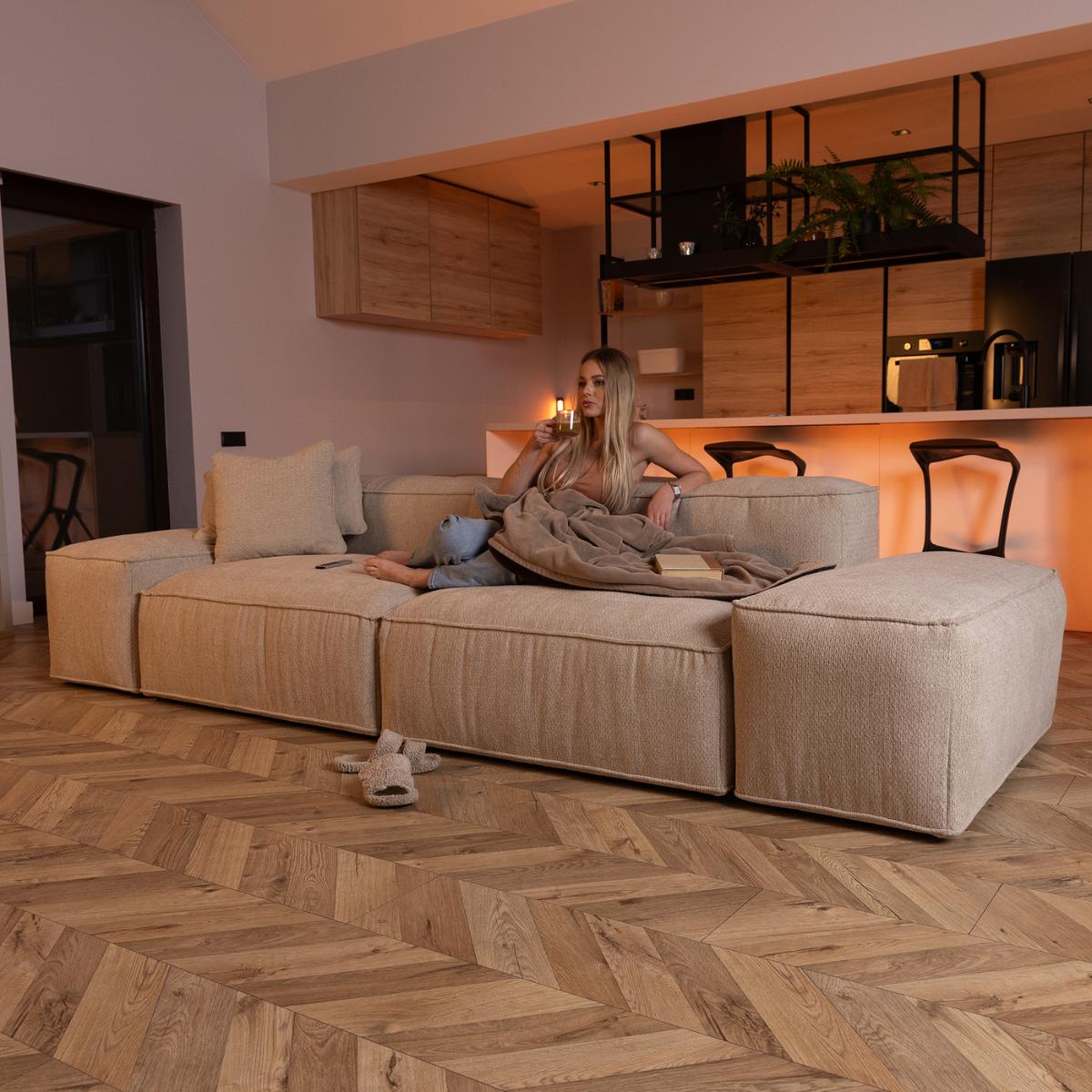
The flexibility of a modular sofa is particularly valuable when it comes to room arrangement — the configuration can be adjusted to create the exact footprint your room needs. If your focal point is centred on one wall and your room is a non-standard shape, a modular sofa lets you build the configuration around the room rather than forcing the room around a fixed piece.
Float vs. Wall: The Central Arrangement Question
Should the sofa sit against the wall or float in the middle of the room? Floating furniture — placing the sofa at least 30-50 cm from the wall — creates a more considered, designed-looking space. It is counterintuitive (most people instinctively push furniture to the edges to maximise floor space), but it actually makes rooms feel larger because it creates defined zones rather than one large empty floor with furniture around the perimeter. In rooms larger than 20-25 square metres, floating the sofa is almost always the more effective choice. In smaller rooms, a wall-placed sofa is more practical.
Conversation and Traffic Flow
A good furniture arrangement creates natural conversation groupings — seating positioned so that people can make eye contact and converse without shouting. The maximum comfortable conversational distance is approximately 2.5-3 metres between seats; beyond that, conversation becomes effortful and people stop engaging. Ensure that the furniture arrangement also preserves a clear traffic route through the room — 90 cm is the minimum comfortable clearance between a seating piece and another piece of furniture or wall. Rooms with a clear traffic route feel twice as large as rooms where you have to navigate around furniture.

Zostaw komentarz
Ta strona jest chroniona przez hCaptcha i obowiązują na niej Polityka prywatności i Warunki korzystania z usługi serwisu hCaptcha.