



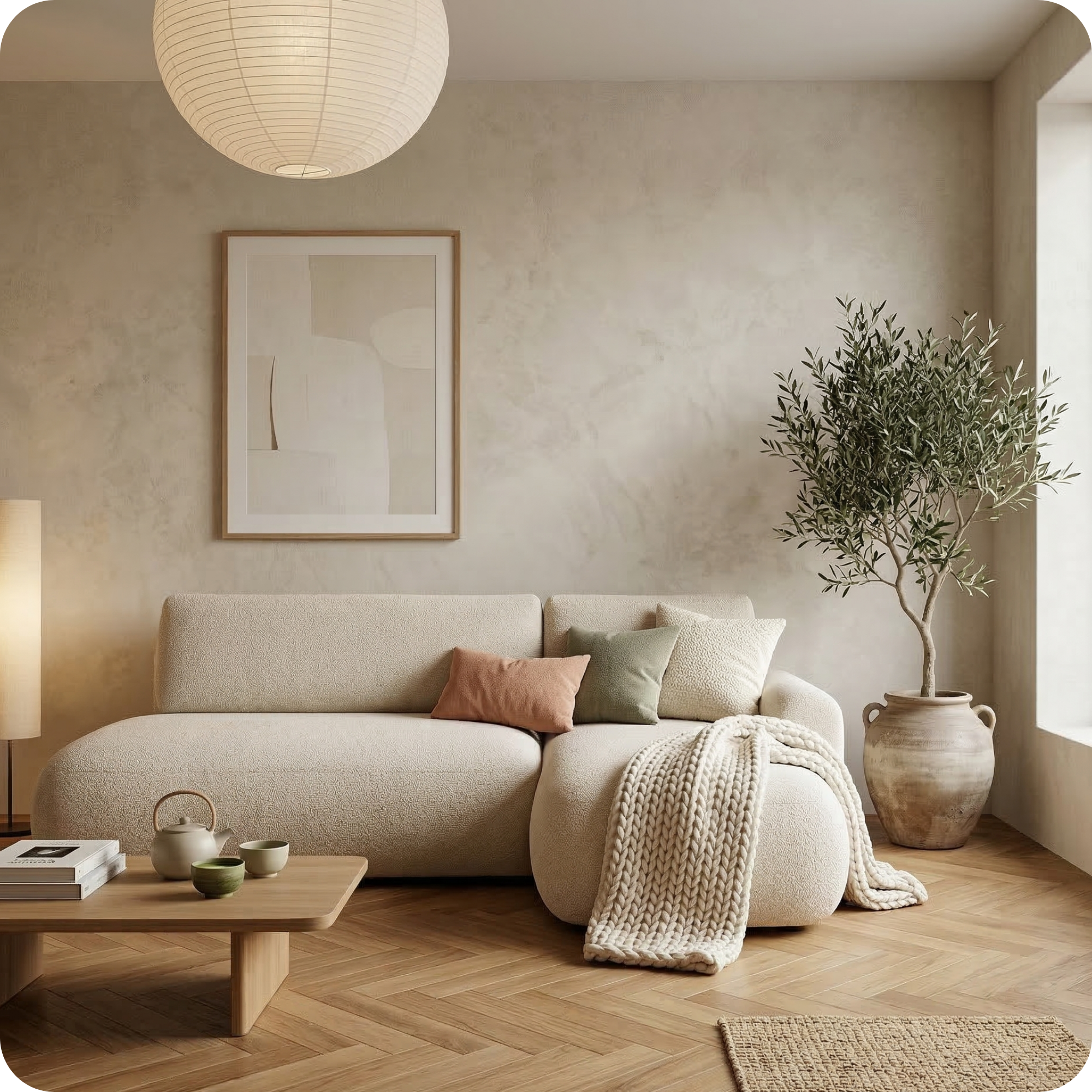
How to Clean a Fabric Sofa: Complete Cleaning Guide
Cleaning a fabric sofa correctly is one of the most important maintenance tasks for keeping it looking good and lasting longer. The wrong approach — using too much water, the wrong cleaning product, or vigorous scrubbing — can damage fabric, cause watermarks, or set stains permanently. The right approach is methodical, uses the appropriate products for the specific fabric, and addresses both regular maintenance and specific stains differently. This guide covers everything you need to know.
Before You Start: Check the Care Label
Every sofa should have a cleaning code label, usually found under a seat cushion or on the underside of the sofa. The codes are: W (water-based cleaning products only), S (solvent-based or dry-cleaning products only — no water), W/S (either water or solvent-based products can be used), and X (vacuum only — no liquid cleaning products of any kind). Never use water or liquid products on an S-coded fabric, and never use solvent products on a W-coded fabric. If there is no label and you are uncertain, test any product on a hidden area of the sofa first and wait for it to dry completely before proceeding.

Lugano Collection
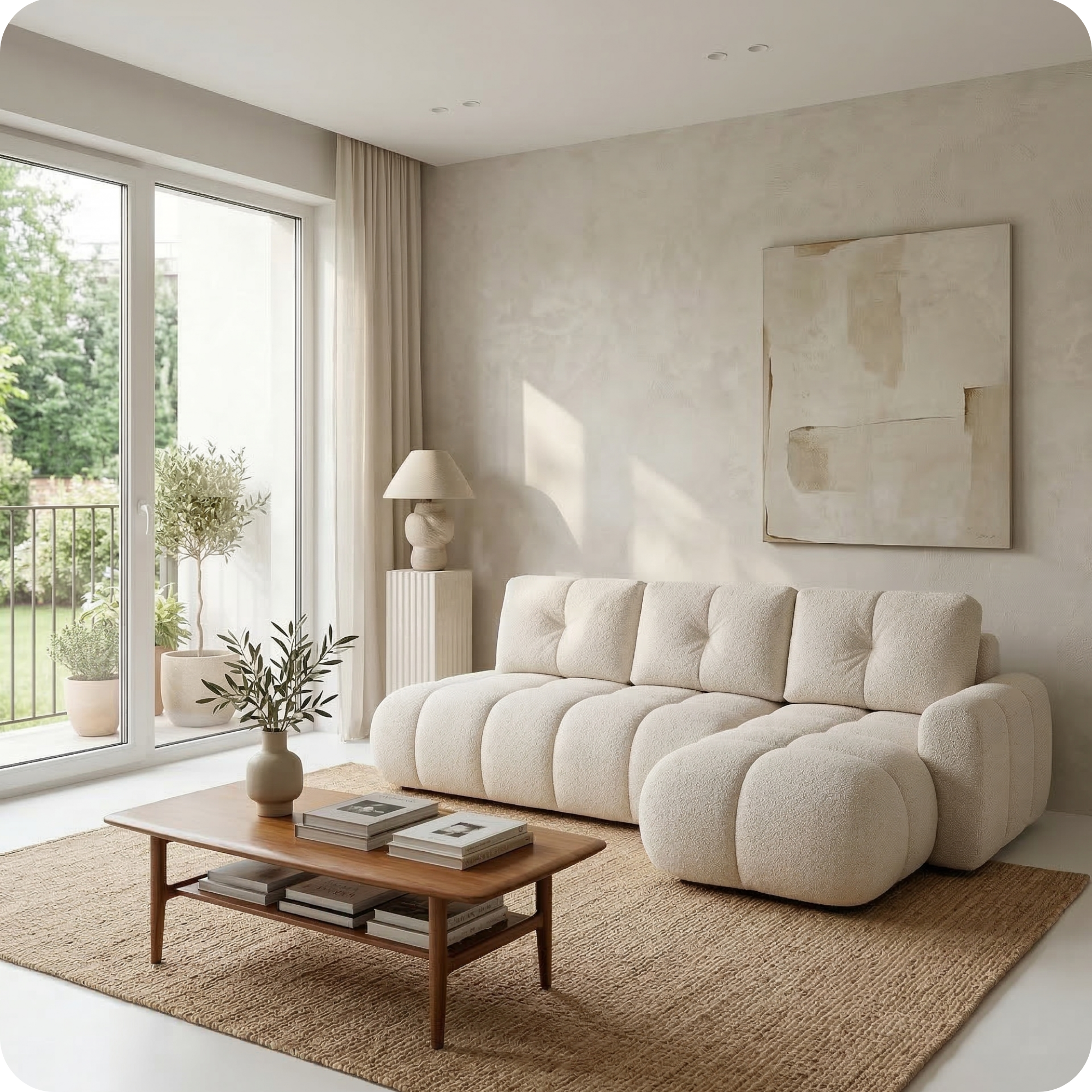
The Lugano's premium upholstery is designed for durability and ease of maintenance. Understanding how to clean and care for your sofa fabric properly extends the life of your investment significantly. Regular vacuuming, prompt attention to spills, and annual professional cleaning or steam cleaning are the three pillars of sofa fabric maintenance that will keep your Lugano looking excellent for a decade or more.

Modular Sofas at Furni
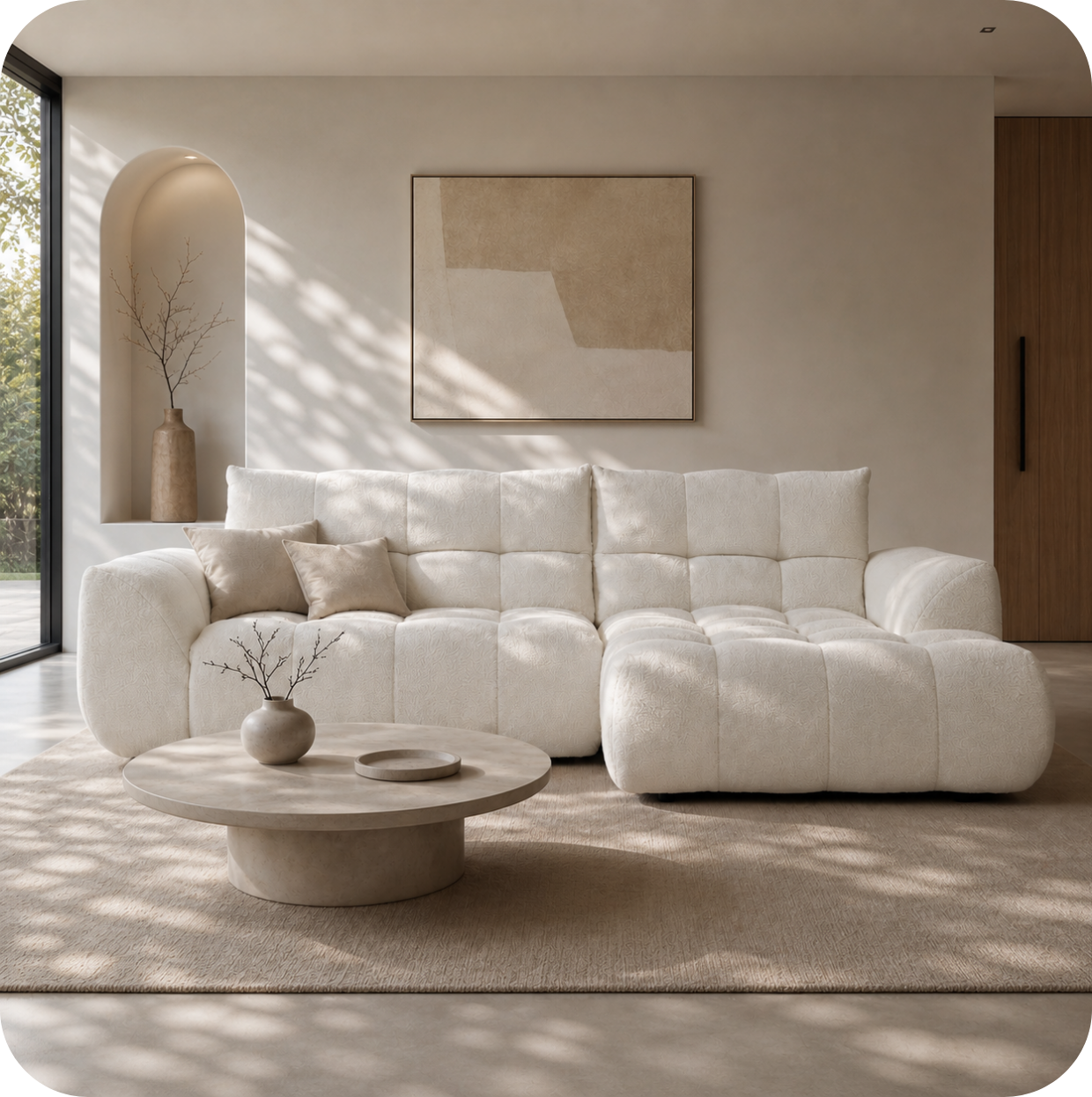
All Furni sofas use high-performance upholstery fabrics with strong Martindale rub counts, meaning they are designed to withstand regular use. The care instructions specific to your sofa are available on the care label. For general fabric maintenance, the principles below apply to most modern sofa fabrics.
Regular Maintenance: Weekly and Monthly Tasks
Weekly: vacuum the entire sofa surface with an upholstery attachment, including the backs of cushions, the crevices between cushions, and under removable cushions where crumbs and debris accumulate. This prevents dirt from becoming ground-in over time. Flip and rotate loose cushions weekly (alternating which face is up) to ensure even wear across all cushion surfaces. Monthly: lightly brush fabric-upholstered sofas with a soft upholstery brush to raise and restore the nap on textured fabrics like bouclé or chenille, and to remove any surface lint and pet hair that vacuuming misses.
Dealing with Spills Immediately
Speed is the single most important factor when dealing with a spill — the longer a liquid sits on fabric, the more it is absorbed and the harder it is to remove. The correct approach: immediately blot (do not rub) the spill with a clean, dry, white cloth or paper towel to absorb as much liquid as possible. Work from the outside of the spill inward to avoid spreading it. Once you have blotted up as much liquid as possible, if further treatment is needed, use the cleaning method appropriate to your sofa's care code. Do not rub, scrub, or apply heat (a hair dryer, for example) to a fresh stain — both spread the stain and can damage fibres or set pigment permanently into the fabric.
Water-Based Cleaning (W-Coded Sofas)
For W-coded sofas: mix a small amount of mild liquid dish soap (or specific upholstery cleaning product) with cool water to create a lightly foamy solution. Using a clean white cloth, apply the solution to the stained area in small circular motions from the outside in — using as little liquid as possible. The goal is to lift the stain without saturating the fabric. After treating, blot with a clean damp cloth to remove any soap residue, then blot with a dry cloth to absorb moisture. Allow to air dry completely — do not use heat. For a general refresh, a spray bottle with diluted upholstery cleaner or a fabric refresher spray used sparingly across the whole sofa (followed by airing) is effective.
Steam Cleaning
Steam cleaning is highly effective for refreshing and deep-cleaning most fabric sofas and is generally the best way to remove accumulated oils, bacteria, and embedded odours. A handheld fabric steamer used in slow, steady passes over the entire sofa surface will refresh the fabric, kill bacteria, and lift compacted pile on textured fabrics. Allow the sofa to dry completely after steaming (at least 4 hours, preferably overnight). Steam cleaning is particularly effective for sofas that cannot be washed with liquid products.

Zostaw komentarz
Ta strona jest chroniona przez hCaptcha i obowiązują na niej Polityka prywatności i Warunki korzystania z usługi serwisu hCaptcha.