



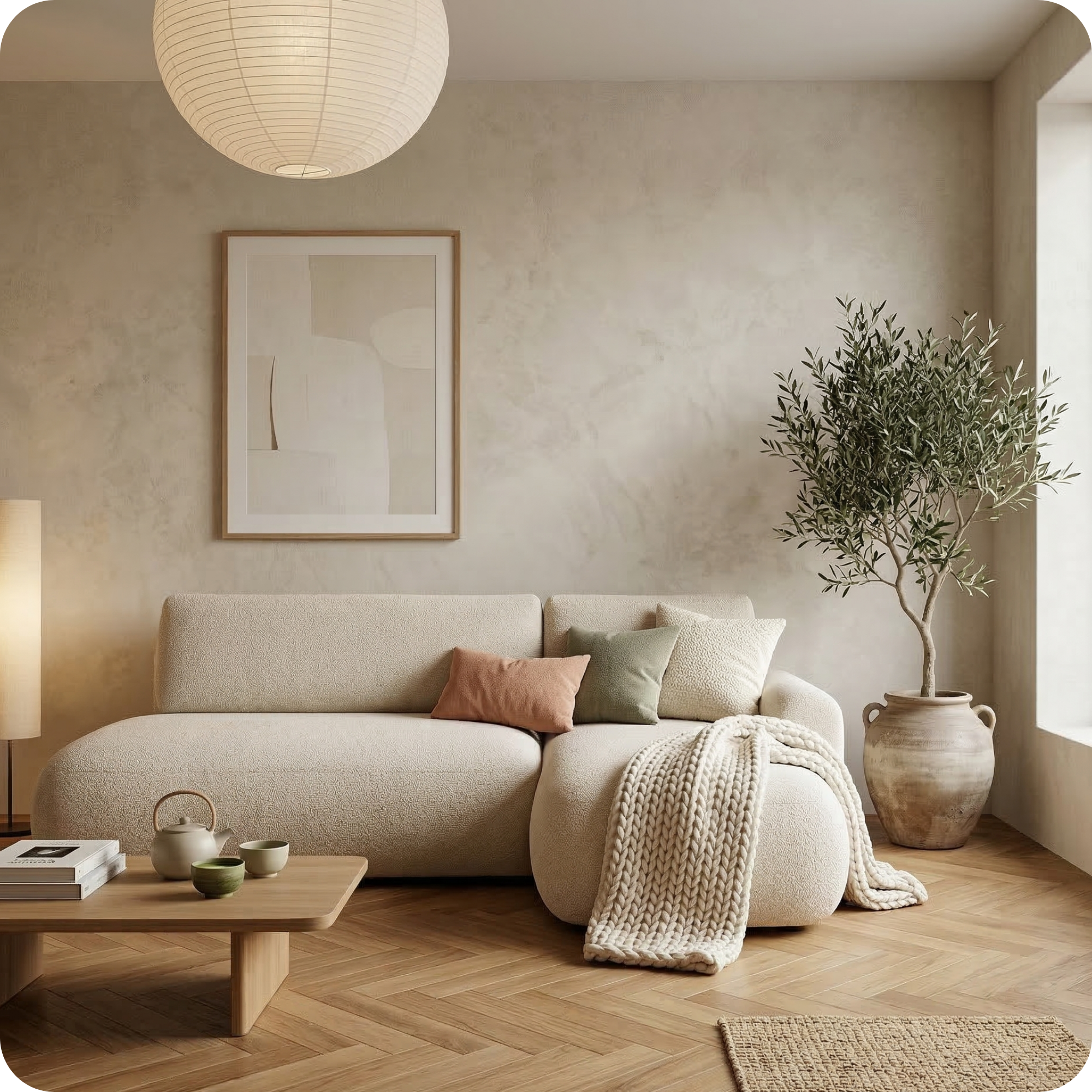
Japandi Design: The Japanese-Scandinavian Interior Style Explained
Japandi is one of the defining interior design trends of the 2020s — a thoughtful hybrid of Japanese and Scandinavian design philosophies that feels entirely coherent and deeply appealing. Where maximalist and highly decorative interior trends come and go, Japandi has proven unusually durable because it is rooted in values rather than aesthetics alone: simplicity, quality, functionality, and a deep respect for natural materials. This guide explains what Japandi design is, what distinguishes it from pure Scandinavian or pure Japanese design, and how to achieve it in your own home.
The Shared Values of Japanese and Scandinavian Design
Japanese and Scandinavian design traditions have more in common than their geographic distance suggests. Both traditions prioritise function over decoration — the idea that objects should be made well, serve their purpose beautifully, and contain no unnecessary ornamentation. Both have a deep reverence for natural materials — wood, stone, linen, wool, ceramics — and a preference for allowing those materials to show their natural character rather than concealing it. Both prize negative space: the areas between objects are considered as carefully as the objects themselves. And both are associated with a particular philosophy of wellbeing — hygge in Scandinavia (cosiness, warmth, togetherness) and wabi-sabi in Japan (finding beauty in imperfection and impermanence). Japandi design draws from all of these shared values simultaneously.

Lugano Sofa — Light Grey — from EUR 890
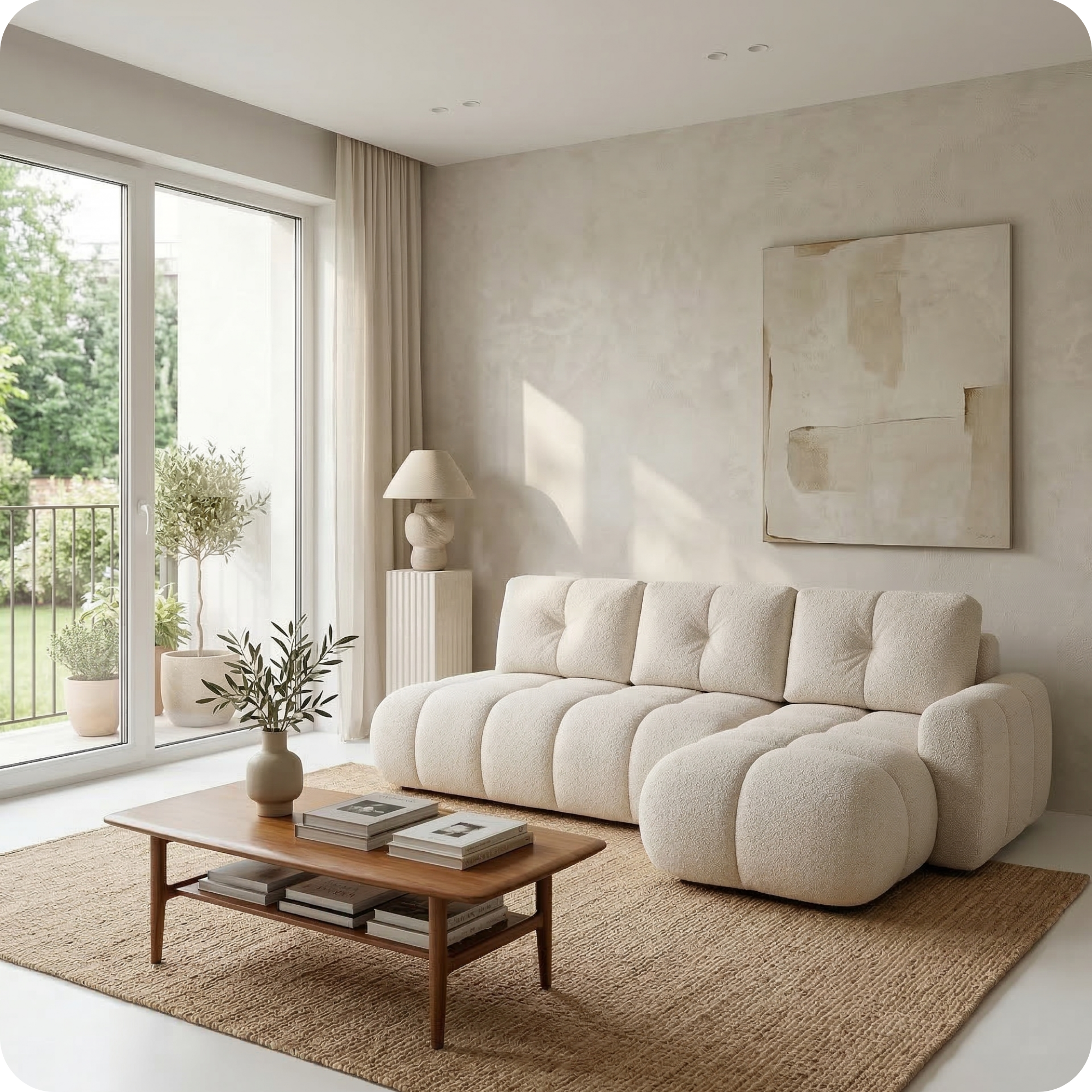
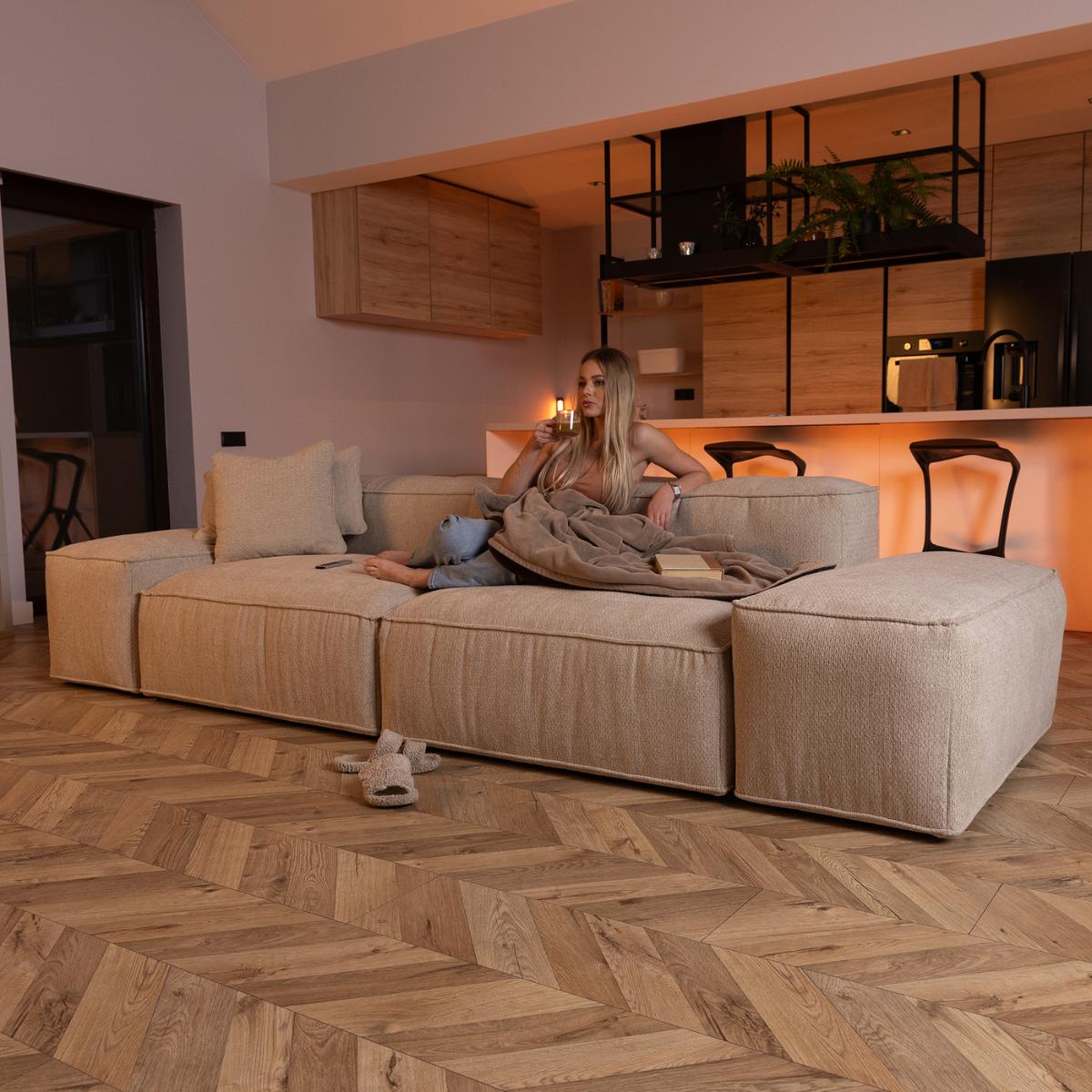
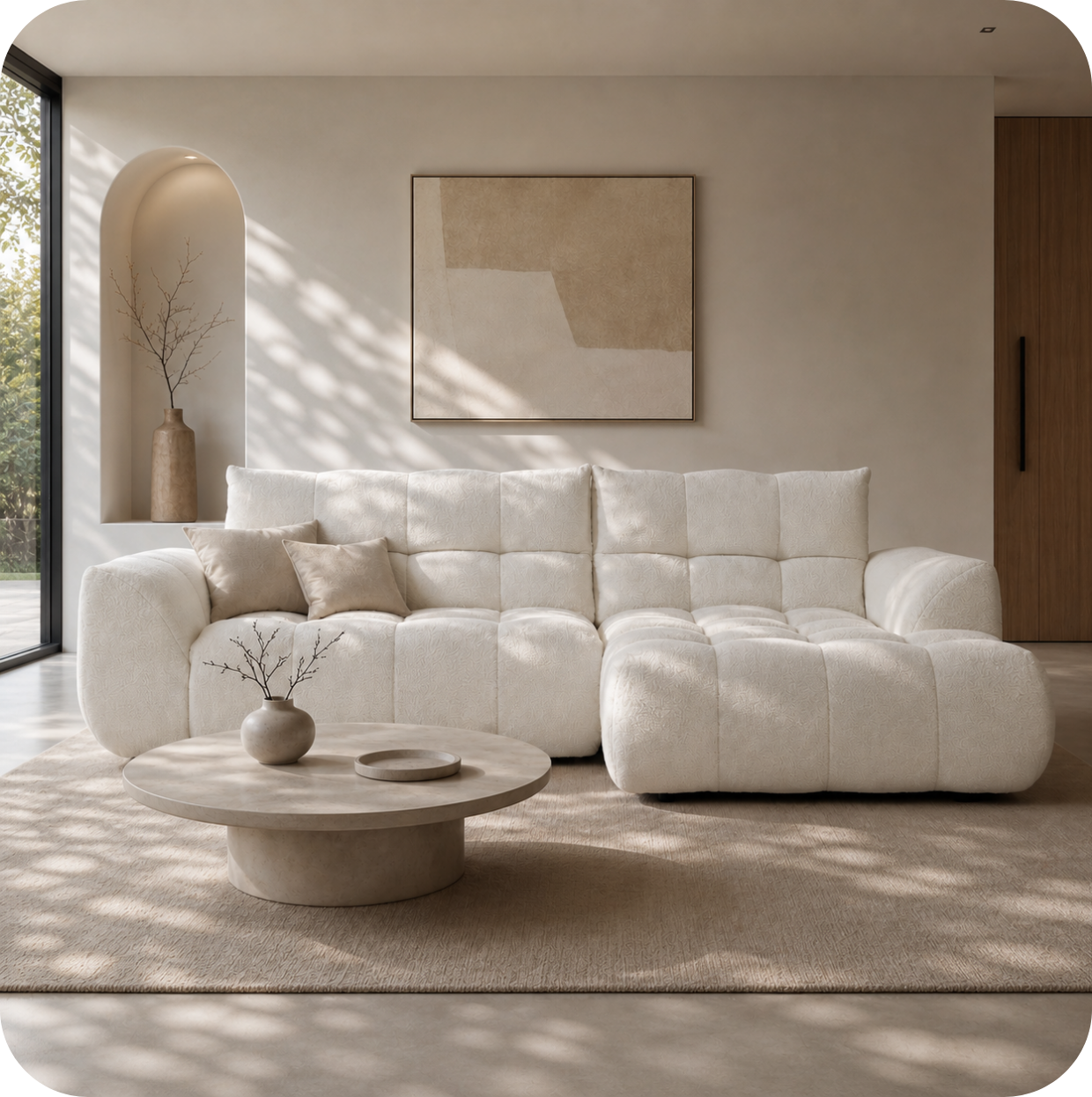
The Lugano in light grey is an excellent Japandi sofa choice: its clean, unfussy lines and muted, natural-feeling colour sit squarely within the Japandi design vocabulary. Pair with a low natural wood coffee table, minimal accessories, and a tatami-inspired natural fibre rug for an authentic Japandi living room.

Merlot Sofa — Leaf Green — from EUR 1,190
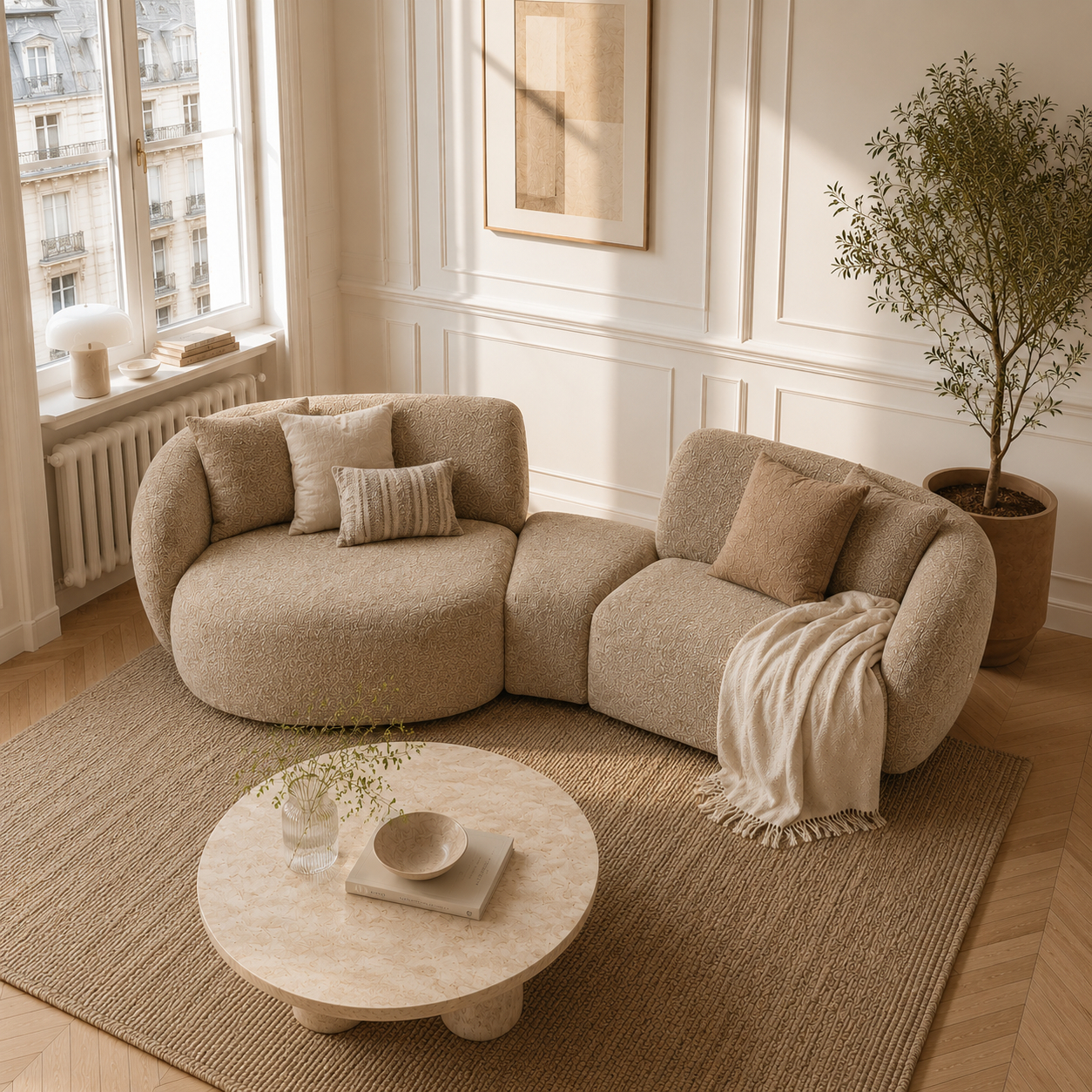
In leaf green, the Merlot brings the botanical, nature-connected quality of Japandi design to the centrepiece of your living room. The deep green resonates with the Japanese appreciation for nature as interior decoration and adds the warmth that distinguishes Japandi from pure minimalism.
How Japandi Differs from Pure Scandinavian or Pure Japanese Design
Pure Scandinavian design (or Scandi) tends to be brighter — more white walls, lighter woods, and a greater use of colour in accents like cushions and soft furnishings. It is also somewhat more playful and informal, with an emphasis on cosiness and domesticity. Pure Japanese design tends towards a more austere, almost meditative quality — very low furniture, tatami mats, sliding screens, and an extreme restraint in decoration that can feel sparse rather than warm. Japandi occupies the space between these two aesthetics: warmer than pure Japanese design (borrowing the hygge warmth of Scandinavian interiors) and more refined and contemplative than pure Scandi (drawing on the Japanese preference for restraint and quality). The result is a style that is simultaneously minimal and warm — a combination that proves very difficult to achieve with either tradition alone.
The Japandi Colour Palette
Japandi colour palettes are characteristically restrained and drawn from nature. The dominant tones are neutral: off-white, warm grey, stone, sand, and putty. These are complemented by the natural colours of wood (from pale ash to dark walnut), the greens of plants and botanicals, and occasional deep accent colours — deep green, charcoal, terracotta, or dusty clay. Pure white and bright colours are generally avoided — Japandi prefers the slight warmth and imperfection of natural tones. Black appears in Japandi interiors primarily as a sharp accent — a black window frame, black tapware, a black lacquer vase — rather than as a dominant colour.
Key Japandi Design Elements
Low furniture: Japanese design traditionally favours furniture close to the floor — low sofas, floor cushions, low coffee tables — which Japandi adopts and softens with Scandinavian comfort. Natural materials throughout: wood, stone, linen, cotton, wool, ceramics, and rattan feature heavily, always allowed to show their natural grain, texture, and imperfection. Minimal decoration: objects are chosen carefully and placed intentionally — a ceramic bowl, a single branch in a vase, a carefully arranged book stack. Negative space is treated as a design element in its own right. Plants and botanicals: both Japanese and Scandinavian traditions connect interior design to nature, and Japandi interiors typically include living plants, dried botanicals, or nature-referencing ceramics and artwork.

Zostaw komentarz
Ta strona jest chroniona przez hCaptcha i obowiązują na niej Polityka prywatności i Warunki korzystania z usługi serwisu hCaptcha.