



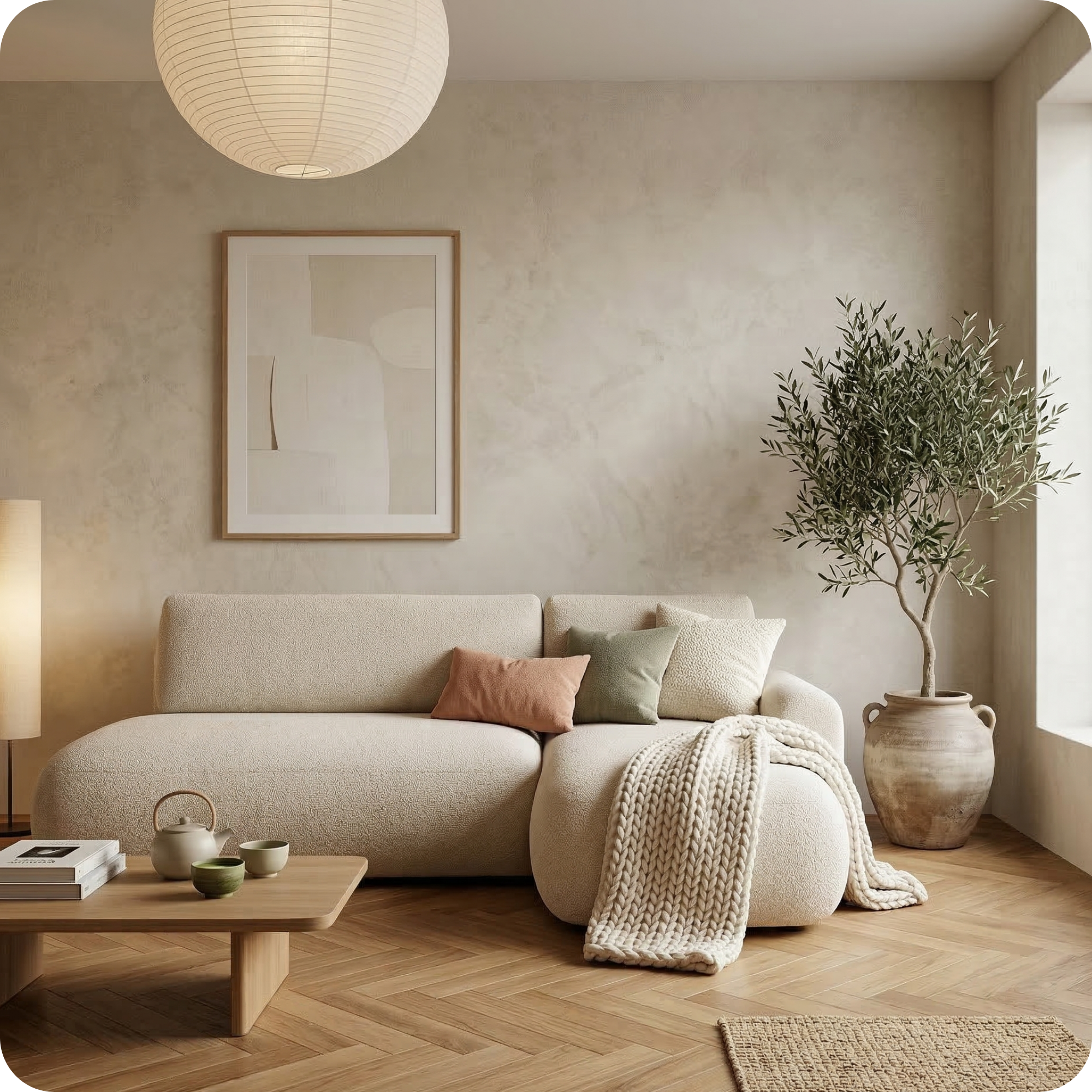
Japandi Interior Design: How to Achieve the Perfect Japanese-Scandinavian Blend
Japandi is a design movement that has grown from a niche aesthetic concept to one of the most influential interior design approaches of the 2020s. The name is a portmanteau of Japanese and Scandi(navian) — and the style draws on the shared values of both design traditions: a love of natural materials, clean functional forms, quiet restraint, and the idea that a well-designed space should feel peaceful and purposeful rather than impressive. This guide explains the philosophy behind Japandi design and how to achieve it in your own living room.
The Philosophy: Wabi-Sabi Meets Hygge
Japandi's depth comes from the collision of two complementary but distinct design philosophies. Japanese wabi-sabi is a worldview centred on the acceptance of imperfection and transience — it values objects that are worn, asymmetrical, aged, and made by hand. Scandinavian hygge is the concept of cosiness, comfort, and convivial warmth — it values soft textiles, candlelight, and spaces that feel welcoming and human. Together, these philosophies produce a design approach that is simultaneously austere and cosy, minimal and warm, functional and beautiful.
The Japandi Colour Palette
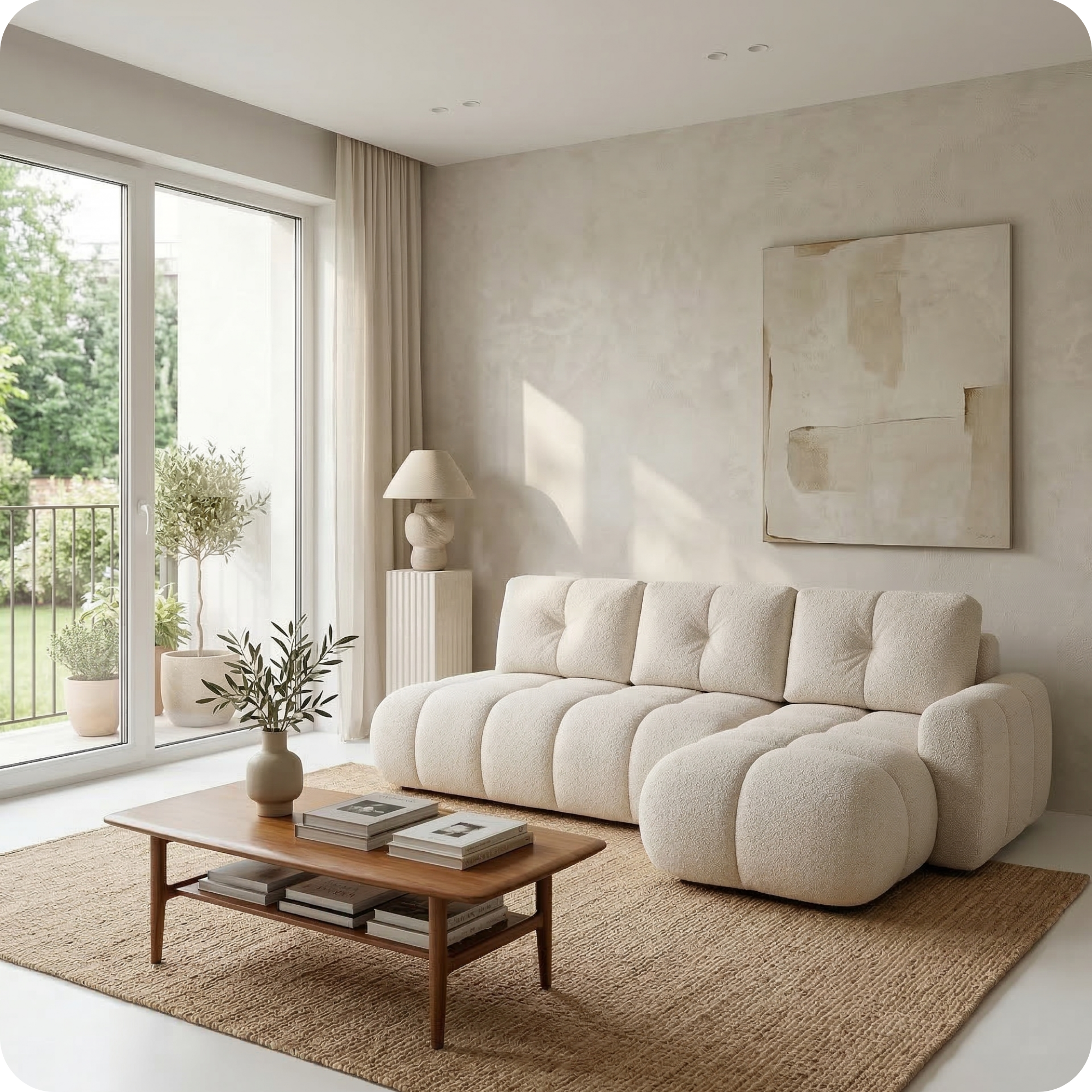
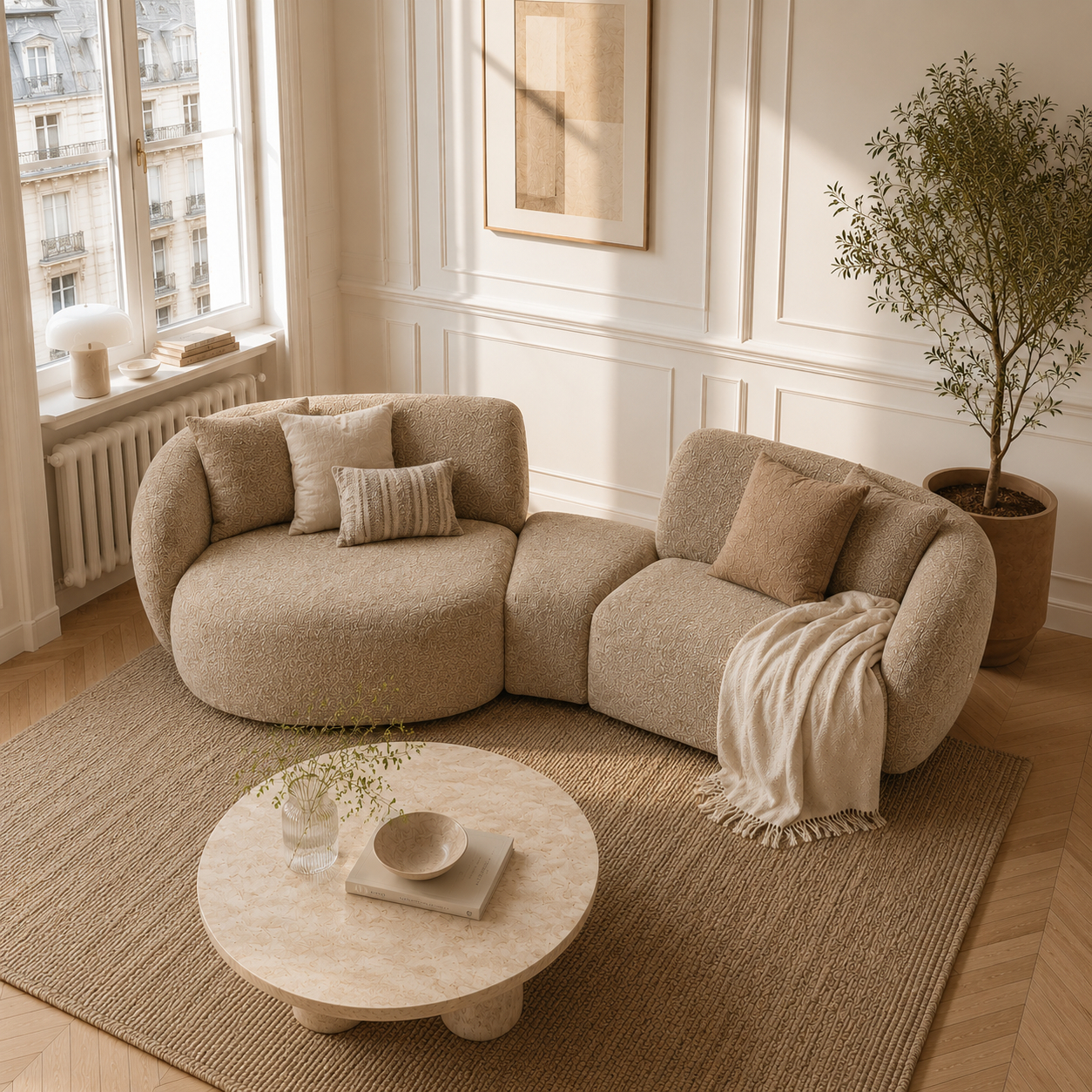
The Japandi colour palette is one of the most distinctive elements of the style. It is built on a base of warm neutrals — warm white, off-white, warm grey, and light beige — but these are given depth and character by earthy dark accents: dark walnut brown, charcoal black, and deep clay. The result is a palette that is lighter than typical Japanese interiors but more tonal and earthy than typical Scandinavian ones. Avoid cold whites, bright accents, and saturated colours — Japandi is deliberately quiet and tonal.

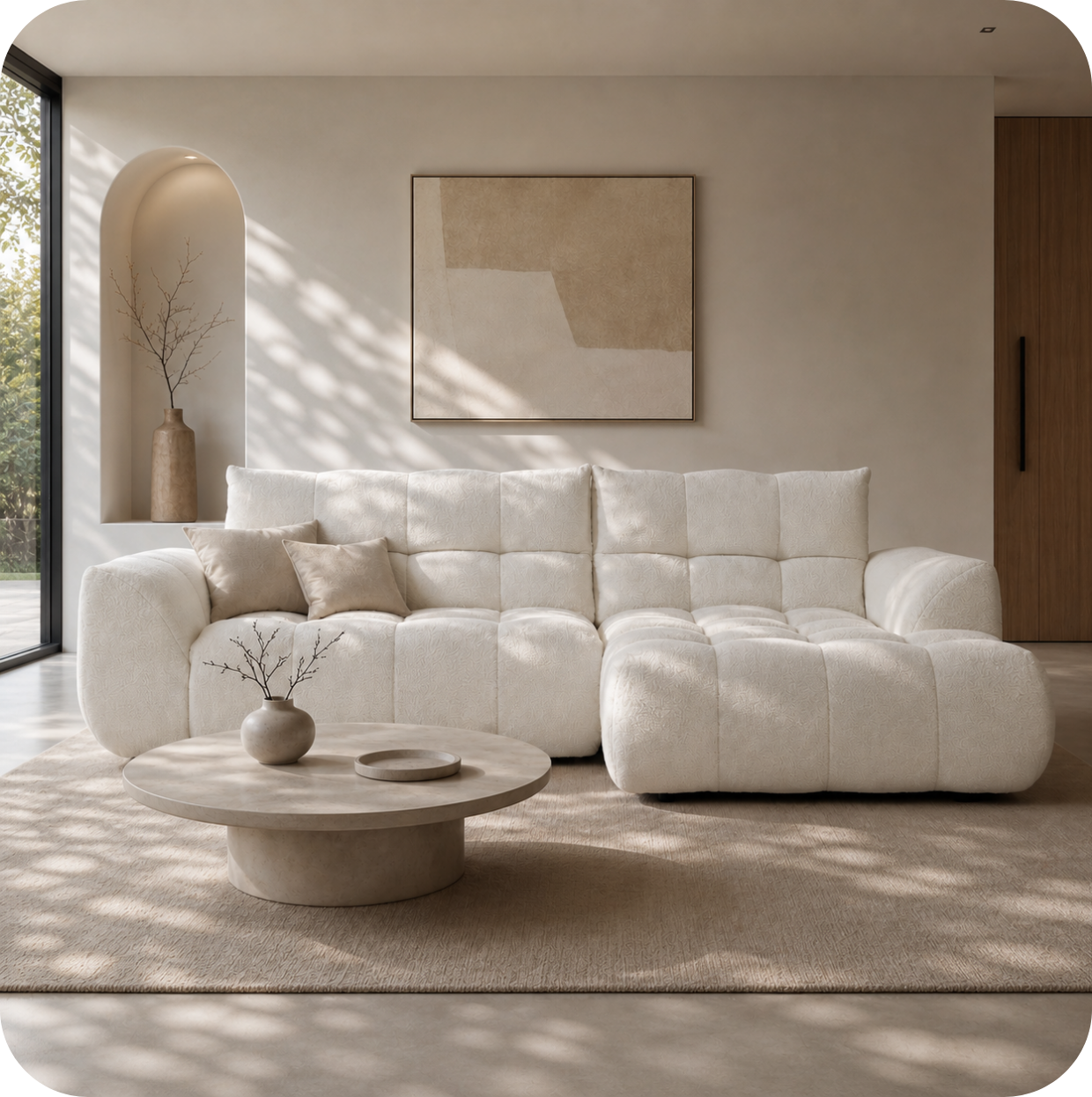
Lugano Sofa in Light Grey — from EUR 790
The Lugano in light grey is a natural Japandi companion — its soft, muted tone and clean profile sit beautifully in a space built on natural wood, warm neutrals, and considered simplicity.

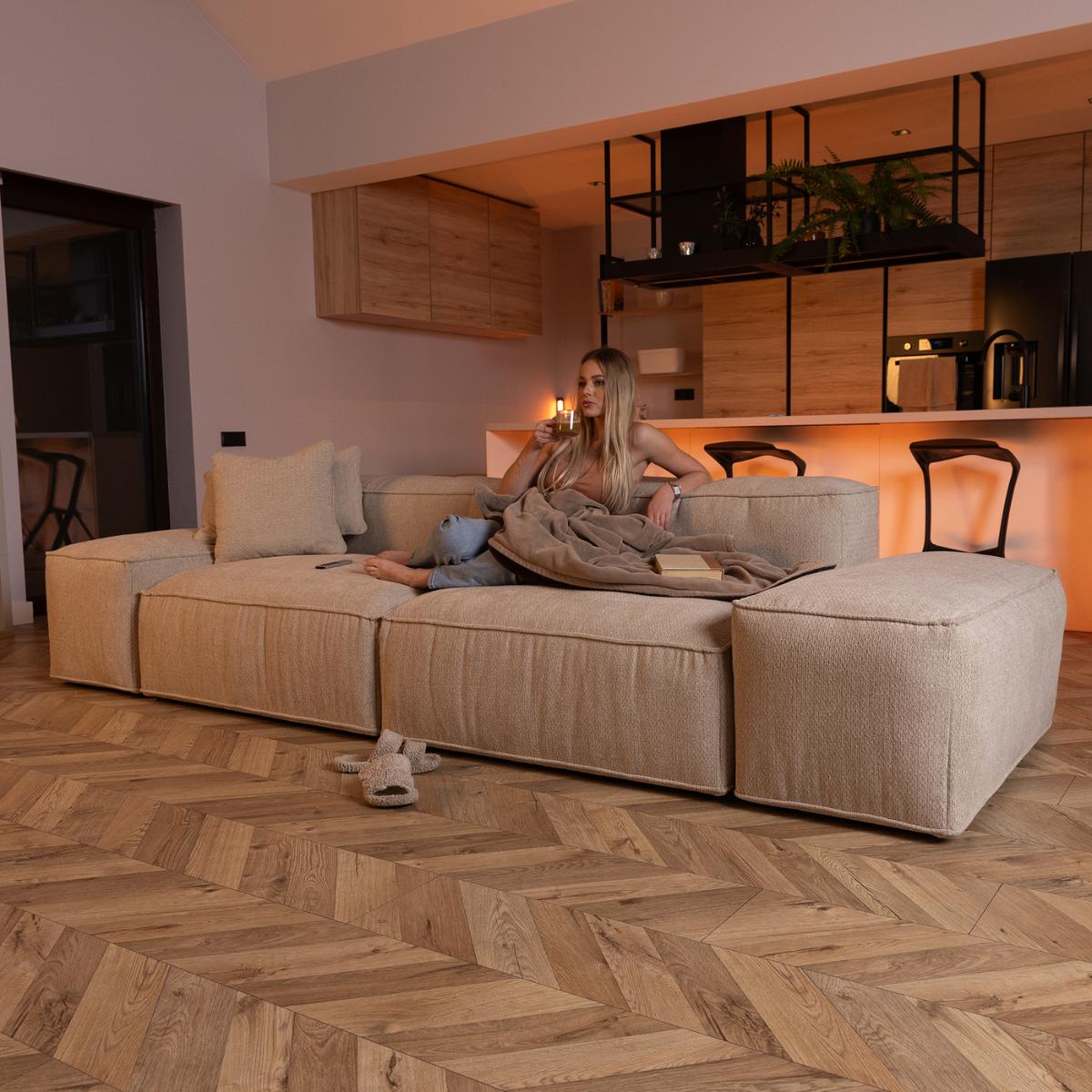
Riva 3-Seater Sofa — from EUR 990
The Riva's clean, streamlined silhouette embodies the Japandi principle of functional beauty — no unnecessary detail, no visual clutter, just a well-made sofa with a considered form that ages beautifully over time.
Natural Materials: The Foundation of Japandi
Natural materials are the backbone of Japandi design. Light oak, ash, and bamboo dominate furniture and flooring; natural linen, cotton, and wool feature in textiles; stone, ceramics, and rattan appear in accessories and decorative objects. The key principle is that every material should feel honest and unprocessed — a roughly hewn stone bowl, a hand-thrown ceramic vase, or a linen cushion with slightly irregular weave are all more desirable in Japandi than their perfect, mass-produced equivalents.
Japandi Furniture: Low, Simple, and Functional
Japandi furniture has a distinctive character: it sits low to the ground (inspired by Japanese seating culture), uses clean geometric forms without ornamentation, and tends toward darker natural wood tones (black walnut, dark oak) than pure Scandinavian design. Every piece should earn its place — Japandi interiors are carefully edited spaces where clutter is eliminated and each object has a clear purpose and considered placement.

Zostaw komentarz
Ta strona jest chroniona przez hCaptcha i obowiązują na niej Polityka prywatności i Warunki korzystania z usługi serwisu hCaptcha.