


Living Room Rug Guide: How to Choose the Right Size, Material and Style
A rug is one of the most transformative elements a living room can have. It defines the seating area, adds warmth and texture underfoot, reduces echo and noise, and can unify a disparate collection of furniture into a coherent arrangement. It is also, consistently, one of the most common sources of interior design mistakes — primarily because most people buy rugs that are too small. This guide covers the key considerations for choosing a living room rug: size, material, pile type, and style.
Rug Size: The Most Important Decision
Getting the size right is the single most important aspect of choosing a living room rug. The most common mistake is buying a rug that is too small — a rug that only fits under the coffee table is almost always the wrong choice. The correct sizing principle is that all the main furniture legs — or at least the front legs of each piece — should be on the rug. This "all legs on" or "front legs on" approach creates a contained, unified seating area that looks intentional and proportionate. A good guide: in a typical living room, the rug should extend at least 30 cm beyond the sofa on each side. For most living rooms, this means a minimum rug size of 200 x 300 cm. Larger rooms and sofas typically require 240 x 340 cm or larger.

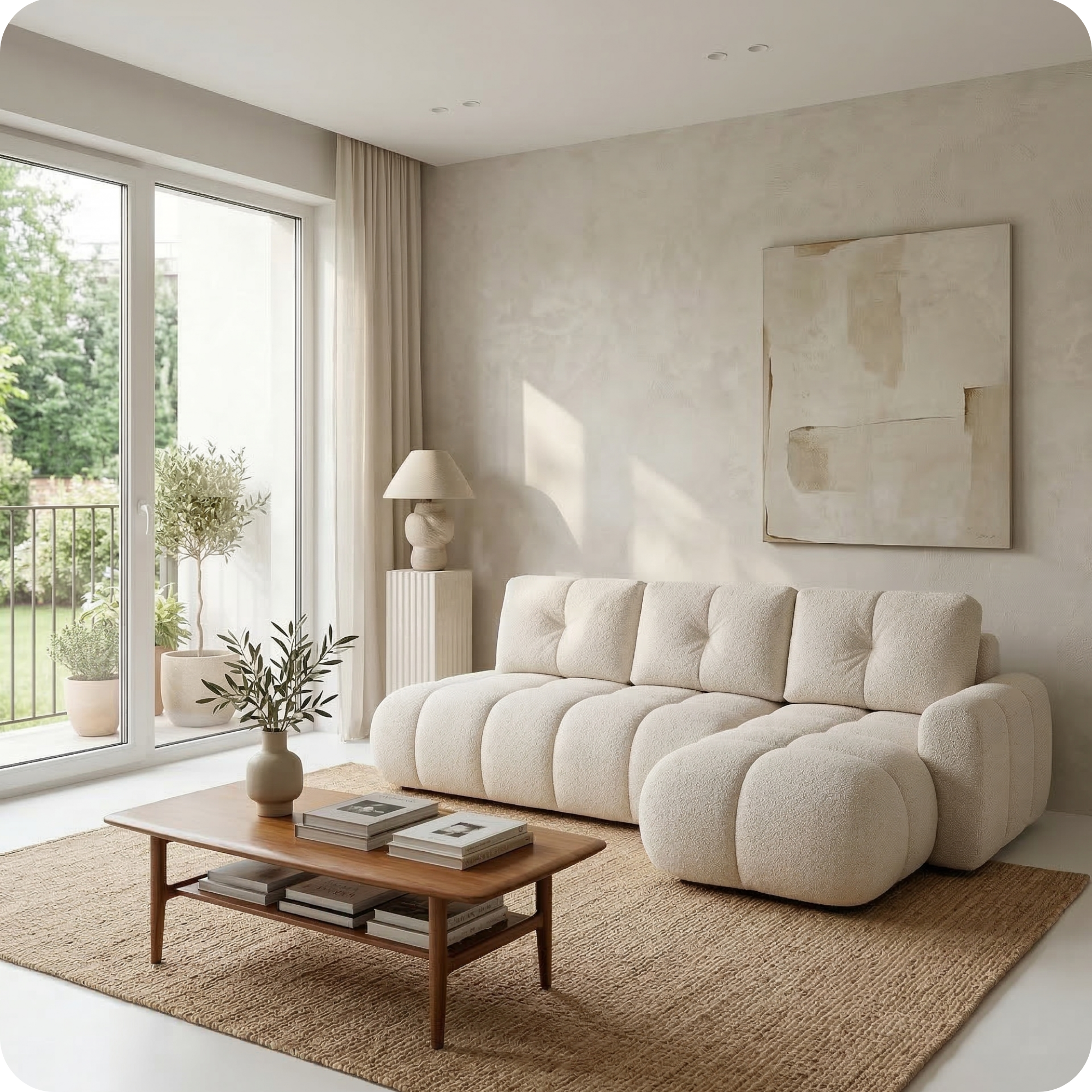
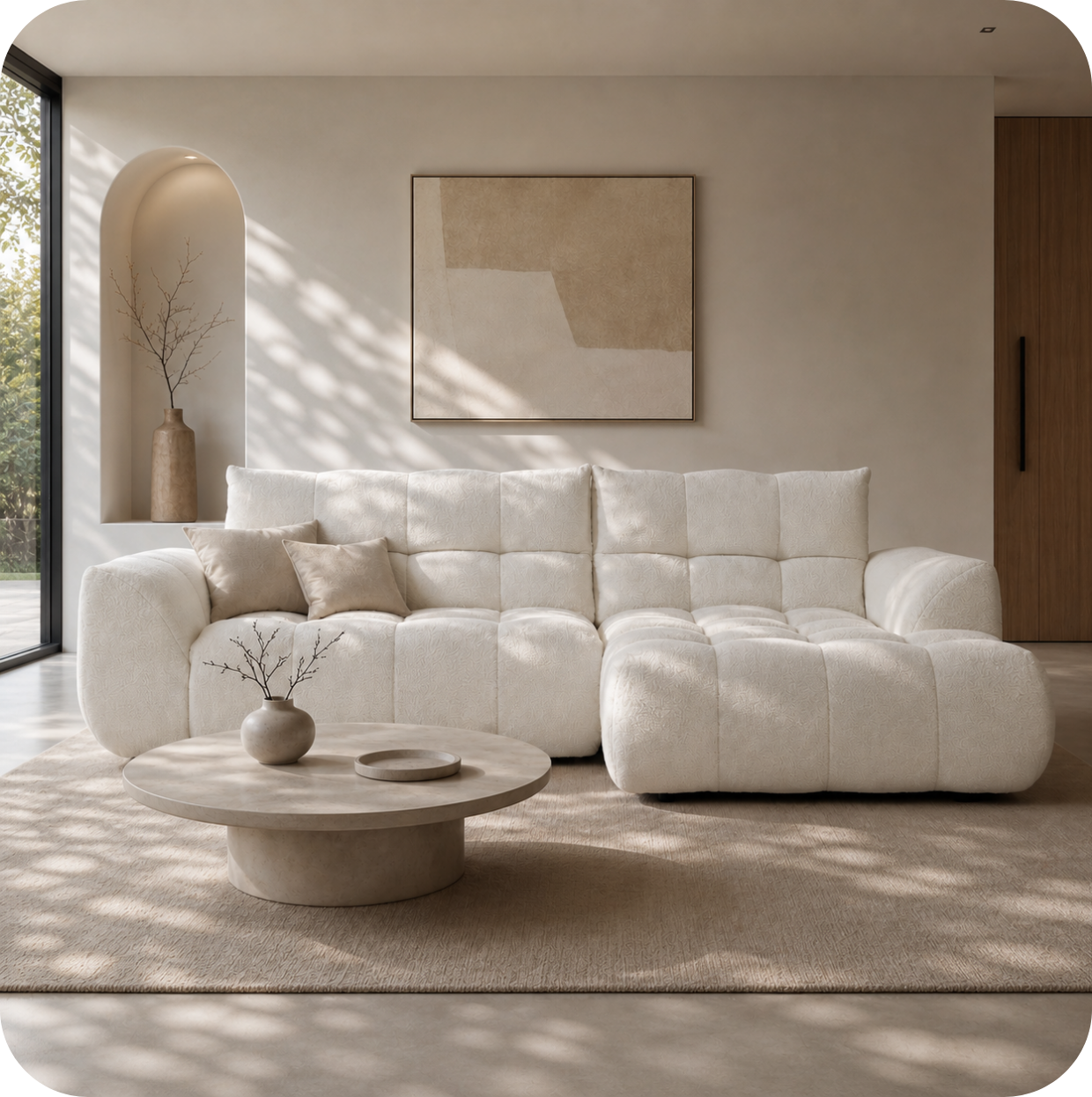
Merlot Corner Sofa — from EUR 1,290
A corner sofa requires a large rug that extends under all sections of the L-shape — typically 240 x 340 cm or larger. The rug anchors the seating arrangement and defines the living area within the wider floor plan.

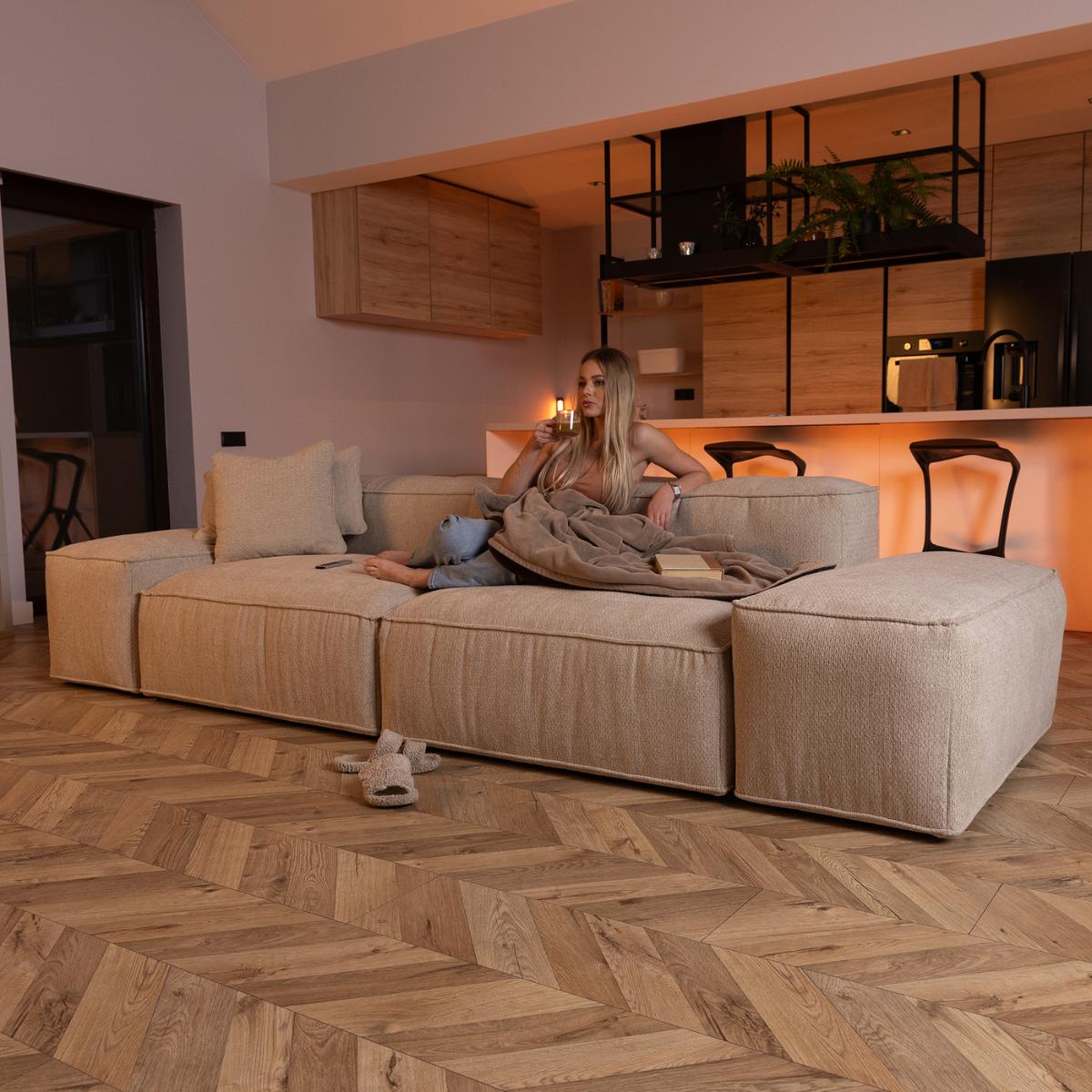
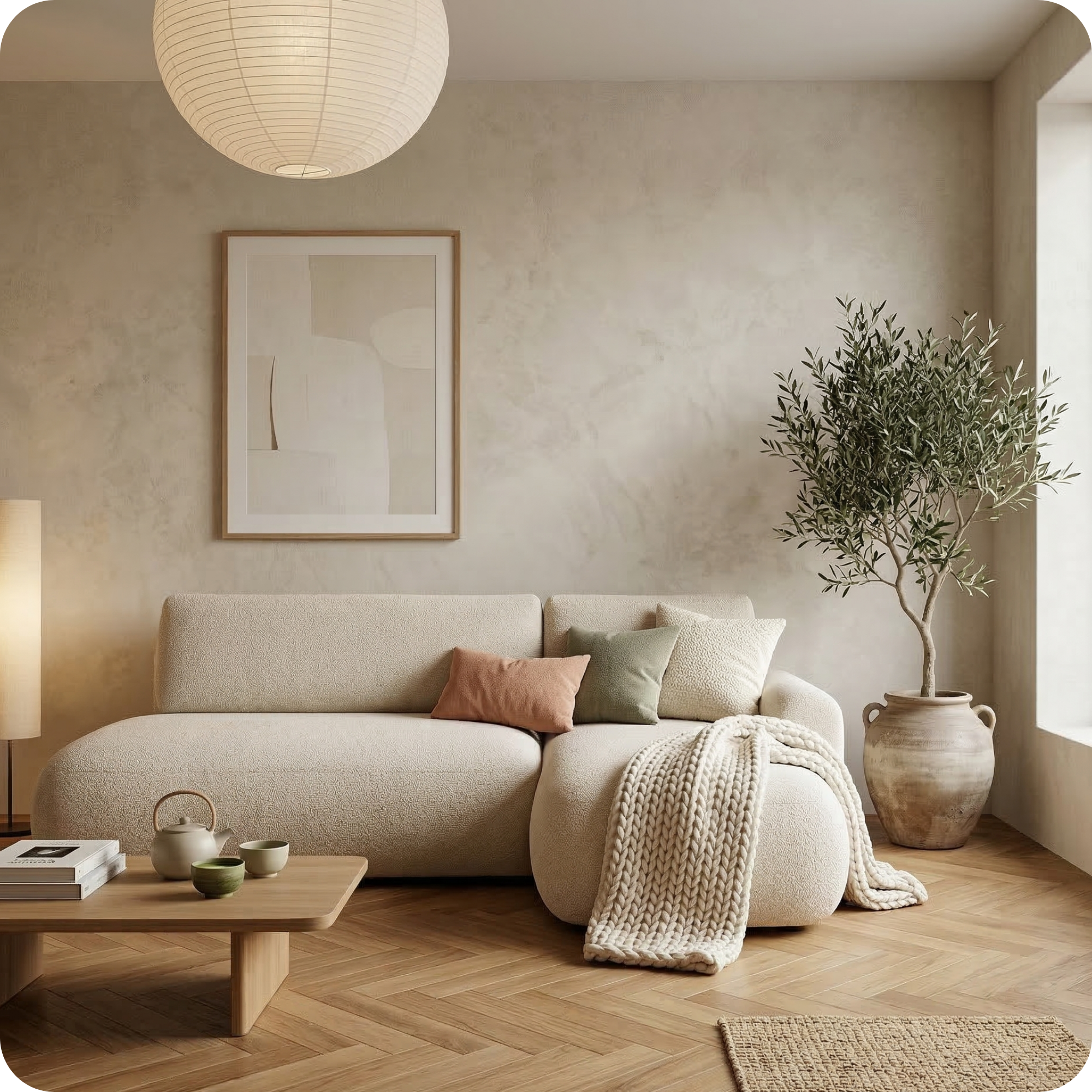
Lugano Sofa — Sand — from EUR 890
A sand-toned sofa works beautifully with almost any rug — a natural jute or sisal rug for a warm neutral look, a patterned Moroccan-style rug for boho warmth, or a deep-toned wool rug for contrast and drama.
Rug Materials: What to Choose
Wool: the gold standard for living room rugs. Wool rugs are durable, naturally stain-resistant, soft underfoot, and improve with age. They are more expensive but represent excellent value over time. Jute and sisal: natural fibre rugs are beautiful, environmentally friendly, and work particularly well in boho, coastal, and Japandi interiors. Less soft underfoot than wool. Viscose or silk blend: beautiful appearance with a soft sheen, but less durable and harder to clean than wool — best in lower-traffic rooms. Polypropylene: the most practical and budget-friendly choice, easy to clean and very durable. Improved quality at the top end of the market. Cotton: soft, washable, and affordable but less durable than wool.
Pile Height and Texture
Low pile (under 10mm): sleek, easy to clean, works well under furniture. Suitable for high-traffic areas. Medium pile (10–25mm): the most versatile choice for living rooms — comfortable, reasonably easy to clean, and available in the widest range of styles. High pile or shaggy (over 25mm): very cosy and tactile but harder to clean. Best in lower-traffic areas like bedroom alcoves.
Rug Style for Different Interior Aesthetics
Scandinavian and minimalist: simple geometric patterns in muted tones or solid neutrals. Boho: Moroccan-style, vintage kilim, or layered natural rugs. Maximalist: bold patterns and colours. Industrial: flat-weave geometric rugs in dark neutrals. Mid-century modern: abstract patterns, warm tones, or simple geometric forms.

Zostaw komentarz
Ta strona jest chroniona przez hCaptcha i obowiązują na niej Polityka prywatności i Warunki korzystania z usługi serwisu hCaptcha.