


Living Room Rug Guide: How to Choose the Right Rug for Your Sofa
A rug is the single piece that can most dramatically transform a living room's feel — and also the piece that is most commonly bought in the wrong size. A rug that's too small is one of the most universal interior design mistakes: it makes the furniture appear to float, disconnected and awkward, rather than anchored and composed. Getting the rug right changes everything. This guide covers the essentials of rug selection for a living room with a sofa.
The Cardinal Rule: Go Bigger Than You Think
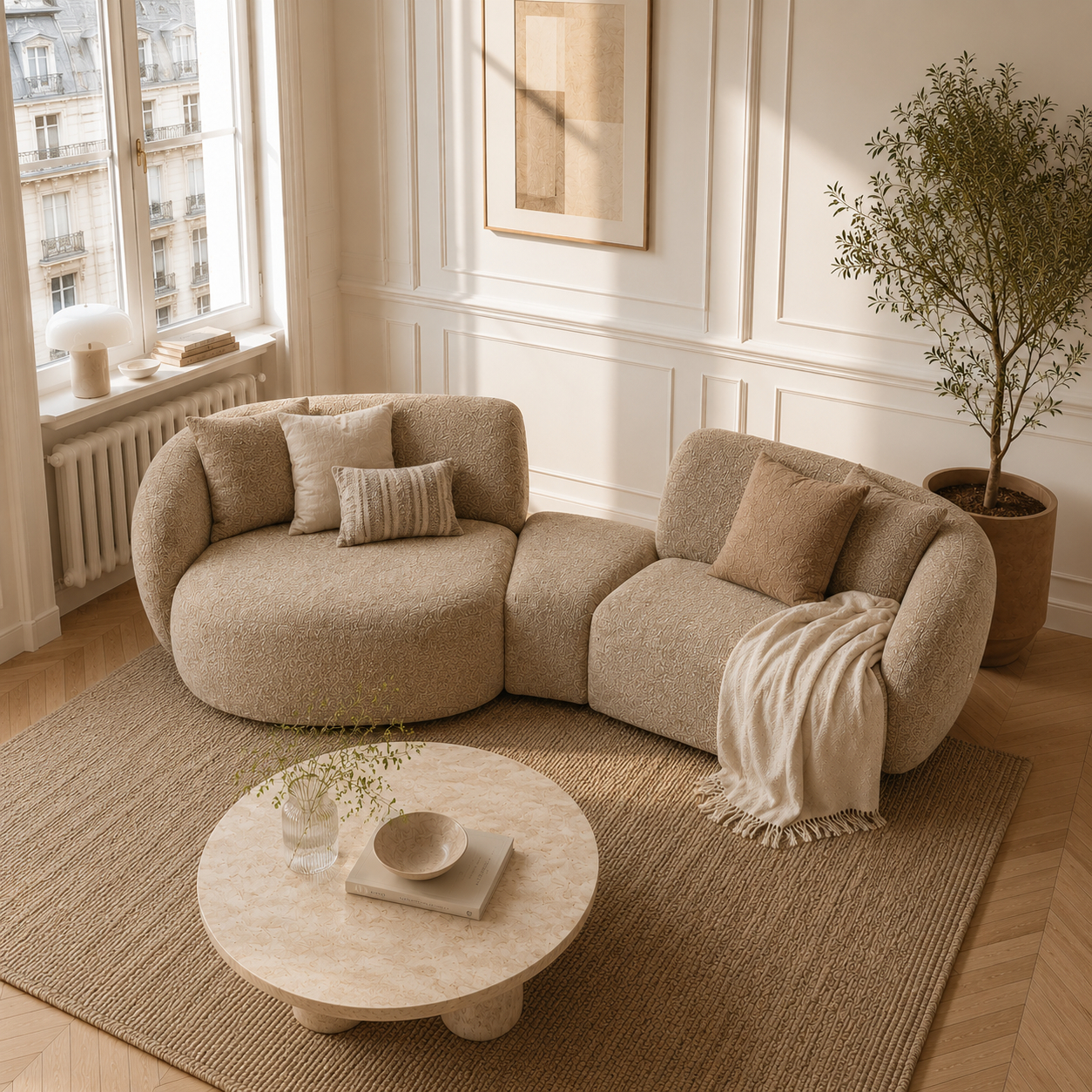
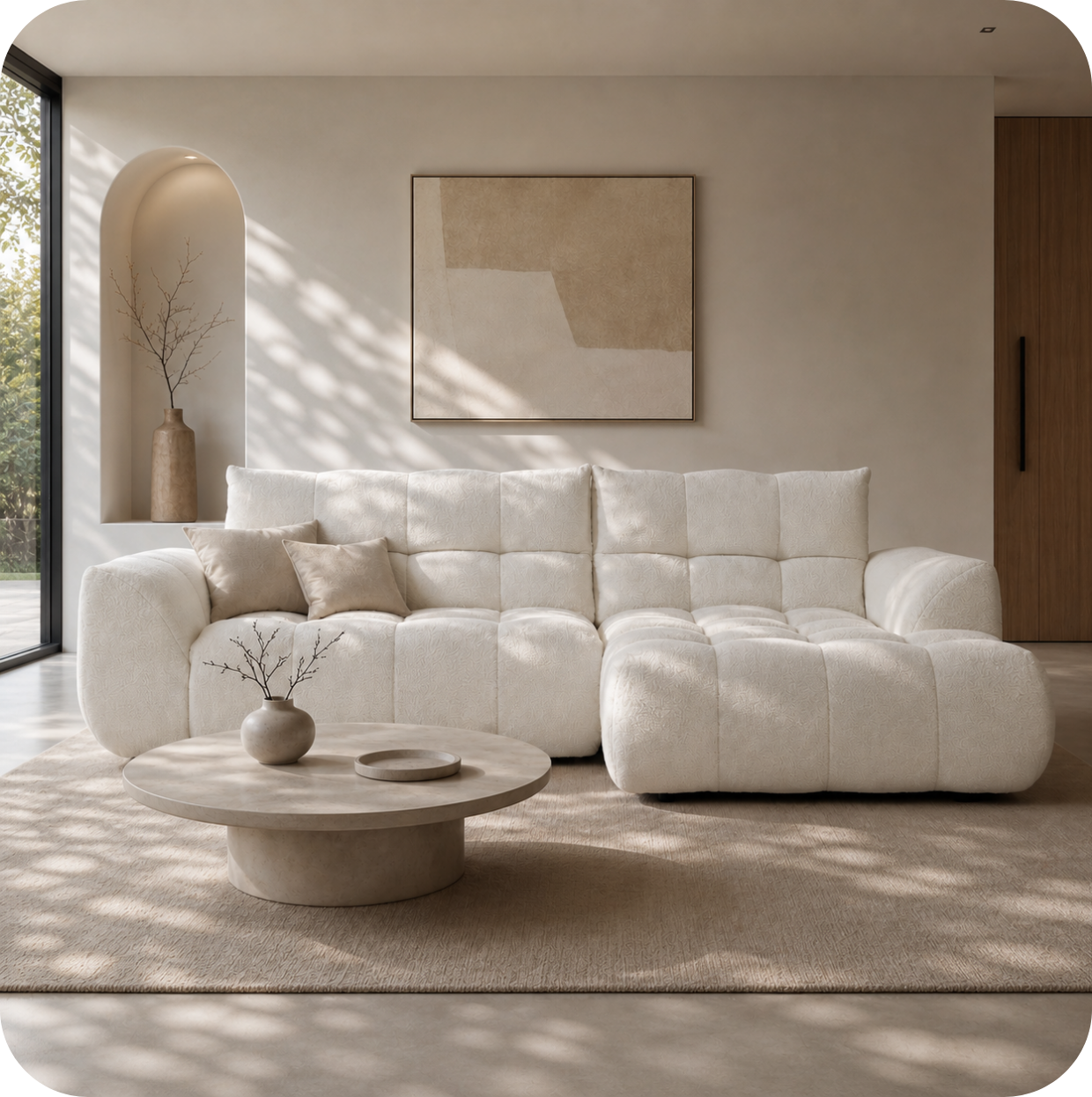
If there is one rule of living room rugs, it is this: the correct rug size is larger than you expect it to be. When most people imagine a rug under their sofa, they picture something that sits entirely under the sofa. The reality of good rug placement is the opposite — a correctly sized rug extends significantly beyond the sofa in all directions. At a minimum, the rug should extend 30-40cm beyond each side of the sofa. Ideally, all the sofa's front legs — and often the back legs too — sit on the rug rather than off it. A rug that's at least 200x300cm is required for most standard 3-seater sofa arrangements; 240x340cm or larger is often better in practice.
Rug Placement Options
There are three accepted rug placement approaches for a sofa-rug combination. All legs on: all four legs of the sofa rest on the rug — creates the most contained, formal composition, requires the largest rug. Front legs on: only the two front legs of the sofa rest on the rug — the most commonly recommended approach, creates a visual connection between sofa and rug without requiring a very large rug. All legs off: the rug sits entirely in front of the sofa with no legs on it — this only works with smaller, accent rugs and can look disconnected. For most living rooms with a standard sofa, front legs on is the recommended approach — it creates the warm, unified feel of all-legs-on with a slightly smaller (and often more affordable) rug.

Torino Corner Sofa — from EUR 1.490
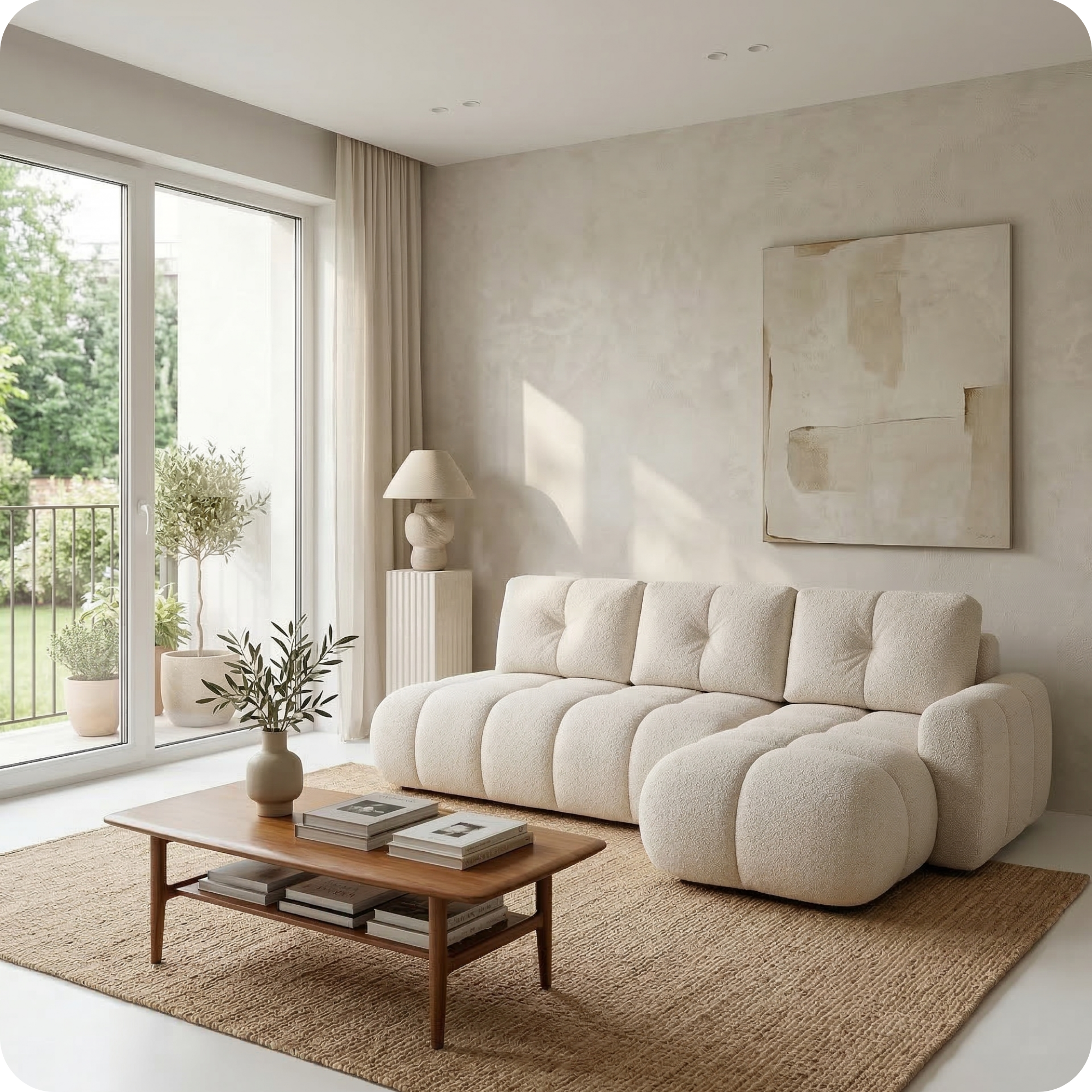
Corner sofas like the Torino require particular rug consideration. Because the sofa covers two walls' worth of floor space, the rug needs to accommodate both arms of the L-shape. For a corner sofa, a very large square rug (250x250cm+) or a round rug placed at the inner corner typically works best — the round or square shape provides visual balance for the corner configuration that an elongated rectangle cannot achieve.

Modular Sofas at Furni — from EUR 990
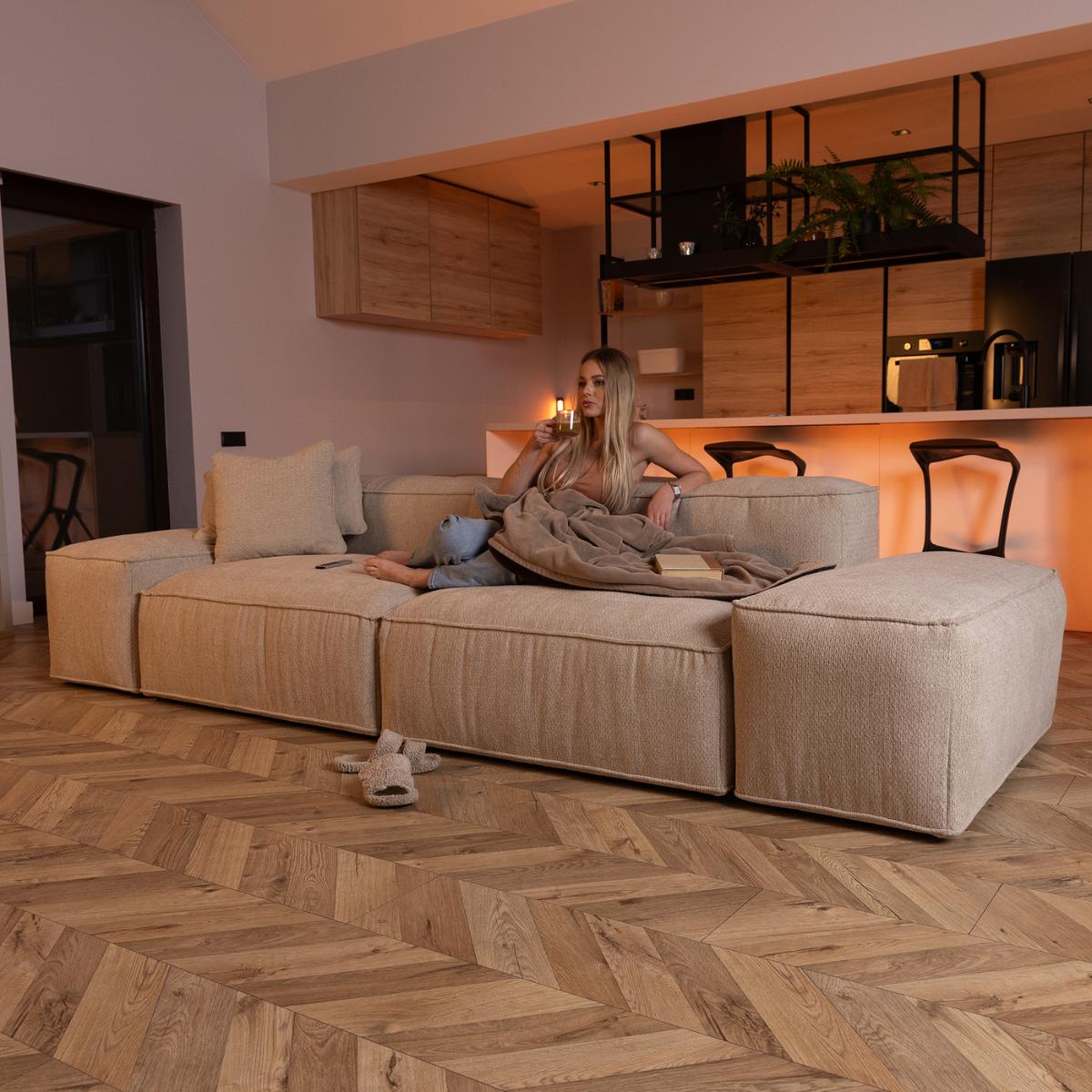
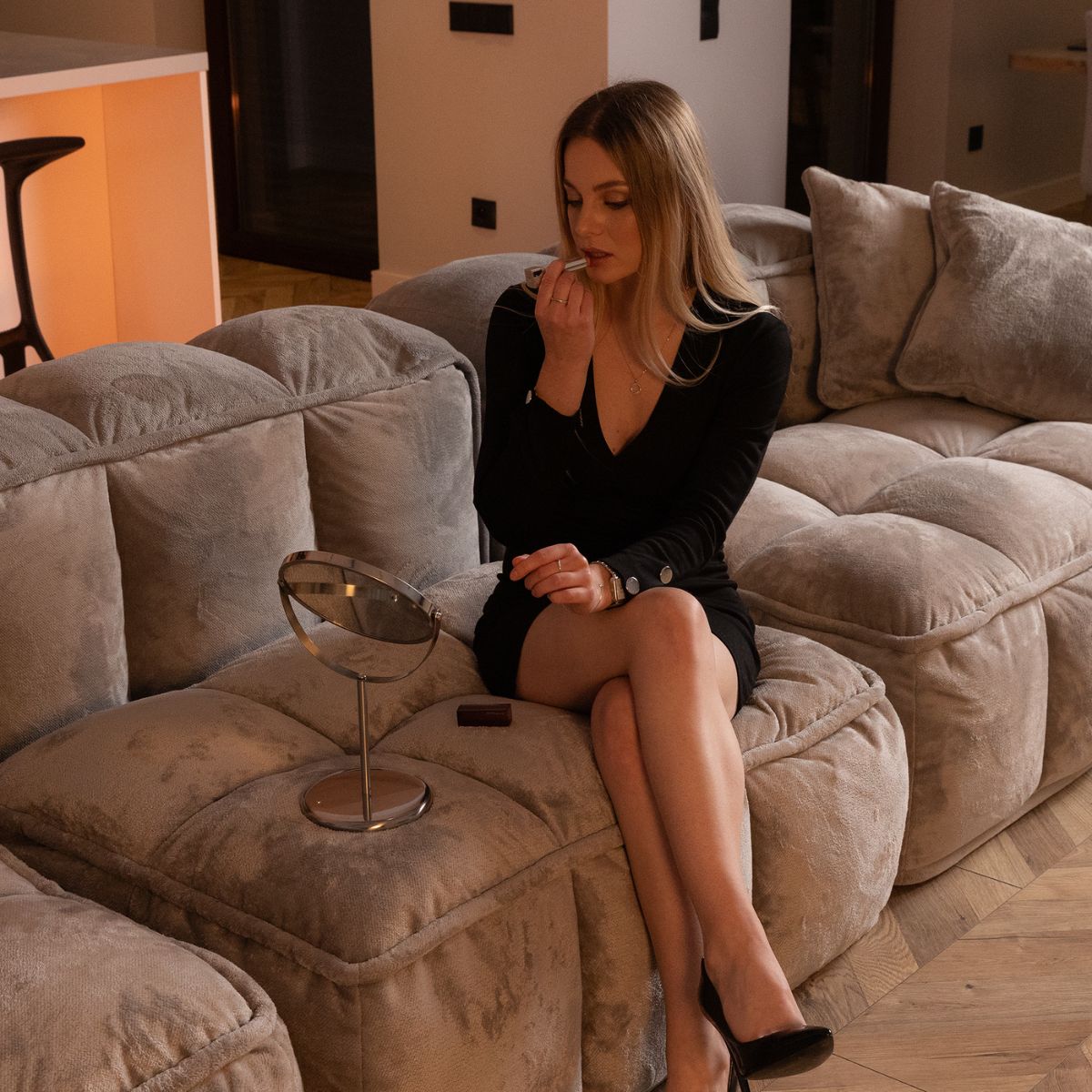
The rug size calculation for a modular sofa depends on the specific configuration. A standard 3-seater modular typically requires a 200x300cm rug minimum with front legs on. Add a longchair or extra module and you'll need 240x340cm. Always measure the specific configuration you plan to order before buying the rug — modular sofas vary considerably in their final dimensions depending on the modules selected.
Rug Material: What to Choose for a Living Room
Rug material affects appearance, feel underfoot, durability, and maintenance requirements. Wool is the gold standard for living room rugs: it's soft, resilient, naturally stain-resistant, and improves with age. The trade-off is cost and weight. Polypropylene (synthetic) rugs are affordable, very easy to clean, and resistant to fading — excellent for high-traffic homes with children or pets, though they typically feel less luxurious underfoot. Cotton rugs are flat-woven and casual in feel — ideal for warm-climate homes or bohemian interiors. Jute and sisal are natural-fibre rugs with a distinctive organic texture — they work beautifully in natural, earthy interiors but are harder underfoot and less suitable for homes where the rug will be sat on directly.
Rug Pile Height
Pile height affects both feel and practical use. High pile (shaggy) rugs are soft and luxurious underfoot but trap dust and are difficult to clean — avoid under dining tables and in kitchens, but lovely in a living room seating area where they won't be walked on heavily. Low pile rugs are easier to vacuum, more practical in high-traffic areas, and show furniture leg marks less. Medium pile offers a balance. For a living room with a sofa, a medium to medium-high pile works well — soft enough to be noticed underfoot but not so high that it's impractical.
Rug Colour and Pattern: Matching the Sofa
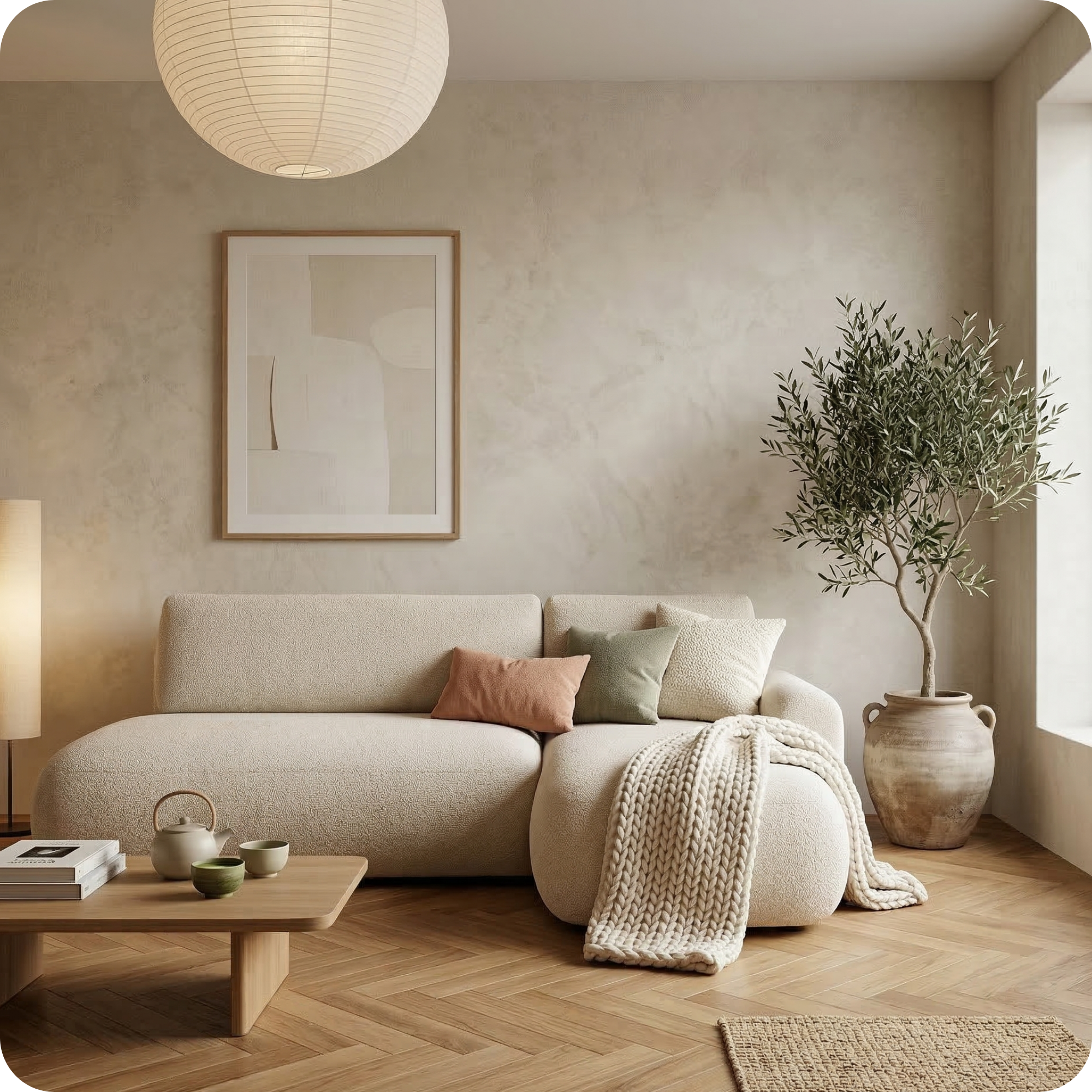
The rug and sofa can relate in one of three ways: contrast (rug is a different colour from the sofa — creates definition and visual interest); harmonise (rug is in the same colour family as the sofa — creates depth and layering); or anchor (rug contains the sofa's colour alongside other colours — the most forgiving approach as the rug can be selected before or after the sofa and will work in either case). Patterned rugs are particularly useful because they provide visual interest without competing with the sofa, and a pattern that includes the sofa's colour will always read as intentional.

Zostaw komentarz
Ta strona jest chroniona przez hCaptcha i obowiązują na niej Polityka prywatności i Warunki korzystania z usługi serwisu hCaptcha.