

Maximalist Living Room Ideas: How to Decorate Boldly Without Chaos
Maximalism is the design philosophy that more is more — that richness, layering, pattern, colour, and the accumulation of meaningful objects creates spaces with more personality, warmth, and life than restrained, minimal interiors can achieve. Maximalism has been in something of a revival in recent years, partly as a reaction against the long dominance of Scandi minimalism and the visual monotony of the all-beige, all-neutral aesthetic. The key distinction between maximalism and simply having a cluttered, disorganised space is intentionality: in a well-executed maximalist room, every choice has been made deliberately, and the abundance reads as curated rather than accidental. The room feels full, not overcrowded; layered, not chaotic.
Start With a Strong Colour Palette
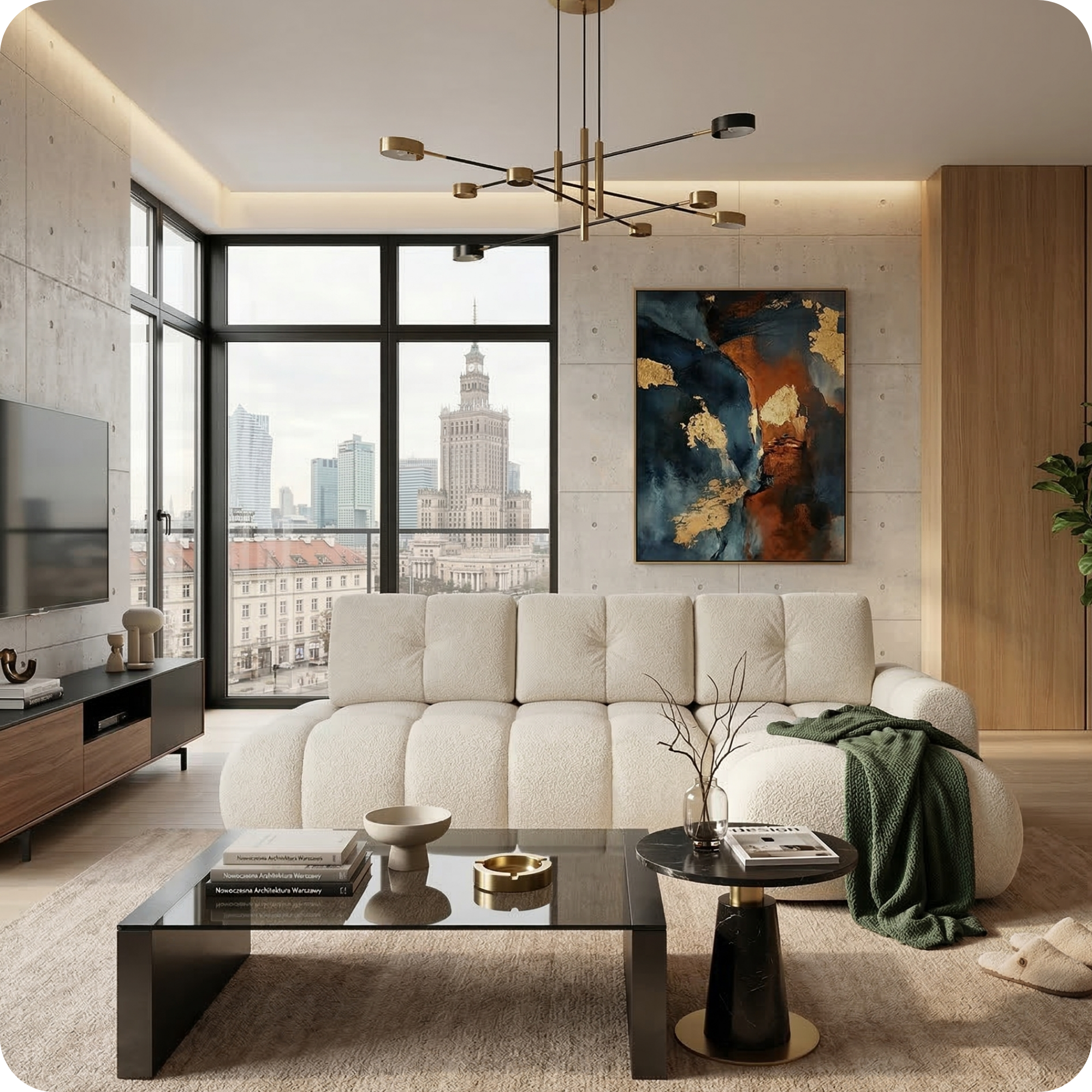
Successful maximalism starts with colour control — not colour restraint. The difference is important: a maximalist room can contain many colours, but they should have a coherent relationship to each other. The most reliable approach is to choose a dominant colour (roughly 60% of the room — walls, large rug, main sofa), a secondary colour (roughly 30% — cushions, curtains, smaller furniture), and then allow accent colours (10% — accessories, art, plants) to provide variation and surprise. The palette can be as rich and daring as you like — deep jewel tones (emerald, sapphire, amethyst, ruby), earthy richness (terracotta, burnt orange, deep olive, warm burgundy), or bold contrasts — as long as the proportional hierarchy is maintained.

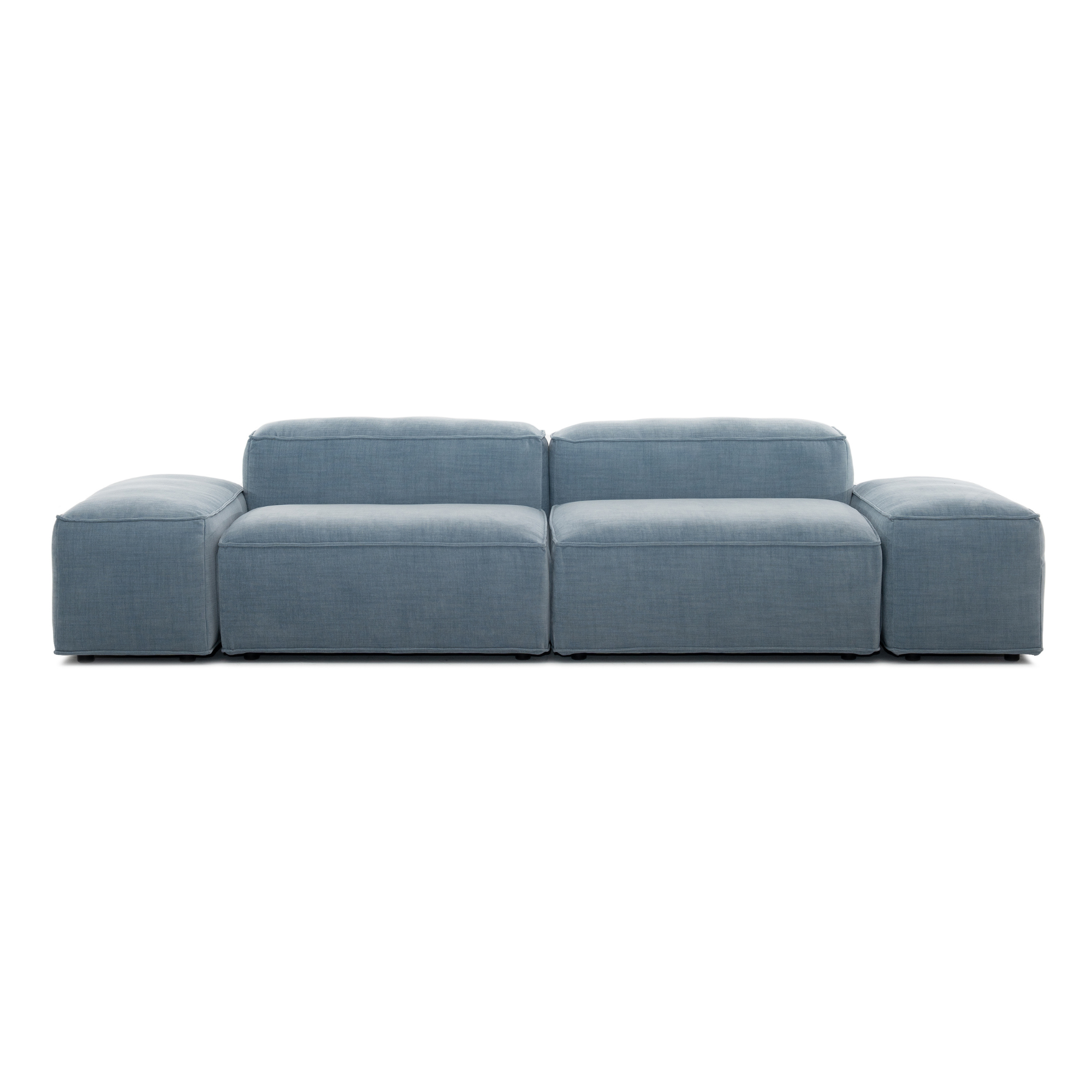
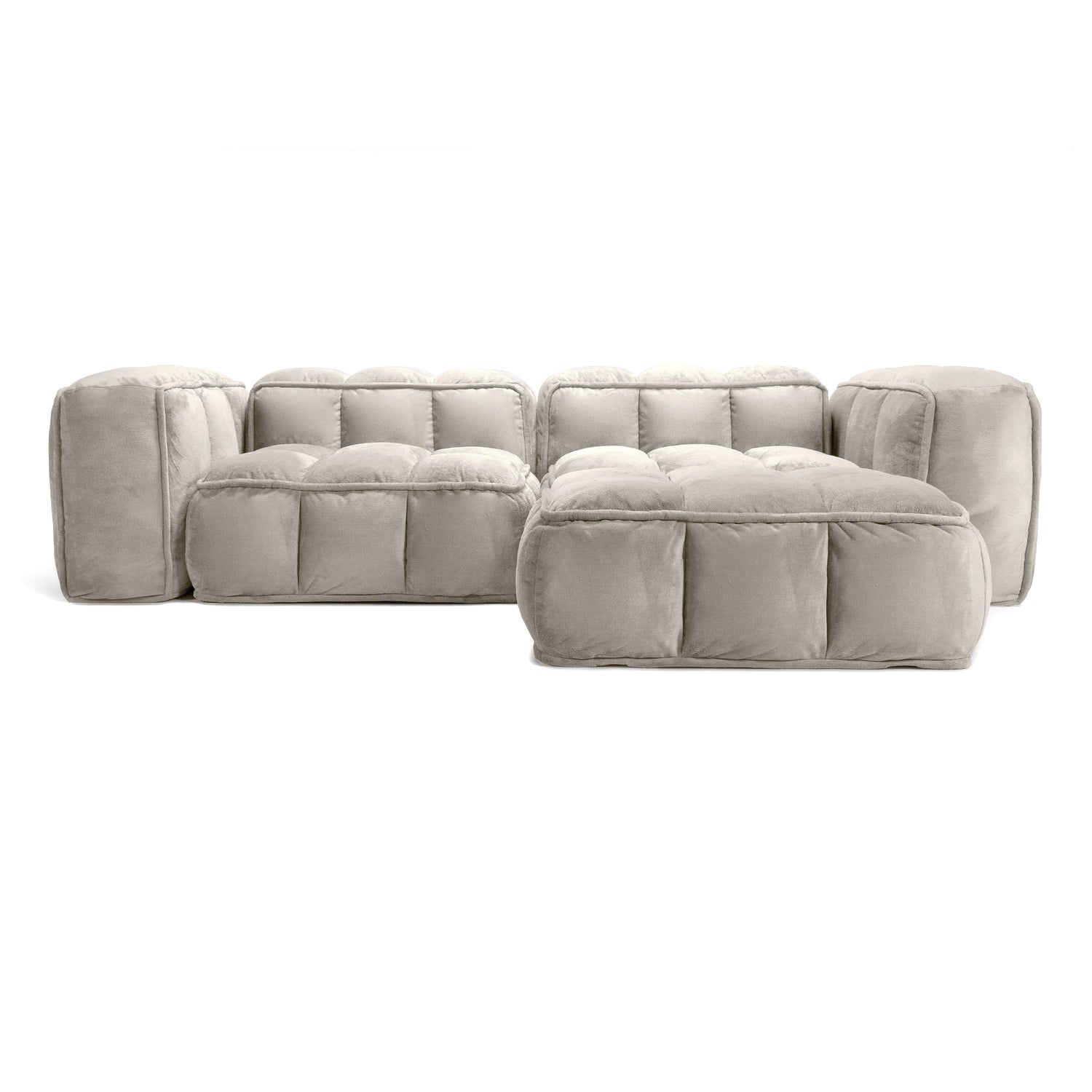
Malbec Modular Sofa — from €2,375
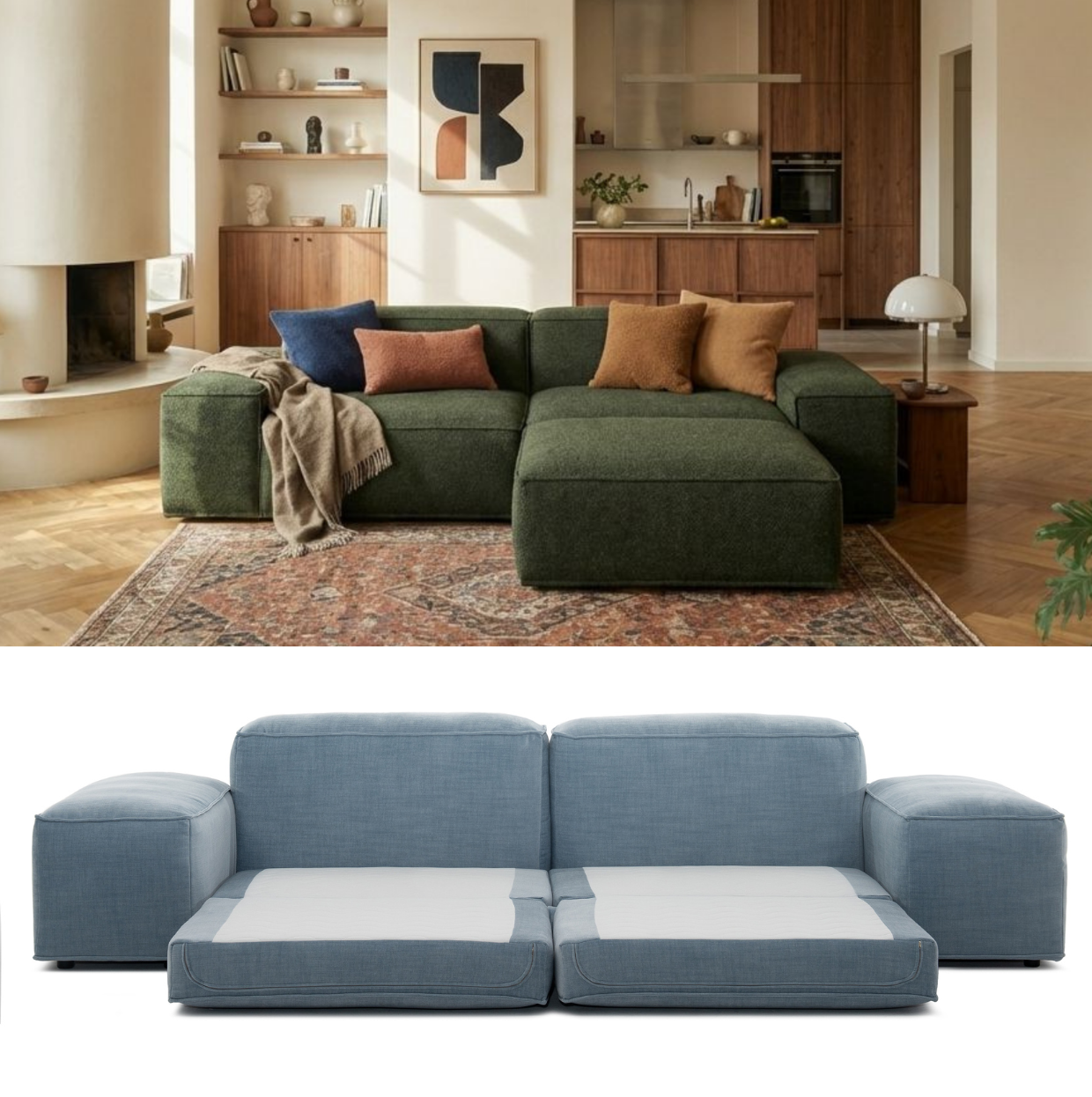
Named after deep red wine, the Malbec is made for maximalist interiors — its rich, saturated tone provides the bold, confident anchor from which a layered, jewel-toned room can be built. Pair with emerald cushions, patterned throws, a gallery wall, and heavily layered textiles for a fully maximalist statement.

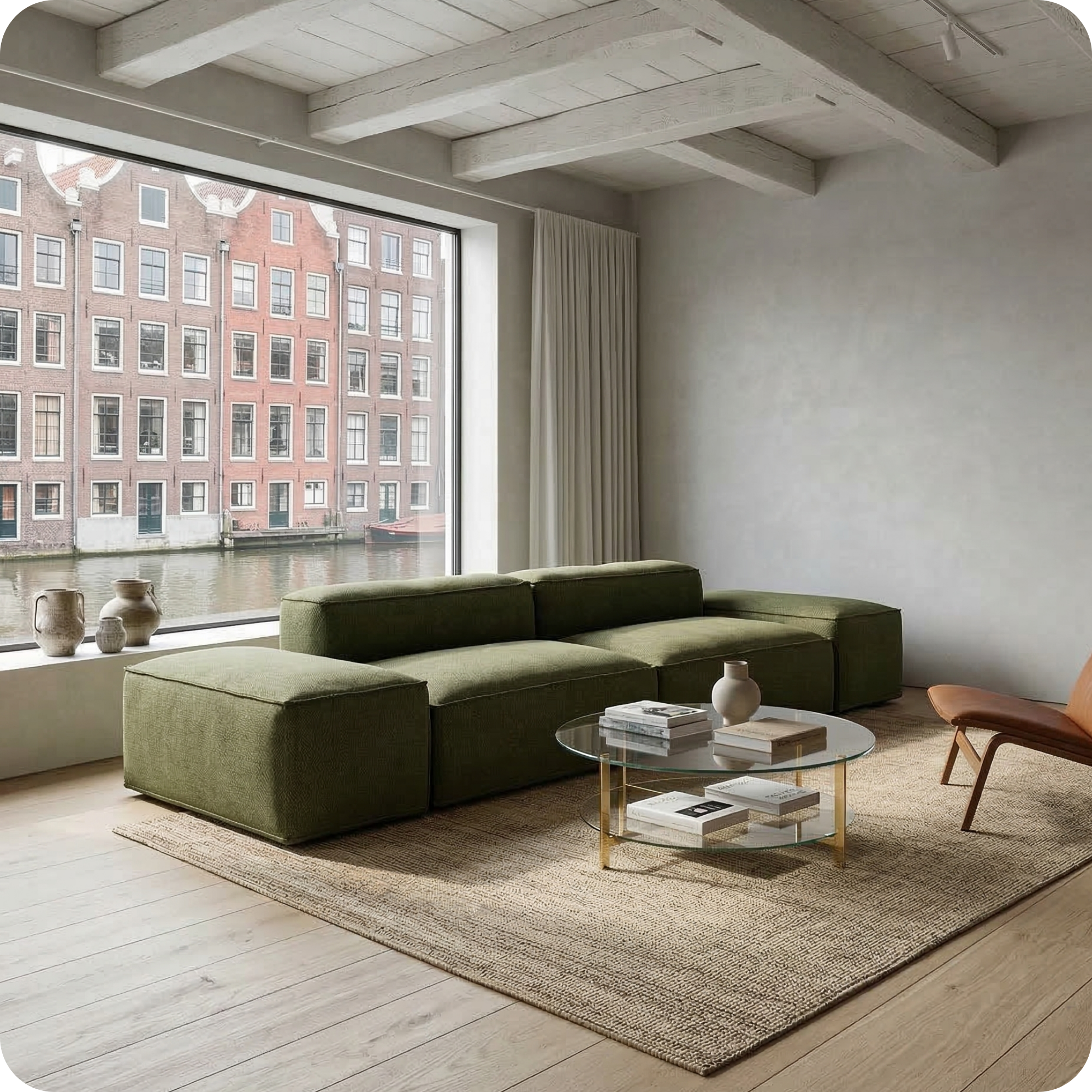
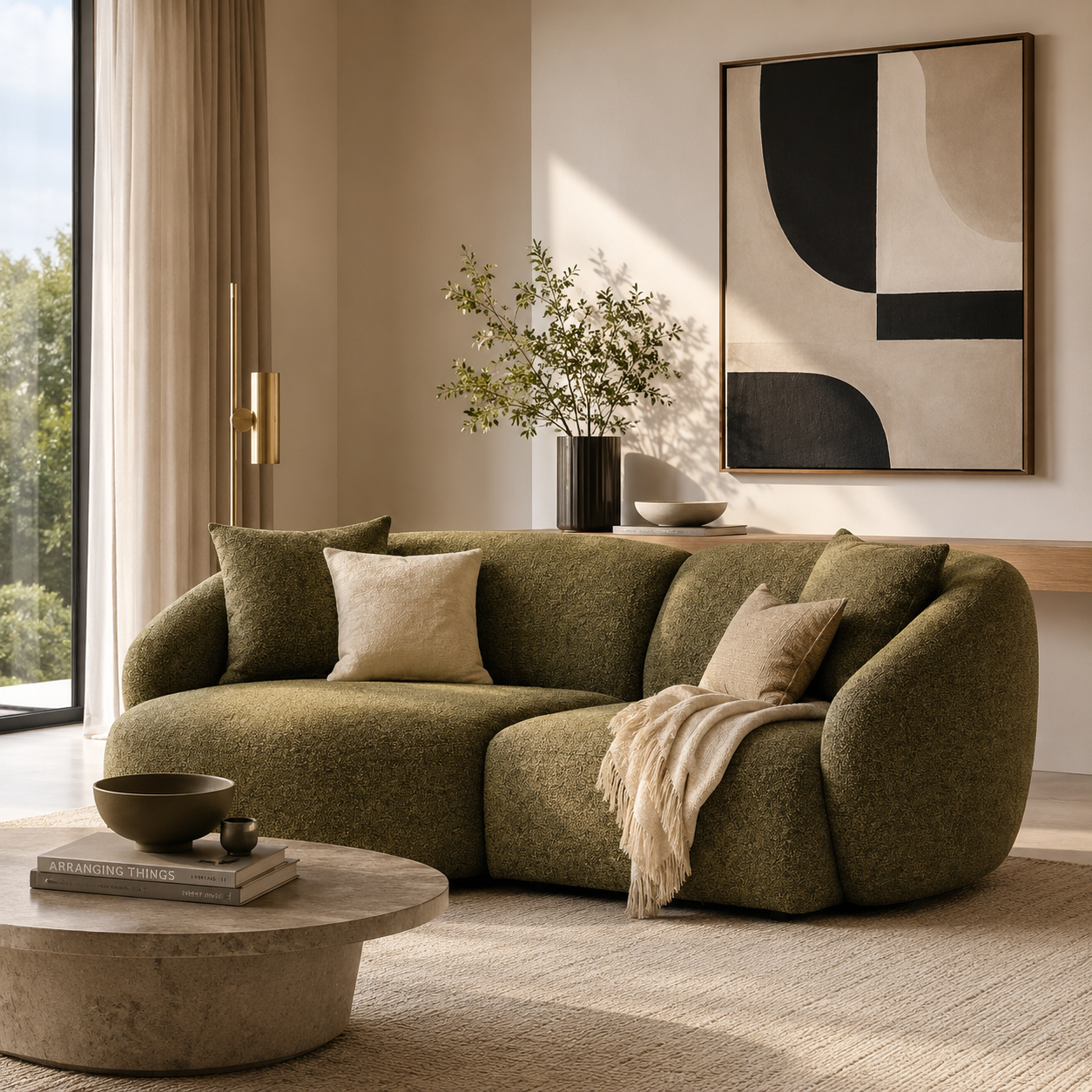
Merlot Sofa — Leaf Green — from €1,532
A leaf green sofa is one of the most versatile bold colour choices for a maximalist room — it plays well with warm terracotta, pink, rust, and gold tones (earthy maximalism) and equally well with navy, teal, and burgundy (jewel-tone maximalism). The Merlot's modular construction also allows it to be reconfigured as your room evolves.
Pattern Mixing in Maximalist Rooms
Pattern mixing is the hallmark of confident maximalism, and the key to doing it successfully without the room feeling unhinged is scale variation. When mixing patterns, ensure that at least two different scales are represented: a large-scale pattern (a bold floral on the curtains or a geometric on the rug), a medium-scale pattern (a stripe or botanical on cushion covers), and a small-scale pattern (a herringbone weave on a throw or a micro-print on an armchair). Keeping some colours consistent across different patterns — the same terracotta appearing in the rug, the curtain, and the cushions — creates unity across the visual complexity.
Gallery Walls and Art in Maximalist Living Rooms
A gallery wall — a curated arrangement of framed artwork, photographs, mirrors, and objects on a single wall — is one of the most characteristically maximalist living room features. The key to a gallery wall that looks intentional rather than random is to establish one or two consistent elements that thread through the entire arrangement: consistent frame finishes (all gold, all black, all natural wood), a consistent mat colour, or a consistent theme in the subject matter. Within those constraints, the arrangement can be as eclectic as you like — mixing sizes, orientations, and mediums creates the layered, complex character that maximalism is built on.