


Minimalist Living Room: How to Achieve a Minimalist Interior Design
Minimalism in interior design is often misunderstood as an absence of things — a cold, sparse, sterile room with nothing in it. True minimalism is something richer: it's the art of choosing only what matters, eliminating what doesn't, and allowing each element in a room to breathe, be seen, and be appreciated. A well-executed minimalist living room isn't empty — it's edited. Every piece has been deliberately chosen; every surface serves a purpose; every proportion has been considered. The result is a room that feels simultaneously calm and generous, uncluttered but not bare, intentional but never effortful. This guide shows you how to achieve genuine minimalist design in your living room.
The Foundational Principle: Less, But Better
The German design principle "weniger aber besser" — less but better — is the heart of minimalism. The question in a minimalist room is not "what else could I add?" but "what can I remove?". Start by removing everything from the room — literally. Then bring back only what you need and genuinely love. You will almost certainly leave things out, and the room will almost certainly feel better for it. Every object that re-enters the room should pass the test: is this beautiful, useful, or both?
Choosing a Minimalist Sofa
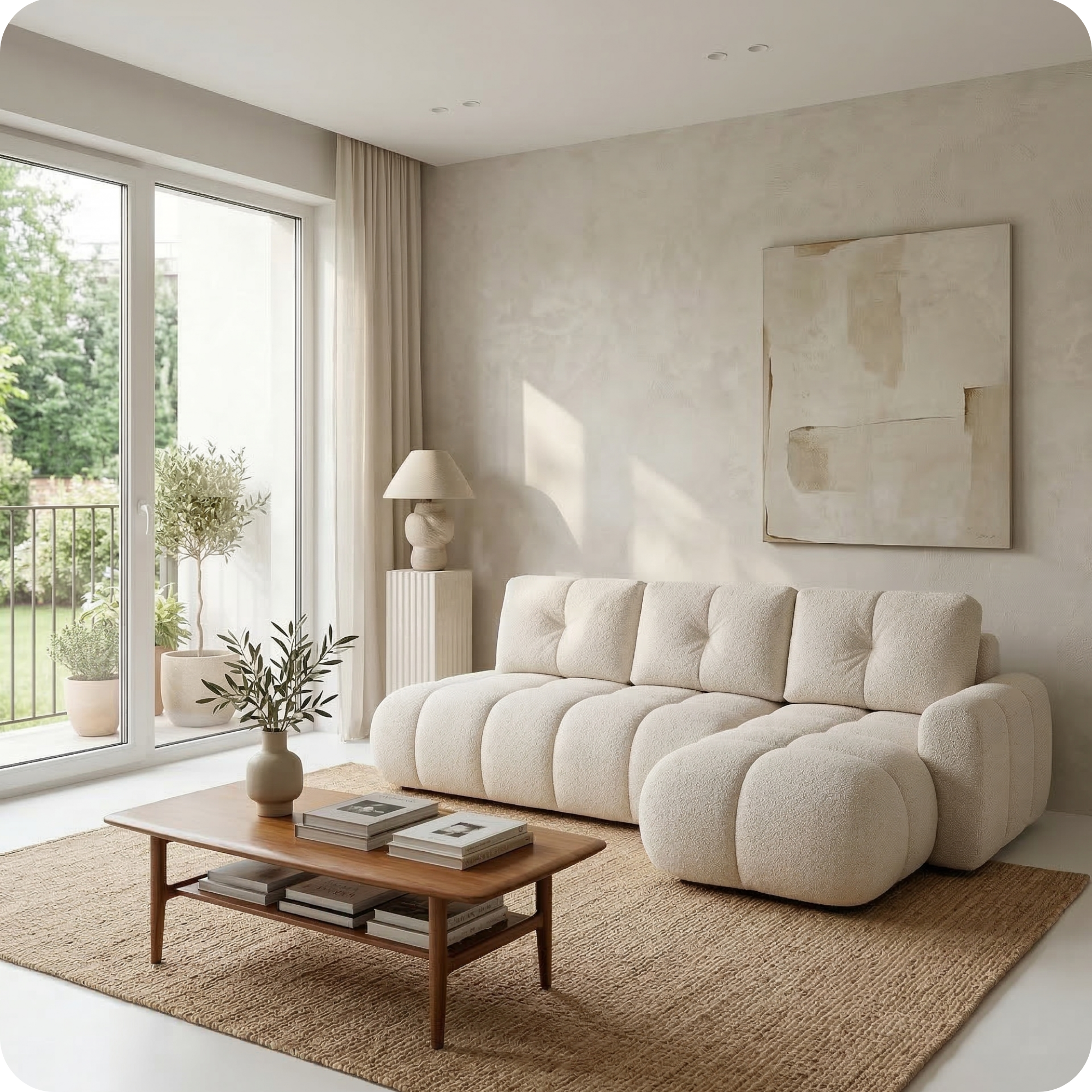
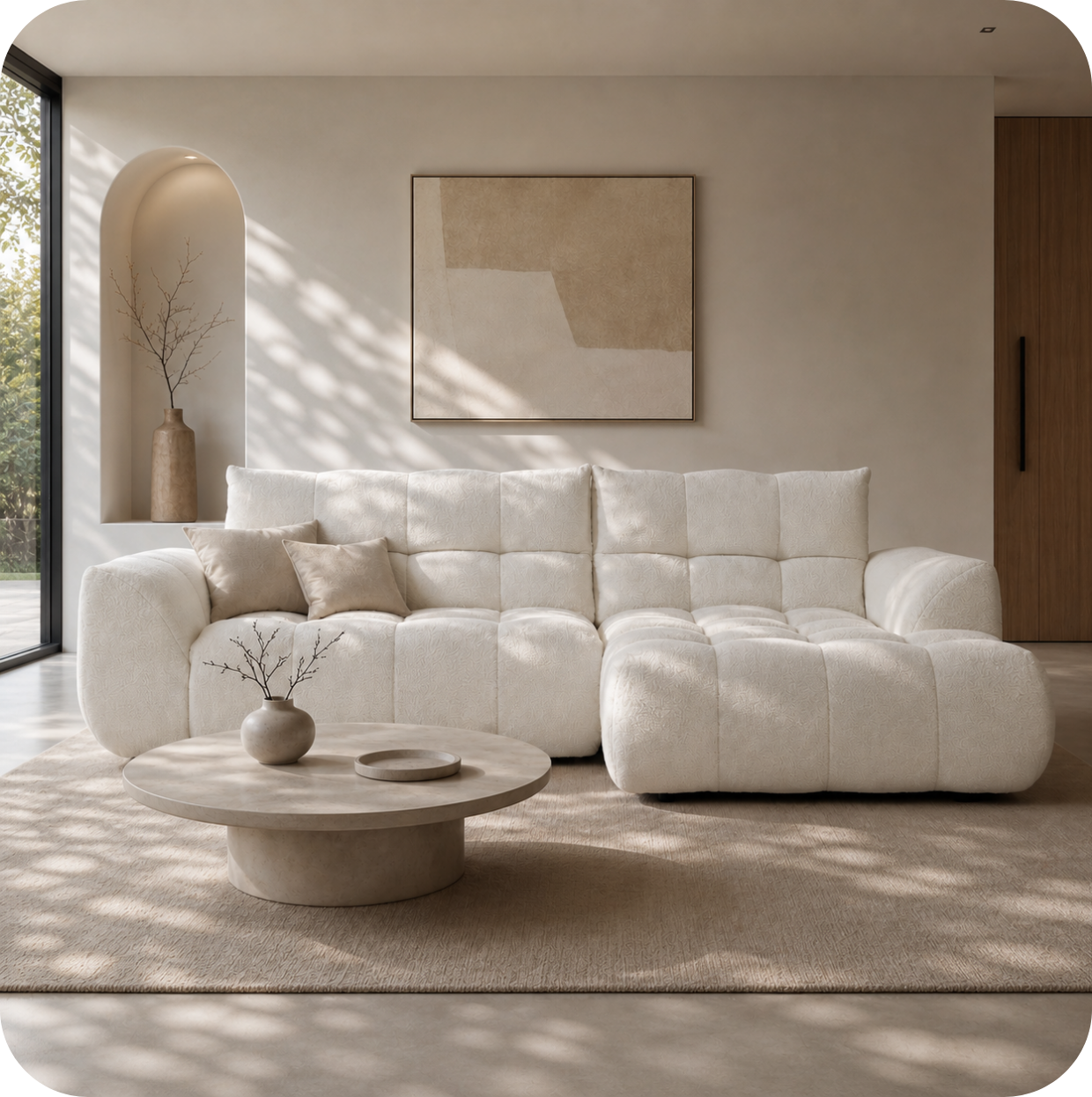
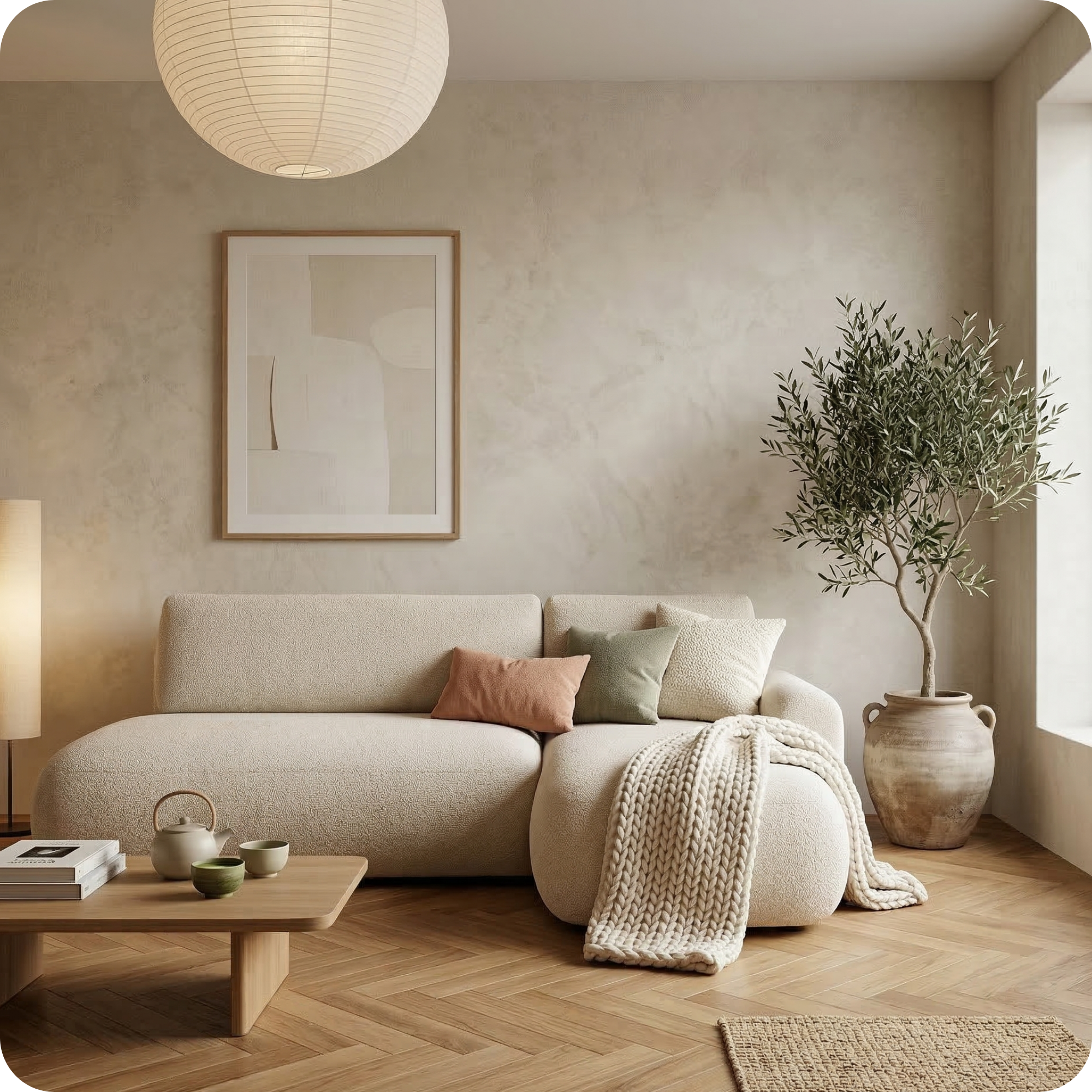
The sofa is the largest piece in a minimalist living room and carries the most visual weight. A minimalist sofa should have clean, straight lines with minimal visible hardware; a simple, restrained silhouette without decorative tufting, contrasting piping, or ornate cushion arrangements; upholstery in a solid, muted tone — cream, warm white, light grey, natural linen, or soft caramel; and proportions that feel right for the room — neither overwhelming nor underwhelming. Low-profile sofas suit minimalist rooms particularly well: they keep the visual horizon low and make the room feel more open and airy.

Lugano Sofa — Light Grey — from EUR 890
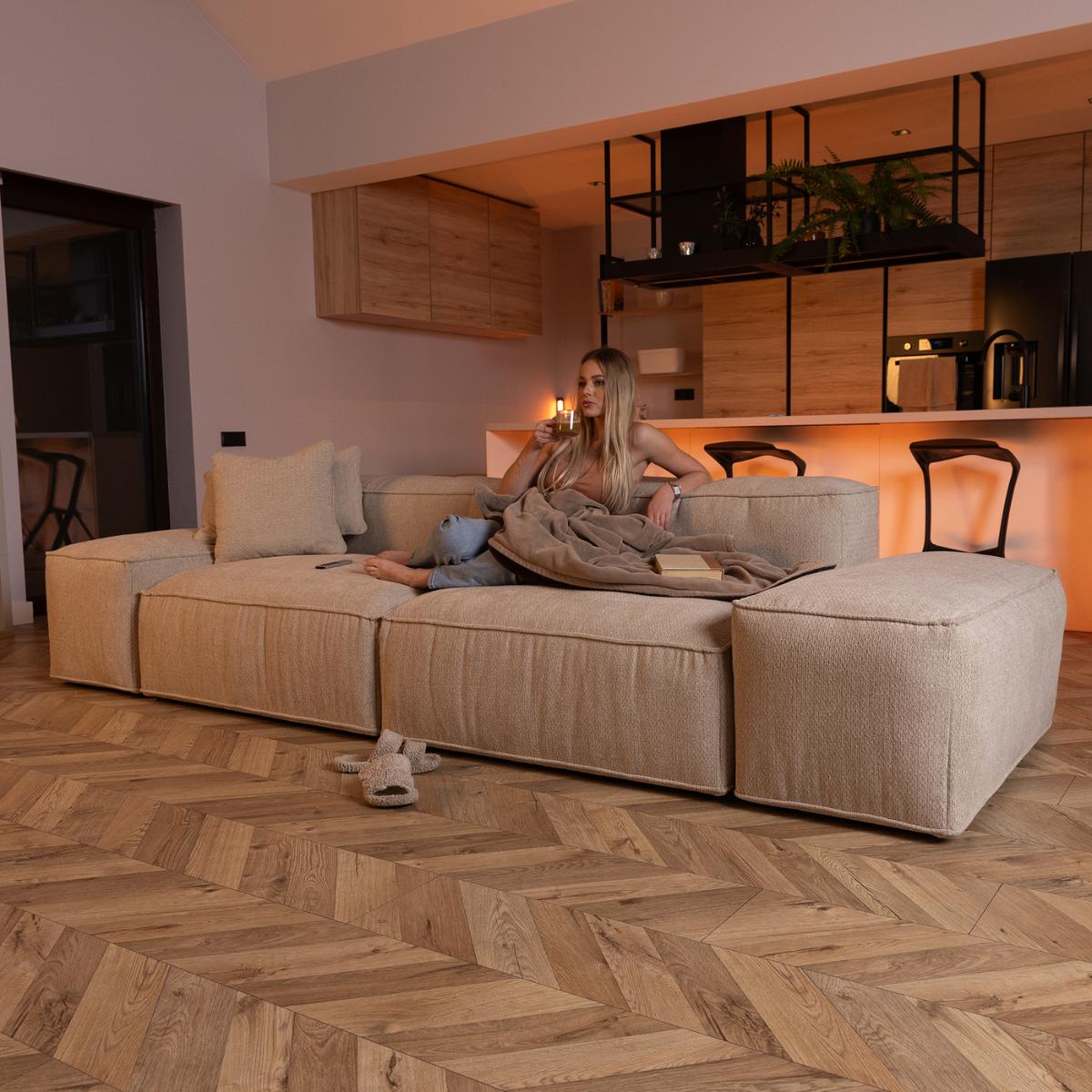
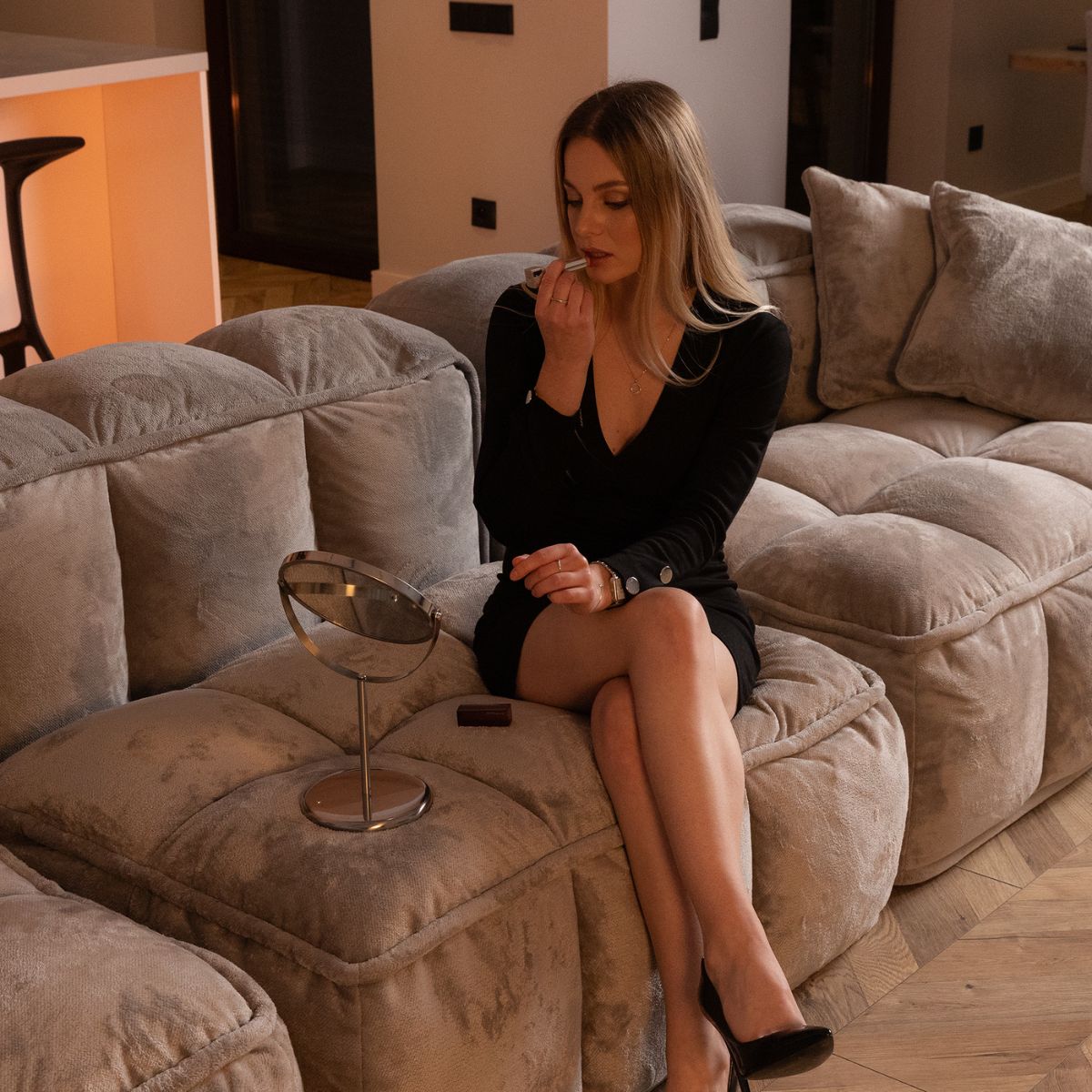
The Lugano in light grey is an ideal minimalist sofa: the clean, restrained silhouette, muted neutral colour, and absence of decorative hardware make it a piece that integrates seamlessly into a minimalist room without demanding attention. It holds the space without dominating it.

Lugano Sofa — Sand — from EUR 890
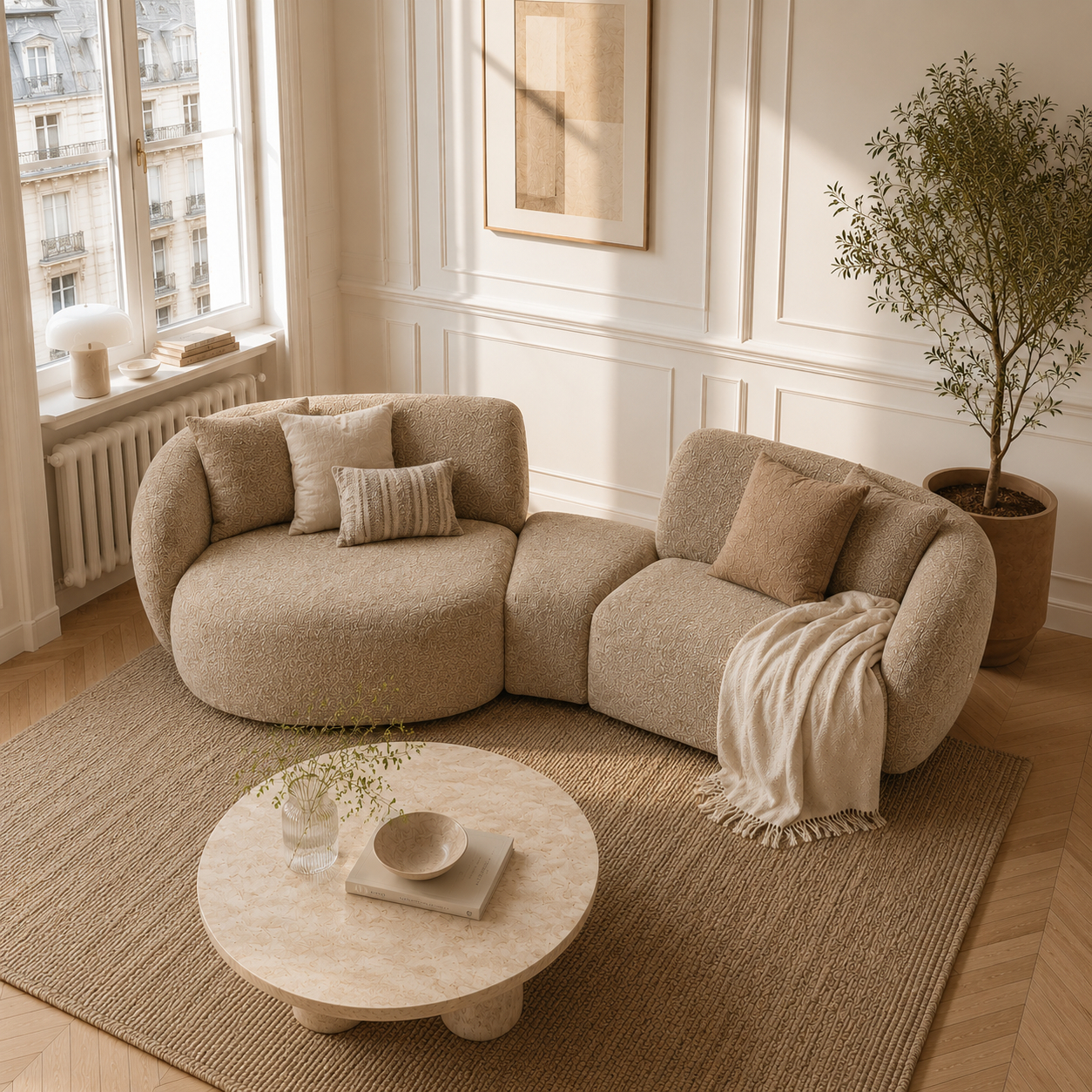
For a warmer take on minimalism, the Lugano in sand brings a gentle, natural warmth to a minimal room. Pair with bare oak floors, a single low coffee table, one large artwork on the wall, and a pair of identical cushions — nothing more is needed.
Colour in a Minimalist Room
Minimalism doesn't require a white room — though white is certainly one path. The key is a restrained, cohesive palette: two or three colours at most, with one dominant and one or two supporting. Warm whites and off-whites (Farrow and Ball's All White, Little Greene's Linen) work universally. Warm beiges and naturals (sand, linen, camel) add warmth without colour. Soft, muted accents — a single sage cushion, a single terracotta ceramic — can be introduced sparingly. The rule: if you wouldn't miss it, remove it.
Surfaces: Clarity and Negative Space
In a minimalist room, surfaces are as important as objects. A bare coffee table is a design choice; a clean shelf with one or two carefully chosen objects is more powerful than a crowded shelf. Practice restraint with styling: one vase, one candle, one plant — not ten. Negative space (empty surface, empty wall, empty floor) is not wasted space in minimalism — it is the medium through which the chosen elements gain their power and presence.
Storage: The Invisible Foundation of Minimalism
The practical foundation of any minimalist interior is excellent storage — not because you own less, but because what you own is stored away from sight. Built-in cabinetry, storage ottomans, and furniture with hidden storage (like many sofa beds) are the backbone of minimalist design. If clutter has no visible home, minimalism becomes impossible to maintain. Invest in storage before investing in styling.

Zostaw komentarz
Ta strona jest chroniona przez hCaptcha i obowiązują na niej Polityka prywatności i Warunki korzystania z usługi serwisu hCaptcha.