


Minimalist Living Room Ideas: How to Create a Calm, Clutter-Free Interior
Minimalism in interior design is often misunderstood as emptiness — bare walls, a single chair, nothing personal. True minimalism is something far richer: it is the practice of keeping only what is genuinely beautiful or functional, and allowing each piece to breathe and be fully seen. A minimalist living room is not a cold, inhospitable space — it is a curated, intentional environment in which everything present has been carefully chosen and placed. The result is a room that feels calm, spacious, and deeply restful — a genuine sanctuary from the visual noise of modern life.
Quality Over Quantity: The Minimalist Sofa
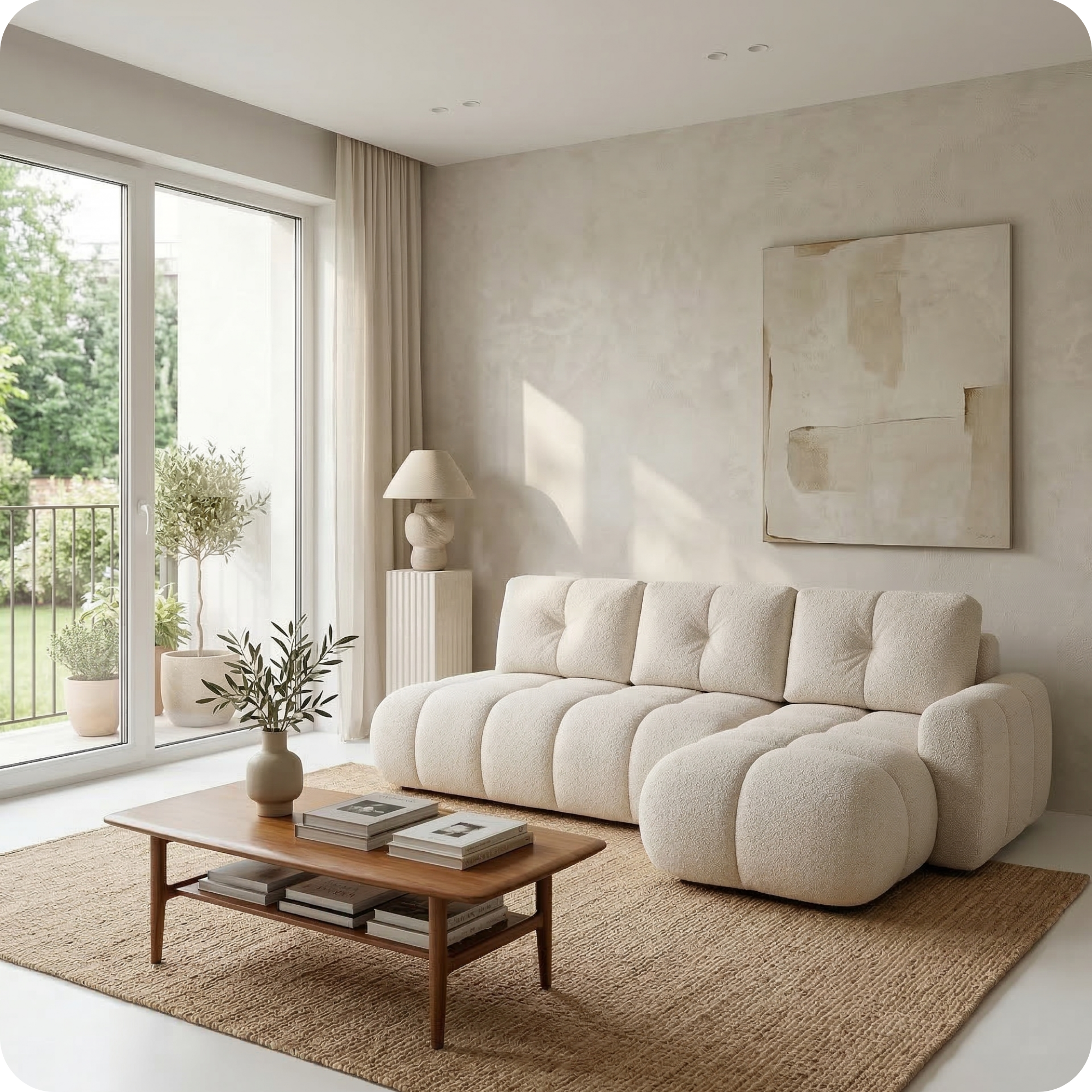
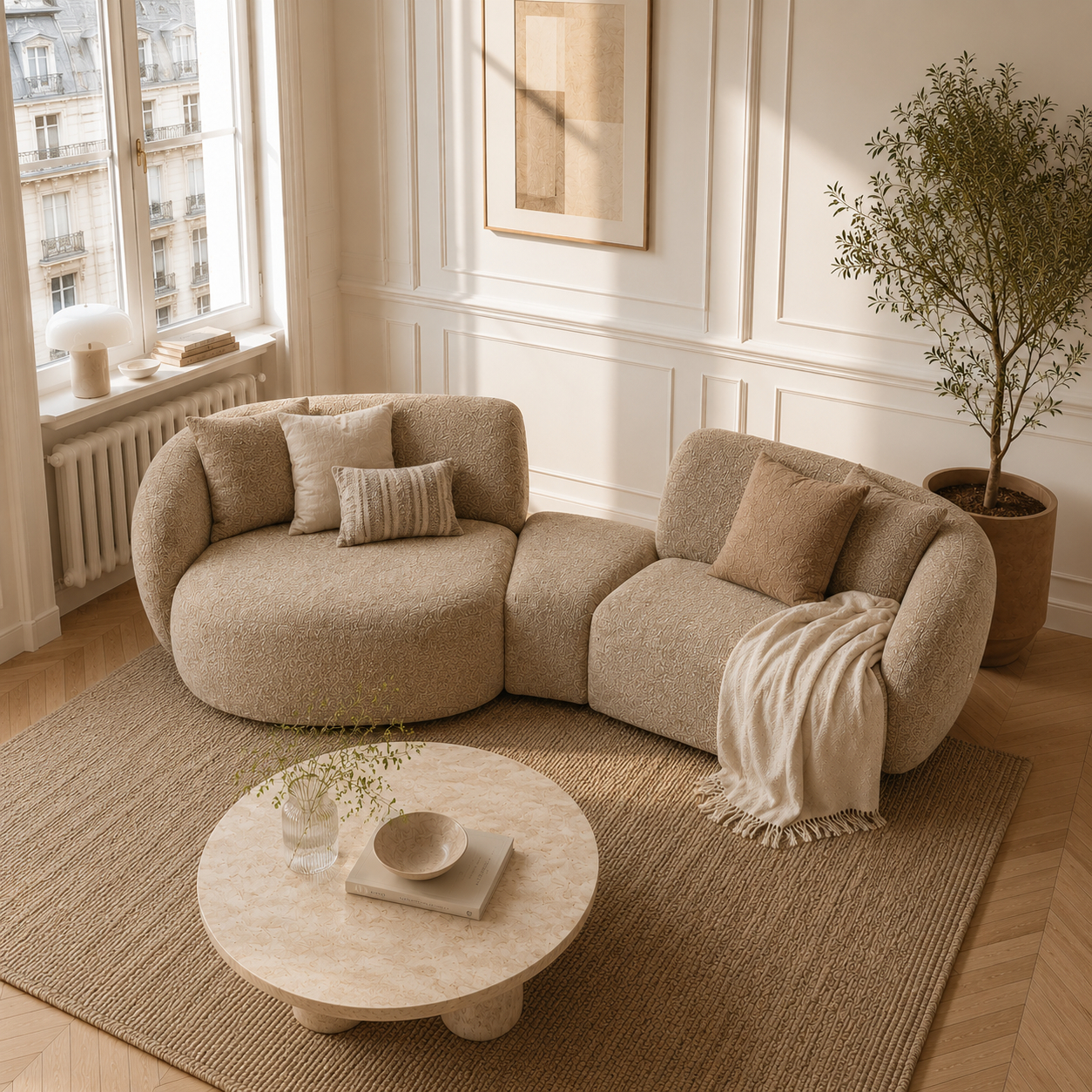
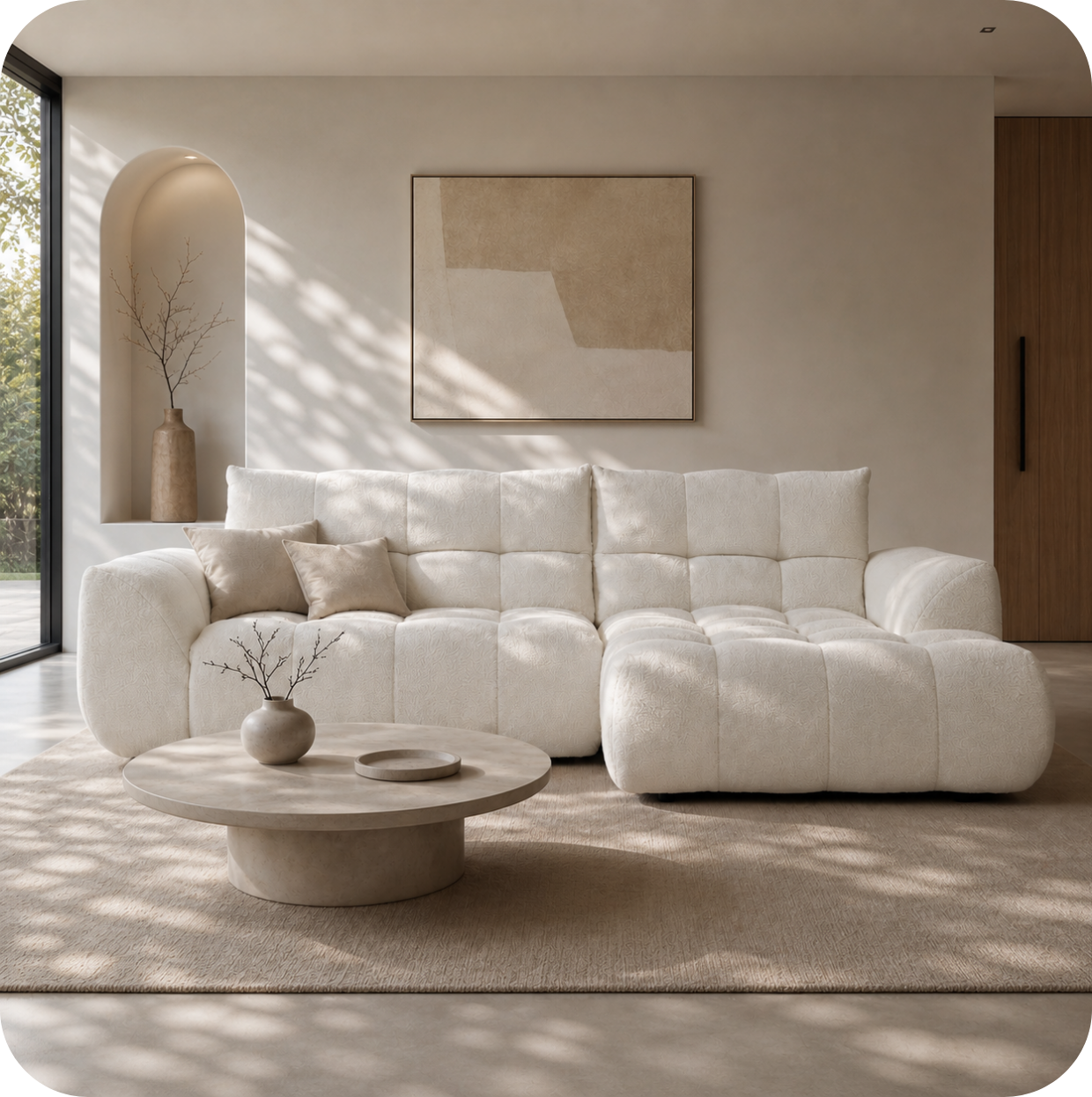
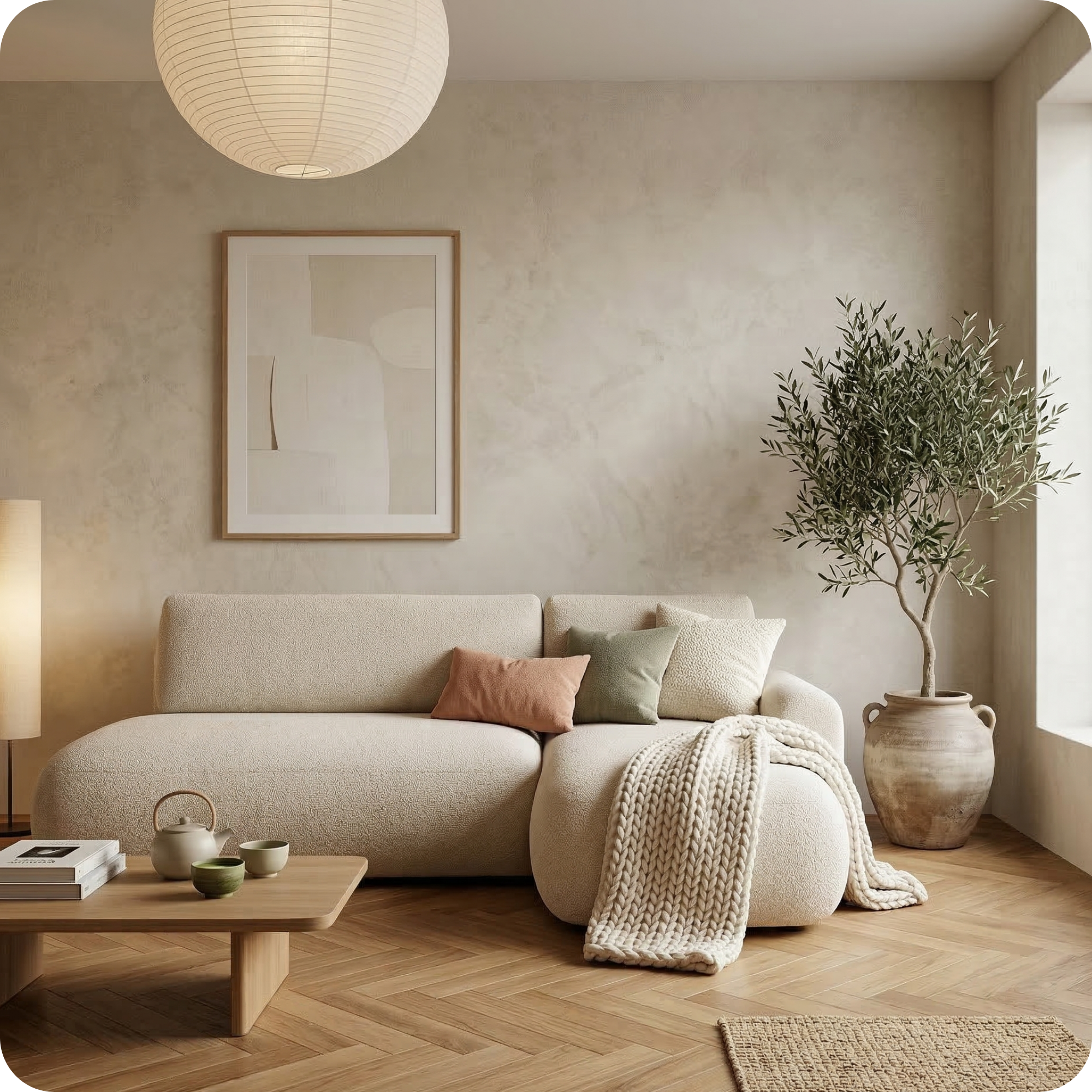
In a minimalist living room, every piece of furniture is highly visible — there is nowhere to hide a poorly made or ill-chosen piece. This makes the quality and design of each individual item more important than in more furnished rooms. The sofa, as the largest single piece, carries the most weight. Choose a sofa with clean lines, no fussy ornamentation, and excellent proportions for the room. The fabric should be beautiful in itself — a textured linen, a bouclé, a smooth boucle — something that is visually interesting without being visually loud. In a minimalist room, a single great sofa has more impact than an entire suite of mediocre furniture.

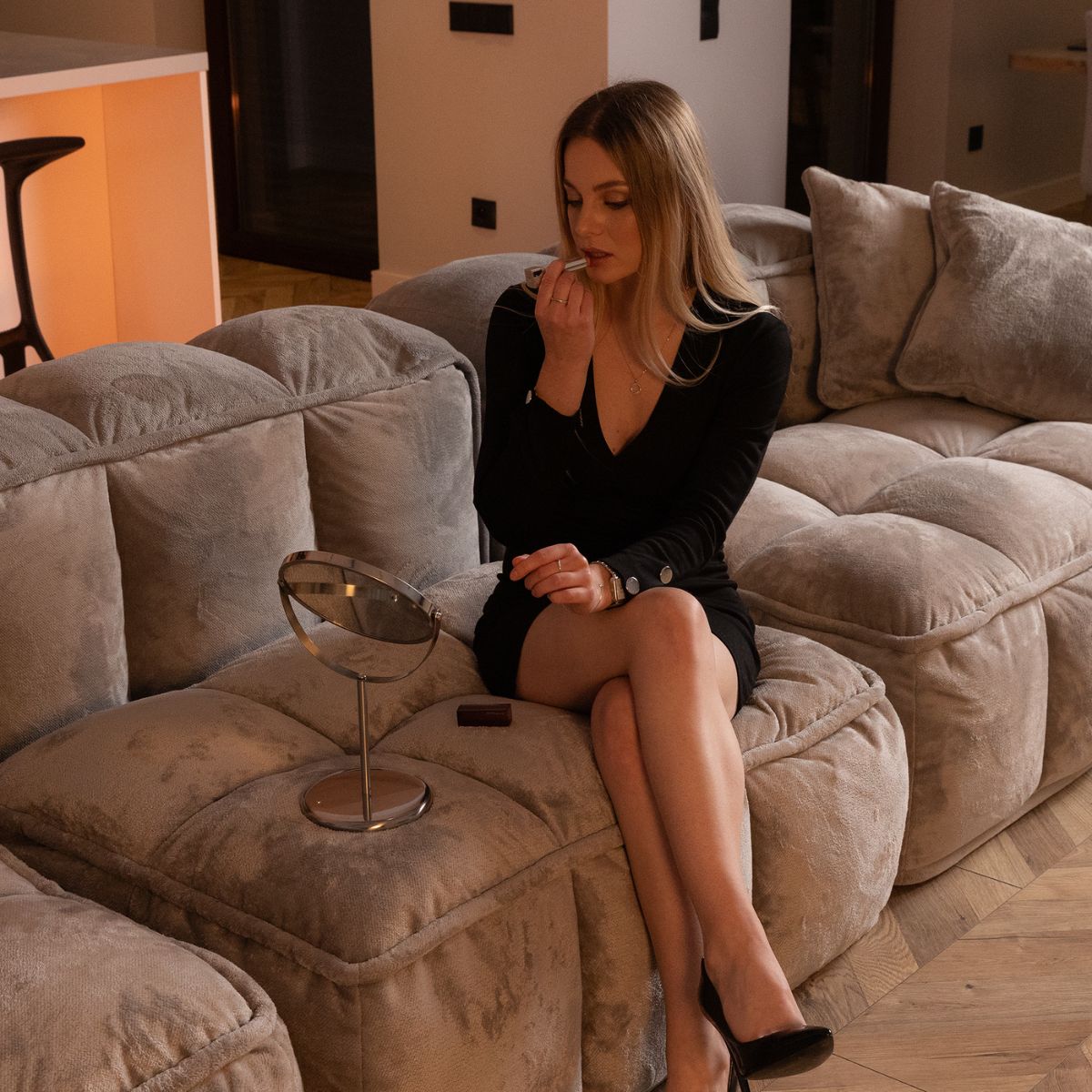
Lugano Sofa in Light Grey — from EUR 790
The Lugano's clean, architectural lines and soft grey upholstery make it an ideal anchor piece for a minimalist living room — it provides comfortable, beautiful seating without visual complexity, letting the room breathe around it.

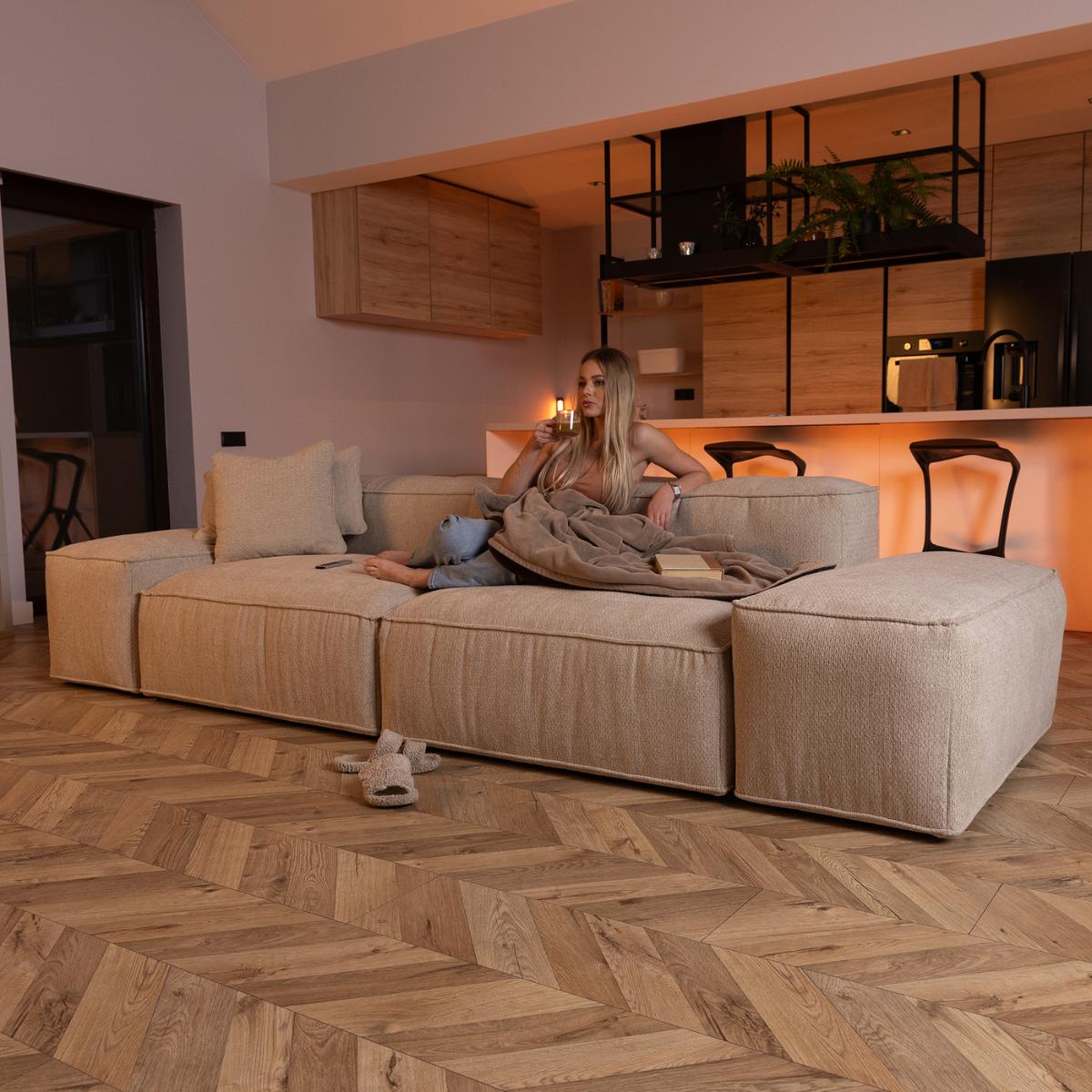
Merlot Modular Sofa — from EUR 1,090
In a minimalist interior, a single bold colour choice has enormous impact. The Merlot in leaf green, set against white walls and natural oak, is a study in confident minimalism — one beautiful piece, allowed to fully own the space.
The Minimalist Colour Palette
Most minimalist living rooms work within a narrow, considered palette — typically built around white, off-white, or light grey as the primary background, with natural materials like wood, linen, and stone providing variation in tone and texture. The absence of strong colour contrast means that texture becomes the primary vehicle for visual interest. A smooth linen sofa against a rough plaster wall, a polished concrete floor alongside a natural wool rug — these material contrasts create richness without requiring colour. When colour is used, it tends to be used deliberately and sparingly: a single deep olive or navy cushion, a terracotta pot, a single piece of art with a limited palette.
Storage and Decluttering: The Essential Minimalist Practice
The most important non-decorative element of a minimalist living room is excellent storage. Clutter is the enemy of minimalism — not objects, but objects without a designated place. Built-in cabinetry, floating shelves with restrained styling, a media unit with closed storage, a single well-chosen console table — these create places for objects to live without being permanently visible. The minimalist approach to styling is the same as the approach to editing: begin with everything, then remove anything that does not earn its place. What remains is a room in which every element is intentional, and that intention reads as elegance.

Zostaw komentarz
Ta strona jest chroniona przez hCaptcha i obowiązują na niej Polityka prywatności i Warunki korzystania z usługi serwisu hCaptcha.