



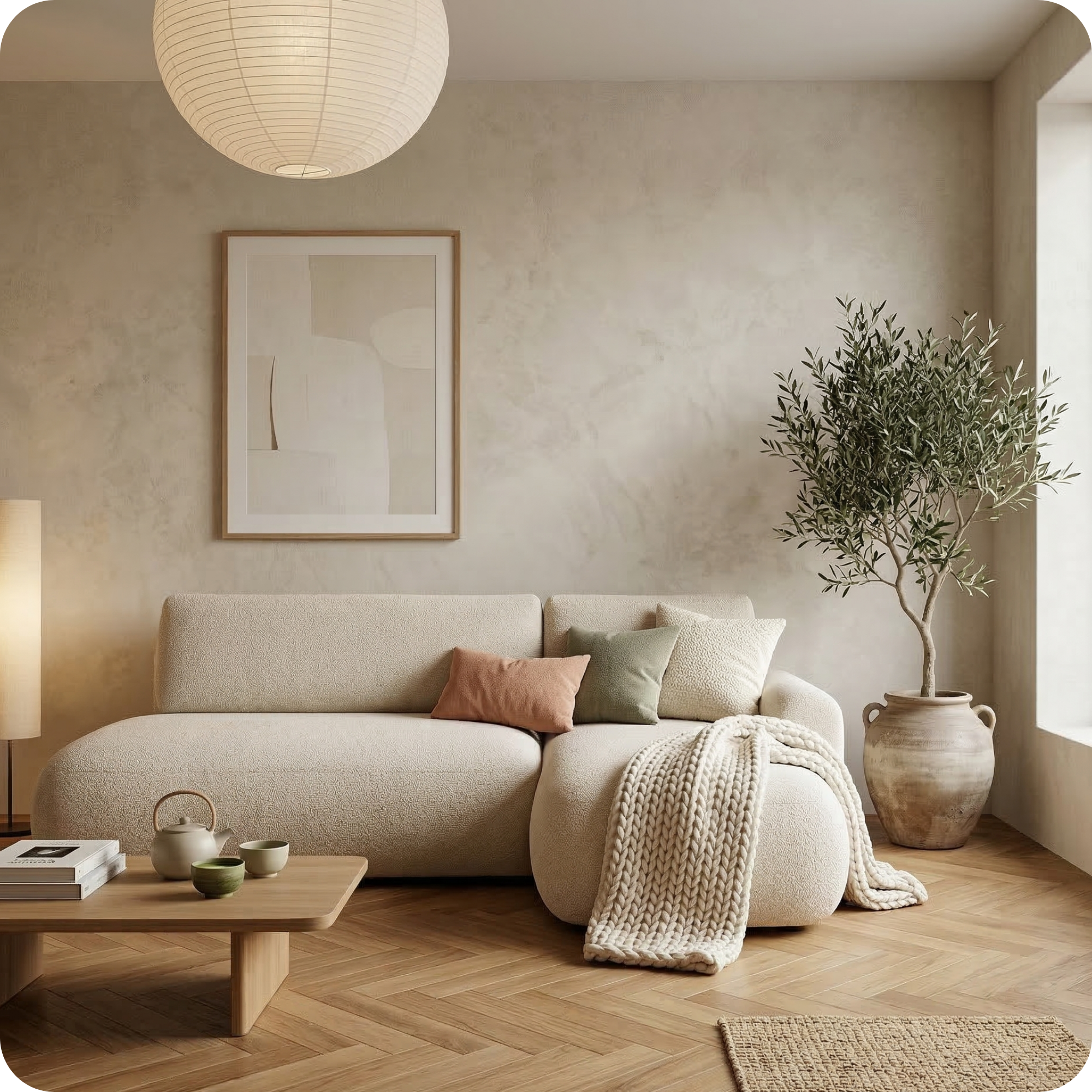
Scandinavian Living Room Style Guide: How to Achieve the Scandi Look
Scandinavian interior design has been the dominant influence on contemporary living room aesthetics for over a decade — and it continues to evolve rather than feel dated. The reason for its enduring relevance is that it is genuinely liveable rather than purely aesthetic: the emphasis on quality materials, functional design, natural light, and warmth creates spaces that work well as homes, not just as photographs. This guide breaks down the key principles of Scandi living room design and how to achieve them.
The Foundation: Neutral Base with Warmth
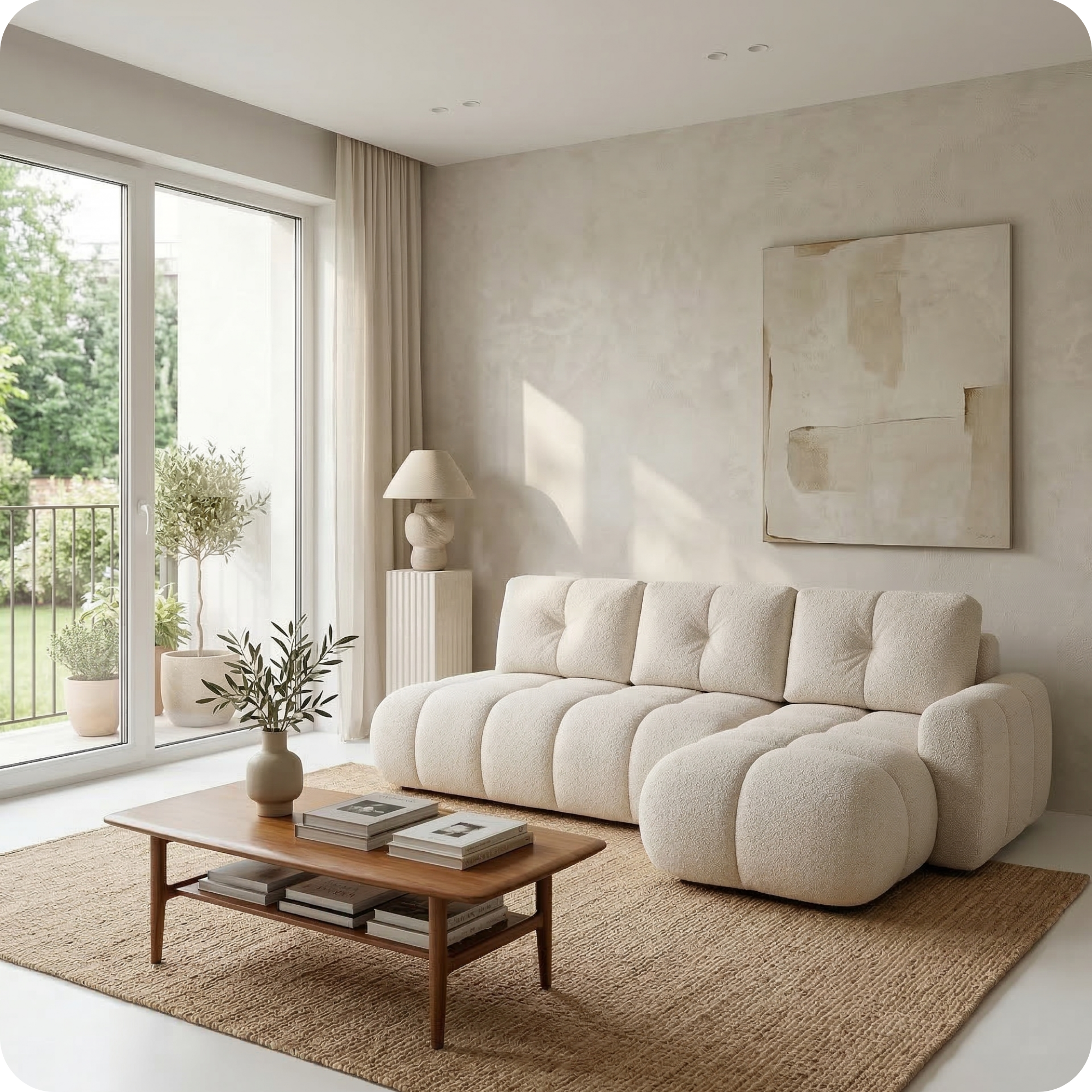
The starting point of any Scandi interior is a neutral, light base — white or off-white walls, light timber flooring (oak is the quintessential Scandi floor), and a restrained palette that allows natural light to dominate. But the key distinction between genuine Scandi and cold minimalism is warmth: Scandi design layers textures and warm tones over the neutral base. Sheepskin throws, woven rugs, knit cushions, and warm-toned wood furniture prevent the neutrality from reading as clinical. The palette is warm — cream, sand, toffee, warm grey, sage — not cool.

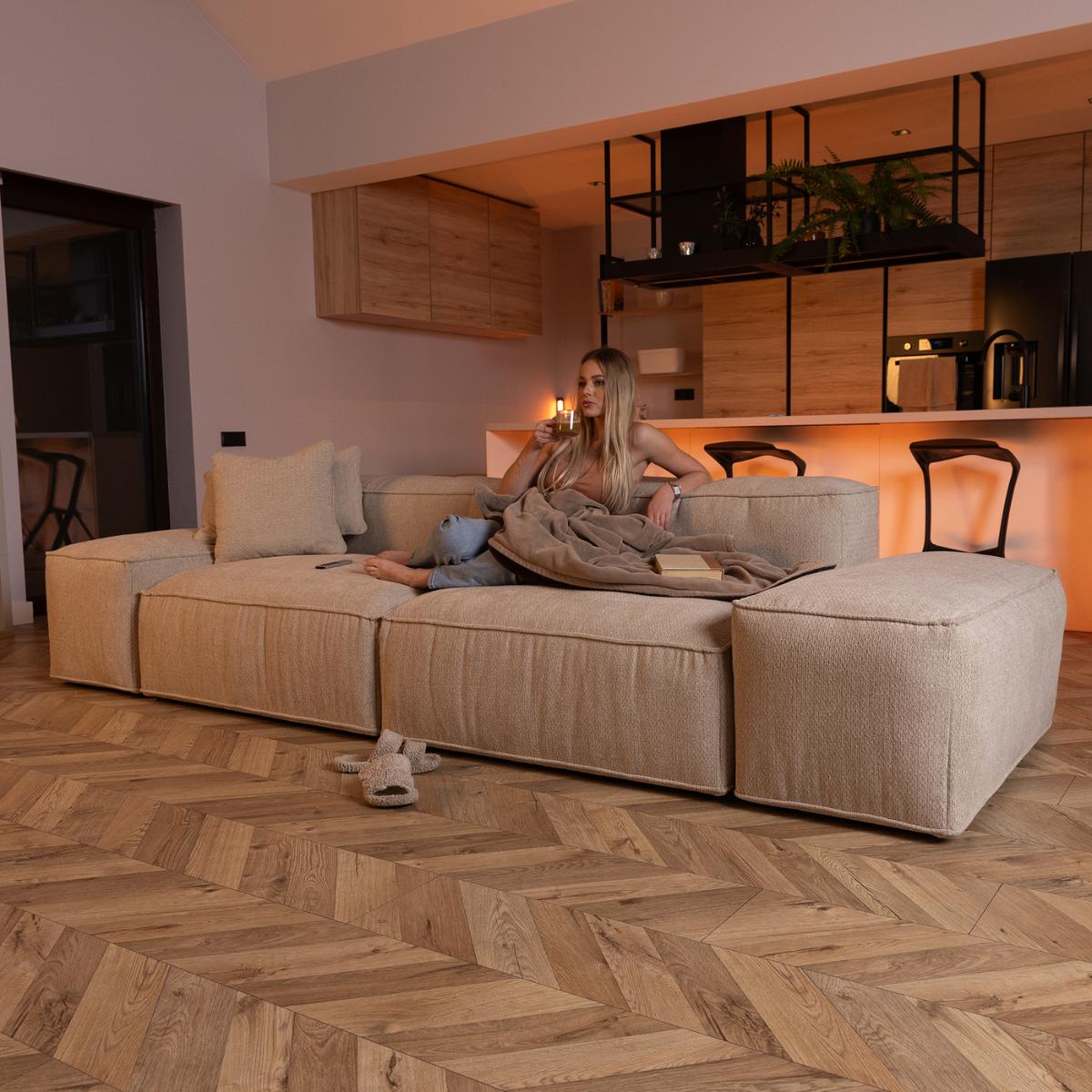
Lugano Sofa in Sand — from EUR 1.290
The Lugano in sand is a natural fit for Scandinavian interiors — the warm sand tone sits perfectly against white walls and light oak flooring, and the clean structured silhouette reads as Scandi without being stark. Layer with a sheepskin throw, a woven cushion, and a jute rug to complete the look.

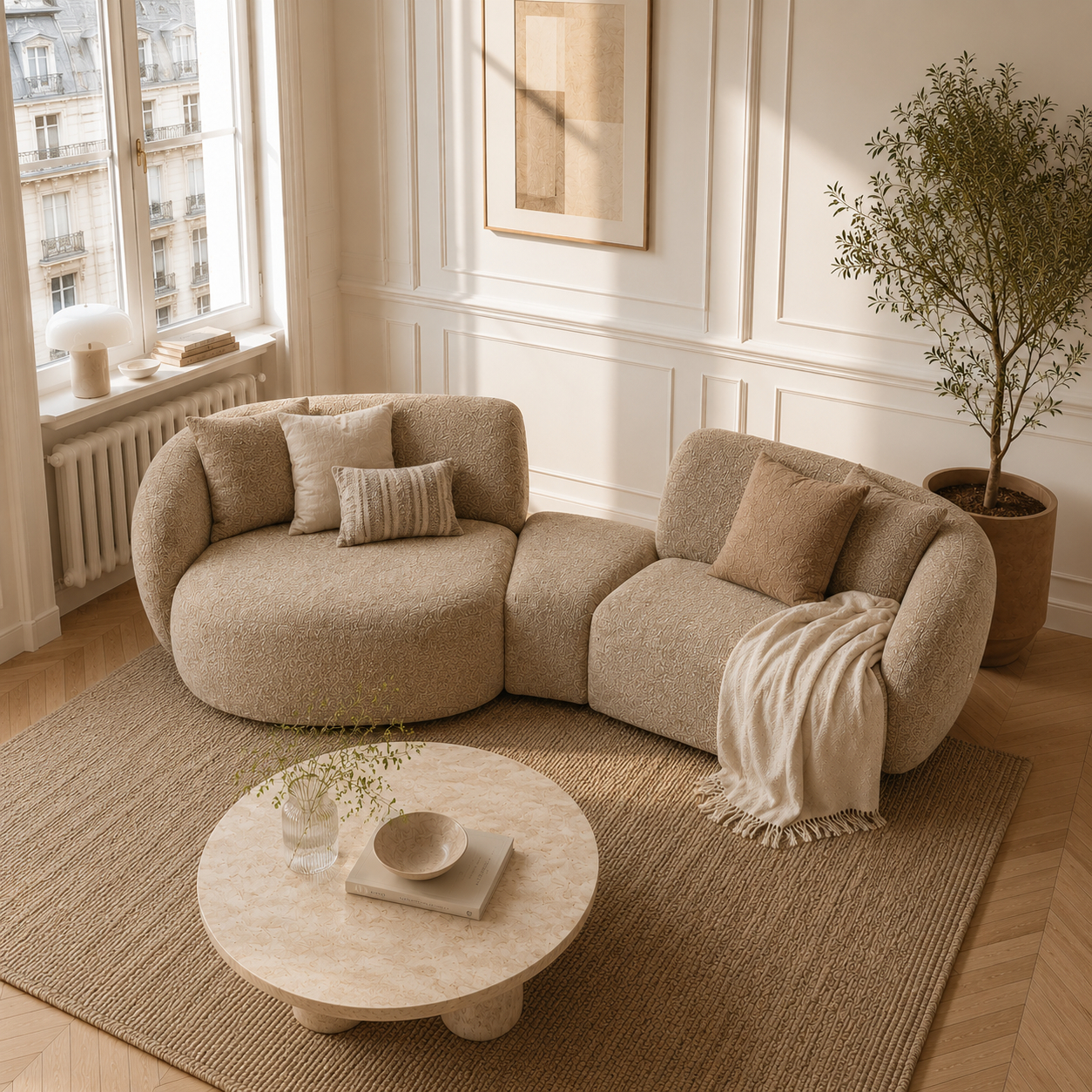
Lugano Sofa in Khaki — from EUR 1.290
Khaki — a warm grey-green neutral — is one of the most quintessentially Scandi sofa colours. It pairs naturally with raw linen textiles, natural wood, and the muted green plants that are a constant in Scandinavian interiors. The colour sits between grey and olive green, giving you both the calm of a neutral and the warmth of an earthy tone.
Natural Materials and Textures
Natural materials are the visual and tactile vocabulary of Scandi design: oak, birch, walnut, linen, wool, sheepskin, cotton, leather, and ceramic. The Scandi approach is to use these materials in their natural or near-natural state — raw timber rather than high-gloss lacquer, undyed or naturally dyed linen rather than synthetic weaves, natural rope and rattan rather than plastic. Texture layering is central: a wool throw over a linen sofa cushion in front of a timber bookcase creates the richness of an interior that feels carefully considered without requiring expensive individual pieces.
Clean Lines and Functional Design
Scandinavian furniture design is characterised by clean lines, honest construction, and functional intent — the form follows the function, with ornamentation and complexity stripped back. The sofa silhouette that works best in a Scandi interior is structured and clean: defined arms, straight back lines, and a form that reads as designed rather than overstuffed. Scandinavian design is not minimalism — it allows colour, pattern, and texture — but the furniture forms themselves are restrained and proportioned rather than extravagant.
Hygge: The Warmth Principle
Hygge — the Danish and Norwegian concept of cosiness, warmth, and the quality of a moment shared in a comfortable environment — is the emotional core of Scandi living room design. Hygge is created by layering: candles and warm lighting rather than overhead white light, soft textiles in abundance, a wood stove or fireplace if possible, plants that bring living greenery, and furniture arranged to facilitate conversation and closeness rather than formal distance. A well-layered Scandi living room should make you want to stay in it.

Zostaw komentarz
Ta strona jest chroniona przez hCaptcha i obowiązują na niej Polityka prywatności i Warunki korzystania z usługi serwisu hCaptcha.