



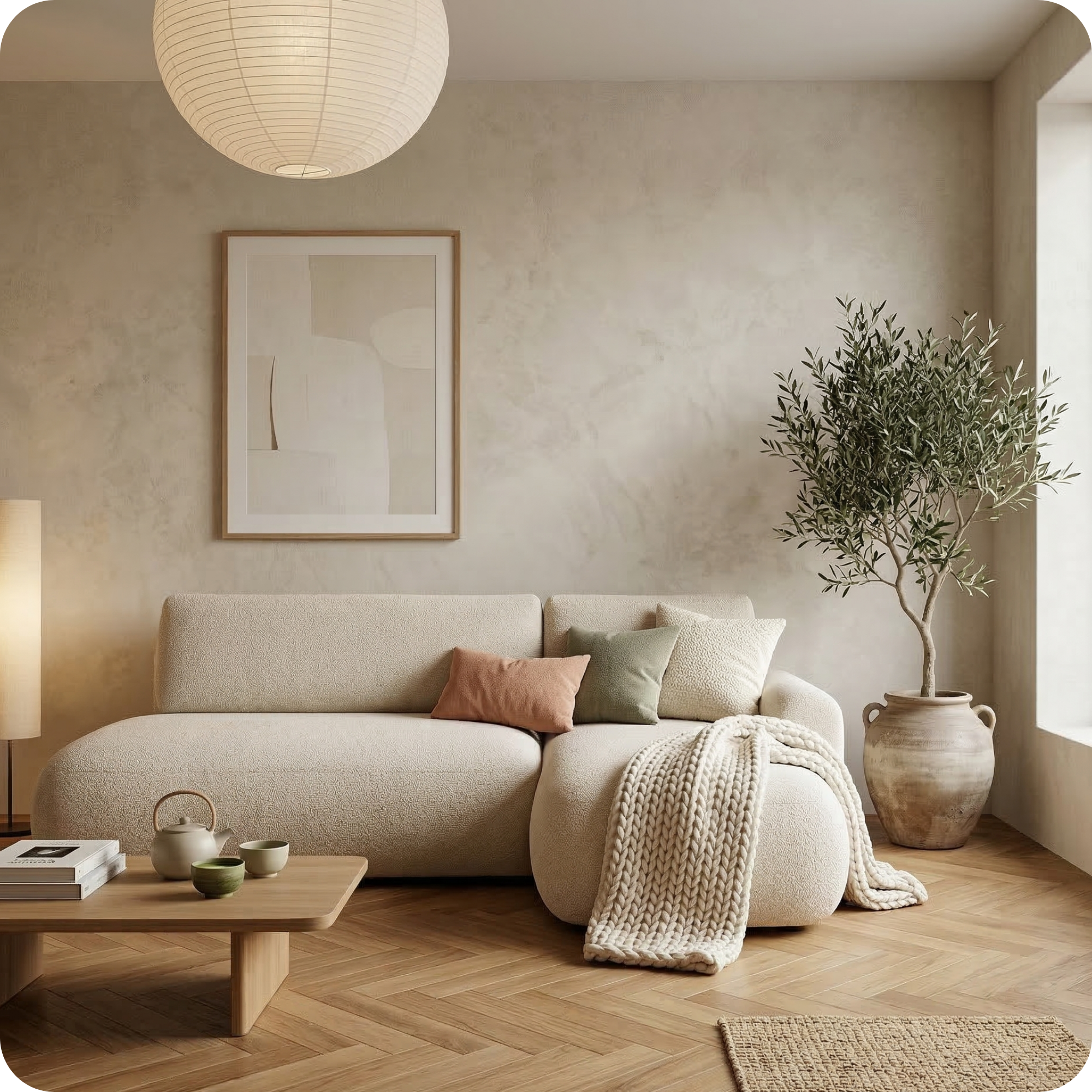
Sustainable Living Room Design: How to Create an Eco-Friendly Interior
Sustainable interior design has moved from a niche concern to a mainstream aspiration. More and more people are choosing to furnish their homes with environmental impact in mind — considering where materials come from, how long a piece will last, what happens to it at the end of its life, and whether the manufacturing process respects workers and the environment. Creating a sustainable living room does not mean choosing between aesthetics and ethics — in fact, the principles of sustainable design and the principles of good design overlap significantly. Both emphasise quality over quantity, durability over disposability, and materials with genuine beauty and provenance over cheap synthetic imitations.
Buy Less, Buy Better
The most sustainable approach to furnishing a living room is to buy fewer, better things rather than many cheap things. A sofa bought at very low cost is typically made with less durable materials, less skilled construction, and less sustainable sourcing — it will need to be replaced in 3-5 years, generating significant waste. A higher-quality sofa, made with better materials and construction, may cost more initially but will last 10-15 years or more, and over that timeframe represents both better value and significantly less environmental impact. The frame, the mechanism, and the fabric quality all determine longevity — it is worth understanding what goes into a sofa before buying.
Natural and Sustainable Materials
When choosing furniture and textiles, prioritise natural, renewable, or recycled materials over virgin synthetics. Solid wood — particularly FSC-certified wood from sustainably managed forests — is an excellent choice for furniture frames and hard furnishings. Natural fibres for textiles — linen, cotton, wool, jute, and sisal — are renewable and biodegradable. Recycled steel and recycled plastic are better choices than virgin equivalents for structural and functional elements. Natural latex and wool-blend cushion filling are more sustainable alternatives to petroleum-derived foam. These material choices are also often more beautiful — natural materials have an authenticity and character that synthetic alternatives cannot replicate.

Lugano Sofa in Sand — from EUR 790
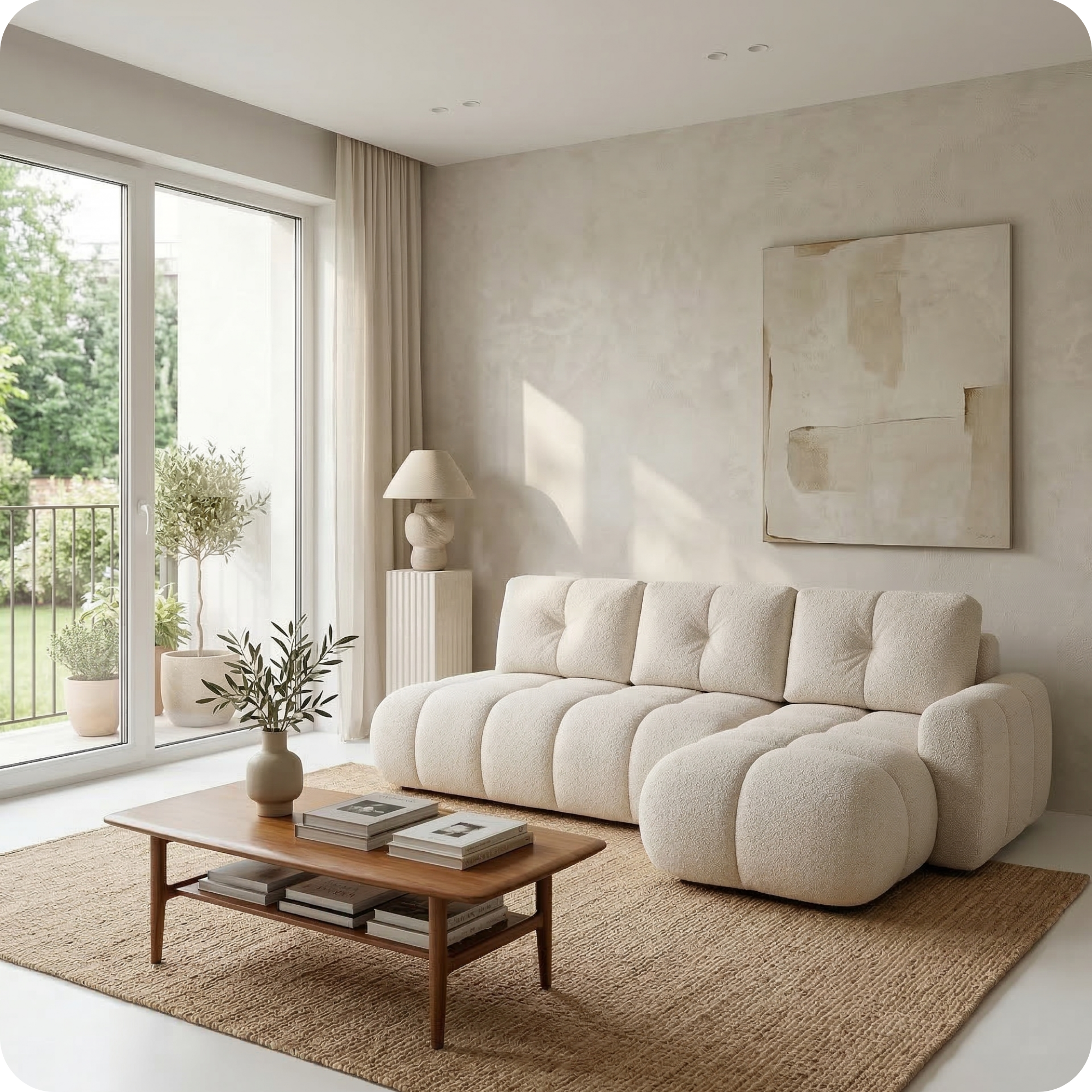
The Lugano collection is built to last — its quality construction and durable fabric upholstery are designed for a decade or more of everyday use, embodying the sustainable design principle of buying fewer, better pieces rather than replacing cheap furniture repeatedly.

Malbec Modular Sofa — from EUR 1,190
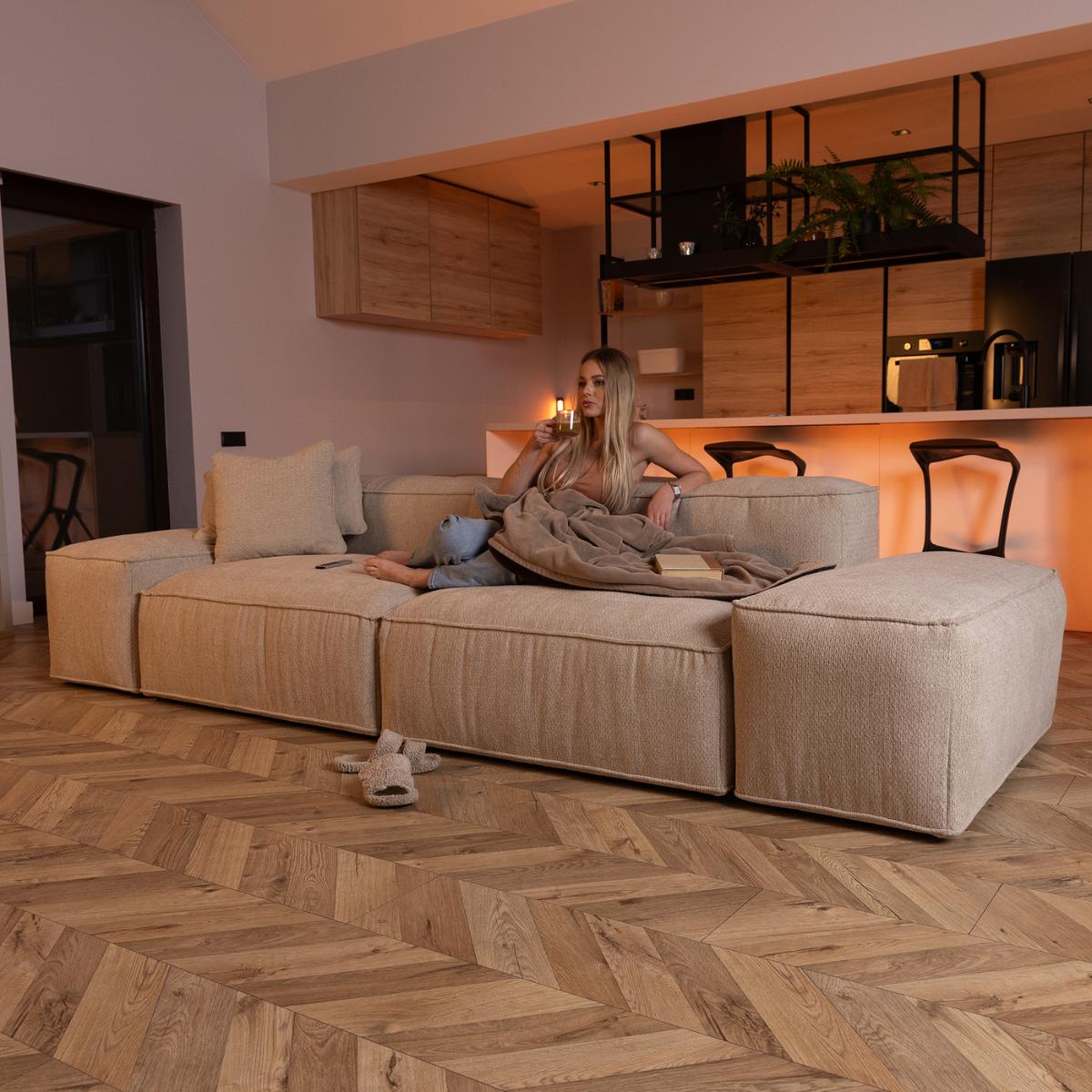
The modular construction of the Malbec is inherently sustainable — individual modules can be replaced or reconfigured rather than the whole sofa being replaced, extending usable life and reducing waste over time.
Second-Hand and Vintage Furniture
Second-hand and vintage furniture is the most sustainable option of all — it involves no new manufacturing, uses existing resources, and often results in pieces of higher quality than what can be bought new at a comparable price. A vintage solid wood sideboard, a second-hand chesterfield sofa reupholstered in a beautiful new fabric, or a set of dining chairs found at an estate sale — these pieces have a history and character that newly manufactured equivalents cannot match. Mixing second-hand pieces with well-chosen new purchases is both sustainable and, aesthetically, one of the most interesting approaches to furnishing a living room.
Sustainable Textiles and Accessories
Textiles are one of the most environmentally impactful categories in interiors. When choosing cushion covers, throws, curtains, and rugs, look for organic cotton certification, recycled fibre content, or natural materials like linen, wool, and jute. Avoid polyester and nylon where possible — these synthetic fabrics shed microplastics with every wash. Plants are the most sustainable and living decoration available — they require no manufacturing, improve air quality, and can be propagated and shared indefinitely. LED candles or natural beeswax candles are more sustainable alternatives to petroleum wax candles.

Zostaw komentarz
Ta strona jest chroniona przez hCaptcha i obowiązują na niej Polityka prywatności i Warunki korzystania z usługi serwisu hCaptcha.