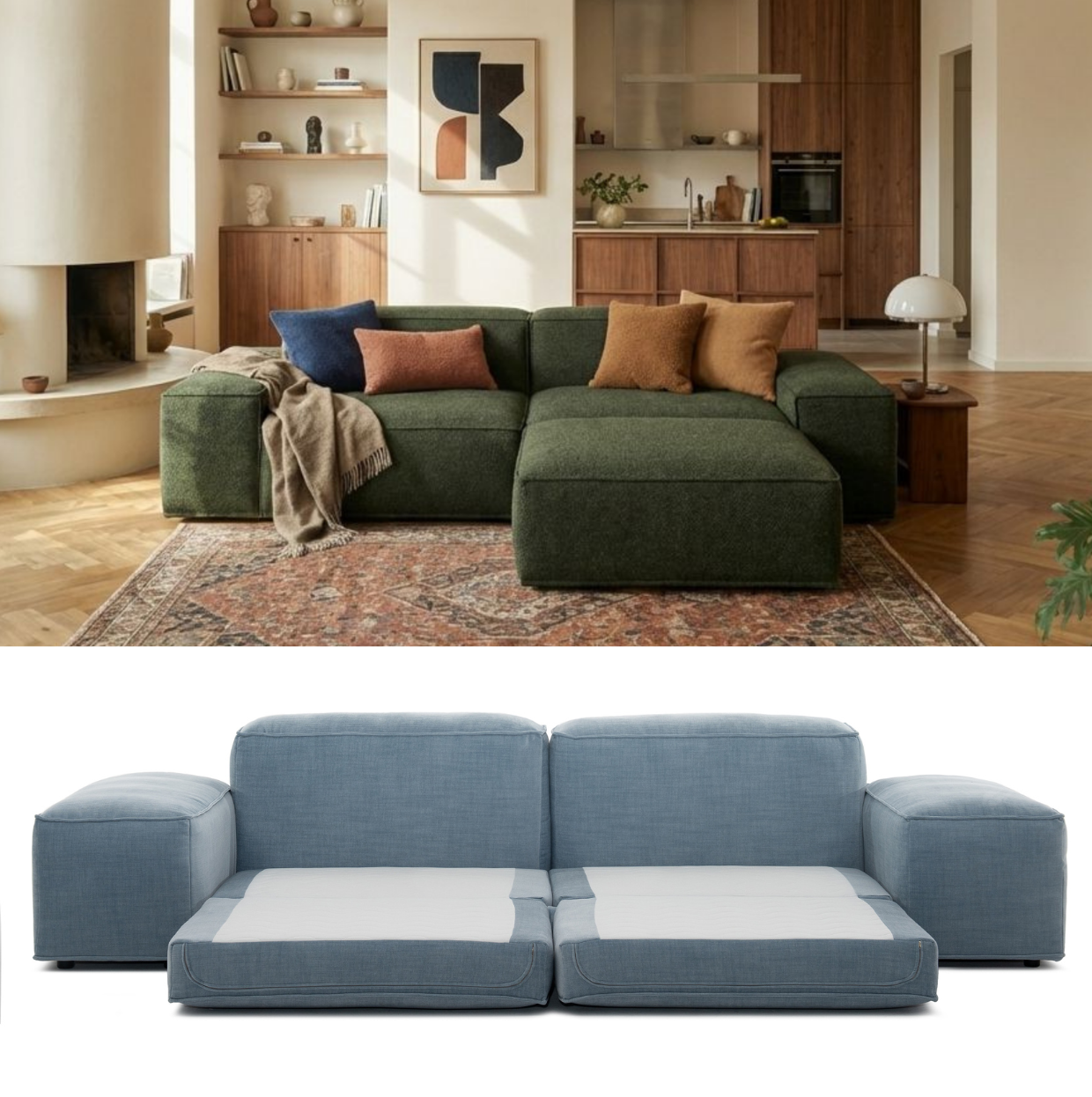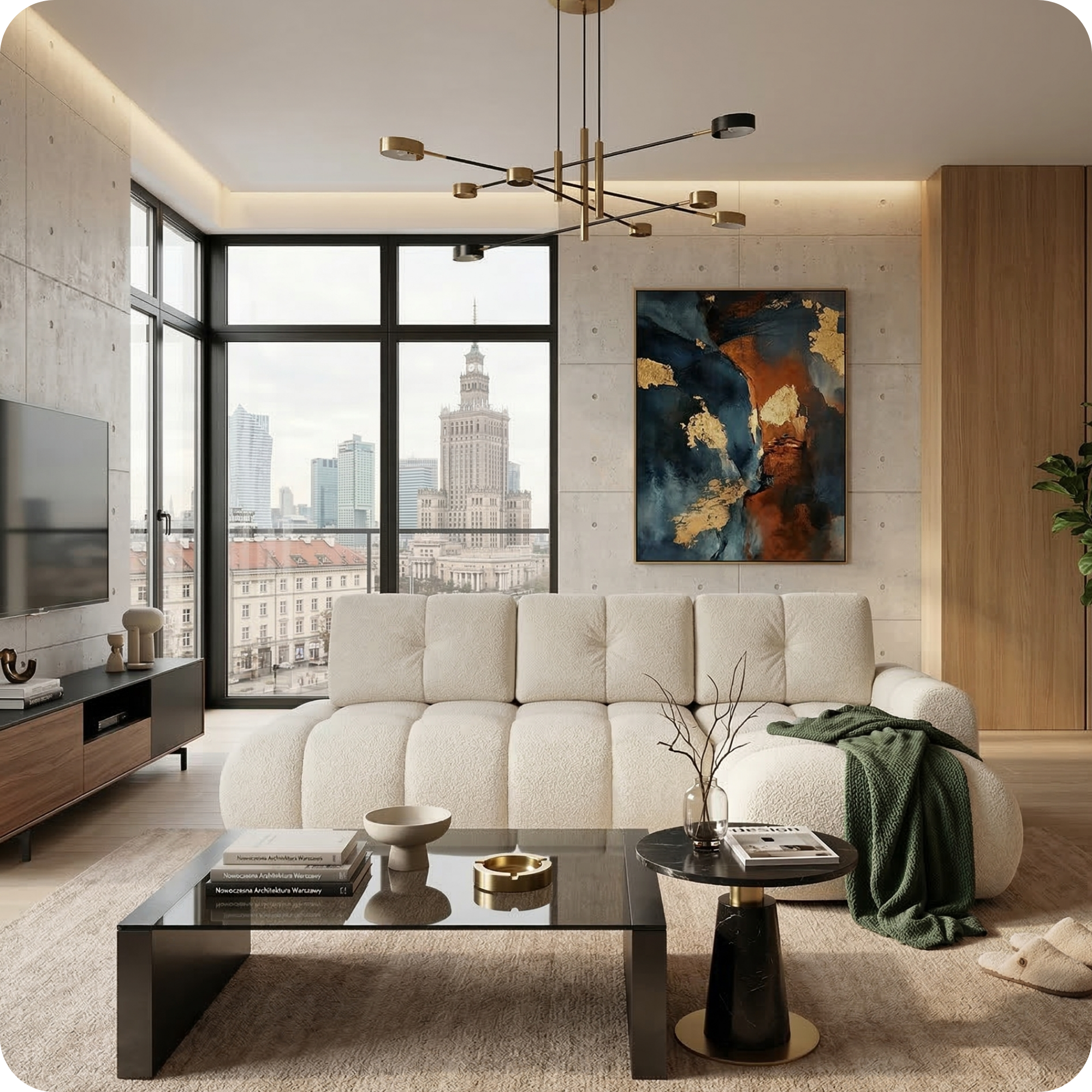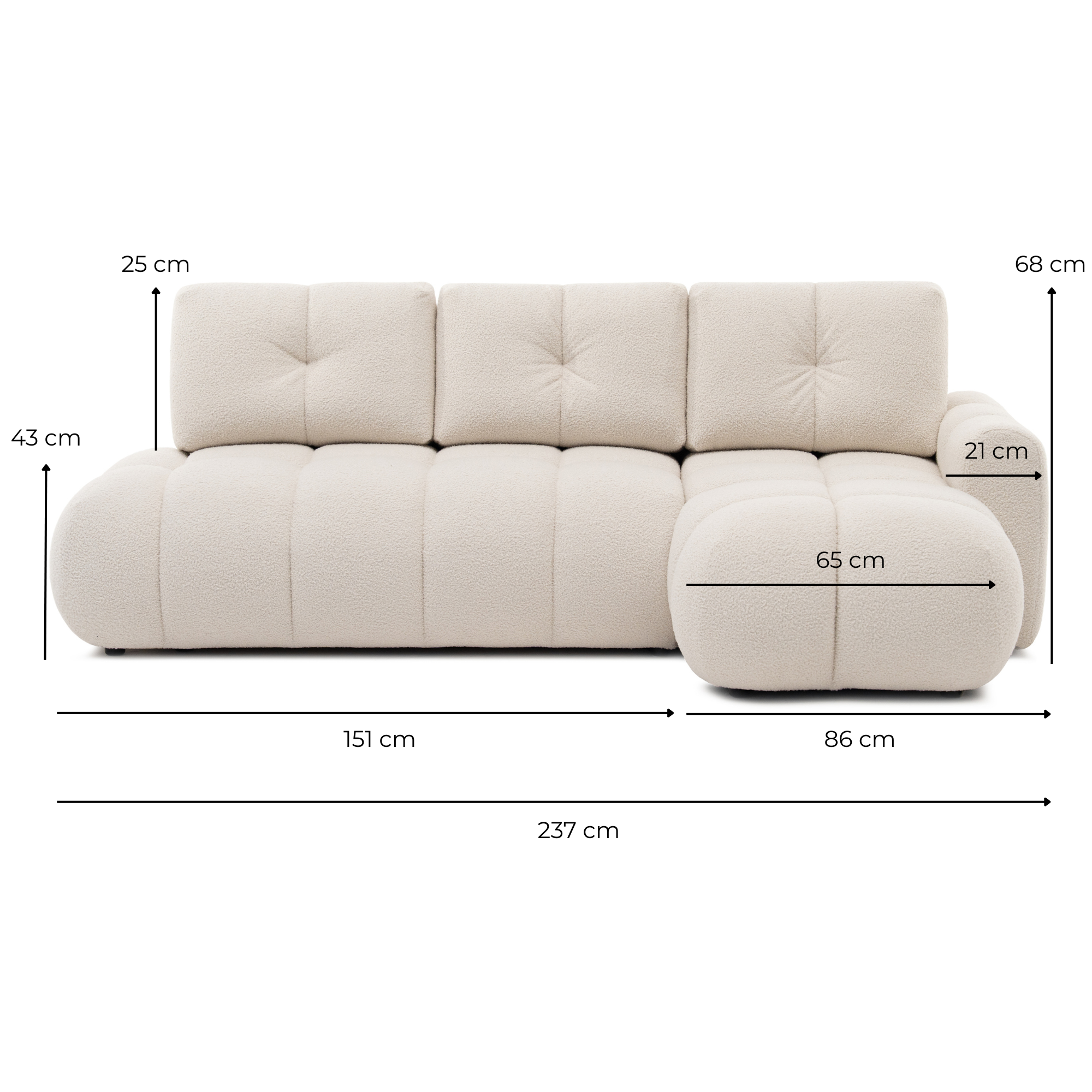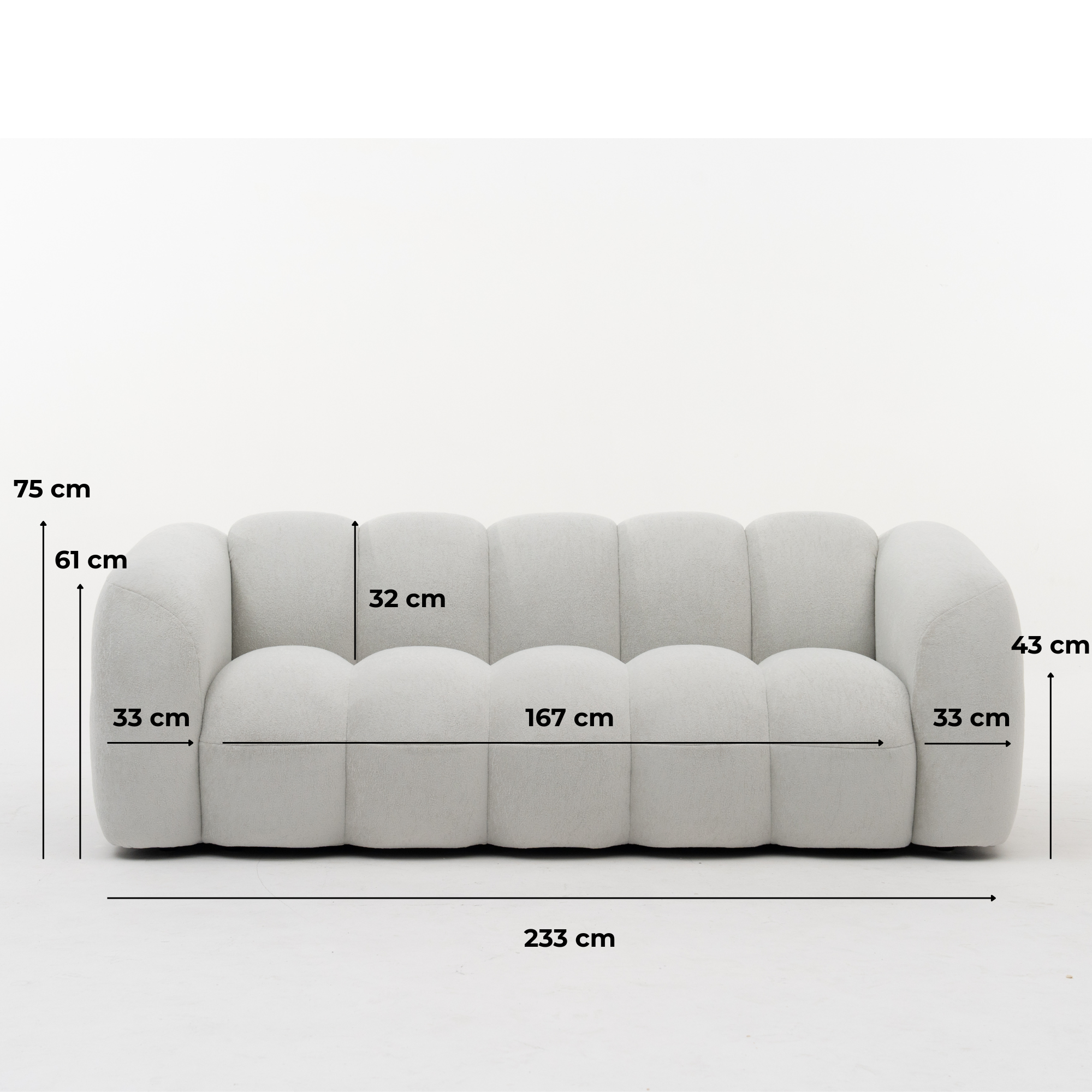


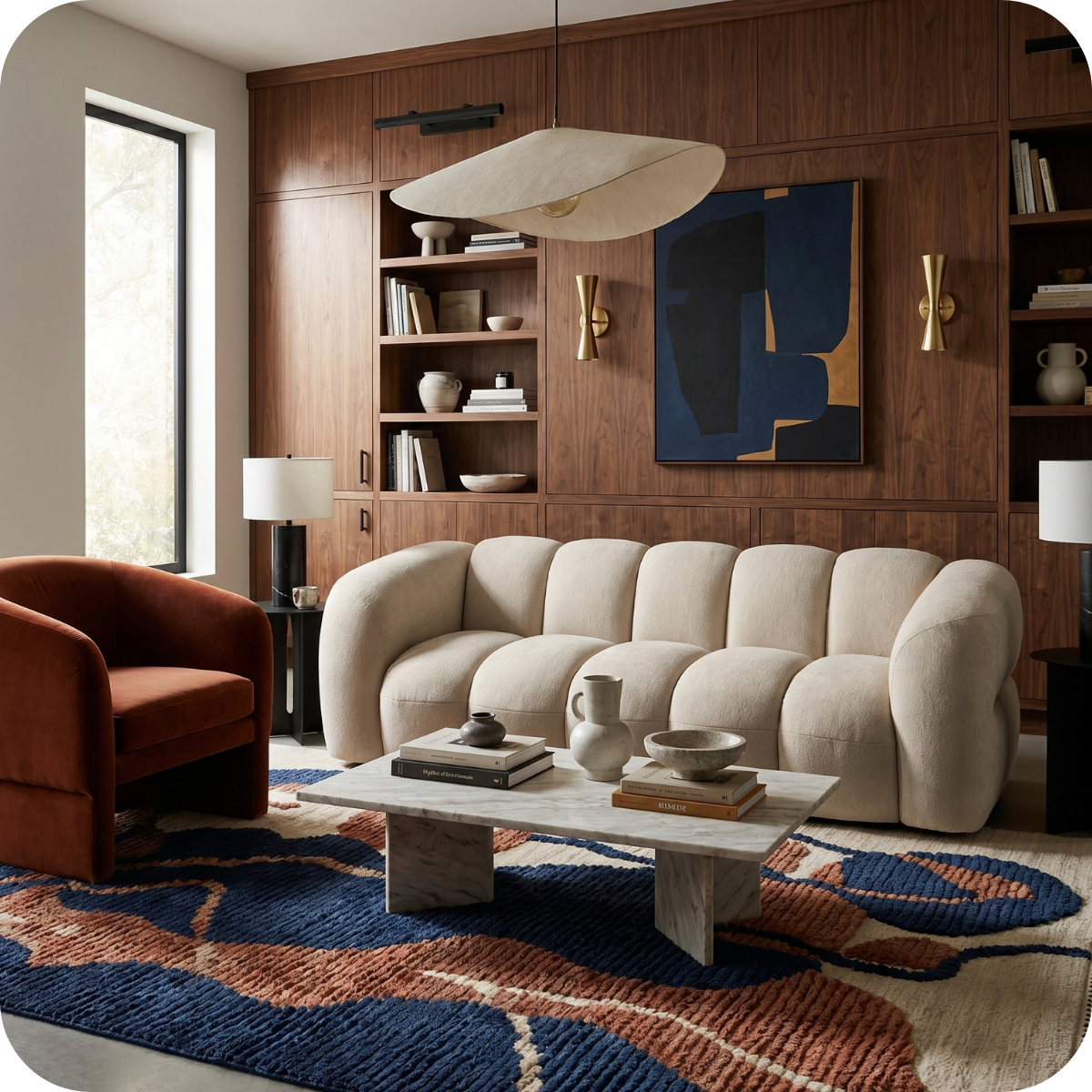
A mid-century modern sofa is the one piece of furniture that still looks right seventy years after it was designed: a low, long seat on tapered wooden legs, slim or slab arms, firm cushions and a palette of mustard, teal, tan and olive. The style – shorthand MCM – dates from roughly 1945 to 1969, but its rules are so sensible that most good contemporary sofas follow them without saying so. This buying guide explains what makes a sofa genuinely mid-century, which features matter for comfort rather than looks, how to tell a well-made version from a copy, and which Furni models carry the look into 2026.
Shop the look: browse our low profile sofas – MERLOT, PINOT and LUCCA at 67–73 cm high – made in Poland with free EU & UK delivery and 30-day returns.
What defines a mid-century modern sofa?
Designers such as Florence Knoll, Hans Wegner, Børge Mogensen and Edward Wormley were solving the same problem: how to make a sofa for smaller post-war apartments that looked light, sat well and could be produced at scale. The answers became the style's signatures.
- Low profile. Seat height 38–45 cm and an overall height of 65–80 cm, so the sofa sits below the window line and the room looks bigger.
- Tapered or splayed legs. Slim legs in walnut, teak or oak that lift the frame off the floor. You can see under an MCM sofa – that is the point.
- Low arms, or none. Arms either barely rise above the seat, or are flat "slab" arms wide enough for a cup. Rolled or scrolled arms are the quickest giveaway that a sofa is not mid-century.
- A straight, horizontal line. Backs and seats run level; cushions are rectangular and firm, often with visible seams or button tufting in a grid.
- Honest materials. Exposed wood frames, wool or wool-look weaves, leather in tan or cognac. Nothing hidden behind a skirt.
- A warm palette. Mustard, burnt orange, teal, avocado and olive, warm grey and camel. Even the neutrals lean warm.
For styling rather than buying – what to put around the sofa, which rugs and lamps – see our mid-century modern sofa ideas.
Buying guide: the features that matter
Seat height and depth
The low seat is the heart of the look, but it is also where people go wrong. At 38–40 cm a sofa looks perfectly period but is hard to get up from if you have knee or back trouble; at 43–46 cm it keeps the low silhouette and is comfortable for everyday use. Seat depth on original MCM sofas was shallow (50–55 cm) for upright sitting; modern interpretations run 60–70 cm or deeper for lounging. Decide how you sit before you decide how it looks. Our guide to sofas for back pain covers the ergonomics in detail.
Arm style
Low arms give the cleanest mid-century line and save width in a small room; they also let you lie across the sofa with your head on the arm. Slab arms add a surface and a more architectural look. High arms are not MCM in the strict sense – but a single high arm on an otherwise low modular sofa is a common contemporary compromise.
Cushion firmness and foam
Original MCM sofas sat firm. The modern equivalent is high-resilience (HR) foam: HR35 or HR35/38 foam keeps its shape and support for years, whereas cheap standard foam softens and sags within a couple of them. Firm, supportive cushions also hold the sofa's straight lines, which soft, slouchy fillings destroy.
Frame and legs
Look for a solid hardwood frame – Scandinavian beech or birch at Furni – rather than particleboard. On legs, solid wood tapered legs are period-correct; metal hairpin legs are mid-century too but read more industrial. On a modular sofa the "legs" are often a low plinth or recessed feet, which keeps the floating look while letting modules connect.
Fabric
Textured weaves and chenilles are closest to the wool upholstery of the period and hide wear well. Bouclé is a contemporary twist that still reads as mid-century thanks to its 1950s pedigree. For families, choose a fabric rated above 30,000 Martindale cycles; for pets, a tight performance weave such as Sorriso. All Furni fabrics are OEKO-TEX Standard 100 certified.
Mid-century colours in 2026
| MCM colour | Character | Furni fabric to look at |
|---|---|---|
| Burnt orange / brick | The warmest MCM option, very current | Golden 56 brick chenille (MERLOT), Rhythm 128 terracotta bouclé (COMO), Tana 201 (LUCCA) |
| Olive / forest green | Retro but grown-up | Retro Bliss 38 dark green (MERLOT, PINOT), Golden 35 (MERLOT), Tana 500 olive (LUCCA) |
| Teal / navy | Sophisticated with walnut and brass | Retro Bliss 77 navy (MERLOT, PINOT), Golden 72 light blue (MERLOT) |
| Camel / toffee / tan | The leather-look neutral | LUGANO in Wolf toffee, Rhythm 108 taupe (MERLOT, COMO) |
| Warm grey / oat | The quiet backdrop | Retro Bliss 85 grey, Retro Bliss 03 beige, Melody 12 greige (BAROLO) |

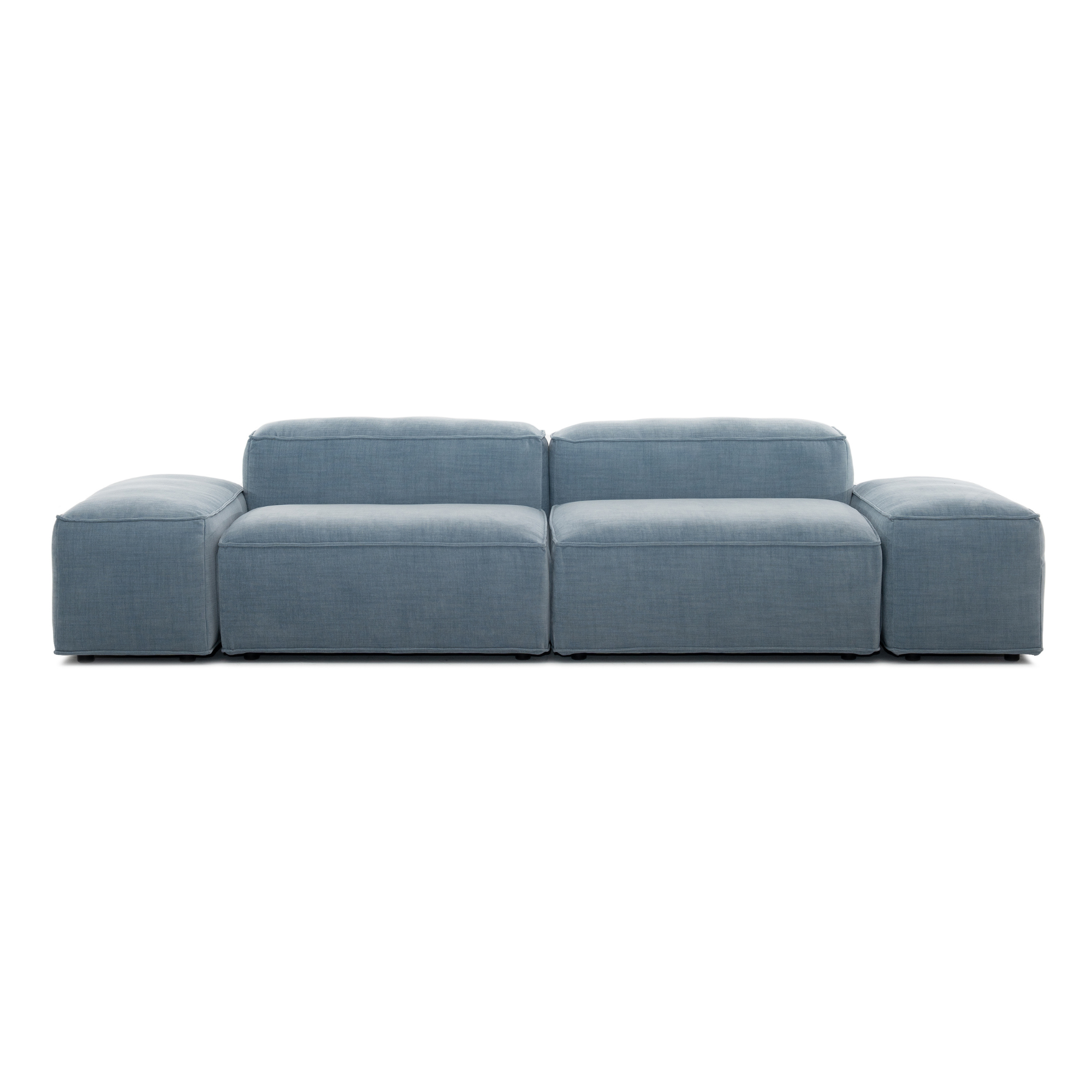
MERLOT Modular Sofa 3-Seater, Low Armrests — from €1,532
70 cm high, low arms, a straight horizontal line and firm HR foam – the mid-century recipe in a modular system. Brick, dark green, navy and taupe chenilles plus brown bouclé. Add a chaise or extra seat later.

Low Profile Sofas — from EUR 1
Every low Furni sofa in one place: MERLOT at around 70 cm, PINOT with a 67 cm back and 43 cm seat, and the curved LUCCA in bouclé – the silhouettes that suit mid-century, Japandi and contemporary rooms.
The best mid-century style sofas at Furni
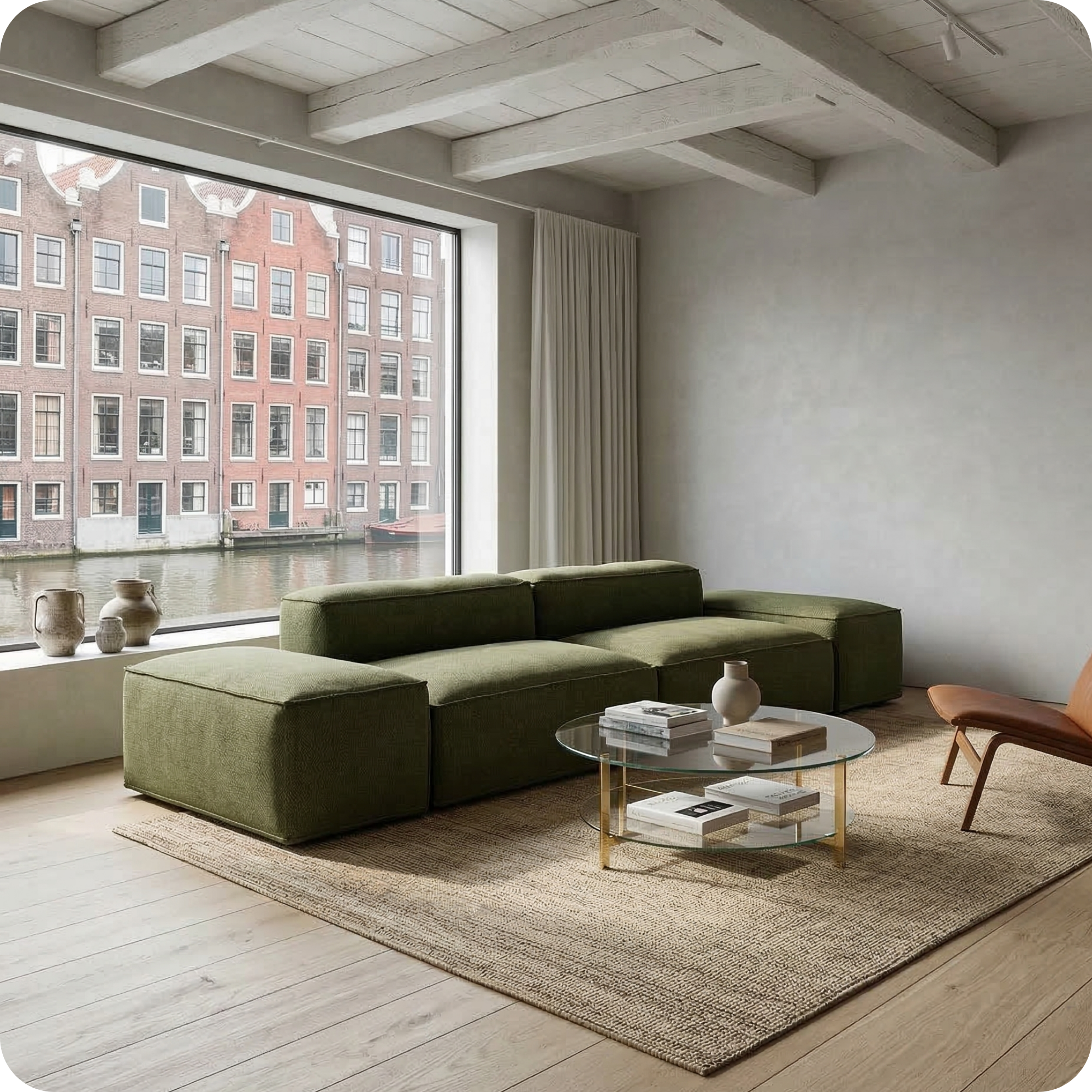
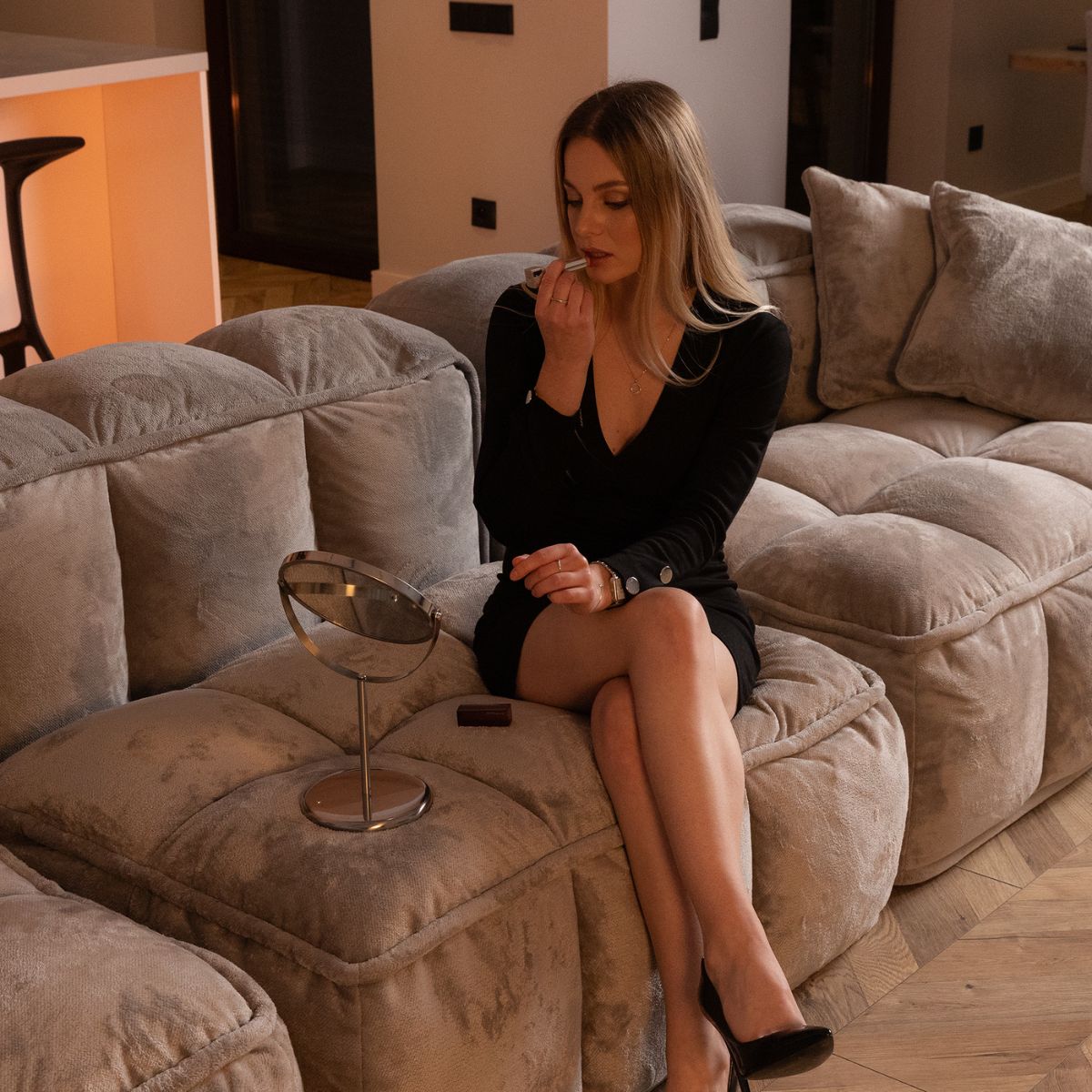
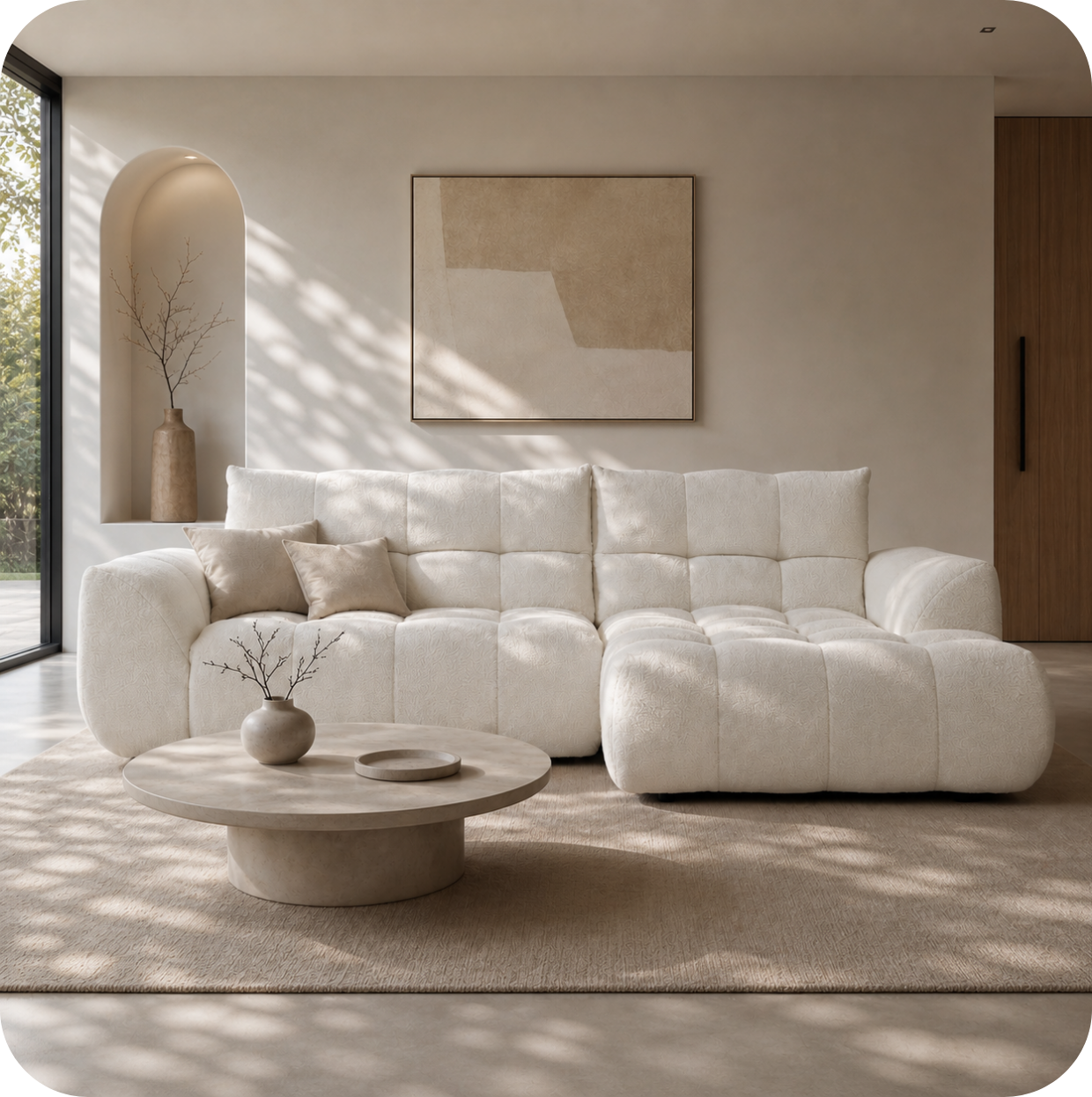
MERLOT with low armrests – the closest to the original brief
MERLOT is 70 cm high with a deep 111–112 cm seat, low arms and a dead-straight back line. The 3-seater with low armrests is 302 cm wide – a long, low sofa in the Florence Knoll tradition – and the 4-seater low-arm version stretches it further for a big open-plan room. In Golden 56 brick or Retro Bliss 38 dark green it is unmistakably mid-century; in Rhythm 108 taupe it becomes a quiet contemporary piece. Because it is modular you can add a low longchair later without changing the profile. For a smaller room, the armless MERLOT 3-seater is 212 cm.
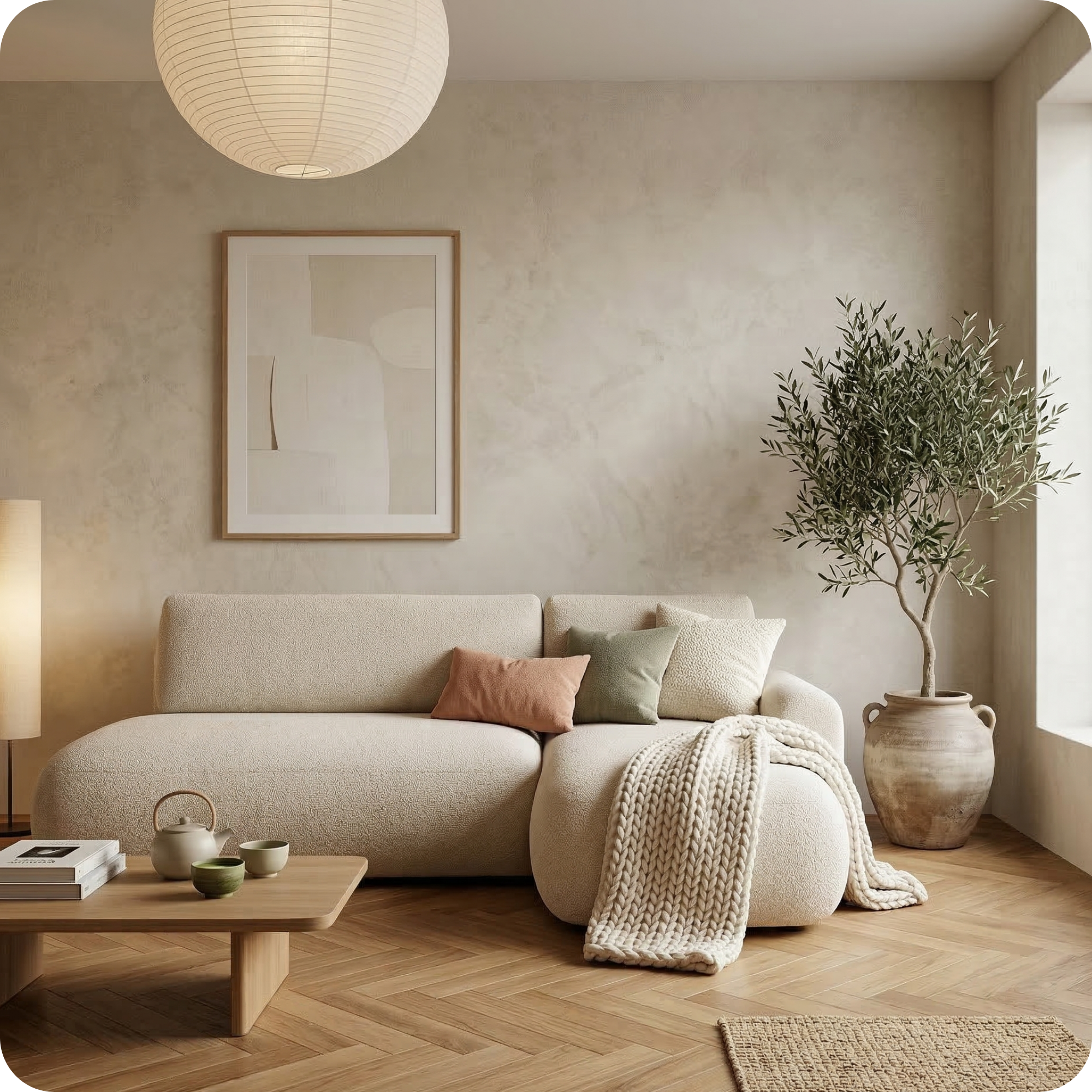
PINOT – low and compact
The PINOT 2-seater (190 × 95 cm) and 3-seater (262 cm) have a 43 cm seat and 67 cm back – the lowest back in the range. The arms are high rather than slab, so this is MCM in proportion rather than in every detail, but in navy or dark green Retro Bliss chenille with walnut furniture around it the effect is convincing, and it fits where a 300 cm sofa will not.
LUGANO in toffee – the colour, not the legs
The LUGANO 3-seater has a segmented, legless silhouette that is contemporary rather than period, but its Wolf toffee fabric is the exact camel-leather tone of 1960s lounge furniture. Paired with a walnut sideboard and a brass floor lamp it reads as a modern take on MCM; also in khaki, light grey, graphite and sand.
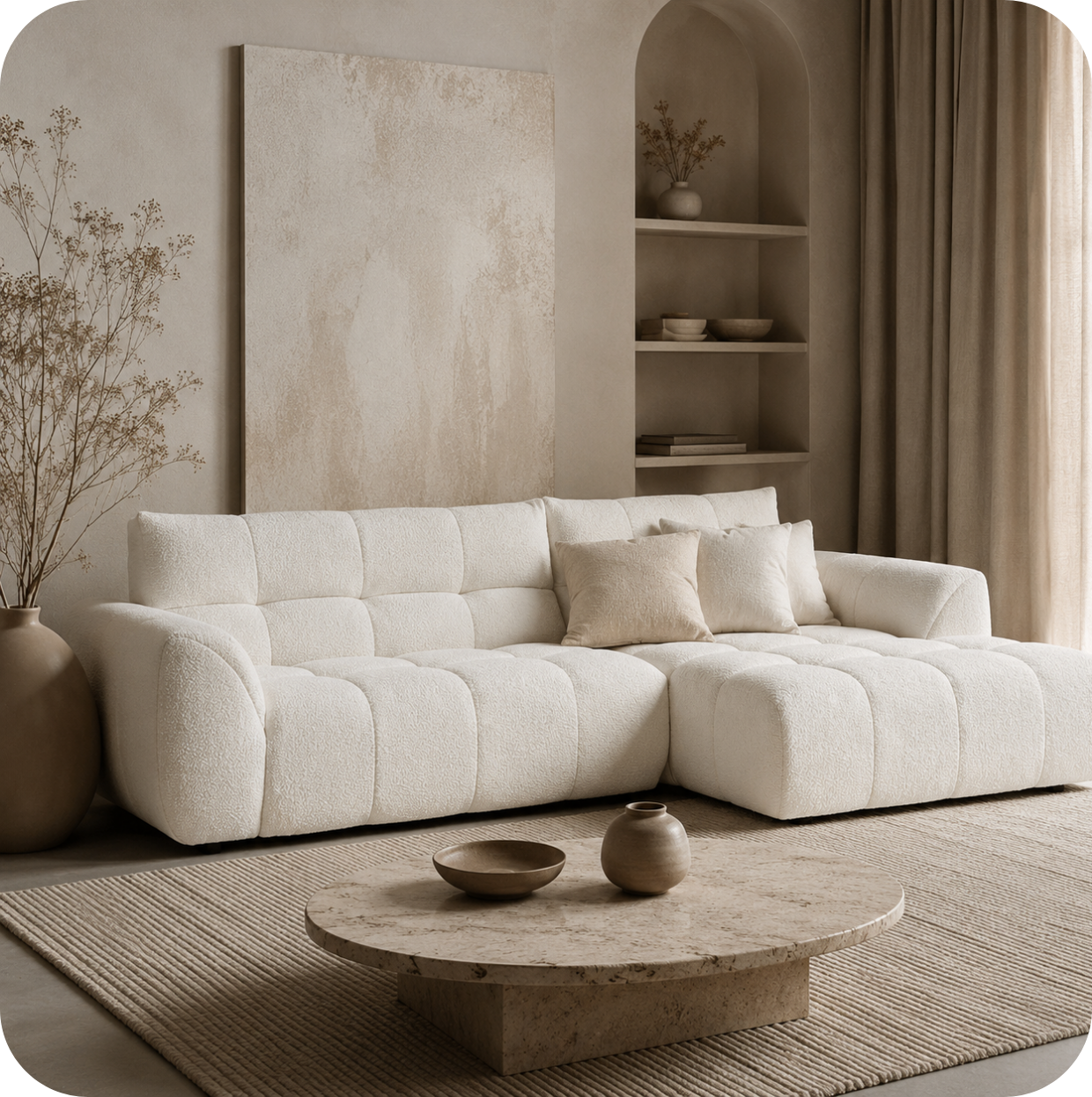
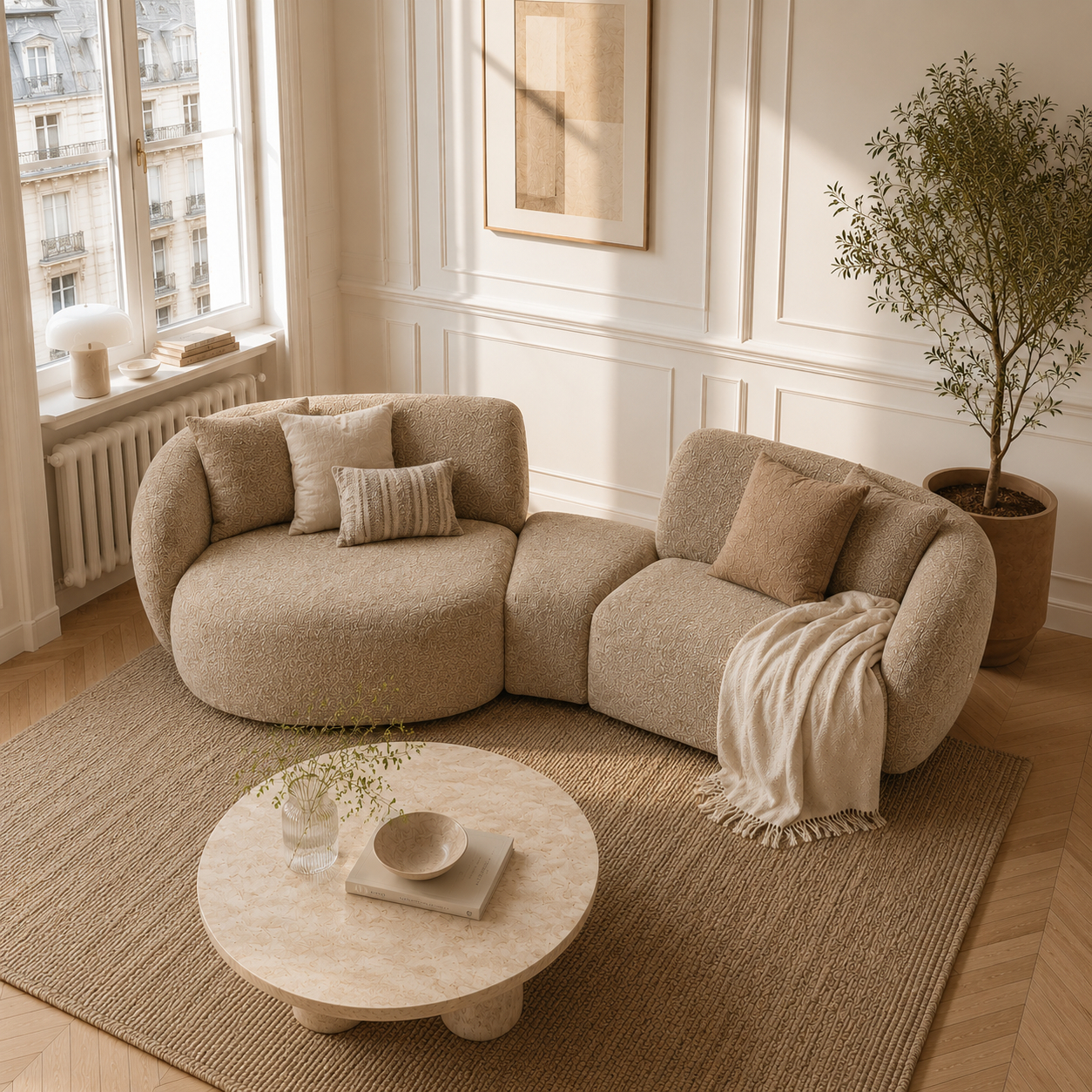
LUCCA – curved mid-century in bouclé
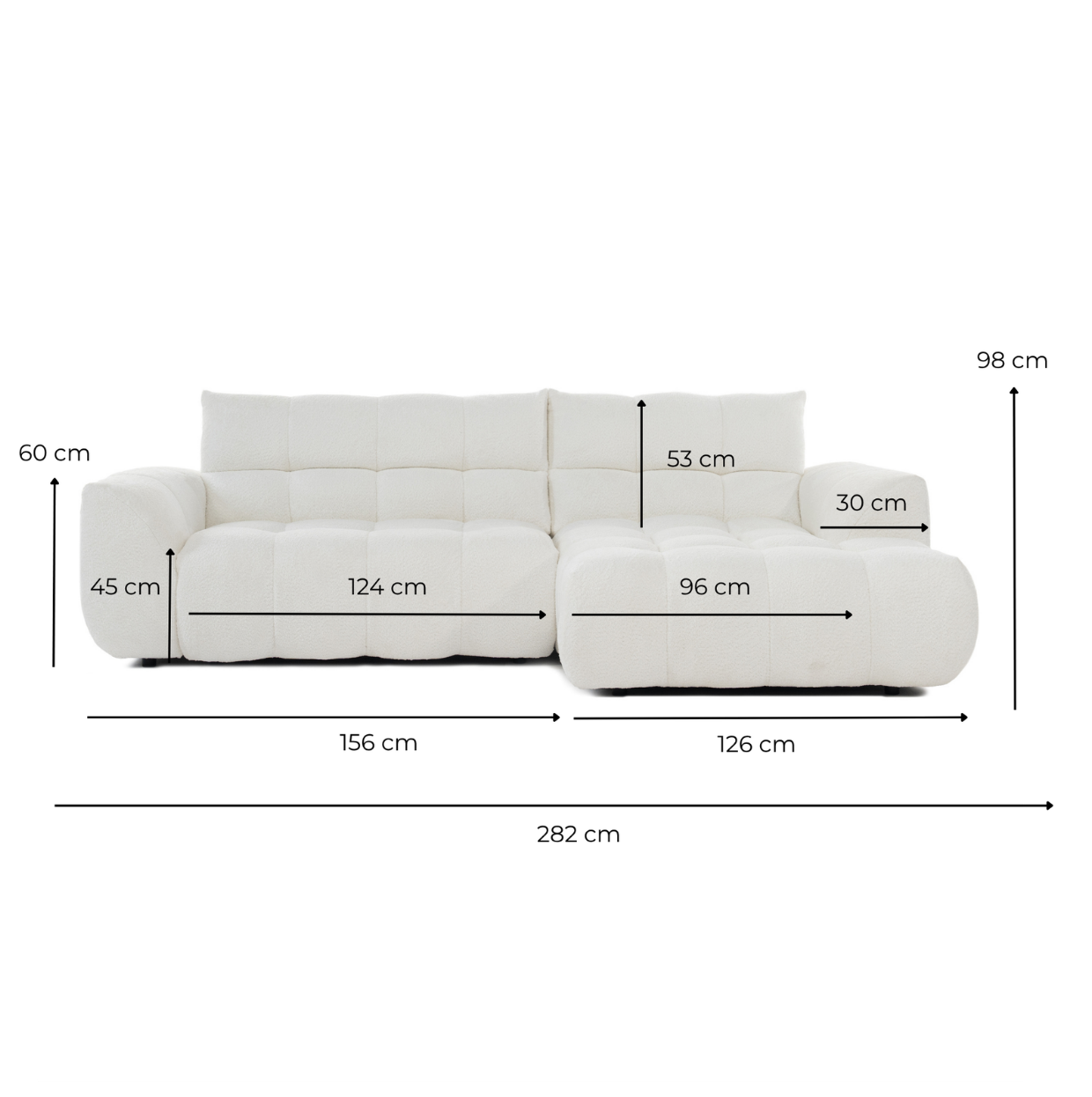
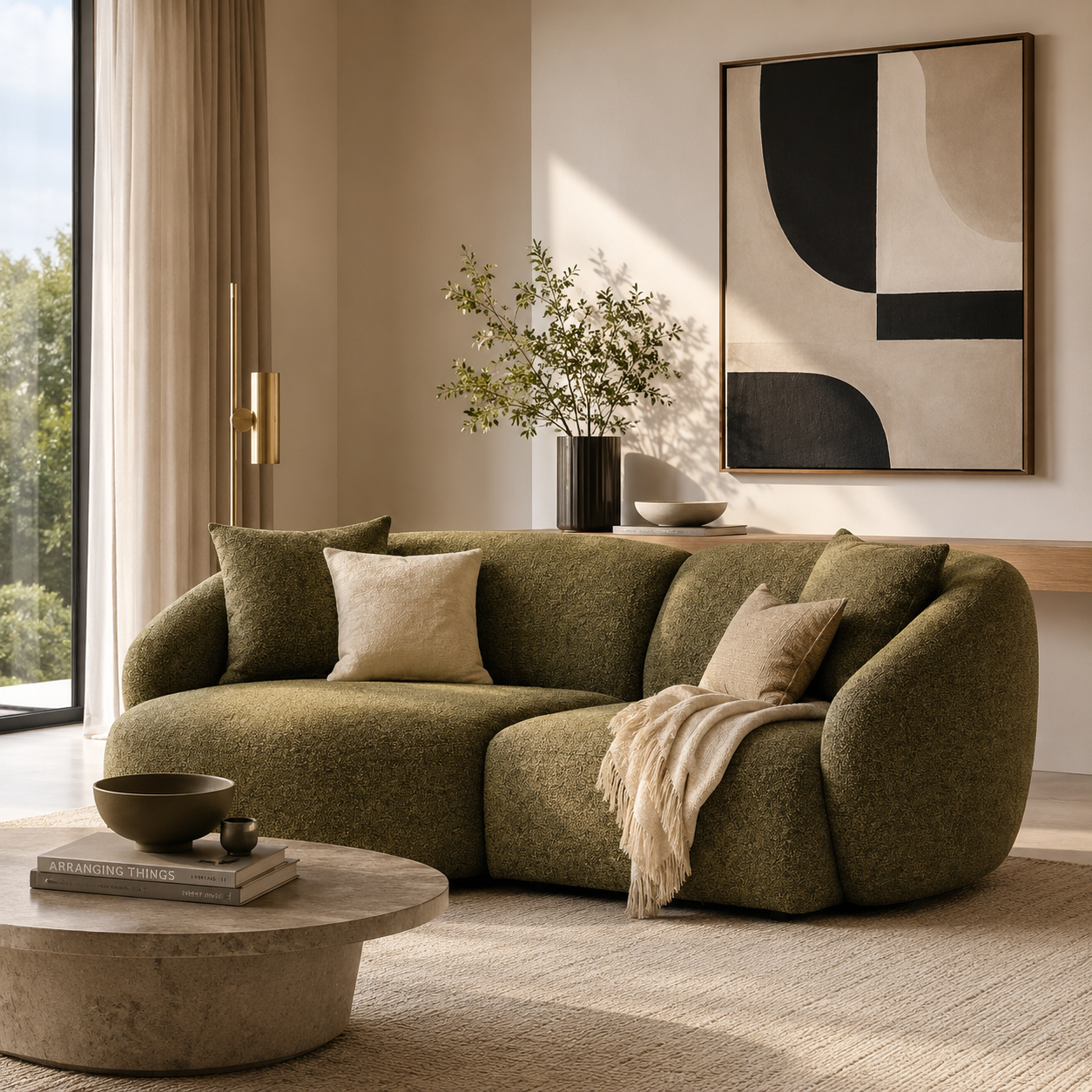
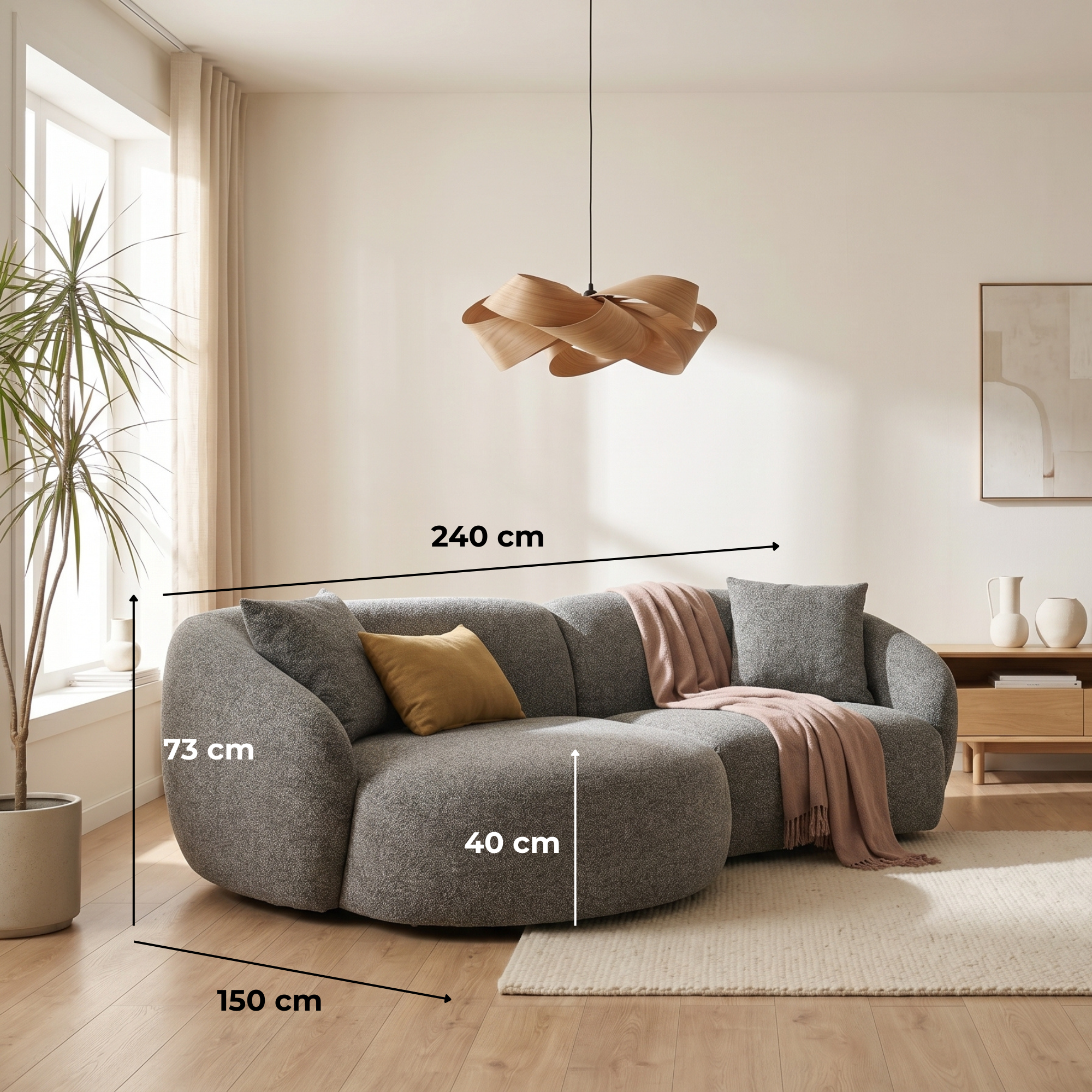
Not every mid-century sofa was square: Pierre Paulin and Vladimir Kagan built the curved, organic branch of the movement, and the LUCCA 3-seater (240 × 150 cm, 73 cm high, 40 cm seat) sits in that lineage. Dense Tana bouclé in olive or terracotta makes it the retro option; mélange grey or taupe keeps it calm. Read our bouclé sofa buying guide before you choose the fabric.
BAROLO with slim arms – the upright alternative
If a 70 cm back is too low for how you sit, the BAROLO 3-seater with the slim armrest (311 cm × 87 cm, 82 cm high) keeps a narrow, tailored arm and firm cushions, in four Melody neutrals. More head support, still a clean line.
Mid-century modern vs Scandinavian and Japandi
All three are low. Scandinavian is lighter in colour and softer in cushion; Japandi removes the legs and most of the colour; mid-century keeps both and sits firmer. Contemporary modular sofas borrow the MCM line on a plinth with deeper seats – for most households the comfortable compromise, as our best modular sofas in Europe guide explains.
How to choose a mid-century modern sofa: checklist
- Set the height first. 43–46 cm seat and 67–75 cm back gives the look without the struggle to stand up; go lower only if everyone in the house is young and fit.
- Choose low or slab arms. Skip rolled arms, skirts and overstuffed backs – they are the opposite of the style.
- Insist on HR foam and a hardwood frame. Firm cushions are what hold the lines; HR35 foam holds them for years.
- Pick a warm colour or a warm neutral. Brick, olive, navy, toffee or oat; avoid cool grey and optic white.
- Decide on texture. Chenille or textured weave for the classic look; bouclé for the curved, Paulin-style branch; performance fabric if you have pets.
- Measure length generously. Mid-century sofas were long and low; a 260–300 cm sofa in a 16–18 m² room is correct, not oversized, as long as the back stays low.
- Prefer modular if you move or change your mind. You can add a chaise later; a fixed-frame sofa cannot grow.
- Check who stands behind it. Furni builds every sofa to order in its own factory in Wielkopolska, Poland, with free EU & UK delivery, 30-day returns, a 2-year warranty and a 4.8 Trustpilot rating.
Frequently asked questions
What makes a sofa mid-century modern?
A low profile (seat 38–45 cm), tapered or slim wooden legs, low or slab arms, a straight horizontal back and seat line, firm rectangular cushions and warm colours or honest materials such as wood, wool weaves and tan leather.
Are mid-century modern sofas comfortable?
Originals were firm and shallow. Modern interpretations keep the look but use high-resilience foam and deeper seats, which most people find more comfortable than soft, sinking sofas over an evening – and much better for your back.
What colour is a mid-century modern sofa?
Classic choices are mustard, burnt orange or brick, teal or navy, olive or avocado green, and camel or tan. Warm grey and oat work as neutrals. Cool blue-grey and bright white are the colours to avoid.
Can a modular sofa be mid-century modern?
Yes, if it is low (65–75 cm), has a straight back and low arms and comes in a warm colour. A modular system such as MERLOT gives you the mid-century line with the practical advantage of adding or moving modules later.
How do I style a room around a mid-century modern sofa?
Walnut or teak coffee table and sideboard, a geometric rug in warm tones, a brass or black arc floor lamp, one or two large-leaf plants and graphic art. Keep walls warm white. Our MCM sofa ideas article goes through the full room.
Made in Poland · Free EU & UK delivery · Free fabric samples · 30-day returns · 2-year warranty · Trustpilot 4.8